Blog

Explore the latest in CNC machining with practical maintenance tips, component breakdowns, buyer’s guides, and industry insights. Each article is designed to help you understand machine tools deeply and choose the right solutions for your production line.

Cutting Force Definition, Factors, and How to Measure It

Cutting Force: Definition, Factors, and How to Measure It

From basic definition to real machining behavior, this article takes a structured look at cutting force in machining. It covers its core components, why it matters in cutting operations, what factors shape it, how it behaves across different processes, how it is measured, and how it is managed in practical machining conditions.

Read More »
What Is Chip Load and How Is It Calculated

What Is Chip Load and How Is It Calculated?

This article provides a complete overview of chip load in milling, covering its practical importance, the key variables that influence it, the standard calculation method, and the consequences of running too low or too high. It also explains how machinists can read cutting feedback to judge whether chip load is working with or against process stability, efficiency, and tool performance.

Read More »
Roughing vs Finishing in Machining A Clear Guide

Roughing vs Finishing in Machining: A Clear Guide

This article explains roughing vs finishing in machining by clarifying their roles, differences, and relationship in real production. It covers machining purpose, material removal rate, cutting parameters, tooling, accuracy, surface quality, and process strategy, helping readers understand how both stages work together to improve efficiency and final part quality.

Read More »
Spindle Speed in CNC Machining Practical Guide

Spindle Speed in CNC Machining: Practical Guide

Spindle speed is a key CNC machining parameter that directly affects cutting stability, surface finish, tool life, heat control, and production efficiency. This article explains what spindle speed means, how to calculate it, what factors influence it, how to choose it correctly, and which common mistakes should be avoided in real machining.

Read More »
Material Removal Definition, Types, and Applications

Material Removal: Definition, Types, and Applications

This article introduces what material removal is and explains how it works in modern manufacturing. It covers the main process types, key operating principles, influencing factors, material removal rate, major industrial applications, and practical limitations, giving readers a clear overview of its role in machining quality and production efficiency.

Read More »
What Is Surface Feet Per Minute (SFM) in CNC Machining

What Is Surface Feet Per Minute (SFM) in CNC Machining?

This article explains what surface feet per minute means in CNC machining, how it is calculated, how it differs from RPM, and how it influences cutting speed, tool life, surface finish, and machining efficiency. It also explores the main factors that affect SFM selection in practical machining operations.

Read More »
What Is the Difference Between Feed Rate and Cutting Speed

What Is the Difference Between Feed Rate and Cutting Speed?

Feed rate and cutting speed are two essential CNC machining parameters, but they control different parts of the cutting process. This article explains what each term means, how they differ in heat generation, mechanical load, tool life, surface finish, and machining strategy, and how they apply in turning, milling, and drilling.

Read More »
Does Room Temperature Affect CNC Machining Accuracy

Does Room Temperature Affect CNC Machining Accuracy?

This article explains whether room temperature affects CNC machining accuracy and why the answer matters in real production. It explores how temperature changes influence thermal condition, thermal expansion, accuracy stability, and dimensional consistency, while also showing when these effects become more noticeable in precision CNC machining.

Read More »
What Is a Dual Spindle CNC Lathe and When to Use One

What Is a Dual Spindle CNC Lathe and When to Use One

This article explains what a dual spindle CNC lathe is, how its main spindle and sub-spindle work together, what advantages it offers in machining flow and consistency, and which parts and production tasks it is best suited for. It also compares dual spindle and standard single spindle CNC lathes to clarify when a dual spindle setup makes more practical sense.

Read More »
Closed-Loop vs Semi-Closed-Loop CNC Control Systems

Closed-Loop vs Semi-Closed-Loop CNC Control Systems

This article explores the key differences between closed-loop and semi-closed-loop CNC control systems through the factors that matter most in real machining, including feedback path, positioning accuracy, repeatability, compensation ability, system complexity, cost, maintenance, and application fit, with a practical focus on machine performance and production needs.

Read More »
What Is a Spindle Taper The Complete Guide

What Is a Spindle Taper? The Complete Guide

This guide covers the main spindle taper types, their structural differences, common applications, selection factors, typical problems, and practical maintenance points. It is designed to help readers understand how different spindle taper systems compare and how to make better decisions for machining performance, tooling compatibility, and long-term production reliability.

Read More »
Runout in Machining Causes, Effects, and Fixes

Runout in Machining: Causes, Effects, and Fixes

This article explores the hidden role of runout in machining and why it deserves more attention in modern CNC production. Readers will learn how runout appears in different forms, where it typically comes from, how it influences cutting behavior, and what practical steps can help improve machining stability, accuracy, and consistency in real shop conditions.

Read More »
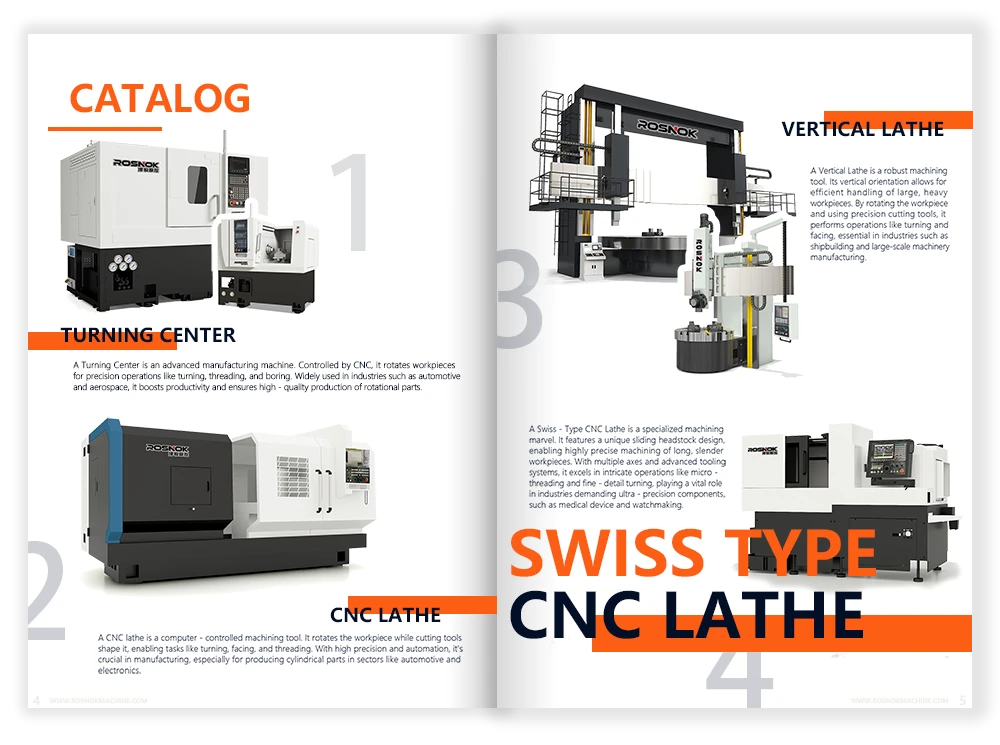
ROSNOK CNC Machine Product Catalog Listing

Get Custom CNC Machine Solutions

Fill out the form below, and our engineers will contact you within 12 hours to provide a tailored CNC Machine Solution for your needs.