Casting plays a vital role in industries ranging from automotive and aerospace to machinery and construction. It allows manufacturers to produce durable, high-strength components efficiently, reducing material waste and enabling mass production. From engine blocks to industrial fittings, casting ensures parts meet structural and functional requirements, making it indispensable for modern manufacturing and technological innovation.
This article explores casting’s definition, key advantages, common types, and practical applications, providing a comprehensive guide for understanding and implementing this essential metalworking process.
What Is Casting?
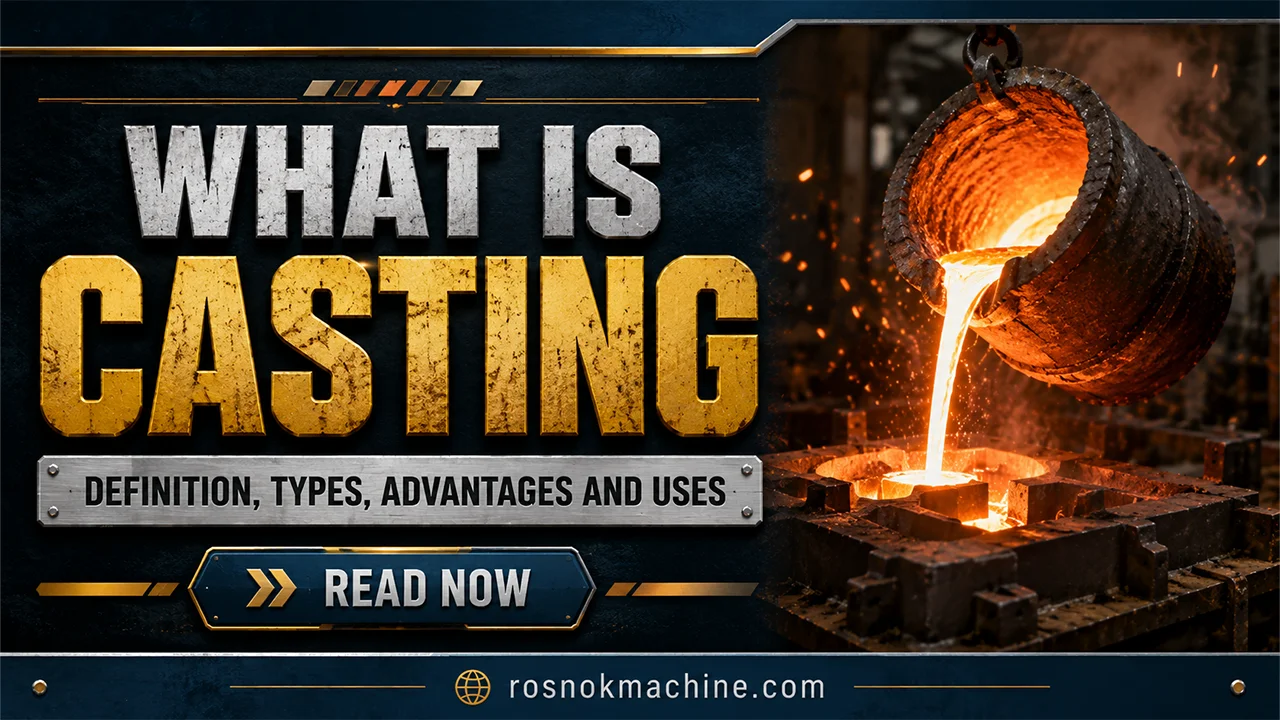
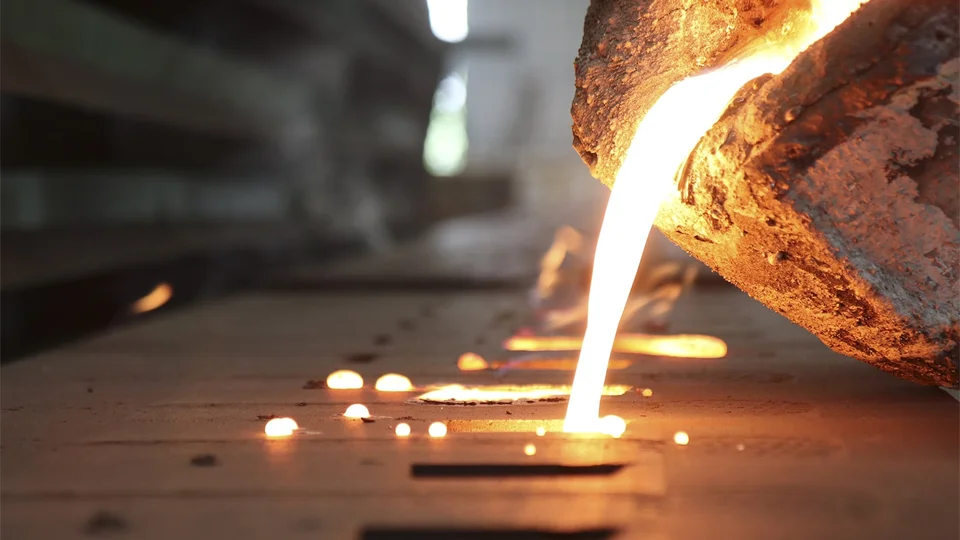
Casting is a foundational manufacturing process that transforms liquid metal into a solid, functional shape. The core logic of the process is straightforward yet highly engineered: solid material is heated until it reaches a molten state, poured into a specially designed hollow mold cavity, and allowed to cool and solidify. Once solidified, the newly formed part takes on the exact internal and external geometry of the mold.
In the broader landscape of industrial manufacturing, casting is categorized as a primary forming process. Unlike subtractive methods such as cutting or CNC machining—where material is progressively removed from a solid block to achieve the final dimensions—casting creates the desired shape directly from a liquid state. This fundamental difference makes it an incredibly efficient approach for producing parts with complex internal cavities and intricate external structures in a single operation.
However, modern casting is far more than simply “pouring liquid metal into a hole.” It is a precise metallurgical science. Transforming a molten liquid into a reliable solid component requires strict control over thermodynamics, material fluidity, mold cavity design, and solidification rates. It is this complex interaction of physics and engineering that elevates casting from a basic pouring technique to one of the most essential and versatile manufacturing processes in the modern industrial world.
How Does the Casting Process Work?
Casting follows a clear sequence: the shape is prepared first, the metal is melted, the molten metal is poured into the mold, and the part is removed after solidification. The details may vary between different casting methods, but the basic working logic remains the same.
Pattern or Mold Preparation
The casting process begins with preparing a pattern or mold. The pattern is used to create the required mold cavity, while the mold provides the hollow space that molten metal will fill. This cavity defines the external shape, internal structure, and major dimensional features of the final casting.
At this stage, accuracy matters because any mistake in the mold cavity may be transferred directly to the finished part. The mold must also be strong enough to withstand heat, metal pressure, and handling during pouring.
Metal Melting
After the mold is prepared, the selected metal or alloy is heated in a furnace until it becomes molten metal. The required melting temperature depends on the material. Aluminum, cast iron, steel, copper, zinc, and other alloys all have different melting behaviors and temperature requirements.
Proper melting control is important. If the temperature is too low, the molten metal may not flow completely through the mold cavity. If it is too high, oxidation, gas absorption, and material loss may increase.
Pouring
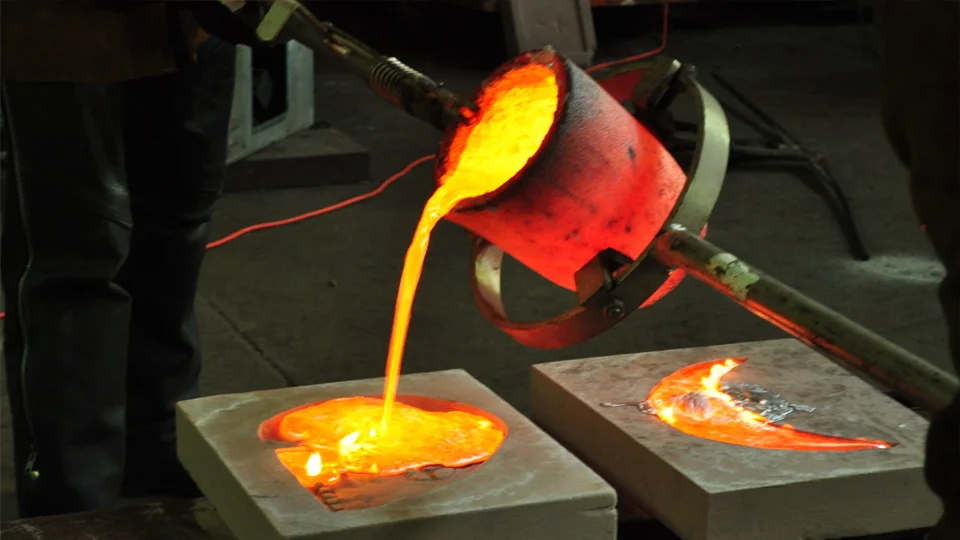
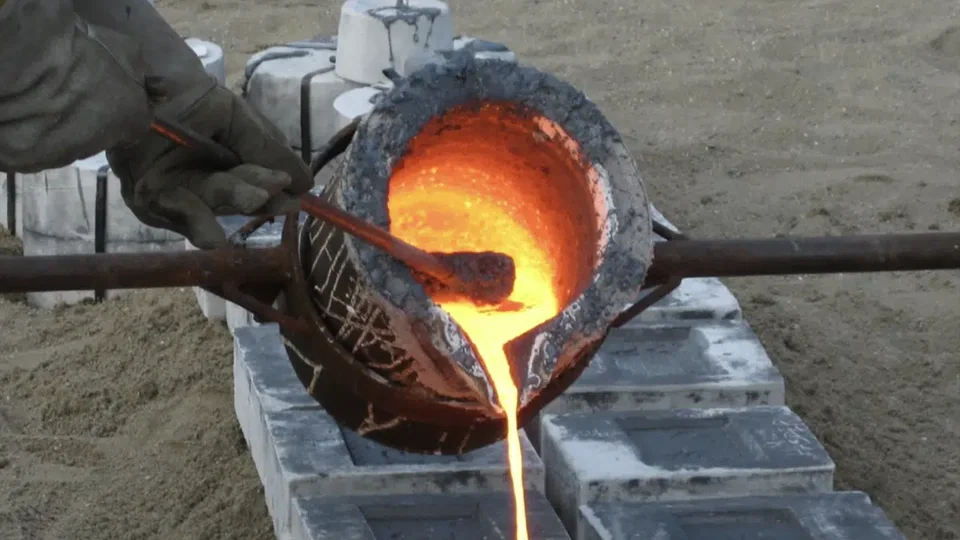
Once the metal reaches the proper molten state, it is poured into the mold cavity. The molten metal must flow smoothly and fill all required areas before it begins to solidify. Pouring speed, pouring temperature, and flow stability all influence the quality of the casting.
This step may look simple, but it requires control. Unstable pouring can trap gas, disturb the mold surface, or cause incomplete filling. A well-controlled pour helps create a more uniform casting structure.
Cooling and Solidification
After pouring, the molten metal starts to cool inside the mold. As the temperature drops, the liquid metal gradually solidifies and takes the shape of the mold cavity. This stage is critical because metal shrinks during solidification.
Controlled cooling helps reduce internal stress, distortion, and shrinkage-related problems. The goal is to allow the casting to form a stable structure while maintaining the intended shape and dimensions.
Mold Removal
When the casting has fully solidified and cooled enough for handling, it is removed from the mold. In some casting methods, the mold can be opened and reused. In others, especially expendable mold processes, the mold must be broken away to release the casting.
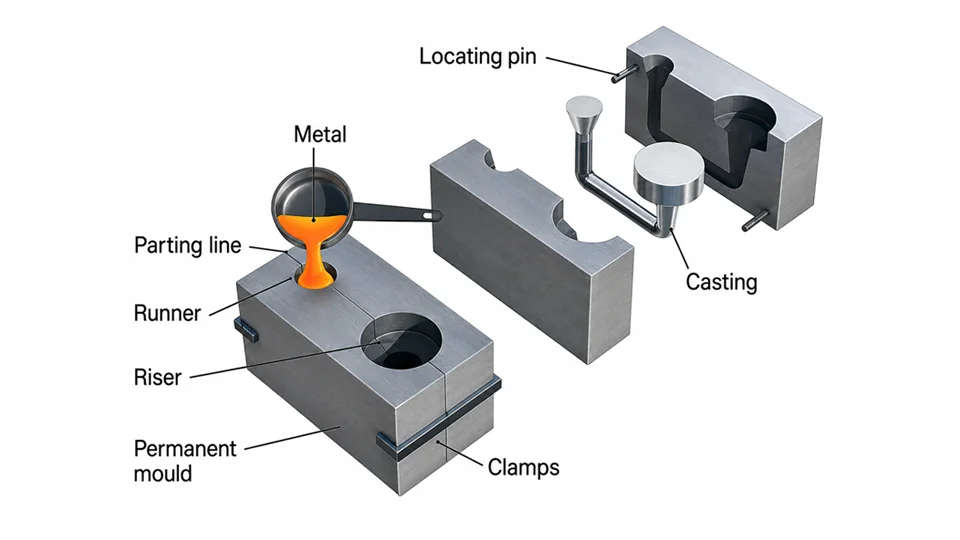
At this point, the part has its basic shape, but it is usually not ready for final use. It may still contain extra metal from gates, runners, risers, or parting lines.
Cleaning and Finishing
The raw casting then goes through cleaning and finishing. Extra metal is removed, surface residues are cleaned, and rough edges or flash are trimmed. Depending on the part requirements, further operations may include grinding, shot blasting, heat treatment, inspection, or CNC machining.
This final stage turns the rough casting into a usable component. Casting creates the near-net shape, while finishing processes improve surface quality, dimensional accuracy, and functional performance.
Key Elements in the Casting Process
A successful casting process depends on several key elements working together. The mold gives the part its shape, the molten metal provides the material body, and the feeding and cooling design helps the metal fill and solidify correctly. If one element is poorly controlled, the final casting quality can be affected.
Mold
The mold is the hollow form that defines the final shape of the casting. Its internal cavity determines the part’s main geometry, including outer surfaces, internal spaces, ribs, bosses, and other structural features.
A good mold must withstand high temperature, metal flow, and pressure during pouring. It also needs enough dimensional accuracy to keep the casting close to the required shape. Poor mold quality can lead to surface defects, dimensional errors, or unstable part consistency.
Pattern
A pattern is usually used to create the mold cavity, especially in processes such as sand casting. It represents the shape of the part, but it may be slightly adjusted to allow for metal shrinkage, machining allowance, and mold removal.
The pattern is not always identical to the final part. In professional casting design, pattern dimensions must consider how the metal behaves after pouring and cooling. This is why pattern design directly affects the accuracy and manufacturability of the casting.
Molten Metal
Molten metal is the liquid material that fills the mold and becomes the final casting after solidification. Its temperature, cleanliness, and fluidity strongly influence how well the mold cavity is filled.
If the molten metal does not flow properly, thin sections or complex areas may not form completely. If the metal contains too much gas, slag, or oxide, the internal quality of the casting may be reduced. Stable metal preparation is therefore essential for reliable casting results.
Gating System
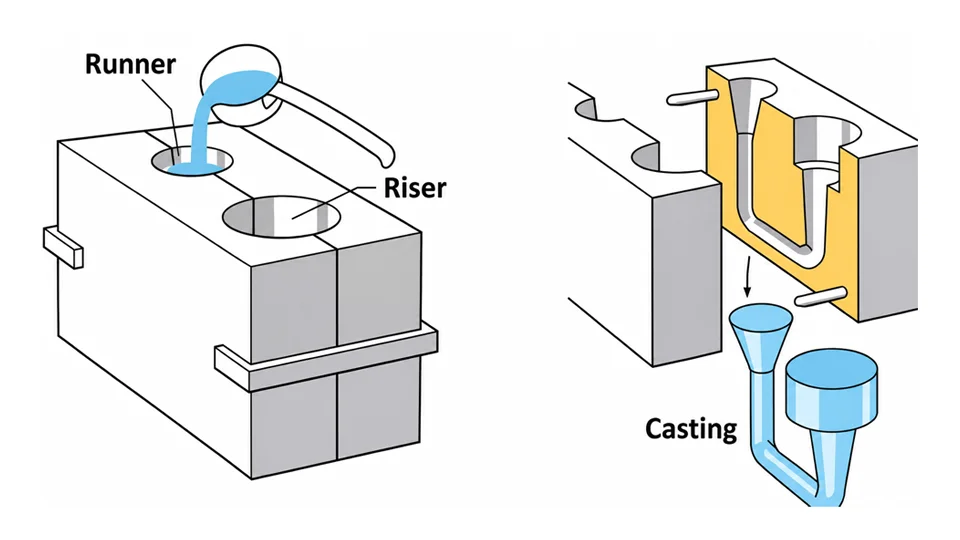
The gating system is the channel that guides molten metal into the mold cavity. It usually includes parts such as the sprue, runner, and gate. Its purpose is to control how the metal enters the mold and reaches different areas of the cavity.
A well-designed gating system helps reduce turbulence, air entrapment, and uneven filling. It does not simply move metal from one point to another; it controls the flow path so the casting can form more consistently.
Riser
A riser is a reservoir of extra molten metal connected to the casting. Its main function is to feed additional metal into areas that shrink during solidification.
Because metal contracts as it cools, some sections may need extra material to compensate for volume loss. A properly designed riser helps reduce shrinkage problems and supports better internal soundness in the casting.
Cooling and Solidification Control
Cooling and solidification determine how the liquid metal becomes a stable solid part. The cooling rate affects dimensional stability, internal structure, mechanical performance, and the risk of stress or distortion.
The goal is not always to cool the metal as fast as possible. In many cases, controlled and balanced cooling is more important. Proper solidification control helps the casting maintain its intended shape and reduces the chance of internal weakness.
Common Materials Used in Casting
Casting can work with many metals and alloys, but the right material depends on strength, weight, fluidity, corrosion resistance, cost, and final working conditions. A material that flows well in the mold is not always the strongest material, and a high-strength material may require stricter temperature and solidification control.
Cast Iron
Cast iron is one of the most widely used casting materials. It has good fluidity, relatively low cost, strong wear resistance, and excellent vibration damping performance. These properties make it suitable for heavy and stable components such as machine bases, housings, pump bodies, and engine parts.
Its main advantage is manufacturability. Cast iron can fill complex mold cavities well and can produce thick, rigid parts with good dimensional stability. However, different grades of cast iron have different strength, toughness, and machinability, so material selection must match the part’s actual load and service conditions.
Steel
Cast steel is used when higher strength, toughness, or impact resistance is required. Compared with cast iron, steel generally offers better mechanical performance, especially for parts that must withstand heavy loads, shock, or pressure.
However, steel casting is more demanding. Steel has a higher melting temperature and lower fluidity than many other casting materials, so mold design, pouring temperature, and solidification control must be handled carefully. It is often chosen for structural parts where performance is more important than easy castability.
Aluminum Alloys
Aluminum alloys are popular in casting because they are lightweight, corrosion-resistant, and have good thermal conductivity. They also offer good fluidity, which helps produce parts with thinner walls and more detailed shapes.
The major value of aluminum casting is weight reduction. It is commonly selected when manufacturers need a balance between strength, low weight, and production efficiency. Aluminum castings are often followed by machining when tight tolerances, sealing surfaces, or precise assembly features are required.
Copper Alloys
Copper-based alloys, such as bronze and brass, are used when conductivity, corrosion resistance, wear resistance, or low-friction performance is important. These materials are often selected for parts that need stable performance in contact, rotation, fluid flow, or electrical applications.
Copper alloys are generally more expensive than iron or aluminum materials, so they are not chosen only for shape-making. They are used when their functional properties justify the cost, especially in components that need durability, corrosion resistance, or reliable thermal and electrical behavior.
Zinc Alloys
Zinc alloys are commonly used for smaller cast parts that require good dimensional accuracy and smooth surface quality. They have good fluidity and a relatively low melting temperature, which makes them efficient for producing detailed components.
Zinc casting materials are suitable for parts where precision, appearance, and repeatability matter more than high-temperature strength. They are often used when the component is not exposed to extreme heat or heavy structural loads.
Magnesium Alloys
Magnesium alloys are valued for their very low density. They are lighter than aluminum, making them useful for applications where weight reduction is a major design goal.
At the same time, magnesium casting requires careful process control because the material is more reactive at high temperatures. It is usually selected for specialized lightweight parts where the performance benefit outweighs the added handling and process requirements.
Material Selection in Casting
Choosing a casting material is not only about the metal itself. Engineers must consider how the material melts, flows, solidifies, shrinks, machines, and performs in service. A good casting material should match both the manufacturing process and the final function of the part.
In many real production projects, the best result comes from combining casting with secondary operations. Casting forms the main shape, while heat treatment, surface treatment, or CNC machining improves strength, surface quality, and dimensional precision.
Types of Casting
Different casting methods are designed for different part sizes, materials, accuracy levels, surface requirements, and production volumes. There is no single casting type that fits every project. The best choice depends on whether the priority is cost, precision, complexity, strength, or repeatability.
Sand Casting
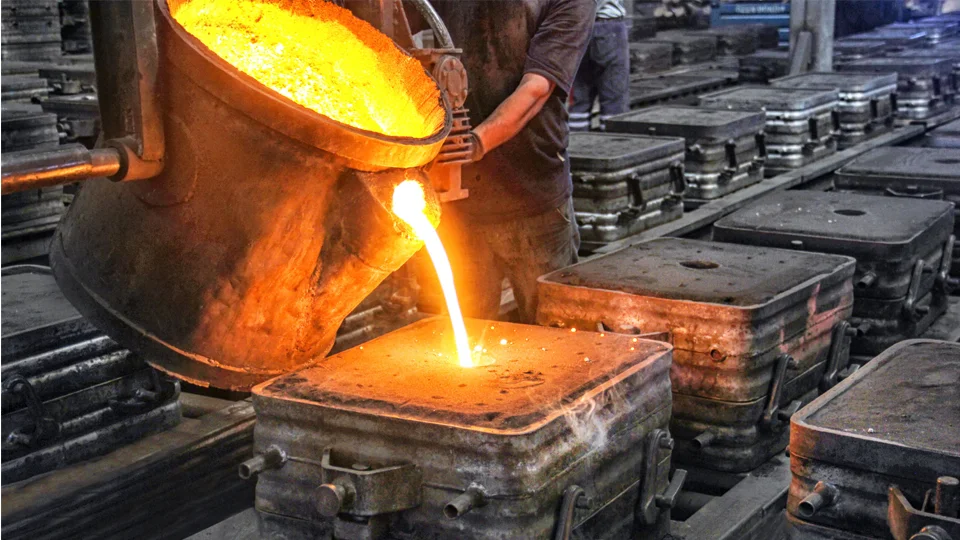
Sand casting uses a sand-based mold to form the casting cavity. It is one of the most flexible and widely used casting methods because the mold can be made for small parts, large parts, simple shapes, or complex geometries.
This method is often suitable for low to medium production volumes and larger components. It can work with many metals, including cast iron, steel, aluminum, and bronze. Its main limitation is that surface finish and dimensional accuracy are usually not as high as more precise casting methods, so secondary machining may be needed.
Die Casting
Die casting uses a reusable metal mold, called a die, and forces molten metal into the cavity under pressure. It is commonly used for high-volume production where consistency, speed, and dimensional repeatability are important.
This method is especially suitable for non-ferrous metals such as aluminum, zinc, and magnesium alloys. Die casting can produce thin walls, smooth surfaces, and detailed shapes efficiently. However, the die cost is high, so it is usually more economical for mass production rather than small batches.
Investment Casting
Investment casting, also known as lost wax casting, uses a wax pattern covered with ceramic material to create a precise mold. After the wax is removed, molten metal is poured into the ceramic cavity.
This method is suitable for complex, detailed, and high-precision parts. It can produce good surface quality and fine features, often reducing the need for extensive machining. Investment casting is commonly selected when shape complexity and dimensional control are more important than the lowest possible production cost.
Permanent Mold Casting
Permanent mold casting uses a reusable metal mold, but the metal is usually poured by gravity rather than injected under high pressure. Compared with sand casting, it often provides better dimensional consistency and surface finish.
This method is commonly used for medium to high production volumes, especially with aluminum, magnesium, and copper alloys. It works best for parts with relatively consistent shapes and moderate complexity.
Centrifugal Casting
Centrifugal casting uses rotation to distribute molten metal inside a mold. As the mold spins, centrifugal force pushes the metal against the mold wall, helping form dense cylindrical or ring-shaped parts.
This method is well suited for pipes, sleeves, bushings, bearing rings, and other round components. It can improve material density in the outer section of the part, but it is mainly limited to symmetrical or rotational shapes.
Continuous Casting
Continuous casting is used to produce long metal forms such as billets, slabs, blooms, rods, or strips. Instead of making one separate part at a time, molten metal is continuously poured into a cooled mold and solidified as it moves through the system.
This process is widely used in the production of steel and non-ferrous metal stock. The cast material is often further processed by rolling, forging, extrusion, or machining before becoming a final product.
Low-Pressure Casting
Low-pressure casting uses controlled gas pressure to push molten metal upward into the mold cavity. This provides a smoother and more stable filling process compared with simple gravity pouring.
It is often used for aluminum alloy parts that require better internal quality, controlled filling, and reduced turbulence. The method is suitable for components where structural reliability matters, but extremely high-speed production is not the main priority.
Vacuum Casting
Vacuum casting removes air from the mold cavity or casting chamber before or during pouring. The purpose is to reduce air entrapment and improve filling quality, especially in thin-walled or detailed parts.
This method can help produce cleaner castings with fewer gas-related problems. It is often used when surface quality, fine detail, or internal soundness is more important than the lowest production cost.
Advantages of Casting
Casting remains widely used because it can create metal parts that are difficult, costly, or sometimes impractical to produce by other methods. Its main value lies in shape flexibility, material adaptability, and the ability to form near-net-shape components with efficient use of material.
Complex Shape Capability
One of the biggest advantages of casting is its ability to produce complex shapes. Because molten metal flows into a mold cavity, casting can form curved surfaces, irregular profiles, internal cavities, ribs, bosses, and thick-to-thin transitions more easily than many solid-stock processes.
This makes casting suitable for parts where the geometry is too complex to machine efficiently from a solid block. Instead of removing large volumes of material, manufacturers can create the basic shape directly through the mold.
Wide Material Compatibility
Casting can be used with many metals and alloys, including cast iron, steel, aluminum, copper, zinc, and magnesium. This gives manufacturers flexibility when balancing strength, weight, corrosion resistance, wear resistance, cost, and machinability.
The material choice still needs to match the part’s function and the casting method. But compared with many forming processes, casting offers a broad material range for both light-duty and heavy-duty components.
Suitable for Large and Small Parts
Casting can produce very small precision parts as well as large heavy components. The same basic principle can be adapted to different part sizes by changing mold design, material handling, and process control.
This size flexibility is one reason casting is common in machinery, automotive, energy, construction, and general manufacturing. Large machine bases, pump housings, brackets, covers, and compact metal components can all begin as castings.
Cost Efficiency
Casting can reduce material waste because the metal is shaped close to the final geometry. This is especially useful for parts with complex profiles, where machining from solid stock would remove too much material and increase tool wear, cycle time, and cost.
The cost advantage depends on production volume, mold cost, material, and finishing requirements. For the right part and batch size, casting can provide a strong balance between manufacturing cost and part complexity.
Mass Production Potential
Many casting methods support stable repeat production once the mold, tooling, and process parameters are properly controlled. This allows manufacturers to produce large quantities of parts with consistent geometry and predictable quality.
Processes such as die casting and permanent mold casting are especially suitable for repeat production, while sand casting remains valuable for larger parts or lower-volume projects. The production method should match the expected quantity and precision level.
Near-Net Shape Manufacturing
Casting is often considered a near-net-shape process because it can create a part close to its final form. This reduces the amount of secondary machining required, especially on non-critical surfaces.
However, near-net shape does not always mean ready-to-use. Functional faces, sealing areas, bearing seats, threaded holes, and high-precision assembly surfaces often still require CNC machining or other finishing operations to meet final specifications.
Limitations of Casting
Casting is powerful, but it is not the best solution for every part. Its limitations usually come from molten metal behavior, mold accuracy, cooling control, and the need for secondary finishing. Understanding these limits helps manufacturers choose the right process instead of treating casting as a universal method.
Dimensional Accuracy May Be Limited
Some casting methods cannot achieve the same dimensional accuracy as precision machining. During cooling, metal shrinks, and this shrinkage can slightly change the final size of the part. Mold material, pouring temperature, and solidification behavior can also affect dimensional consistency.
For this reason, casting is often used to create the basic shape first. Critical surfaces, holes, sealing faces, and tight-tolerance features are usually finished later by CNC machining or other precision processes.
Surface Finish May Require Secondary Processing
A raw casting surface is not always smooth enough for final use. Surface quality depends on the mold material, metal flow, casting method, and finishing requirements. Sand casting, for example, usually leaves a rougher surface than die casting or investment casting.
When a part needs a smoother appearance, better sealing performance, or accurate contact surfaces, additional steps such as grinding, polishing, shot blasting, coating, or machining may be required.
Defect Risk Exists
Casting involves liquid metal flow and solidification, so defects can occur if the process is not properly controlled. Problems such as porosity, shrinkage, cracks, inclusions, or incomplete filling may affect strength, appearance, or service life.
This does not mean casting is unreliable. It means process design, mold design, pouring control, cooling control, and inspection must be taken seriously, especially for load-bearing or safety-critical components.
Mold Cost Can Be High
Some casting methods require expensive tooling. Die casting and permanent mold casting need durable metal molds, which can raise the initial investment before production begins.
This cost can be acceptable for high-volume production because the mold is reused many times. However, for small batches, prototypes, or highly customized parts, the tooling cost may make another casting method or manufacturing route more practical.
Material Properties May Vary
The mechanical properties of a casting are influenced by cooling rate, grain structure, alloy composition, and internal soundness. Different sections of the same part may cool at different speeds, which can lead to variation in hardness, strength, or internal stress.
Heat treatment and controlled solidification can improve performance, but the final result still depends on proper process control. For parts with very demanding strength or fatigue requirements, material behavior must be evaluated carefully.
Not Always Suitable for Very Tight Tolerances
Casting is excellent for forming complex shapes, but it is not always enough for very tight tolerances. Features such as bearing seats, precision holes, threaded areas, sliding surfaces, and assembly faces often require additional machining.
In many industrial parts, the best solution is not casting alone. Casting provides the near-net shape, while CNC machining brings the part to its final dimensional accuracy and surface quality.
Common Casting Defects
Casting defects are unwanted problems that appear when molten metal does not fill, cool, or solidify correctly. They may affect appearance, dimensions, strength, sealing performance, or service life. This section focuses on common defect types and their basic causes, not detailed inspection standards.
Porosity
Porosity refers to small holes or voids inside or on the surface of a casting. It is often caused by trapped gas, poor venting, excessive moisture in the mold, or gas absorbed in the molten metal.
Porosity can reduce strength and may cause leakage in pressure-bearing parts. Better melt treatment, proper venting, stable pouring, and cleaner metal handling can help reduce this problem.
Shrinkage
Shrinkage occurs because metal contracts as it cools and solidifies. If the casting does not receive enough extra molten metal during this stage, cavities or loose internal areas may form.
This defect is common in thick sections or areas where solidification is not properly controlled. Good riser design, balanced wall thickness, and controlled cooling can reduce shrinkage risk.
Cold Shut
A cold shut happens when two streams of molten metal meet but fail to fuse completely. It often appears as a visible line, seam, or weak boundary on the casting surface.
The common causes include low pouring temperature, poor fluidity, slow filling, or an unsuitable gating design. Cold shuts can weaken the part because the metal connection is not fully formed.
Misrun
A misrun occurs when molten metal fails to completely fill the mold cavity. As a result, the casting is incomplete, with missing edges, thin sections, or unformed details.
This usually happens when the metal cools too quickly, the pouring temperature is too low, or the mold design makes flow difficult. Thin-walled parts and complex geometries are more sensitive to misruns.
Cracks
Cracks can form during or after solidification when internal stress exceeds the material’s strength. Hot cracks usually occur while the metal is still at high temperature, while cold cracks may appear after further cooling.
Cracking may be related to uneven cooling, sharp corners, poor part design, restricted shrinkage, or unsuitable material selection. Reducing stress concentration and improving cooling control can help prevent it.
Inclusions
Inclusions are unwanted non-metallic materials trapped inside the casting. They may include slag, oxides, sand particles, or other foreign materials.
These defects can reduce mechanical performance and create weak points. Cleaner melting practice, better filtration, careful pouring, and good mold preparation help reduce inclusion-related problems.
Warpage
Warpage is distortion that occurs when a casting changes shape during cooling. It is often caused by uneven wall thickness, unbalanced cooling rates, or internal stress.
A warped casting may still look complete, but it may not meet assembly or dimensional requirements. Better part design, proper cooling control, and suitable post-treatment can help maintain shape stability.Common Casting Defects
Casting defects are unwanted problems that appear when molten metal does not fill, cool, or solidify correctly. They may affect appearance, dimensions, strength, sealing performance, or service life. This section focuses on common defect types and their basic causes, not detailed inspection standards.
Porosity
Porosity refers to small holes or voids inside or on the surface of a casting. It is often caused by trapped gas, poor venting, excessive moisture in the mold, or gas absorbed in the molten metal.
Porosity can reduce strength and may cause leakage in pressure-bearing parts. Better melt treatment, proper venting, stable pouring, and cleaner metal handling can help reduce this problem.
Shrinkage
Shrinkage occurs because metal contracts as it cools and solidifies. If the casting does not receive enough extra molten metal during this stage, cavities or loose internal areas may form.
This defect is common in thick sections or areas where solidification is not properly controlled. Good riser design, balanced wall thickness, and controlled cooling can reduce shrinkage risk.
Cold Shut
A cold shut happens when two streams of molten metal meet but fail to fuse completely. It often appears as a visible line, seam, or weak boundary on the casting surface.
The common causes include low pouring temperature, poor fluidity, slow filling, or an unsuitable gating design. Cold shuts can weaken the part because the metal connection is not fully formed.
Misrun
A misrun occurs when molten metal fails to completely fill the mold cavity. As a result, the casting is incomplete, with missing edges, thin sections, or unformed details.
This usually happens when the metal cools too quickly, the pouring temperature is too low, or the mold design makes flow difficult. Thin-walled parts and complex geometries are more sensitive to misruns.
Cracks
Cracks can form during or after solidification when internal stress exceeds the material’s strength. Hot cracks usually occur while the metal is still at high temperature, while cold cracks may appear after further cooling.
Cracking may be related to uneven cooling, sharp corners, poor part design, restricted shrinkage, or unsuitable material selection. Reducing stress concentration and improving cooling control can help prevent it.
Inclusions
Inclusions are unwanted non-metallic materials trapped inside the casting. They may include slag, oxides, sand particles, or other foreign materials.
These defects can reduce mechanical performance and create weak points. Cleaner melting practice, better filtration, careful pouring, and good mold preparation help reduce inclusion-related problems.
Warpage
Warpage is distortion that occurs when a casting changes shape during cooling. It is often caused by uneven wall thickness, unbalanced cooling rates, or internal stress.
A warped casting may still look complete, but it may not meet assembly or dimensional requirements. Better part design, proper cooling control, and suitable post-treatment can help maintain shape stability.
Applications of Casting
Casting is used wherever manufacturers need metal parts with practical strength, complex geometry, or efficient production cost. Its applications range from heavy industrial components to smaller precision parts. In many cases, casting forms the basic part shape, while later machining creates the final accuracy and working surfaces.
Automotive Industry
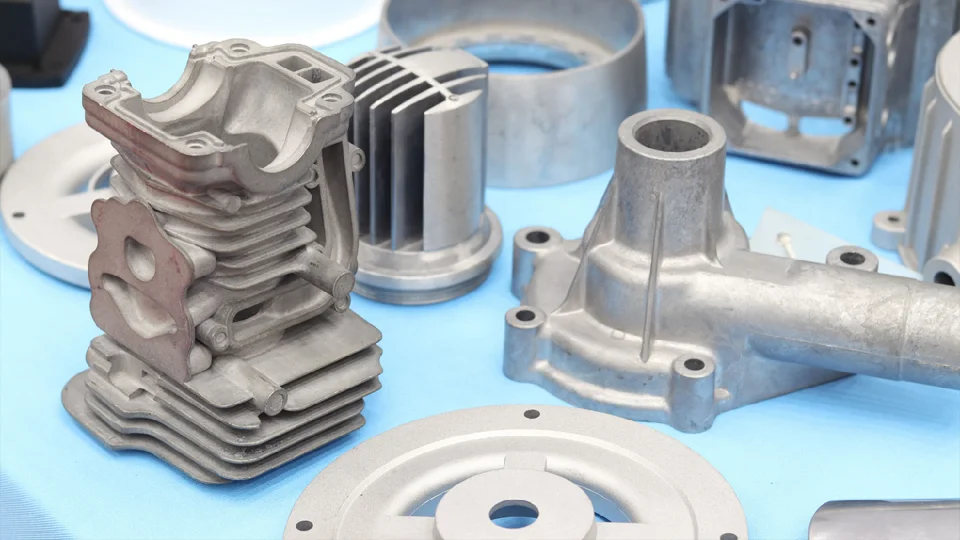
Casting is widely used in automotive manufacturing because many vehicle parts require complex shapes, stable strength, and repeatable production. Common cast parts include engine blocks, cylinder heads, transmission housings, brake components, wheels, brackets, and pump housings.
Aluminum casting is often used where weight reduction matters, while cast iron is still common for parts that need rigidity, wear resistance, or vibration damping. After casting, key surfaces are usually machined to meet assembly and performance requirements.
Aerospace Industry
In aerospace manufacturing, casting is used for parts that require complex geometry, controlled weight, and reliable material performance. Examples include turbine components, structural brackets, housings, and some high-temperature alloy parts.
Aerospace castings usually require stricter quality control than general industrial parts. The focus is not only on shape, but also on internal soundness, material consistency, and dimensional reliability.
Machinery Manufacturing
Casting is essential in machinery manufacturing. Many machine tool beds, bases, columns, pump bodies, valve bodies, gearboxes, covers, and support frames begin as castings.
For machine structures, cast iron is especially valued for rigidity and vibration damping. This is why many CNC machine bases and heavy equipment frames use cast components before precision machining is performed on guideways, mounting surfaces, and assembly areas.
Oil and Gas Industry
The oil and gas industry uses casting for parts that must handle pressure, wear, corrosion, and fluid flow. Common examples include valve bodies, pump casings, flanges, pipe fittings, impellers, and sealing components.
Because these parts often work in demanding environments, material selection and quality inspection are especially important. Casting provides the shape and strength foundation, while machining ensures sealing faces, threads, and connection surfaces meet specification.
Construction and Heavy Equipment
Construction machinery and heavy equipment rely on cast parts for strength, durability, and load-bearing performance. Castings are used in housings, counterweights, brackets, track components, bucket teeth, wear parts, and structural supports.
These parts are often large, thick, and exposed to impact or abrasion. Casting allows manufacturers to produce robust shapes that can handle heavy-duty working conditions.
Medical and Precision Components
Casting can also be used for selected medical and precision components, especially when complex shapes or special materials are required. Examples may include surgical instrument parts, dental components, orthopedic structures, and small precision metal parts.
In these fields, casting is usually combined with strict finishing and inspection. Surface quality, dimensional accuracy, material safety, and cleanliness are critical, so secondary machining or polishing is often required.
Consumer and Electrical Products
Many everyday products also contain cast components. Examples include appliance housings, lighting parts, handles, locks, hinges, motor housings, electronic enclosures, and decorative hardware.
For these products, casting often provides a balance between appearance, repeatability, and production efficiency. Zinc and aluminum alloys are commonly selected when smooth surfaces, fine details, and stable batch production are required.
Casting vs Forging vs Machining
Casting, forging, and machining are all important manufacturing processes, but they shape metal in different ways. Casting forms parts from liquid metal, forging shapes metal through pressure, and machining removes material from a solid workpiece. The right choice depends on part geometry, strength requirements, tolerance, surface finish, and production cost.
Casting
Casting uses molten metal to fill a mold cavity and form the required shape after solidification. It is especially useful for complex geometries, internal cavities, irregular contours, and large parts that would be difficult or wasteful to machine from solid material.
Casting is often used to create the basic or near-net shape of a component. When tighter tolerances or smoother surfaces are required, CNC machining may be added after casting.
Forging
Forging shapes metal by applying compressive force while the material is solid or heated to a workable state. This process changes the internal grain structure of the metal, often improving strength, toughness, and fatigue resistance.
Forging is commonly selected for parts that must handle heavy loads, impact, or repeated stress. However, it is generally less flexible than casting when the part has complex internal cavities or highly irregular shapes.
Machining
Machining removes material from a solid block, bar, plate, forging, or casting by using cutting tools. CNC machining is especially valuable when high dimensional accuracy, tight tolerances, threaded holes, flat sealing surfaces, or smooth finishes are required.
Machining can produce very precise features, but it may be less material-efficient for complex parts if the entire shape must be cut from solid stock. For this reason, machining is often used together with casting or forging as a finishing process.
Process Comparison
| Process | Forming Method | Main Strength | Shape Complexity | Precision Level | Typical Role |
|---|---|---|---|---|---|
| Casting | Liquid metal fills a mold | Complex shapes and near-net form | High | Medium to high, depending on method | Primary forming |
| Forging | Metal shaped by pressure | Strength and toughness | Medium | Medium | High-strength forming |
| Machining | Material removed by cutting | Accuracy and surface finish | High, but material removal can be costly | High | Precision finishing or full-part production |
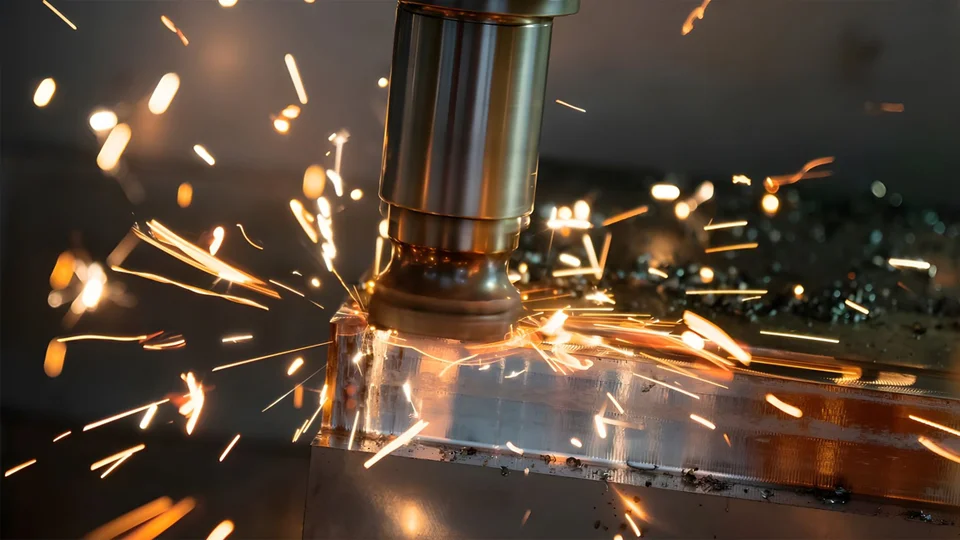
No process is always better than the others. Casting is usually preferred when shape complexity and material efficiency matter. Forging is preferred when mechanical strength is the top priority. Machining is preferred when accuracy, fit, and surface quality are critical. In many industrial projects, the best result comes from combining these processes rather than choosing only one.
How to Choose the Right Casting Method
Choosing the right casting method depends on the part’s size, material, geometry, tolerance, production volume, and cost target. A good casting decision is not based on one factor alone. It should balance manufacturability, performance, finishing requirements, and the total production cost.
Part Size and Weight
Part size is one of the first factors to consider. Large and heavy parts are often better suited to sand casting because the mold can be made for bigger geometries without extremely high tooling cost.
Smaller parts with fine details may be more suitable for investment casting, die casting, or other precision casting methods. The goal is to match the casting method with the physical scale and handling requirements of the component.
Shape Complexity
Complex shapes need a casting method that can reproduce details accurately. Parts with internal cavities, curved surfaces, thin walls, ribs, or difficult external features require careful mold and process selection.
If the shape is very complex but the production volume is not high, investment casting or sand casting may be practical. If the part is complex and produced in large quantities, die casting may be more efficient when the material and design are suitable.
Material Type
Not every material works equally well with every casting method. Cast iron and steel are common in sand casting, while aluminum, zinc, and magnesium alloys are widely used in die casting and permanent mold casting.
Material choice should consider melting behavior, fluidity, shrinkage, strength, corrosion resistance, weight, and machinability. The selected casting method must support both the material and the final performance requirement.
Production Volume
Production quantity strongly affects cost. For prototypes, repair parts, or small batches, a process with lower tooling cost may be better, even if the unit cost is higher.
For high-volume production, a method with expensive tooling but faster cycle time and better repeatability can be more economical. This is why die casting often makes sense for large production runs, while sand casting remains useful for flexible or lower-volume projects.
Required Tolerance and Surface Finish
Casting can form the basic shape, but not every method can meet tight tolerance or smooth surface requirements directly. If the part needs precise holes, flat sealing faces, bearing seats, threaded features, or close assembly fits, secondary machining may be necessary.
Investment casting and die casting generally offer better surface quality than sand casting, but final precision still depends on the part design and process control. For critical dimensions, casting should be planned together with CNC machining allowance.
Mechanical Performance
The casting method must support the part’s strength, wear resistance, heat resistance, pressure resistance, or fatigue performance. Parts used under heavy load or severe service conditions require more attention to internal soundness and material consistency.
For these components, engineers should consider wall thickness, solidification behavior, heat treatment, and inspection requirements. The best method is the one that can produce not only the right shape, but also the required working performance.
Cost and Lead Time
Cost includes more than the casting price. It also includes mold cost, material cost, scrap rate, finishing, machining, inspection, packaging, and delivery time.
A cheaper casting method may become expensive if it requires too much rework or machining. A higher-cost method may be better if it reduces defects, improves consistency, and shortens the total production route. The right choice should be based on total manufacturing cost, not only the initial quotation.
Conclusion
For thousands of years, the elemental act of shaping molten metal has driven human progress, and today, casting remains the irreplaceable beating heart of modern global manufacturing. From a technical standpoint, mastering this foundational process—understanding the transformation from liquid to solid, selecting the appropriate method like sand or investment casting, and balancing material dynamics to prevent inherent defects—empowers manufacturers to produce highly complex geometries at scale while maximizing cost efficiency.
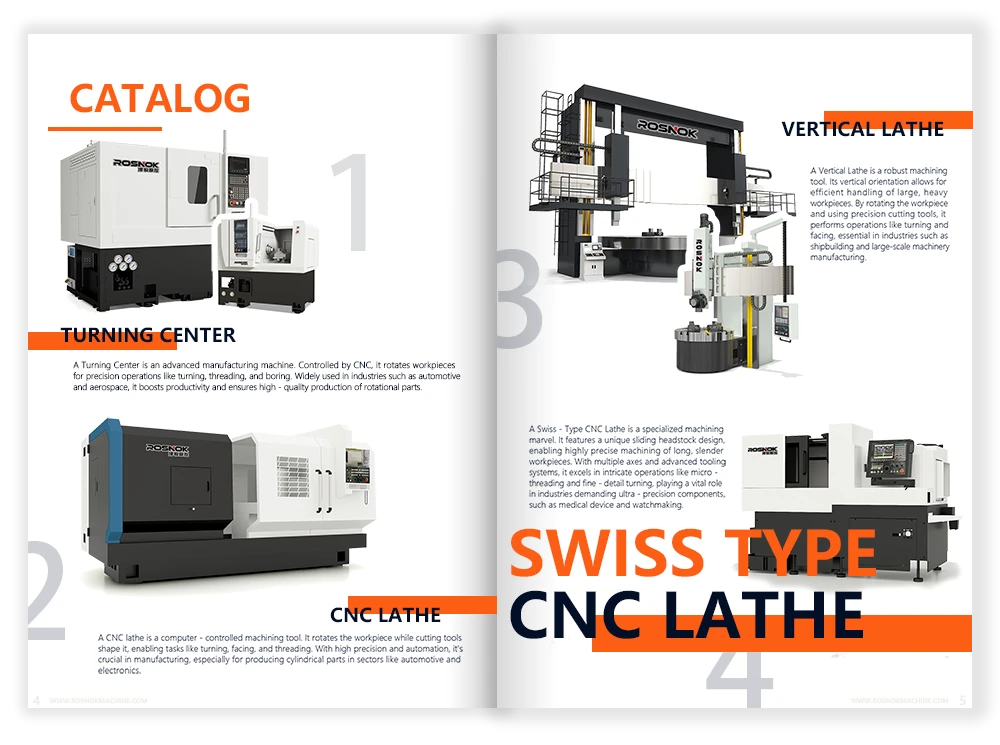
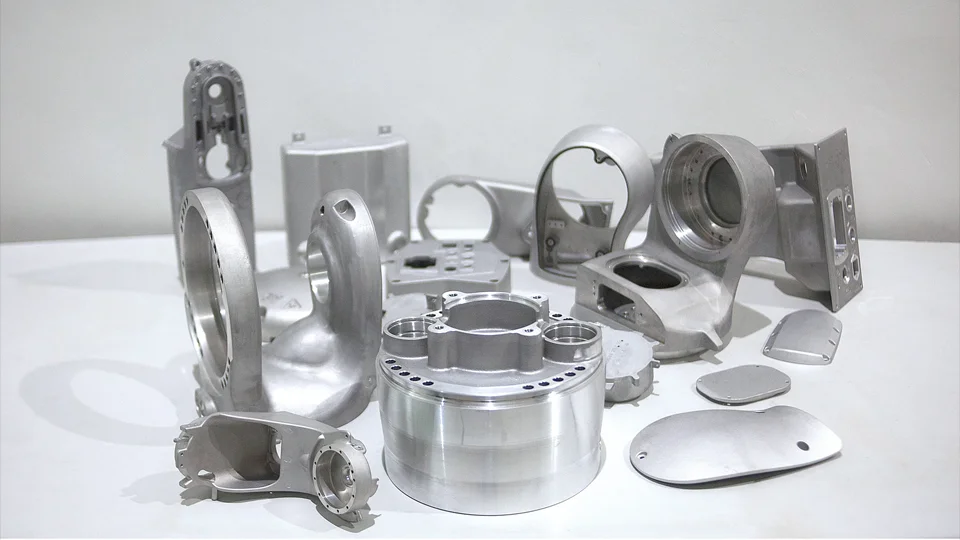
For companies that use cast parts in real production, casting is often only the beginning of the manufacturing route. After the part is formed, precision machining may still be required to create critical precision features and meet final assembly standards. This is where Rosnok supports manufacturers with reliable CNC lathes, machining centers, milling machines, vertical lathes, and other metalworking solutions designed to turn cast blanks into finished, high-performance components.