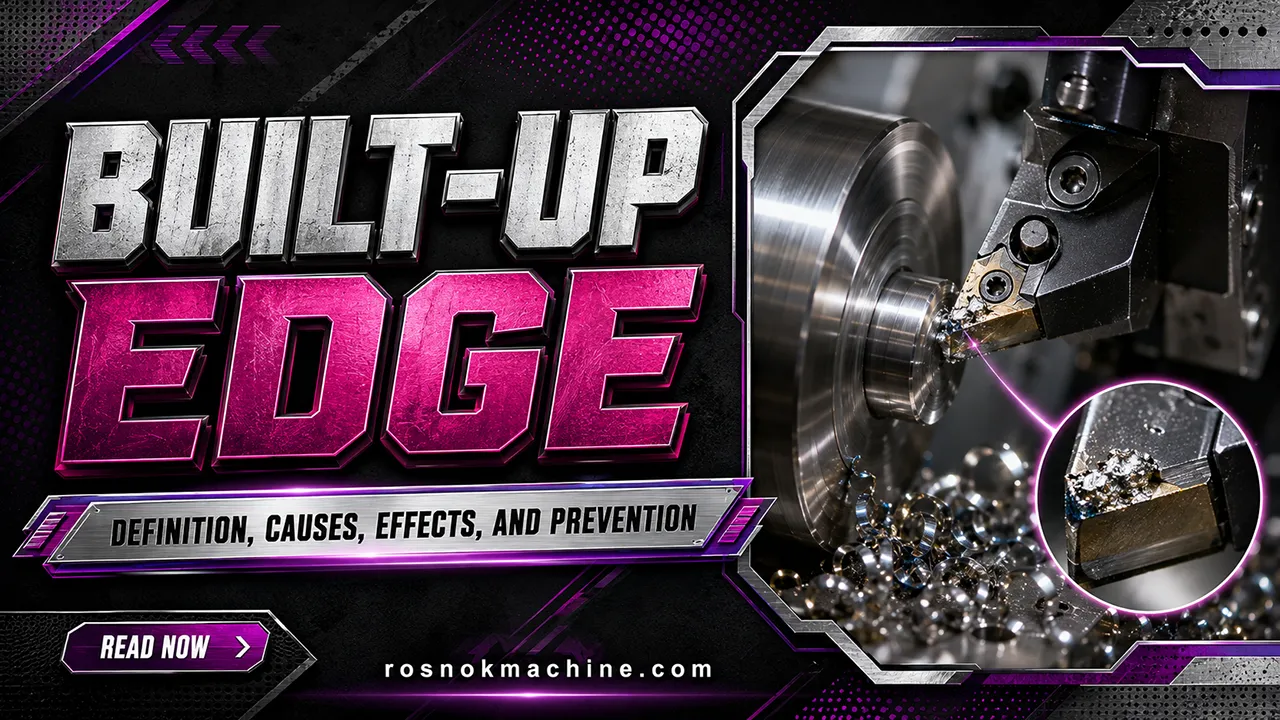
In CNC turning, milling, drilling, and other metal cutting operations, built-up edge can directly affect surface finish, dimensional accuracy, chip control, and tool life. A small buildup on the cutting edge may cause rough surfaces, burrs, vibration, unpredictable cutting forces, or premature insert failure. For manufacturers, understanding built-up edge is important because it often appears in the everyday machining of steel, aluminum, stainless steel, and other ductile materials.
This guide explores the fundamental mechanics of built-up edge, including its root causes, its harmful effects on machining quality, and the most effective operational strategies to reduce or prevent it.
What Is Built-Up Edge?
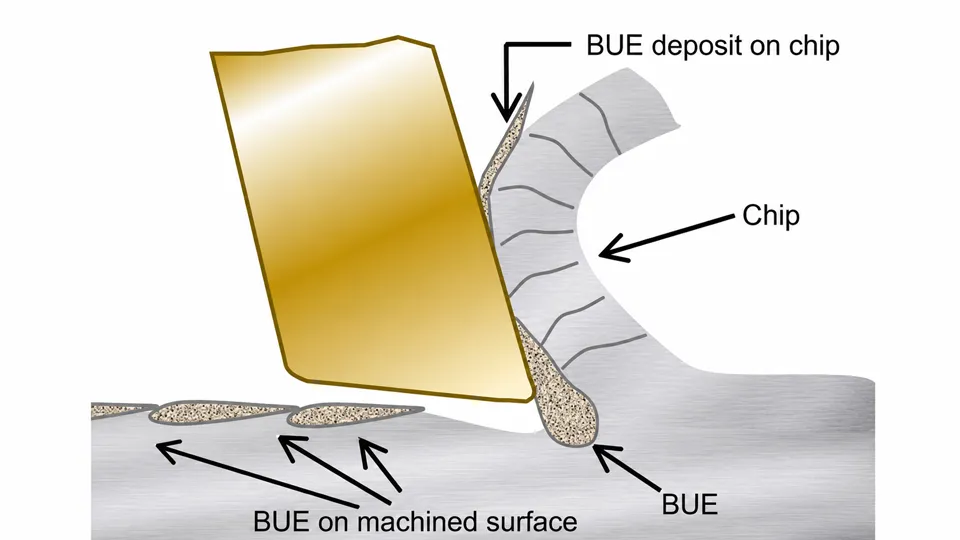
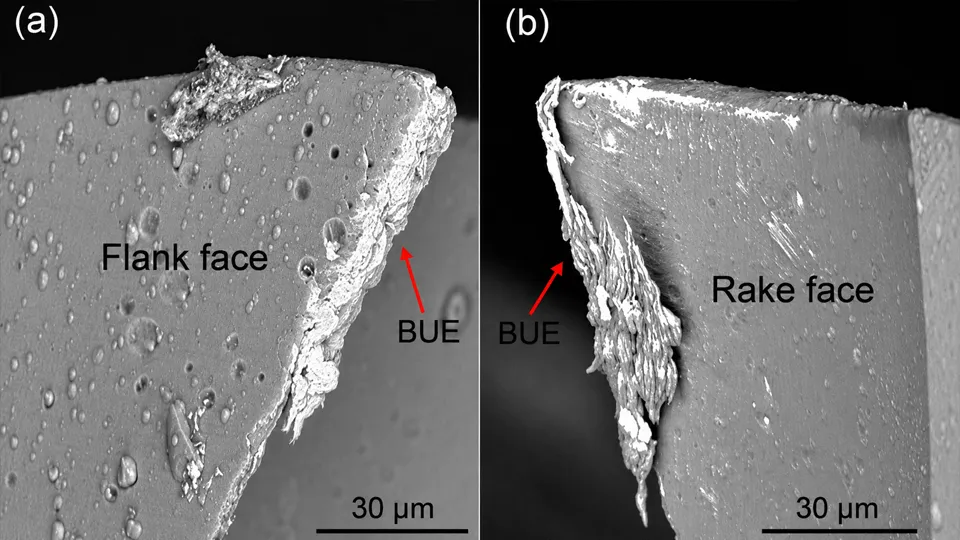
Built-up edge (BUE) is a prevalent phenomenon in metal machining where layers of the workpiece material physically adhere to and accumulate on the tool’s rake face and cutting edge.
It is crucial to understand that BUE is neither a normal metal chip nor a standard form of tool wear. Rather than material flowing smoothly away from the cutting zone, the metal pressure-welds itself to the insert, creating a temporary, highly hardened “false edge.”
Once formed, this false edge essentially takes over the cutting action. It directly alters the tool’s original geometry, changing the designed cutting angle, the sharpness of the edge, and the overall cutting dynamics between the tool and the workpiece.
Furthermore, unlike typical tool wear—which is a gradual and predictable degradation—built-up edge is highly erratic. It operates in a continuous, dynamic cycle: the material forms, grows larger under cutting pressure, becomes mechanically unstable, and eventually breaks off. This cyclical nature is what makes BUE a unique and particularly frustrating challenge in CNC cutting operations.
How Does Built-Up Edge Form During Machining?
The formation of built-up edge is not a random occurrence; it is a specific sequence of thermo-mechanical events that take place at the tool-chip interface. Understanding this process requires looking at the extreme physical environment created during metal cutting.
High Pressure Between Tool and Workpiece
During cutting, the tool does not simply slice the metal like a knife through soft material. It compresses and shears the workpiece material at very high contact pressure.
At the rake face, the newly formed chip is forced to slide across the tool surface. If the pressure is high enough, small portions of the workpiece material can become trapped against the tool instead of moving away with the chip.
This is the starting point of built-up edge formation.
Heat and Friction at the Cutting Zone
The cutting zone generates intense friction. The chip rubs against the rake face, while the cutting edge continuously deforms the workpiece material.
This friction creates heat. Under elevated temperature, ductile metals become easier to deform and more likely to adhere to the tool surface. If lubrication is insufficient, the friction becomes stronger, making adhesion more likely.
At this stage, the attached material begins to behave less like a loose chip and more like a welded layer on the tool.
Workpiece Material Adhesion
Built-up edge is closely related to the adhesive behavior of the workpiece material. Soft and ductile metals are more likely to smear, deform, and bond to the cutting tool under pressure.
Instead of separating cleanly, part of the material sticks to the rake face or edge area. As cutting continues, more material may attach to the same location, increasing the size of the buildup.
This is why BUE is often seen when machining materials such as aluminum, mild steel, stainless steel, copper alloys, and other ductile metals.
Repeated Growth and Break-Off
Built-up edge does not usually remain stable. It grows as more material adheres to the tool, but the cutting force also becomes more unstable as the buildup increases.
Eventually, the accumulated material breaks away. Some of it may leave with the chip, while some may be dragged across the machined surface.
After that, the same process can begin again: adhesion, growth, instability, and break-off. This repeated cycle is the basic formation mechanism of built-up edge during machining.
Main Causes of Built-Up Edge
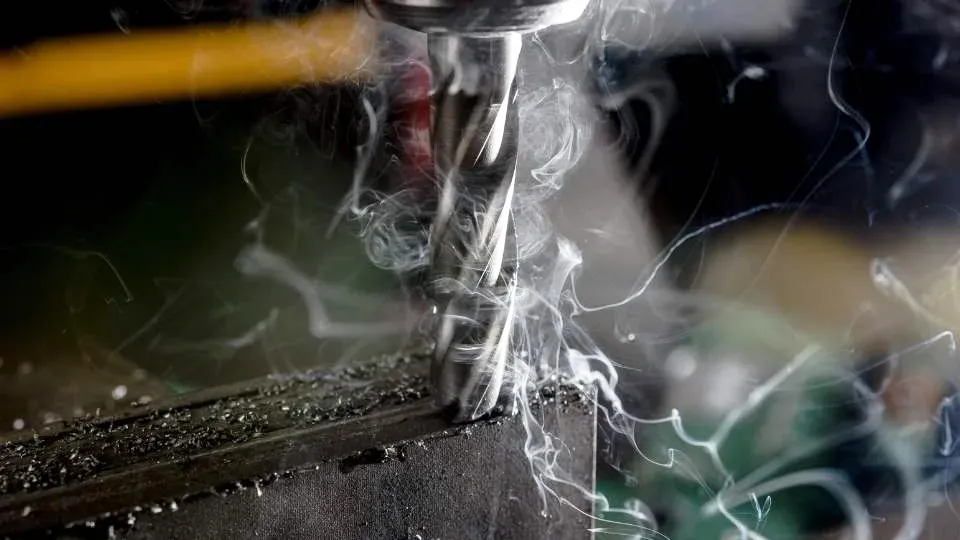
Built-up edge is not caused by one single factor. It usually appears when cutting conditions make the workpiece material more likely to stick, smear, or weld onto the tool surface. The most common causes are low cutting speed, unstable feed, poor lubrication, unsuitable tool geometry, improper tool material, and insufficient machining rigidity.
Low Cutting Speed
Low cutting speed is one of the most common causes of built-up edge. When the cutting speed is too low, the chip may not flow smoothly across the rake face. Instead, it stays in contact with the tool surface for a longer time, increasing the chance of adhesion.
This is why BUE often appears during low-speed or medium-speed cutting of ductile metals. In many cases, properly increasing the cutting speed helps the chip move away faster and reduces the time available for material to weld onto the tool.
Incorrect Feed Rate
Feed rate also affects built-up edge formation. If the feed is too light, the tool may rub more than it cuts, creating friction and material smearing near the cutting edge. If the feed is too heavy, cutting pressure rises sharply, which can also encourage material adhesion.
The goal is not simply to reduce feed. The correct feed rate should create a stable chip thickness and a consistent cutting load. Once the chip formation becomes unstable, the risk of built-up edge increases.
Inadequate Coolant or Lubrication
Poor coolant application can make built-up edge worse. Coolant helps control heat, while lubrication reduces friction between the chip and the tool surface.
If the coolant does not reach the cutting zone effectively, the rake face may become hot and sticky. This is especially problematic when machining aluminum, stainless steel, low carbon steel, and other materials that tend to adhere to the cutting edge.
Wrong Tool Geometry
Tool geometry has a direct influence on chip flow. A dull edge, unsuitable rake angle, poor chipbreaker design, or incorrect nose radius can increase cutting resistance and friction.
When the tool does not shear the material cleanly, the workpiece material is more likely to be squeezed and smeared against the cutting edge. This creates favorable conditions for built-up edge formation.
Poor Tool Coating or Tool Material
Some tool surfaces resist adhesion better than others. If the tool coating has a high friction coefficient or is not suitable for the workpiece material, chips may drag across the rake face instead of flowing smoothly.
For example, machining aluminum often requires a sharp tool with a low-adhesion surface. For steel or stainless steel, the tool material and coating must match the cutting temperature, chip load, and surface finish requirement.
Machine Tool Rigidity Problems
Built-up edge can also be encouraged by unstable machining conditions. Weak clamping, spindle runout, poor machine rigidity, or vibration can cause the cutting load to fluctuate.
When the tool does not maintain steady contact with the workpiece, chip thickness changes continuously. This unstable cutting condition increases friction, pressure variation, and material adhesion, making built-up edge more likely to form.
Materials That Are Prone to Built-Up Edge
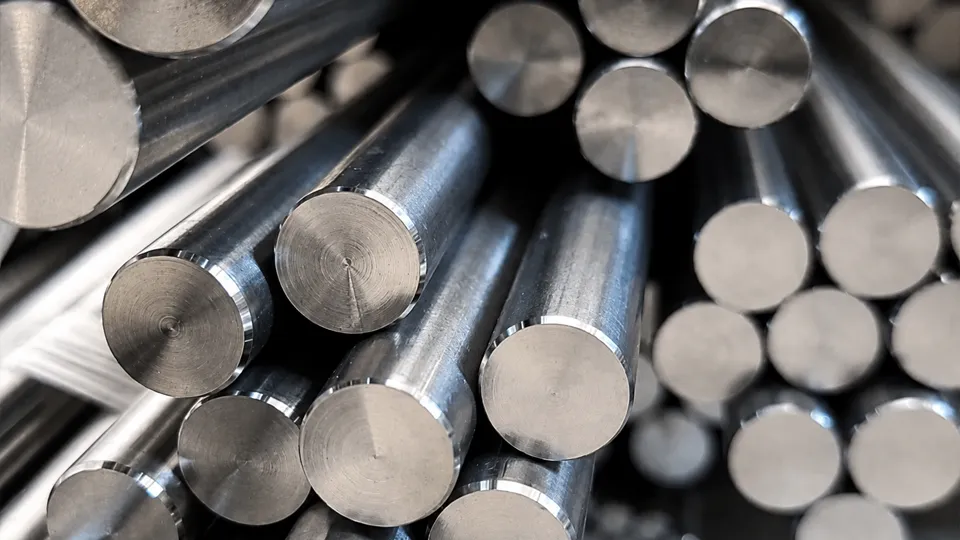
Built-up edge is more common when machining materials that are ductile, sticky, or difficult to separate cleanly from the tool surface. These materials tend to deform under pressure instead of breaking away smoothly, which increases the chance of adhesion at the cutting edge.
Aluminum and Aluminum Alloys
Aluminum is one of the most common materials associated with built-up edge. It is soft, ductile, and easy to smear during cutting, especially when the tool is not sharp enough or lubrication is insufficient.
Once aluminum begins to adhere to the cutting edge, it can quickly grow into a visible buildup. This may affect surface finish, increase burr formation, and make chip control less stable.
Low Carbon Steel and Mild Steel
Low carbon steel and mild steel are also prone to built-up edge because they have good plasticity. During machining, the material can stretch and deform before separating from the workpiece.
At low or medium cutting speeds, this plastic flow increases contact between the chip and the rake face. If the cutting condition is not stable, part of the steel may weld onto the tool edge and form BUE.
Stainless Steel
Stainless steel can create built-up edge because of its toughness, poor thermal conductivity, and tendency to work harden. Heat often concentrates near the cutting zone, while the material resists clean shearing.
This makes stainless steel more likely to stick to the tool under pressure. If the tool becomes dull or coolant is poorly applied, BUE can appear together with rapid tool wear and unstable surface quality.
Copper and Soft Ductile Metals
Copper and other soft ductile metals can also produce built-up edge. These materials are often sticky during cutting and may form long, continuous chips.
If the tool geometry is not suitable, the material may smear across the rake face instead of flowing away cleanly. Sharp tools, proper lubrication, and stable chip evacuation are especially important when machining these materials.
Effects of Built-Up Edge on Machining Quality
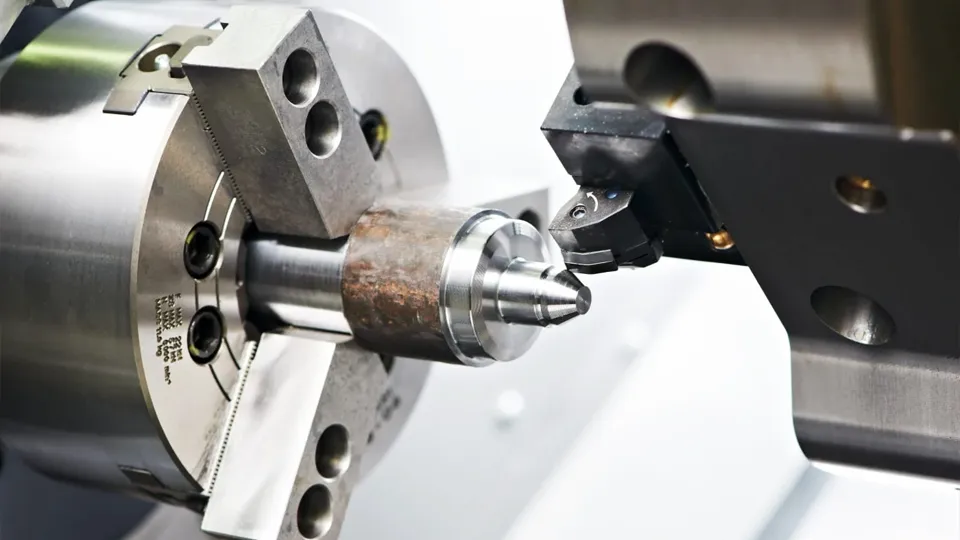
While a microscopic, stable built-up edge can occasionally protect the tool during certain roughing operations, in the vast majority of precise CNC machining, its effects are highly destructive. The cyclical formation and breakdown of BUE severely compromise both the workpiece and the cutting tool.
Poor Surface Finish
A built-up edge makes the cutting edge irregular. Instead of producing a clean and consistent cut, the tool may tear or drag material across the machined surface.
When the buildup breaks off, small fragments may also scratch the workpiece surface. This often results in rougher texture, visible tool marks, tearing, or unstable surface roughness.
Dimensional Inaccuracy
BUE can change the effective position and shape of the cutting edge. Even if the CNC program is correct, the actual material removal may no longer match the programmed tool path.
This is especially problematic in finishing operations, where small dimensional changes can cause parts to go out of tolerance.
Burr Formation
Because built-up edge disrupts clean shearing, the material may not separate neatly from the workpiece. Instead, it can bend, smear, or tear near edges and exits.
This increases the chance of burrs, especially on soft metals, thin walls, drilled holes, grooves, and part edges.
Tool Wear and Tool Chipping
Built-up edge can temporarily protect part of the tool surface, but this effect is unstable and unreliable. When the buildup breaks off, it may pull away tool coating or even small pieces of the cutting edge.
Over time, this repeated adhesion and break-off cycle can accelerate flank wear, crater wear, edge chipping, or premature insert failure.
Unstable Chip Control
The false edge changes how the chip flows over the rake face. Chip thickness, curl direction, and chip-breaking behavior may become inconsistent.
This can cause long chips, sticky chips, poor chip evacuation, or chip clogging around the cutting zone.
Vibration and Cutting Force Fluctuation
Built-up edge forms and breaks unpredictably, so cutting forces may rise and drop during machining. This unstable load can produce vibration, noise, and inconsistent tool marks.
In severe cases, it may also reduce process stability and make it harder to maintain repeatable machining quality across a production batch.
How to Identify Built-Up Edge
Diagnosing BUE early on the shop floor is critical to preventing scrapped parts and broken tools. Because it acts differently than normal tool wear, operators can identify built-up edge by monitoring four key areas during the machining process.
Visual Signs on the Cutting Tool
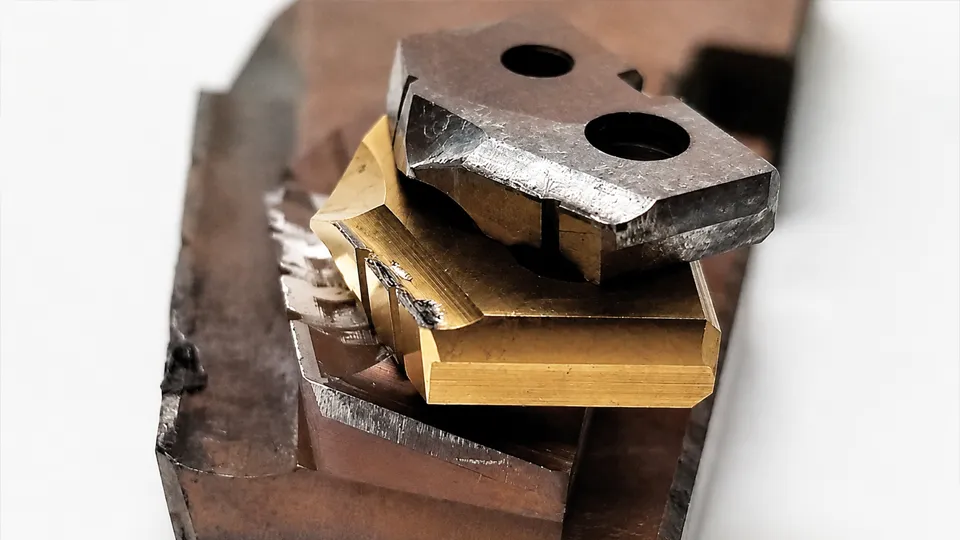
The most direct sign is material stuck near the cutting edge or on the rake face. It may appear as a small lump, layer, or shiny deposit welded onto the insert.
The color often matches the workpiece material. For example, aluminum buildup may look bright and silver, while steel buildup may appear gray or dark metallic. Under magnification, the cutting edge may look uneven instead of clean and sharp.
Surface Defects on the Workpiece
Built-up edge often leaves unstable marks on the machined surface. The surface may look rough, torn, scratched, or smeared, even when the cutting parameters seem normal.
The key sign is inconsistency. One area may look acceptable, while another area shows tearing or rough tool marks. This happens because the false edge keeps changing during cutting.
Changes in Chip Shape
BUE can disturb normal chip flow. Chips may become sticky, rough, curled irregularly, or difficult to break.
In some cases, small fragments of built-up material may separate with the chip. If chip shape changes suddenly without a clear change in program, material, or setup, built-up edge should be considered.
Abnormal Cutting Sound or Vibration
Because built-up edge changes the cutting force, the machining sound may become unstable. Operators may hear intermittent noise, rubbing, or slight knocking during cutting.
Vibration can also increase when the buildup grows and breaks away repeatedly. This does not always mean BUE is the only cause, but when vibration appears together with rough surfaces and material deposits on the tool, BUE is a likely factor.
How to Prevent Built-Up Edge
Eliminating built-up edge requires breaking the thermo-mechanical conditions that cause cold welding. By systematically optimizing your machining parameters, tooling, and environment, BUE can be effectively prevented.
Increase Cutting Speed Properly
The most effective and often counterintuitive solution for BUE is to run the spindle faster. Increasing the cutting speed (Surface Feet Per Minute, SFM) raises the temperature at the cutting zone beyond the critical “cold welding” window. This added heat softens the chip just enough to let it flow smoothly over the rake face. However, this increase must remain within the tool manufacturer’s recommended limits to avoid rapid thermal wear.
Use the Right Feed Rate and Depth of Cut
Cutting parameters must ensure actual shearing, not rubbing. A feed rate that is too light forces the insert to rub against the workpiece, generating massive friction without removing material. Conversely, an excessive depth of cut spikes contact pressure. Finding the optimal middle ground creates a chip thick enough to absorb and carry heat away from the cutting edge without overloading it.
Improve Coolant and Lubrication
For sticky metals like aluminum or stainless steel, reducing friction is just as critical as cooling. Employing high-pressure coolant directed precisely at the tool-chip interface helps physically break the thermal boundary layer. Furthermore, ensuring the cutting fluid has a rich concentration (higher lubricity) drastically lowers the friction coefficient, making it much harder for the material to adhere to the insert.
Choose Sharp Tools with Suitable Geometry
Dull edges force material to extrude rather than shear cleanly. Utilizing inserts with a sharp, precision-ground cutting edge and a highly positive rake angle significantly reduces cutting resistance. Coupling this with the correct chip breaker geometry ensures that the chip curls and evacuates immediately, leaving no time for the material to stagnate and bond.
Select Proper Tool Coatings
Tool coatings act as an essential physical and chemical barrier. When machining non-ferrous, gummy metals like aluminum, highly polished uncoated carbide or Diamond-Like Carbon (DLC) coatings provide an ultra-smooth surface that resists adhesion. For steels and stainless alloys, selecting the appropriate PVD coatings (such as TiAlN) provides the necessary lubricity and thermal isolation to keep the chip moving.
Improve Workholding and Machine Rigidity
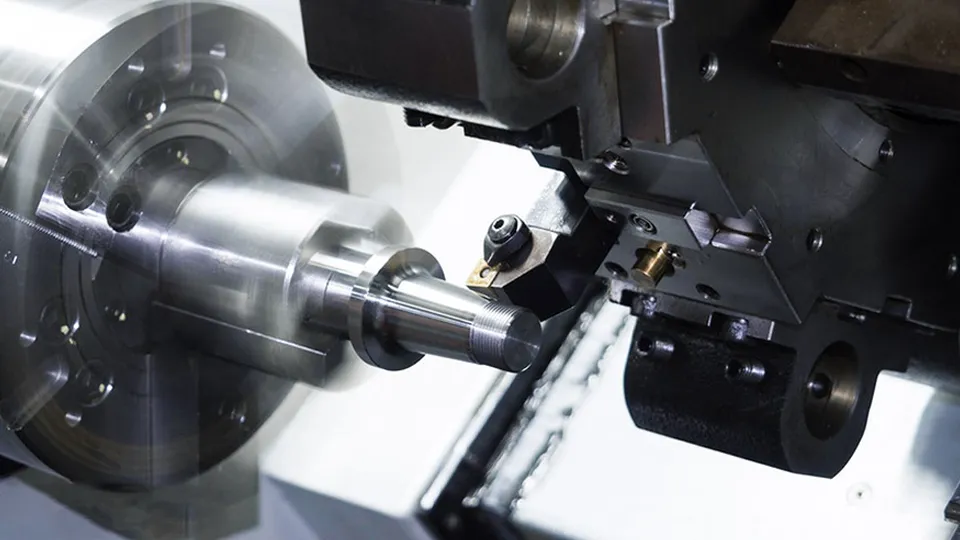
Micro-vibrations disrupt the smooth shearing process and actively encourage material build-up. Maximizing the rigidity of your workholding fixtures is non-negotiable to prevent chatter. Coupling secure workpiece clamping with a highly rigid CNC machining center or lathe ensures a stable, consistent cutting environment, which is fundamental to maintaining continuous chip flow.
Use Chip Evacuation Correctly
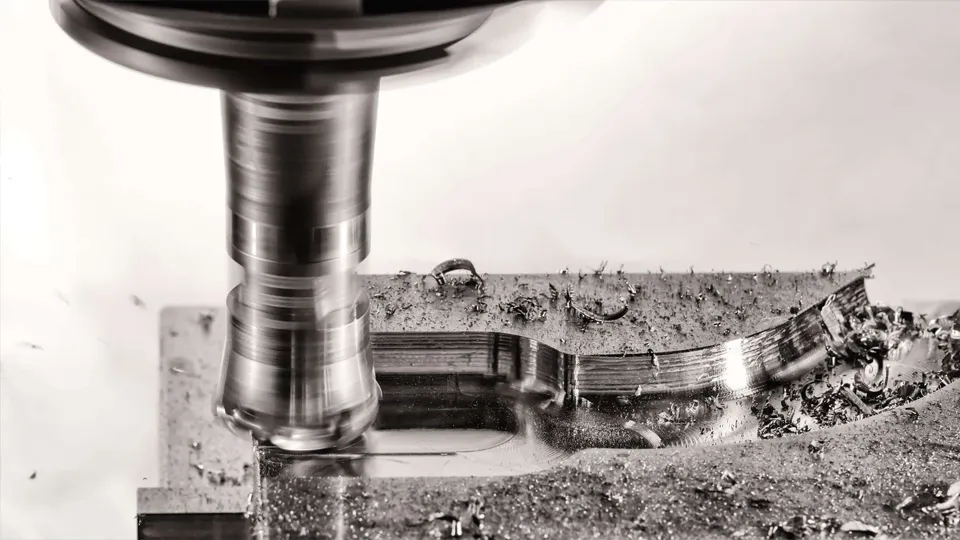
If evacuated chips fall back into the cutting path, they will be recut by the tool. Chip recutting instantly generates massive pressure and heat spikes that trigger BUE. In operations like deep-hole drilling or pocket milling, utilizing through-tool coolant (TSC) or implementing peck drilling cycles is mandatory to actively flush chips completely out of the machining envelope.
Common Mistakes When Solving Built-Up Edge
Many operators attempt to fix BUE using instinctual troubleshooting methods that actually exacerbate the problem. Avoiding these common shop-floor pitfalls is essential for maintaining long-term process stability.
Only Replacing the Tool Without Adjusting Parameters
Swapping a failed insert for a brand-new one only addresses the symptom, not the root cause. If the cutting speed, feed rate, and workholding conditions remain completely unchanged, the exact same thermo-mechanical environment persists. The new tool will inevitably develop a built-up edge and fail just as quickly as the previous one.
Using Too Low Cutting Speed for Safety
When operators hear chatter or see poor surface finishes, their first instinct is often to slow down the spindle to “protect” the cutting edge. For BUE, this is a critical error. Lowering the surface speed drops the cutting temperature directly into the localized “danger zone” where metal plasticity and cold welding thrive, massively accelerating material adhesion.
Ignoring Coolant Direction
Simply turning on the flood coolant is not a guaranteed fix. If the nozzle aims at the back of the toolholder or merely splashes the general workpiece area, it fails to reach the critical tool-chip interface. Without targeted, high-pressure flow breaking the thermal boundary directly at the cutting edge, friction remains high and BUE continues to form unabated.
Treating Built-Up Edge as Normal Tool Wear
Misdiagnosing BUE as standard flank wear leads to completely incorrect corrective actions. For instance, if an operator misinterprets BUE-induced edge chipping as poor wear resistance, they might switch to a harder, more brittle carbide grade. This harder insert will still suffer from material adhesion but will fracture much faster under the unstable cutting forces.
Built-Up Edge Troubleshooting Checklist
This checklist helps connect visible machining problems with possible built-up edge causes and practical correction methods. It should be used together with tool inspection, chip observation, and parameter review.
| Problem Sign | Possible Built-Up Edge Cause | Practical Solution |
|---|---|---|
| Rough or torn surface | Built-up edge breaks off and scratches the workpiece | Increase cutting speed properly, improve lubrication, use a sharper tool |
| Unstable surface finish | False edge repeatedly forms and breaks during cutting | Check tool geometry, stabilize feed rate, inspect coolant delivery |
| Dimensional drift | BUE changes the effective cutting edge position | Inspect the tool tip, remove buildup, optimize cutting parameters |
| Burrs on edges or holes | Material is smeared instead of cleanly sheared | Use a sharper cutting edge, adjust feed, improve chip control |
| Sticky or irregular chips | Poor chip flow across the rake face | Improve coolant direction, use suitable chipbreaker geometry |
| Premature insert wear | BUE pulls coating or edge material away when it breaks off | Select a more suitable tool coating, reduce vibration, improve lubrication |
| Chatter or unstable cutting sound | Cutting force changes as BUE grows and breaks | Check workholding, tool overhang, spindle stability, and feed consistency |
| Built-up material visible on insert | Workpiece material is adhering to the rake face or edge | Stop and inspect the tool, clean or replace the insert, adjust speed and lubrication |
Built-up edge troubleshooting should not rely on one symptom alone. A rough surface may come from vibration, tool wear, incorrect parameters, or BUE. The most reliable approach is to confirm several signs together: visible material on the tool, unstable chip flow, changing surface finish, and cutting force fluctuation.
Conclusion
Dealing with built-up edge can often feel like a frustrating, losing battle against the workpiece material itself, where unpredictable tool failures and ruined surface finishes sabotage even the most carefully planned production runs. However, this phenomenon is not an unavoidable curse. By recognizing BUE as a specific thermo-mechanical reaction, machinists can systematically eliminate it. The ultimate solution lies in breaking the cold-welding cycle: decisively pushing cutting speeds past the critical temperature zone, utilizing targeted high-pressure lubrication to reduce friction, and deploying sharp, properly coated tool geometries to ensure continuous chip evacuation.
Yet, even the most perfectly calculated cutting parameters and premium tools will fail if the underlying machining environment is unstable. Micro-vibrations and chatter act as the primary catalysts for material adhesion, meaning the structural foundation of the equipment is non-negotiable. For manufacturing facilities striving to eradicate these machining inconsistencies, partnering with a specialized CNC machine tool manufacturer like Rosnok provides the necessary mechanical advantage. Rosnok engineers highly rigid machining centers and turning lathes designed specifically to absorb vibrations and maintain absolute spindle stability, ensuring that every optimized parameter translates directly into flawless surface finishes and extended tool life.