Thread milling is a high-precision CNC threading method offering greater control, versatility, and tool life compared to traditional tapping. This article explores how thread milling works, tool types, entry strategies, programming tips, and common mistakes — helping machinists cut better threads with confidence.
Are you tired of broken taps halting your production or struggling to achieve high-precision threads in tough materials? There’s a smarter solution: Thread Milling — a modern technique that lets you use a single tool to machine multiple thread sizes with minimal risk of tool breakage. Compared to tapping or turning, it offers better chip control, higher accuracy, and unmatched flexibility. If you’re ready to improve your threading operations, keep reading — this guide will explain what thread milling is and how it works, in the clearest way possible.
What Is Thread Milling?
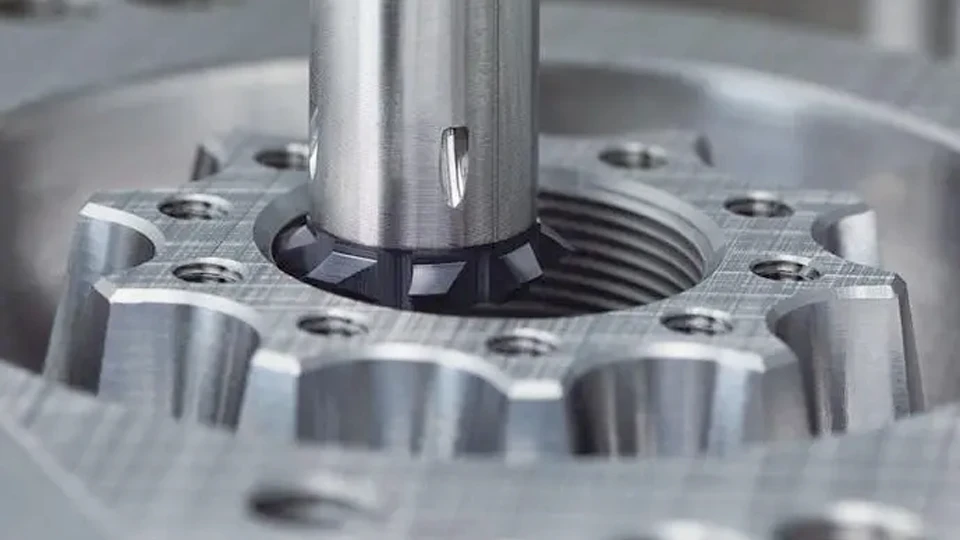
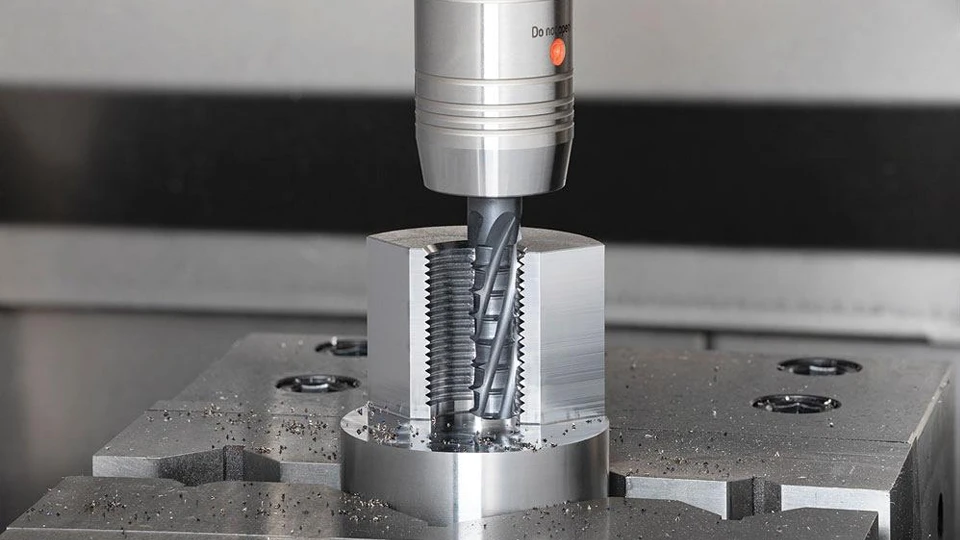
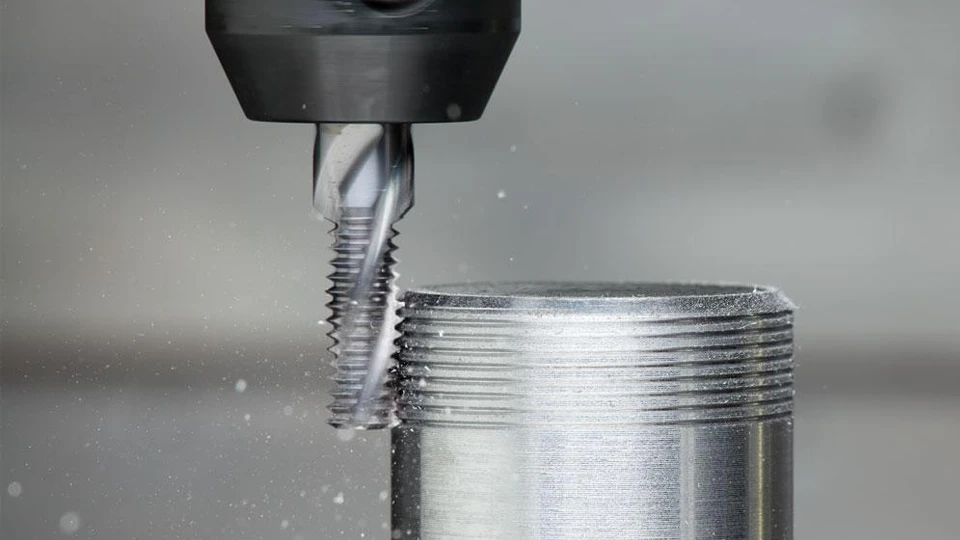
Thread milling is a modern CNC machining method used to create precise internal and external threads by interpolating the tool in a helical path around the hole. Unlike traditional tapping or thread turning, which rely on a rigid, dedicated tool for each thread size, thread milling uses a rotating cutter that gradually forms the thread by removing material along a spiral trajectory.
This process is performed on CNC machining centers or milling machines, making it a flexible solution in both high-mix and high-volume production. The same tool can be used to produce different thread sizes, both metric and imperial, with simple changes in the CNC program. This greatly reduces tool inventory and increases versatility on the shop floor.
Another key benefit is that thread milling generates less cutting force compared to tapping, which significantly reduces the risk of tool breakage — especially important when working with hard materials or small-diameter holes. This method also performs reliably in demanding conditions such as deep hole thread milling, where chip evacuation and tool deflection must be tightly controlled. When properly set up with the right tool and cutting strategy, it can offer excellent results even in deeper holes that challenge traditional tapping methods.
Whether you’re working with aluminum, steel, titanium, or hardened alloys, thread milling offers reliable results with high surface quality and dimensional accuracy. Since the thread is formed through controlled helical movement, it also allows for precise control over thread depth and pitch.
For manufacturers seeking a high-performance alternative to tapping, CNC thread milling offers a scalable, programmable, and highly accurate solution that meets the demands of modern precision machining.
How Thread Milling Works (Step-by-Step Process)
So, how does thread milling work, exactly?
Thread milling uses a CNC-controlled tool that follows a helical path to gradually form threads in the material. Instead of cutting the entire thread profile in one go (like tapping), the tool machines the thread in a continuous spiral, layer by layer. This approach reduces cutting pressure, increases precision, and allows for better control in both shallow and deep threads.
The thread milling process usually follows these core steps:
Pilot Hole Drilling Before thread milling begins, a properly sized pilot hole must be drilled. This hole is slightly larger than the thread’s minor diameter to allow the tool to move without interference. Accuracy here is critical — the thread will only be as good as the hole it’s cut into.
Tool Entry (Z-axis Positioning) The thread mill approaches the start point, usually above the hole, then plunges along the Z-axis to the designated thread depth. Some applications use a ramped entry to reduce tool wear.
Helical Interpolation This is the heart of the process. The machine simultaneously moves in X, Y, and Z axes, tracing a helical (spiral) path. The cutter rotates and follows this path, forming the thread profile while descending gradually. This is called helical thread milling.
Multi-pass Strategy (if needed) For larger threads or harder materials, the cut can be broken into multiple passes — roughing and finishing — to reduce tool load and improve surface finish.
Tool Exit & Retraction Once the desired thread depth is reached, the tool spirals out and retracts safely above the hole. If chip removal is critical (like in blind holes), a pause or coolant flush can be added between passes.
This process can be adapted to create internal or external threads, and it’s compatible with a wide range of thread standards (metric, UNC, UNF, etc.). Since the cutter does not require synchronization with spindle threads like tapping, thread milling can even be used to repair damaged threads or make custom thread forms with programmable pitch.
Additionally, because the motion is controlled entirely by the CNC, the same tool can be reused across different diameters simply by adjusting the code. That’s a major reason why CNC thread milling is gaining popularity across industries that demand precision, flexibility, and low tooling costs.
Thread Milling vs Tapping vs Thread Turning
When it comes to cutting threads in metal parts, manufacturers typically choose between thread milling, tapping, or thread turning. While each method has its place on the shop floor, understanding the strengths and limitations of each helps you pick the right tool for the job.
Thread Milling
Thread milling uses a rotating cutting tool that follows a CNC-controlled helical path to form threads. This method offers unmatched flexibility — the same tool can create multiple thread sizes simply by modifying the CNC program. It produces clean threads with better surface finish, allows for greater control over pitch and depth, and dramatically reduces the risk of tool breakage. Plus, it’s compatible with internal and external threads, blind holes, and tough materials like stainless steel or titanium.
However, thread milling does require a CNC machine capable of helical interpolation, and it’s typically slower than tapping in high-volume environments. That said, the longer tool life, fewer tool changes, and versatility often offset the slower cycle time.
Tapping
Tapping is a traditional method that uses a fixed-form tool to cut internal threads in one plunge motion. It’s fast, simple, and widely used for high-volume production. If you’re making the same threaded hole repeatedly in soft or medium materials, tapping can be very efficient.
The downside? Each tap is specific to one thread size and pitch. Breakage is common in harder materials or when chip evacuation is poor, especially in blind holes. And if a tap breaks mid-operation, it can ruin the part completely. Unlike thread milling, tapping doesn’t allow for adjustments once the tool is selected.
Thread Turning
Thread turning uses a lathe to cut threads with a single-point tool, typically on the external surface of rotating parts. It’s ideal for large diameters, custom profiles, or parts that are already being turned. This method allows full control over thread shape and depth, especially for non-standard threads or large threads in heavy industries.
But thread turning is limited to round parts held on a lathe, and the setup can be time-consuming. For small or internal threads, or when switching between different thread sizes, it’s not nearly as efficient as CNC thread milling.
Summary Comparison
Feature
Thread Milling
Tapping
Thread Turning
Flexibility
✓ (1 tool, many sizes)
✗ (1 tool per size)
✓
Tool Life
Long
Short
Long
Breakage Risk
Low
High
Low
Accuracy
High
Medium
High
Material Suitability
Broad
Limited
Broad
Equipment
CNC Mill Required
Drill/Tap Machine
CNC Lathe
Internal Threads
✓
✓
(Limited)
External Threads
✓
✗
✓
Best for
Precision, small batches
High-speed repeat parts
Large parts, custom threads
As you can see, thread milling offers the highest flexibility and safety, especially in modern CNC machining environments where part variety, accuracy, and reliability matter. While tapping and turning still have value in specific contexts, thread milling continues to grow in popularity for good reasons.
Types of Thread Milling Tools
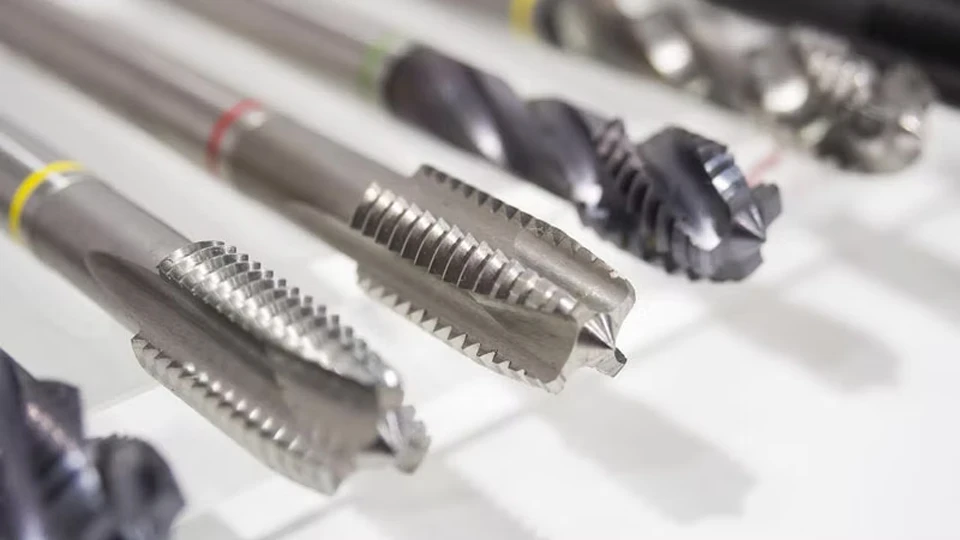
There isn’t just one type of tool for thread milling — in fact, the variety of tool designs is one of the reasons this process is so flexible. Choosing the right tool depends on the thread size, depth, material, and even whether the thread is internal or external.
Here are the most common types of thread milling tools, each with unique advantages:
1. Single-Point Thread Mills
This tool has a single cutting point and machines the thread form gradually, pass by pass. It’s highly versatile — one single-point tool can be used to cut different thread diameters and pitches, just by changing the program.
✓ Ideal for custom or non-standard threads
✓ Works well in tight spaces or small diameters
✗ Slower due to multiple passes
✓ Great for deep threads and repair work
2. Multi-Form (Full Profile) Thread Mills
These tools feature multiple teeth that match the full thread profile, allowing them to cut the thread in one or two passes. This dramatically increases speed and is perfect for production environments.
✓ High-speed threading for standard sizes
✗ Limited to specific pitches and profiles
✓ Excellent surface finish
(Limited) Not ideal for tight spaces or deep threads
3. Indexable Insert Thread Mills
These tools use replaceable carbide inserts, which makes them economical for large thread sizes or tough materials. The tool body stays the same; only the inserts need replacing.
✓ Cost-effective for high-volume production
✓ Suitable for large external threads
✓ Inserts can be optimized for specific materials
✗ Larger machine clearance required
✗ Not ideal for very small threads
4. Combination Thread Mills
These are hybrid tools that can drill, chamfer, and thread in a single operation. They’re a great choice for reducing tool changes and cycle time.
✓ Ideal for short threads with low to medium volume
✓ Reduces total machining time
✗ Limited flexibility in thread type
(Limited) Not suitable for all materials or depths
Flute Design: Straight, Helical, and Single Profile
In addition to tool structures, the flute geometry plays a critical role in chip evacuation and tool performance. The most common flute styles include:
Straight Flute: Best for general-purpose use and easy-to-machine materials. Less aggressive but stable.
Helical Flute: Ideal for high-speed milling and harder materials. The angled flutes help reduce cutting pressure and improve chip removal.
Single Profile: Focused on precision and torque control. Often slower but more adaptable to tight tolerances and hard materials.
Each flute style affects tool behavior, so consider it alongside tool type when selecting the best option for your application.
How to Choose the Right Thread Milling Tool
Selecting the ideal thread milling tool isn’t just about picking one off the shelf—it’s a strategic decision that directly impacts machining efficiency, surface finish, and overall tool life. Here’s a practical checklist to guide your selection:
1. Thread Type & Geometry
First, determine whether you’re cutting internal or external threads, and identify the thread standard (e.g., ISO, UN, NPT). The pitch, depth, and diameter of the thread will influence tool diameter and profile selection.
2. Workpiece Material
Harder materials like stainless steel or titanium require tools with advanced coatings (such as TiAlN) and robust geometries. Softer materials may allow for high-speed tools with helical flutes. Always align tool material and flute design to the workpiece.
For deep hole thread milling, single-profile tools offer better chip control and reduced risk of deflection. In tight or hard-to-reach spaces, smaller-diameter tools or long-reach shanks might be necessary.
4. Machine Capabilities
Check your CNC machine’s capabilities: spindle speed, tool changer size, and rigidity. Multi-form tools may reduce cycle time but require more machine torque; single-point tools are more forgiving for light-duty machines.
5. Production Volume
High-volume production favors indexable tools or multi-form cutters, which complete threads in fewer passes. For small batches or highly variable jobs, single-point cutters provide flexibility and lower tool inventory.
Why Thread Milling Outperforms Traditional Methods
While we’ve touched on some of these benefits in earlier sections, this chapter brings them together in one place — helping you clearly understand why thread milling is gaining popularity over tapping and turning.
Here are the core advantages:
1. One Tool for Multiple Thread Sizes
With traditional taps, you need a separate tool for each thread size and pitch. Thread milling uses one tool to cut different threads — simply by modifying the CNC program. This saves tool inventory, setup time, and cost, especially in job shops or high-mix environments.
2. Reduced Risk of Tool Breakage
Taps break — and when they do, especially in blind holes, parts are often ruined. Thread milling applies lower axial force and uses a controlled helical path, greatly reducing the chance of breakage. This is especially valuable for high-cost parts or hard materials like Inconel and titanium.
3. Superior Thread Accuracy and Surface Finish
Thread milling creates threads through interpolation, not deformation. This delivers tighter tolerances, better concentricity, and a cleaner finish. It’s a critical advantage in precision industries such as aerospace, medical, and automotive.
4. Better Chip Evacuation in Deep Holes
In tapping, chips often accumulate and jam — especially in blind or deep holes. Thread milling removes chips gradually and consistently, improving chip evacuation and reducing tool wear. It performs more reliably in deep hole thread milling scenarios.
5. Internal or External Threads — No Limitation
Thread milling easily handles both internal and external thread milling, giving engineers more design freedom. Tapping is limited to internal threads, and thread turning requires a lathe. With milling, you simplify setups and reduce tool changes.
6. Adaptable to Custom Threads and Repairs
Need to machine non-standard threads or fix damaged ones? With thread milling, you don’t need special taps or dies — just update the code. It’s perfect for custom machining, R&D, or low-volume production runs.
7. Works with Hard-to-Machine Materials
From hardened steels to exotic alloys, thread milling allows for better speed, control, and finish. With the right insert or coating, even titanium or stainless steel becomes manageable — making this method far more versatile than traditional threading.
Thread Milling Strategies & Programming Tips
Thread milling is not just a matter of tool selection — it’s a strategic process. From material type to hole depth, every decision affects thread quality, tool life, and machining efficiency. Below are the essential strategies and programming tips that separate efficient thread milling from trial-and-error operations.
1. Start with Workpiece Material and Thread Characteristics
Before selecting a tool or writing G-code, evaluate:
Material type: Steel, stainless, titanium, or aluminum all behave differently under milling loads. Harder materials may require lower feed rates and multiple passes.
Thread location: External vs internal threads dictate whether you can use indexable or solid tools.
Hole depth: For deep hole thread milling, choose tools with longer reach and plan for staged depth passes.
Thread pitch and tolerance: Fine-pitch threads require more precision in Z-step and interpolation path.
Blind vs through hole: Blind holes need extra care for chip evacuation and tool exit clearance.
Always match your tool choice and feed strategy to the real cutting environment — not just the thread size.
2. Select the Proper Entry Strategy
Entry into the cut affects both tool life and thread quality:
Helical entry is the most common and stable method. It allows a gradual ramp into the cut and distributes tool load evenly.
Ramp entry can be useful when machining very soft materials or when a wider lead-in area is available.
Plunge entry is generally discouraged — especially in hard materials — as it creates excessive tool shock.
In most CNC thread milling cases, use helical interpolation with a controlled lead-in radius.
3. Plan for Roughing and Finishing Passes
Don’t rely on a single-pass cut unless your material is soft and tolerances are loose.
Roughing pass: Remove most material, leaving 0.1–0.2 mm for finishing.
Finishing pass: A final full-depth pass cleans up thread form and improves surface quality.
Spring pass: Optional, but useful in hard materials or when threads deform slightly under cutting load.
Multiple passes also reduce vibration and help avoid tool breakage, especially in deep holes.
5. Programming Essentials: Thread Pitch, Feed, and Safety
When writing code manually or reviewing CAM output, keep in mind:
Z-axis feed = thread pitch per revolution (e.g., for a 1.5mm pitch, move Z–1.5mm per rotation)
Use climb milling (down-cutting) for better surface quality and tool life
Avoid full depth in one pass, especially in hard metals
Set appropriate entry clearance above hole to prevent tool dragging
Use G3 (CCW) for RH threads when using RH tool and CW spindle — watch spindle direction carefully
Thread pitch errors often come from miscalculated Z-feed or improper synchronization with circular interpolation.
Common Mistakes to Avoid When Thread Milling
Even experienced machinists can run into problems with thread milling — especially when dealing with exotic materials, deep holes, or custom thread profiles. Avoiding the following common mistakes will help you protect your tools, improve thread quality, and avoid costly scrap.
Mistake 1: Ignoring Workpiece Material and Hole Conditions
Jumping straight into programming without evaluating the material and hole type is a recipe for failure.
Titanium? You’ll need lower feed rates and multiple passes.
Deep blind hole? You’ll need better chip evacuation and a non-bottoming entry.
Aluminum? You might want high-speed, single-pass strategies.
Always tailor the tool, feed, and path to the material and part geometry.
Mistake 2: Using the Wrong Tool Type for the Job
Using a multi-tooth cutter in a blind hole, or a tool without proper coating in a tough alloy, leads to poor performance or tool breakage.
Use single-form tools for deep holes, fine pitch threads, and tight tolerance parts.
Use multi-form tools only when the hole is shallow and chip evacuation is easy.
Always consider tool overhang and flute length — especially in deep holes.
Wrong tool = poor chip control + risk of scrapped part.
Mistake 3: Incorrect Entry Path or Start Position
Too many crashes happen because the thread starts inside the material or compensation is applied too late.
Never start the helical path inside the thread wall.
Always add a lead-in outside the minor diameter (internal threads) or major diameter (external).
Check lead-in arc length to ensure smooth tool engagement.
A safe lead-in avoids shock, tool overload, and pitch error.
Mistake 4: No Cutter Compensation (or Wrong G41/G42)
If you forget cutter compensation, your thread diameter will be off — often enough to fail inspection.
Always verify that G41 or G42 is applied before the tool engages the helical path.
Make sure compensation is programmed in the correct direction based on tool/spindle setup.
Use a test cut to validate your offsets.
Even experienced programmers misapply G41/G42 in helical motion — double check!
Mistake 5: Incorrect Z-Axis Feed for Pitch
Thread pitch is controlled by Z-axis movement per revolution — mismatch it, and your pitch will be off:
Too slow = shallow pitch
Too fast = overstretched thread
CAM software usually calculates this automatically, but always double-check.
Correct Z feed = pitch per 360° rotation of circular interpolation.
Mistake 6: Trying to Cut Too Much in One Pass
Especially in stainless, Inconel, or titanium, full-depth single-pass cuts:
Burn tools
Cause poor surface finish
Create oversized threads due to deflection
Use a roughing pass and leave 0.1–0.2mm for finish.
Always leave material for finishing, especially in tight-tolerance threads.
Conclusion
Thread milling isn’t just a technique — it’s a smarter way of threading. It gives manufacturers the freedom to cut different thread sizes with a single tool, improve accuracy in hard materials, and reduce the risk of tool breakage. From thread depth to chip control, every aspect becomes more predictable. With the right strategies, it becomes not only efficient, but repeatable — which is exactly what modern CNC production demands.
For operations that rely on precision and repeatability, having the right machine is just as critical as the right tool. That’s why shops around the world trust equipment built to handle the demands of advanced thread milling. At Rosnok, we build CNC machines engineered for rigidity, control, and long-term performance — from lathes to machining centers — helping manufacturers cut perfect threads with confidence, part after part.
Get Free Catalog Now!
Facebook
WhatsApp
Twitter
LinkedIn
Pinterest
Alex
At Rosnok, we’re committed to providing high-performance CNC machines with precision, durability, and cost-effectiveness. Whether you need a CNC lathe, milling machine, or machining center, we have the right solution for you.
Over the past 20 years, I’ve led Rosnok to become a trusted global partner for manufacturers, distributors, and engineers, delivering high-performance CNC machines to over 5,000 clients and helping them achieve precision and efficiency in production.
If you’re seeking a reliable CNC machine solution or expert advice, contact us for a free catalog or a customized machine recommendation.