Explore how a servo motor for CNC machine improves precision, speed, and automation. In this article, you’ll get a clear explanation of what servo motors are, how they work, and why they matter in CNC systems. With over 20 years of experience integrating servo systems into high-performance machine tools, we deeply understand how these motors impact machining accuracy, operational speed, and long-term return on investment. We’ll walk you through motor types, control methods, and key selection tips to help you make an informed decision.
What is a Servo Motor?
When we talk about CNC machines, we are often talking about movement—controlled, precise, and repeatable movement. At the heart of that movement is a component called the servo motor. But what exactly is a servo motor, and why is it so important in modern machining?
A servo motor for CNC machine is a type of electric motor specifically designed to provide highly controlled motion based on commands from the CNC controller. Unlike a standard motor that simply spins when powered, a servo motor receives precise signals to rotate to an exact position, at a specific speed, and with a defined torque. This makes it ideal for tasks where accuracy and feedback are crucial.
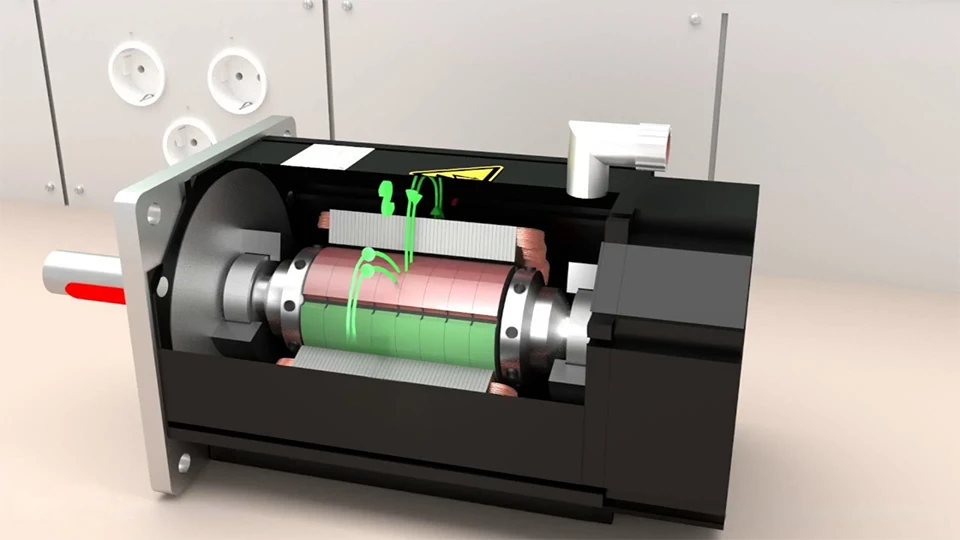
Technically speaking, a servo motor is part of a closed-loop system. This means the motor doesn’t just execute movement—it also reports back. Inside the servo system is a feedback device (usually an encoder) that constantly monitors the motor’s actual position and compares it with the target position set by the controller. If there’s any deviation, the system instantly corrects it in real time. This is what enables tight control in CNC operations.
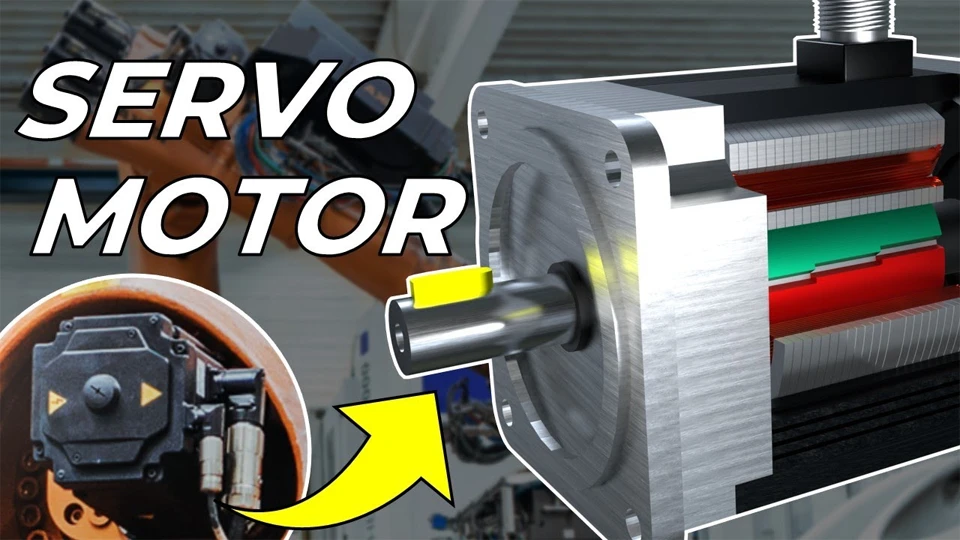
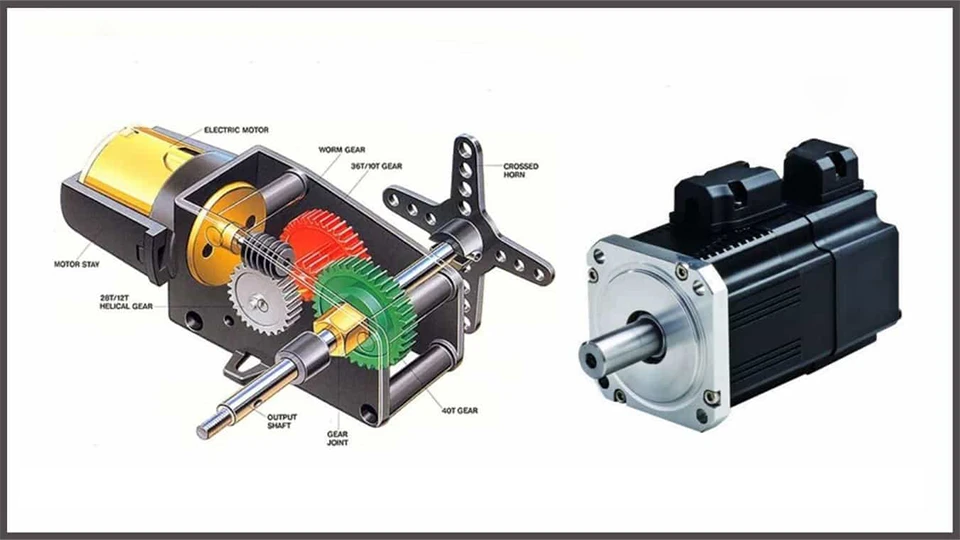
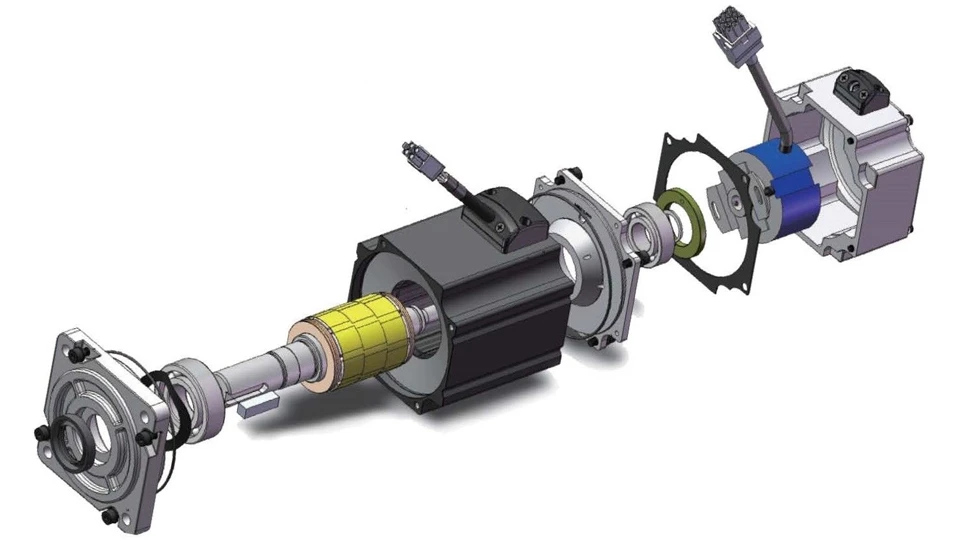
Structurally, a typical CNC servo motor is made up of several key parts:
- The rotor and stator, which create electromagnetic rotation
- A shaft, which connects to the moving part of the machine
- A feedback device, like an optical encoder or resolver
- A servo amplifier, which translates control signals into motion
What separates a CNC machine servo motor from other motors used in industrial machines is not how fast it spins, but how accurately it follows instructions. It’s a motor that’s constantly listening, adjusting, and adapting—exactly what a CNC machine needs to execute complex toolpaths and maintain part quality.
Servo motors come in various sizes and configurations depending on the application. Some are small and compact, used for high-speed but light-duty work. Others are built for high torque, needed to drive large, heavy components on industrial machines. In every case, the motor’s job is the same: execute movement exactly as instructed by the CNC program.
In the context of CNC machining, these motors are responsible for moving the machine’s axes (X, Y, Z), rotating the spindle, and even operating the automatic tool changer. But it’s important to note—we’ll explore those system components in more detail later. For now, just know this:
A servo motor in CNC machine tools is not just a motor—it’s a precision-driven executor of digital instructions.

How Servo Motors Work in CNC Systems
Understanding how a servo motor in CNC machine systems works requires looking beyond the motor itself. A servo motor doesn’t just “spin” like a fan or drill—it responds intelligently to instructions, constantly checking and correcting its own movement based on real-time data. That’s what sets it apart.
At the core of its function is something called a closed-loop control system. This system consists of three main elements: the controller, the servo motor, and a feedback device—usually an encoder or a resolver. Here’s how they interact:
- The CNC controller sends a command to move the machine in a certain direction, at a defined speed, for a specific distance.
- The servo amplifier interprets this command and powers the motor accordingly.
- As the motor moves, the encoder or resolver attached to the motor shaft continuously tracks its position or speed.
- This real-time feedback is sent back to the controller, which compares it to the original command.
- If there’s any mismatch—say, the motor lags or overshoots—the controller sends corrective signals.
This process happens hundreds or even thousands of times per second, making the system highly responsive and stable.
This feedback mechanism is what gives servo systems their precision. Unlike open-loop systems (like basic stepper motors), servo motors can dynamically adjust to changes in load, resistance, or external conditions. If a CNC machine hits unexpected friction or a slight mechanical misalignment, the servo system compensates instantly.
Encoders vs. Resolvers
In a CNC machine servo motor, the feedback device plays a critical role. Most modern systems use optical encoders, which convert shaft position into electrical signals that can be interpreted by the CNC controller. These encoders provide high-resolution position tracking—essential for machining parts with tight tolerances.
Alternatively, resolvers are used in harsher environments. They’re more rugged and can handle vibration, temperature changes, and dust better than encoders, although with lower resolution. The choice between an encoder or resolver depends on the specific CNC application.
Integration with the CNC Control System
The entire motion process is synchronized with the CNC controller, which coordinates the movement of multiple axes in parallel. For example, when cutting a complex contour, the X, Y, and Z axes must move simultaneously and proportionally. Servo motors—each assigned to a machine axis—receive independent yet synchronized commands from the controller.
This synchronization ensures that the cutting tool follows the exact programmed path, not just in position, but also in velocity and acceleration. This is particularly important for high-speed machining, contouring, and applications requiring smooth surface finishes.
Every servo motor is also connected to a servo drive, which acts as the communication bridge between the controller and the motor. It regulates the voltage, current, and frequency sent to the motor—based on both the input command and the real-time feedback.
In short, a servo motor used in CNC machine tools doesn’t work alone—it’s part of a highly responsive, closed-loop motion system. Its performance depends on how well it’s integrated into the entire CNC architecture, including controllers, drives, and feedback systems.
Key Benefits of Using Servo Motor in CNC Machine
When considering a motion system for your CNC equipment, the choice of motor technology directly affects the machine’s precision, speed, and reliability. That’s why more and more manufacturers are shifting toward the use of servo motor in CNC machine setups. These motors offer a wide range of benefits that go far beyond basic motion control.
High Precision and Repeatability
Perhaps the most significant advantage of a CNC machine servo motor is its ability to deliver highly accurate positioning. Thanks to closed-loop feedback systems, the motor constantly corrects its own motion in real-time. Whether your CNC machine is executing intricate toolpaths or simple linear cuts, servo motors can maintain accuracy down to microns.
In industries like aerospace, medical device manufacturing, and mold-making—where every dimension matters—this level of precision is not just helpful, it’s essential. Repeatability, or the ability to return to the exact same position multiple times, is just as critical. A well-tuned servo system ensures parts remain consistent across long production runs.
Fast Acceleration and Deceleration
Speed alone is not enough in CNC machining—controlled acceleration and deceleration are what drive efficiency. Servo motors respond to command changes almost instantly, adjusting speed without delay or overshoot. This is crucial in high-speed machining or when working with short toolpaths that require frequent direction changes.
The result is smoother transitions, sharper corners, and reduced cycle times. In comparison to other motor types, a servo motor’s responsiveness significantly improves the dynamic performance of the machine, especially in multi-axis simultaneous motion.
Energy Efficiency and Thermal Stability
Servo motors are also energy efficient. Because they only consume power when motion is required—and because they operate within closed-loop feedback—they avoid the kind of energy waste found in open-loop systems. This efficiency translates into lower electricity costs, especially in facilities running multiple machines across multiple shifts.
Moreover, servo systems manage thermal loads more effectively. The motors are designed to operate within optimized duty cycles, and the feedback loop prevents overdriving the system unnecessarily. Reduced heat generation means less strain on internal components, extending overall machine lifespan.
Reduced Mechanical Stress and Longer Machine Life
Another overlooked benefit of servo motors is their ability to reduce mechanical stress on the CNC system. Because they move with controlled acceleration, deceleration, and torque output, they minimize sudden impacts, backlash, and vibration. This leads to lower wear and tear on:
- Ball screws and linear guides
- Gearboxes and couplings
- Bearings and spindle assemblies
Over time, this can significantly reduce maintenance costs and downtime. Investing in a servo motor for CNC machine is not just about performance—it’s also about protecting the machine’s mechanical components and preserving your capital investment.
In short, a servo motor used in CNC machine tools is more than a movement source—it’s a critical performance booster. Whether you’re looking to improve part accuracy, boost production speed, or extend machine life, servo technology delivers consistent value on all fronts.
Types of Servo Motors Used in CNC Machines
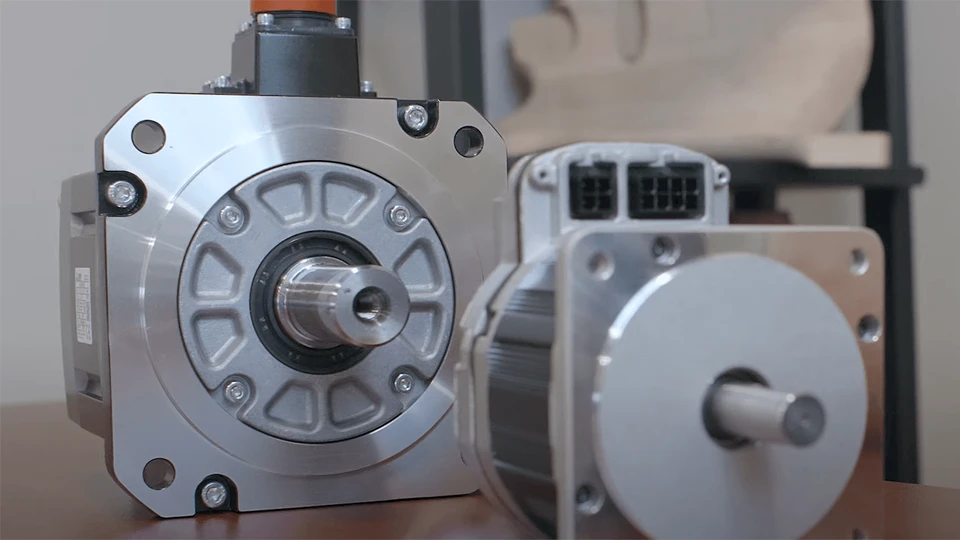
Not all servo motors are created equal. Depending on the specific needs of a CNC machine—such as load, speed, and accuracy requirements—different types of servo motors are used to deliver optimal performance. In this chapter, we’ll look at the main categories of servo motor used in CNC machine systems and how they differ from one another.
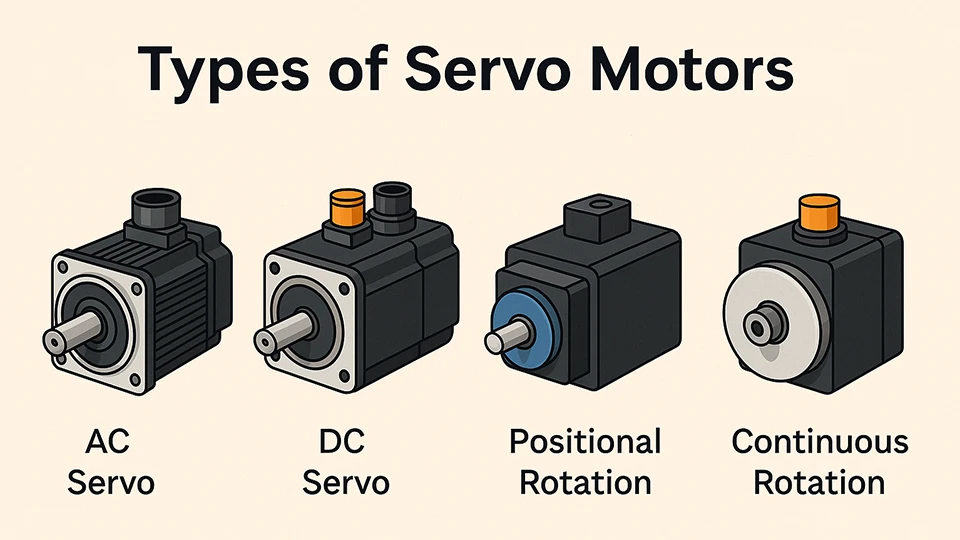
AC vs. DC Servo Motors
Servo motors are broadly classified into two categories based on the type of electrical current they use: AC (Alternating Current) and DC (Direct Current).
- AC servo motors are the most common in modern CNC systems. They are efficient, have higher speed ranges, and require less maintenance due to the absence of brushes. Their smooth performance and reliability make them ideal for high-speed, high-precision applications such as milling centers, Swiss-type lathes, and multi-axis machining setups.
- DC servo motors, on the other hand, are older and now less commonly used. They rely on carbon brushes and commutators, which tend to wear out over time. However, they offer excellent low-speed torque control and are still found in some legacy CNC machines or specialized low-speed operations.
Brushed vs. Brushless Servo Motors
Another important classification comes from how the motor is constructed internally—specifically, whether it uses brushes.
- Brushed servo motors use physical brushes to transfer current to the motor’s rotor. While they are simpler and cheaper, they tend to require more maintenance and have a shorter lifespan due to brush wear. These motors are typically found in older or lower-end CNC systems.
- Brushless servo motors eliminate the need for brushes by using electronic commutation. These motors are more efficient, generate less heat, and last significantly longer. Almost all modern servo motor CNC machine configurations use brushless types for performance and durability.
Brushless systems also support higher speeds and smoother torque delivery, which is particularly valuable in contouring operations or high-speed tapping.
Linear Servo Motors
Linear servo motors are a special type used when rotational motion isn’t enough. Instead of turning a shaft, these motors generate direct linear motion—moving the load in a straight line. They’re often used in high-speed, high-precision CNC applications like laser cutting or micro-milling.
Because they eliminate mechanical elements like ball screws, linear servo motors can reduce backlash and increase responsiveness. However, they are more expensive and typically reserved for high-end or specialty machinery.
In summary, servo motors come in various types—each with its unique advantages and trade-offs. Understanding their differences is the first step toward ensuring your CNC machine runs efficiently and reliably.
CNC Machine Components that Rely on Servo Motors
A servo motor CNC machine is not built around just one motor—it integrates multiple servo motors throughout its structure to handle different functions. From axis movement to spindle rotation and even tool-changing mechanisms, servo motors play a central role in ensuring smooth, accurate, and coordinated motion across all major components.
Axis Drives (X, Y, Z)
The most obvious place where servo motors are used is in axis control. Every CNC machine, whether it’s a lathe, mill, or Swiss-type lathe, features at least three axes: X, Y, and Z. Each axis must move independently and simultaneously, with precise coordination.
Here, servo motors are responsible for:
- Driving the ball screw or linear actuator that moves the slide
- Ensuring positional accuracy with encoder feedback
- Reacting quickly to start/stop commands with high torque control
Without high-performance CNC machine servo motor integration on the axes, you would face backlash, vibration, overshooting, or even dimensional errors in finished parts.
Spindle Drive
The spindle is the heart of the cutting process—it holds and rotates the cutting tool or the workpiece. Modern CNC machines often use servo-driven spindles, especially in applications requiring variable speeds, directional control, or positioning.
Benefits of using servo motors in spindle applications include:
- Smooth speed ramp-up and braking
- Precise control over spindle orientation (essential for tapping or contouring)
- Energy efficiency and quieter operation
Some heavy-duty machines may still use asynchronous motors for the spindle, but in precision machining, servo spindles are becoming standard.
Automatic Tool Changers (ATC)
For multi-tool operations, CNC machines rely on automatic tool changers. These mechanisms must operate with high repeatability and alignment accuracy. If a tool isn’t picked up or returned properly, it can cause crashes, misalignments, or cycle delays.
Servo motors drive:
- The tool magazine indexing
- The robotic arm movement for pickup and placement
- The locking/unlocking sequence of tool holders
In high-speed machining centers, using servo motors in ATC systems drastically reduces tool change time and improves cycle efficiency.
Feed and Loading Systems
In advanced CNC production lines, raw material loading and part ejection are also automated. Servo motors power:
- Bar feeders in Swiss-type lathes
- Conveyor systems for part transfer
- Positioning mechanisms in pallet changers
Their accurate movement ensures synchronization with the machine’s operational rhythm, minimizing downtime and manual intervention.
Real Example: Servo Integration in a Swiss-Type Lathe
Consider a modern Swiss-type lathe used for high-speed, high-precision part production. In such a machine, servo motors control:
- Main spindle and sub-spindle rotation
- 7–9 axes of tool movement
- Live tooling (milling/drilling on the lathe)
- Tool post indexing
- Bar feeder synchronization
All these motions must operate in perfect harmony. A delay or error in one axis can ruin the entire part. That’s why servo motor in CNC machine designs is not optional—it’s foundational.
In summary, servo motors are embedded in nearly every moving part of a modern CNC machine. From axes and spindles to tool changers and feeders, they form the nervous system of automated motion—controlling, synchronizing, and executing every mechanical action with precision.
Choosing the Right Servo Motor for CNC Machine
Selecting the right servo motor for CNC machine operation is not as simple as picking the biggest or most expensive option. In fact, the ideal motor isn’t the strongest one—it’s the most suitable one for your machine’s specific requirements. An overpowered motor wastes energy and raises costs. An underpowered one causes vibration, errors, and part defects.
Let’s break down the key factors to consider.
1. Required Torque and Speed
Every machining operation requires a certain amount of torque (rotational force) and speed (RPM). You’ll need to match the motor’s torque rating to:
- The mass of the load it must move (axis, spindle, etc.)
- The friction and resistance in the mechanical system
- The acceleration and deceleration profile of the motion
For example, a CNC lathe’s X-axis may need high holding torque but moderate speed, while a milling center’s spindle motor may need high speed and moderate torque. Understanding this balance helps avoid oversizing or underperformance.
2. Inertia Matching
Inertia mismatch is one of the most overlooked issues in CNC motor selection. If the load inertia (mass distribution of the moving part) doesn’t match the motor’s rotor inertia, it leads to:
- Overshoot and undershoot in position
- Instability during sudden stops or starts
- Increased wear on mechanical parts
A well-matched inertia ratio ensures the CNC machine servo motor responds predictably and efficiently without unnecessary mechanical stress.
3. Duty Cycle and Thermal Considerations
Servo motors are rated for different duty cycles—how long they can run at full power before requiring a rest period. For example:
- A tool changer might only need 10% duty cycle (short bursts)
- A spindle drive may require continuous 100% duty cycle
Choosing a motor without considering its duty cycle leads to overheating, reduced lifespan, or shutdowns. Thermal characteristics matter, especially in 24/7 production environments.
4. Machine Type and Application
Different CNC machines require different servo configurations. Here’s a simplified guide:
| CNC Machine Type | Recommended Servo Motor Features |
|---|---|
| Swiss-Type Lathe | Compact, high-speed, low inertia |
| Vertical Mill | High torque, medium speed |
| Boring Machine | High holding torque, precise positioning |
| Pipe Thread Lathe | High power for heavy cuts |
| Drilling Machine | Balanced torque and acceleration |
You must match the servo motor CNC machine configuration to the mechanical structure, expected loads, and motion profile of the application.
5. Drive and Controller Compatibility
Even the best motor won’t perform well if it’s not matched with the right servo drive and controller. Before purchasing, ensure:
- Voltage and current ratings are compatible
- Encoder feedback format is supported
- Control loop parameters (PID tuning) are adaptable
Integration should be smooth, especially if you’re retrofitting existing equipment. Always check datasheets from both the motor and control vendors.
In short, selecting the right servo motor for CNC machine use is a balancing act between performance, compatibility, and machine requirements. Taking time to analyze torque, inertia, duty cycle, and mechanical load will pay off in reliability, accuracy, and long-term ROI.
Servo Motor vs Stepper Motor in CNC Machines
One of the most common questions new users ask is: What’s the difference between a servo motor and a stepper motor? Both are used to control motion in industrial equipment, but their capabilities—and limitations—are very different. When evaluating a servo motor CNC machine, understanding how it compares to stepper systems is essential for long-term investment.
Control Systems: Open-Loop vs. Closed-Loop
The most fundamental difference is how each motor type is controlled.
- A stepper motor operates in an open-loop system. It receives pulse commands from the controller and assumes it has moved the desired number of steps. However, there’s no feedback mechanism. If something causes it to lose steps—like extra load or resistance—it has no way of knowing or correcting itself.
- A servo motor in CNC machine systems, by contrast, works in a closed-loop. It uses encoders or resolvers to constantly monitor its position, speed, and torque. Any error is corrected in real time, making the system highly accurate and reliable.
Performance Comparison
Here’s how they stack up in key areas:
| Feature | Stepper Motor | Servo Motor |
|---|---|---|
| Position Feedback | None (open-loop) | Yes (closed-loop) |
| Accuracy | Moderate | High |
| Torque at High Speed | Drops significantly | Maintains torque |
| Noise/Vibration | High at speed | Smooth operation |
| Overload Protection | None | Yes |
| Efficiency | Lower | Higher |
| Cost | Lower | Higher (but justified) |
As you can see, while stepper motors can be used in simple positioning tasks, they struggle under high-speed, high-precision, or variable-load conditions—exactly the demands of CNC machining.
Application in CNC Machines
Stepper motors are still used in:
- Low-cost 3D printers
- Hobbyist CNC routers
- Entry-level engraving machines
But in professional CNC systems—like those used in aerospace, automotive, or mold making—the servo motor CNC machine is the industry standard. It’s not just about better specs; it’s about production consistency, process control, and protecting expensive workpieces from being scrapped.
Reliability and Heat
One of the major issues with stepper motors is heat generation. Because they draw constant current regardless of load, they heat up even when idle. This reduces motor life and causes accuracy drift. Servo motors, on the other hand, adjust their current based on actual demand, making them cooler and more efficient in the long run.
When Should You Use Which?
| Use a Stepper Motor When: | Use a Servo Motor When: |
|---|---|
| Low budget, simple motion | High precision required |
| Light load, short duty cycle | Long duty cycle, heavy load |
| No feedback or speed control needed | Accurate positioning is critical |
| Prototyping or DIY use | Production-grade machining |
While steppers might seem attractive due to their price, they are often a false economy in CNC. A failed job due to missed steps or overheating can cost far more than the motor itself.
In summary, servo motors are designed for the demands of professional CNC machining. While stepper motors have their place in lighter, less demanding applications, they simply can’t match the speed, precision, and adaptability of a well-tuned servo motor in CNC machine systems.
Common Issues with CNC Machine Servo Motors
Even though CNC machine servo motor systems are known for their accuracy and reliability, they are not immune to operational problems. Like any complex electromechanical component, servo motors can fail, drift out of calibration, or trigger alarms if conditions aren’t optimal. Understanding the most common issues can help prevent costly downtime and ensure your CNC machines keep running smoothly.
1. Overheating
One of the most frequent issues with servo motor in CNC machine operations is overheating. This problem often arises in environments where machines are run continuously or where ventilation is poor.
Causes include:
- Running the motor near or beyond its rated load
- Poor airflow around the motor body
- High ambient temperature in the machine enclosure
- Inadequate duty cycle setting in the drive system
Overheating not only reduces motor lifespan but also affects performance—especially in terms of torque and responsiveness. Thermal sensors may trigger emergency stops, interrupting production cycles.
Solution:
Ensure the motor is sized appropriately for the load. Clean dust and chips from cooling fans and airflow ducts regularly. If high-duty cycle operations are needed, choose a motor with a larger thermal capacity or better heat dissipation design.
2. Vibrations and Noise
A well-tuned servo motor should run smoothly and quietly. If you’re hearing grinding sounds, or noticing mechanical vibration, something is wrong.
Common causes:
- Poorly tuned PID control parameters
- Mechanical coupling misalignment
- Worn-out bearings or shaft looseness
- Load-to-motor inertia mismatch
Vibrations can lead to mechanical fatigue, lower part accuracy, and increased wear on linear guides and ball screws. In advanced CNC systems, even slight oscillations can cause major surface finish issues.
Solution:
Perform mechanical inspections to ensure all couplings are tight. Use the servo drive’s auto-tuning features to calibrate loop gains, especially after machine rebuilds or motor replacements. Replace aging mechanical parts before they lead to cascading failures.
3. Encoder or Feedback Failure
Since servo motors depend on real-time feedback to maintain accuracy, any issue with the encoder or resolver can cause erratic behavior or even total motion loss.
Symptoms:
- Sudden position jumps
- Axis drift or stall
- Frequent “position deviation” alarms
Typical causes:
- Loose or damaged encoder cables
- Electrical noise or signal interference
- Dust or oil contamination on encoder disk
- Misalignment between encoder and shaft
Solution:
Check and re-seat connectors. Inspect cables for cuts or wear. In dusty environments, consider switching to sealed encoders. Also, ensure signal cables are routed away from high-voltage or high-frequency lines to reduce EMI (electromagnetic interference).
4. Frequent Alarms or Emergency Stops
A CNC machine servo motor can generate alarms if it senses abnormal behavior in speed, position, temperature, or current draw.
Possible causes:
- Overvoltage or undervoltage from the power supply
- Misconfigured drive parameters
- Faulty servo amplifier
- Unstable power grounding
Solution:
Consult the servo drive’s alarm code log to isolate the cause. Ensure power supplies are regulated and that grounding is solid. If alarms persist, try replacing the drive module for testing.
5. Preventive Maintenance Matters
Most servo motor failures are avoidable. A preventive approach to maintenance can extend the life of your motors and eliminate unexpected stops.
Suggested checks:
- Weekly: Clean fan vents, check cables
- Monthly: Inspect couplings, re-tension belts
- Quarterly: Confirm encoder alignment, recheck torque settings
- Annually: Perform full thermal test under load
For facilities using multiple CNC machines, keeping a log of motor behavior, temperatures, and alarm histories helps identify patterns and predict failures before they happen.
In conclusion, even the best servo motor in CNC machine systems can face operational challenges if not properly installed, maintained, and monitored. But with the right setup and regular preventive checks, these issues can be minimized—protecting both your production output and your bottom line.

Conclusion
Servo motors aren’t just technical components—they’re the invisible force behind accuracy, stability, and efficiency in modern CNC machining. In this guide, we’ve explored what they are, how they work, the different types available, and how to choose the right one for your machine. We’ve compared them with stepper motors and discussed real-world issues that can occur during use. If there’s one takeaway, it’s this: investing in the right servo motor setup directly impacts part quality, machine longevity, and long-term productivity.
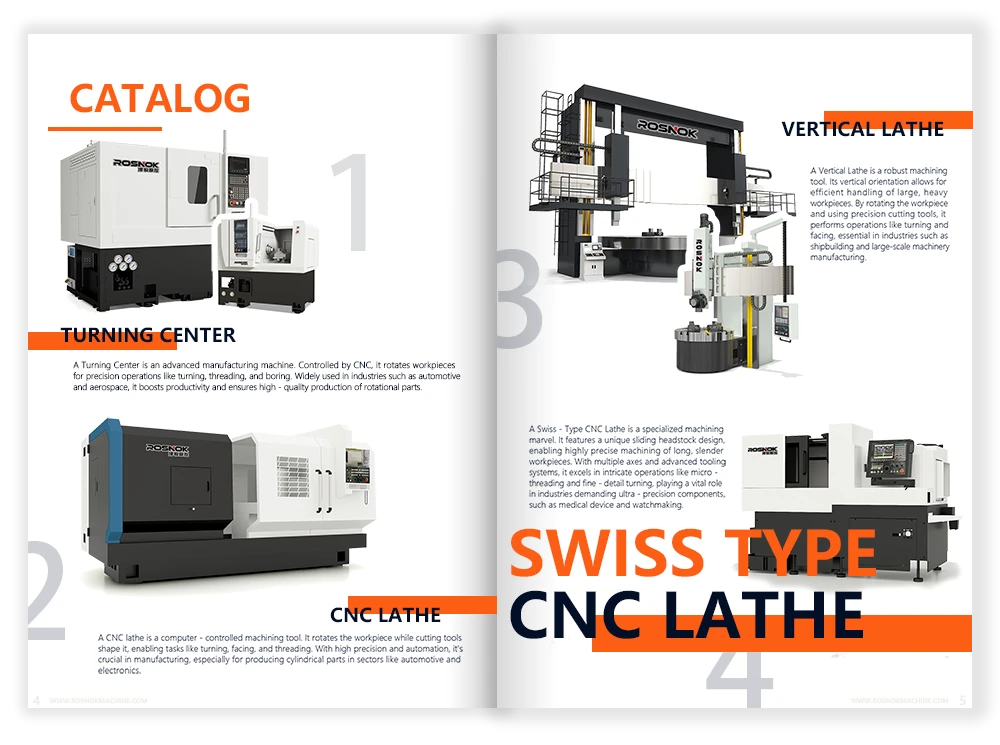
Of course, even the best servo motor can only perform as well as the machine it powers. That’s why at Rosnok, we’ve spent over 20 years engineering CNC machines that are built around high-performance servo systems—from turning centers and machining centers to vertical lathes and Swiss-type lathes. Whether you’re producing complex aerospace components or high-volume automotive parts, our machines are designed to make servo technology work harder—and smarter—for you.