
Structural Design of a Slant Bed Lathe
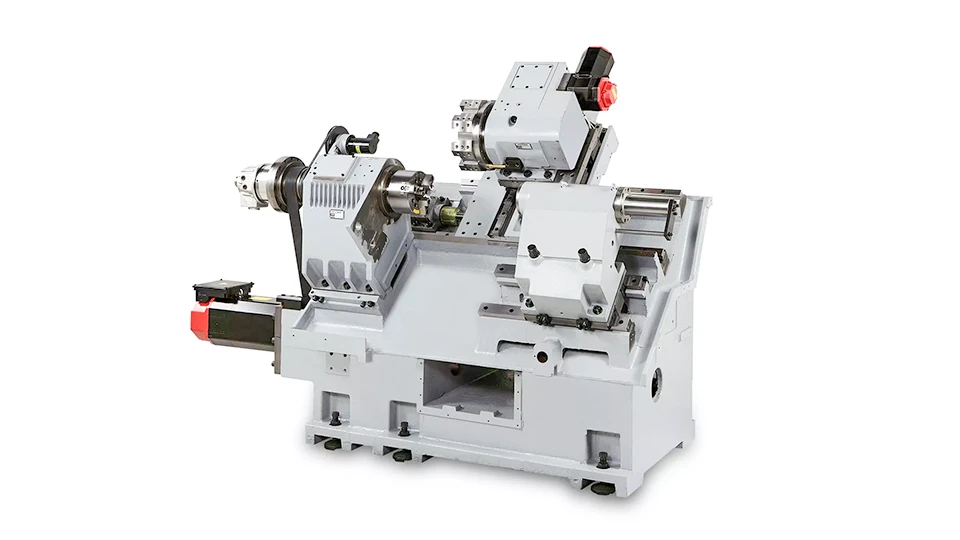
The defining feature of a slant bed lathe is that its machine bed is set at a fixed angle relative to the horizontal plane, commonly 30°, 45°, or 60°. This inclined structure fundamentally changes how mechanical loads are supported compared with a traditional flat bed design, forming the basis of the machine’s rigidity and stability.
In a slant bed lathe, the headstock is fixed at one end of the bed, while the guideways and tool turret are mounted along the inclined surface. This arrangement places the cutting zone closer to the main structural supports of the machine. During machining, cutting forces are transferred more directly into the bed and machine base, reducing bending moments and improving resistance to deformation under load.
The inclined bed design allows cutting forces and structural support directions to work in a more coordinated way. At the same time, gravity helps maintain consistent contact between moving components such as ball screws and guideways, which contributes to stable motion and repeatable positioning during operation.
Another important structural benefit of the slanted layout is chip evacuation. Because the bed is inclined, chips and coolant naturally fall away from the cutting area and move downward into the chip conveyor. This prevents chips from accumulating on guideways or screws, protecting critical components and maintaining long-term mechanical stability.
Overall, the structural design of a slant bed lathe focuses on efficient force transmission, mechanical rigidity, and physical cleanliness. These characteristics provide a solid foundation for accurate and stable machining, which will be further explained in the following sections.
How a Slant Bed Lathe Works
A slant bed lathe operates on the same basic principle as other CNC lathes: the workpiece rotates around the spindle while cutting tools mounted on a turret perform machining operations along controlled axes. What differentiates its working behavior is how this motion is organized within an inclined mechanical layout.
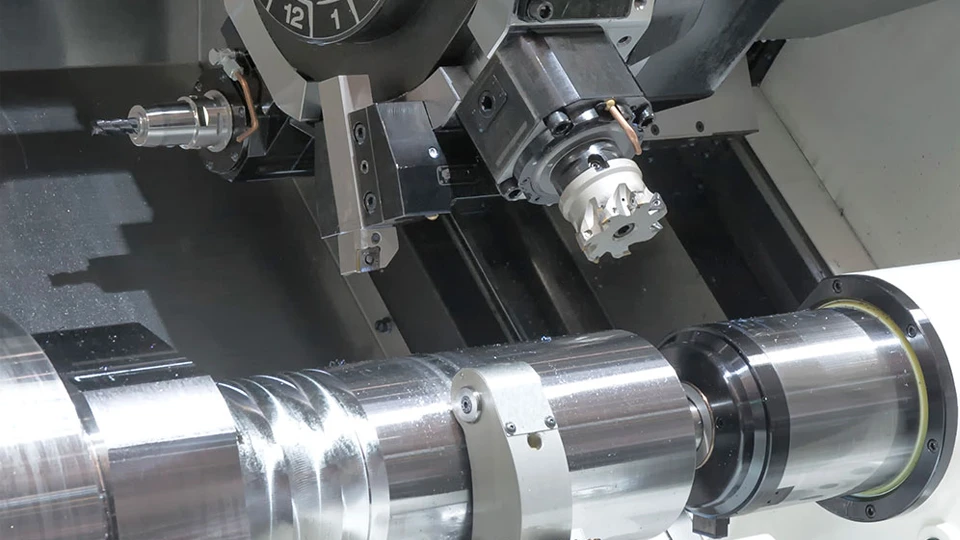
During machining, the spindle drives the workpiece to rotate, while the tool turret moves along the linear guideways mounted on the slanted bed. These movements are precisely controlled by the CNC system, which coordinates spindle speed, feed rates, and tool positioning to follow the programmed tool path. The inclined arrangement ensures that the relative motion between the tool and the workpiece remains stable and predictable throughout the cutting process.
As material is removed, chips are generated at the cutting zone. Because the bed is angled, chips and coolant naturally move away from the tool and workpiece instead of remaining in the machining area. This keeps the cutting zone clear and allows continuous operation without frequent manual intervention.
In machines equipped with live tooling, the working process can include additional operations such as milling, drilling, or tapping. These tools are driven directly by the turret and operate while the workpiece remains clamped. The CNC system synchronizes rotational and linear movements to complete multiple machining steps in a single setup.
Overall, the working process of a slant bed lathe is defined by coordinated spindle rotation, controlled tool movement, and gravity-assisted chip flow. These elements work together to support stable, continuous machining under automated CNC control.
Key Advantages of Slant Bed Lathes
The advantages of slant bed lathes are not limited to a single feature. Instead, they come from how the machine’s structure and working behavior combine to improve accuracy, stability, and overall machining capability in real production environments. These advantages become especially clear during continuous, high-precision, and automated CNC machining.
1. Higher Machining Accuracy
One of the most important advantages of a slant bed lathe is its ability to maintain higher machining accuracy under load. The inclined bed design allows cutting forces to be transmitted more directly into the machine structure, reducing bending moments and minimizing deformation during cutting.
In addition, the orientation of the feed axes in a slanted layout means that moving components such as ball screws and guideways remain under a more consistent load condition. This helps reduce the effects of backlash during direction changes and contributes to smoother, more repeatable positioning. These characteristics are particularly valuable in fine finishing operations, where even small positional variations can affect part quality.
2. Better Chip Evacuation
Chip evacuation is one of the most widely recognized advantages of slant bed lathes in industrial machining. Because the machine bed is inclined, chips and coolant naturally fall away from the cutting zone under gravity rather than accumulating around the tool or workpiece.
This continuous removal of chips keeps the machining area clean and prevents chips from interfering with cutting edges, guideways, or ball screws. In automated and long-cycle production, effective chip evacuation is essential for maintaining stable cutting conditions, protecting machine components, and reducing unplanned downtime.
3. Improved Machining Efficiency
Slant bed lathes are designed to support efficient, uninterrupted machining. Stable cutting behavior, reduced chip accumulation, and consistent axis motion allow the machine to run at higher feed rates with fewer interruptions for cleaning or adjustment.
Because the cutting zone remains clear and machine movements are predictable, cycle times can be shortened without compromising accuracy. Over extended production runs, this translates into higher throughput and more consistent part quality, especially in batch or mass production environments.
4. Support for Multi-Process Machining
Modern slant bed lathes are often equipped with live tooling systems that significantly expand their machining capabilities. In addition to standard turning operations, these machines can perform milling, drilling, tapping, and other secondary processes while the workpiece remains clamped.
By completing multiple operations in a single setup, slant bed lathes reduce repositioning errors and eliminate unnecessary part handling. The CNC system synchronizes spindle rotation, turret movement, and live tool operation to execute complex machining sequences efficiently. This multi-process capability makes slant bed lathes well suited for producing complex parts with high accuracy and reduced overall processing time.

Slant Bed Lathe vs Flat Bed Lathe
Slant bed lathes and flat bed lathes share the same fundamental purpose, but their structural layouts lead to clear differences in behavior, maintenance, and suitability for modern CNC machining. Understanding these differences helps clarify why slant bed designs are increasingly favored in high-precision and automated environments.
1. Bed Structure and Layout
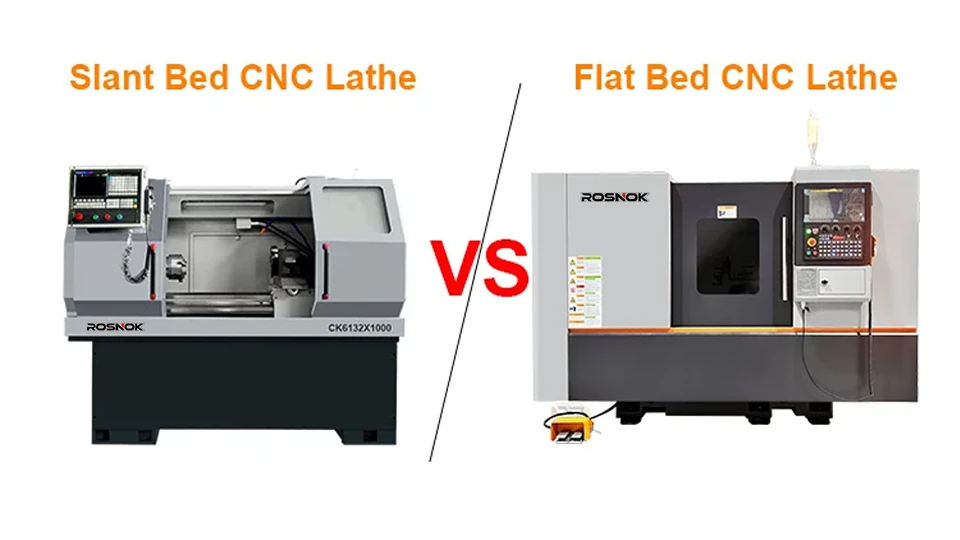
The most visible distinction lies in the machine bed orientation. A flat bed lathe uses a horizontal bed, where guideways, chips, and coolant remain on the same plane. In contrast, a slant bed lathe positions its guideways and turret on an inclined surface, which changes how forces, chips, and machine components interact during operation.
2. Rigidity and Structural Stability
In terms of rigidity and stability, flat bed lathes rely mainly on mass and bed width to resist cutting forces. Slant bed lathes achieve stability through force direction and structural geometry, allowing loads to be transferred more directly into the machine base. This difference becomes more apparent during heavier cutting or high-precision finishing, where consistent structural support is critical.
3. Chip Control
Chip control is another key area of contrast. On flat bed lathes, chips tend to accumulate on the bed and around guideways, requiring manual or mechanical removal to prevent interference. Slant bed lathes allow chips and coolant to fall away naturally, keeping the cutting zone clearer and reducing the risk of contamination to moving components.
4. Suitability for Automation and Continuous Machining
From an operational standpoint, flat bed lathes are often used in simpler or lower-duty applications, where manual intervention and shorter production cycles are acceptable. Slant bed lathes are better suited for automated, continuous, and multi-process CNC machining, especially in environments where consistent accuracy and long-term stability are critical.
Overall, the difference between slant bed and flat bed lathes is not about one being universally better than the other, but about how each design aligns with specific machining requirements. As production demands shift toward higher precision and automation, the structural advantages of slant bed lathes become increasingly relevant.
Conclusion
Understanding what a slant bed lathe is goes beyond knowing its structure. It is about recognizing how thoughtful mechanical design, stable force transmission, and efficient chip management come together to support accuracy, repeatability, and long-term reliability. From structural layout to working behavior and practical advantages, slant bed lathes clearly represent the direction of modern CNC machining, where precision and stability are no longer optional, but essential.
In real production environments, these requirements are exactly what experienced CNC machine builders focus on. At Rosnok, we design and manufacture CNC lathes with this same understanding—placing equal emphasis on mechanical integrity, machining stability, and long-term performance. By combining proven slant bed designs with practical manufacturing experience, Rosnok supports customers who demand consistent accuracy and dependable CNC machining solutions.