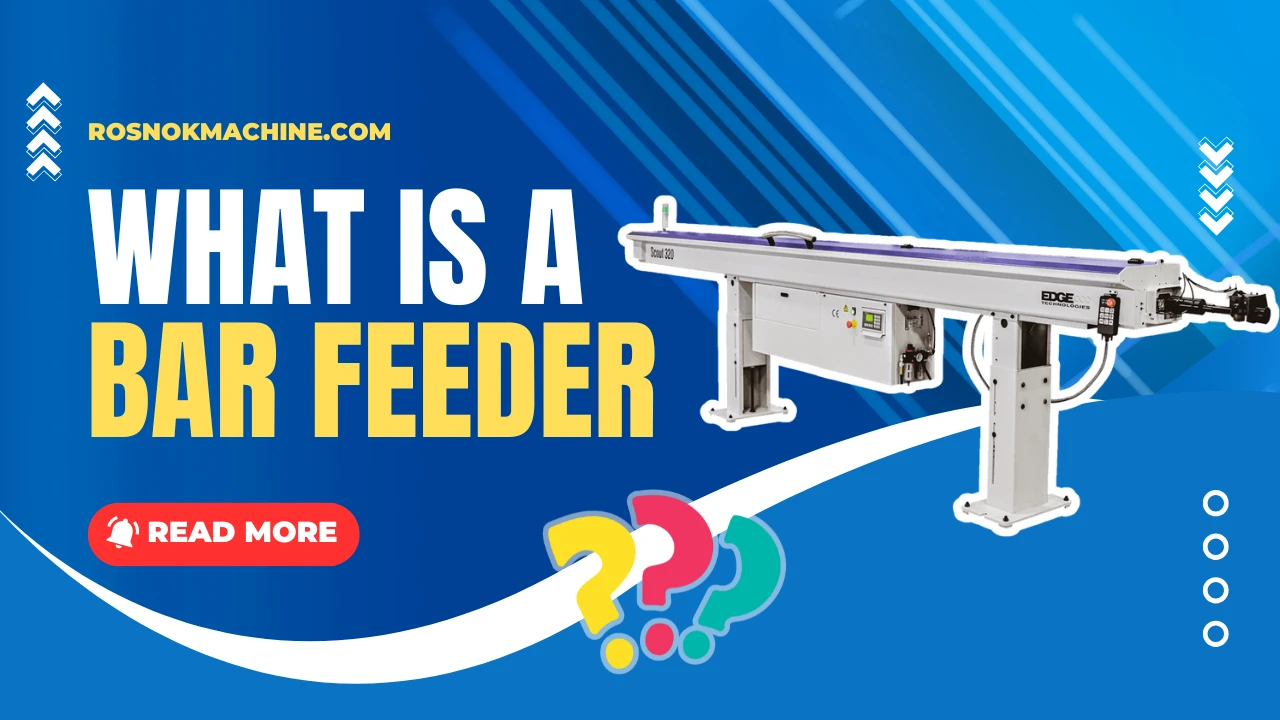
A bar feeder is an automated material loading device designed to supply bar stock—typically metal rods—into CNC lathes and turning centers. It stores multiple bars and feeds them sequentially into the spindle, enabling continuous part machining without manual intervention after each cycle.
Unlike manual loading, which requires constant operator attention, a bar feeder allows CNC machines to run unattended for extended periods. It improves machine uptime, reduces setup interruptions, and keeps production stable even during night shifts or low-staffing hours.
For manufacturers, this means fewer labor hours per part, faster production cycles, and higher overall throughput. Whether you’re scaling batch production or aiming for full automation, a bar feeder plays a key role in reducing cost per unit and maximizing ROI in your machining workflow.
Want to know how bar feeders work, what types exist, and which one fits your needs? Keep reading—this guide breaks it all down in simple, practical terms.
What Is a Bar Feeder?
A bar feeder is an automatic material loading device used to continuously supply round or hexagonal bar stock into a CNC lathe or other CNC machining equipment without manual intervention. It plays a vital role in high-efficiency, high-volume machining, particularly in turning operations where precision, stability, and repeatability are essential.
In traditional setups, machine operators must manually load each workpiece into the chuck or collet. This process is slow, inconsistent, and labor-intensive. But with a bar feeder, long bars—usually ranging from 1 to 3 meters—are loaded into a guiding mechanism that automatically pushes each bar segment forward as needed, enabling continuous operation.
Bar feeders are typically controlled by the CNC system itself or by a dedicated controller, and they’re synchronized to feed a new section of bar once the current one is machined. This makes them indispensable in unattended production shifts, especially for parts that require turning from bar stock—like shafts, sleeves, bolts, or pins.
Today, bar feeders are found across various industries including automotive, aerospace, medical device manufacturing, and electronics, where consistent part quality and high production throughput are critical.
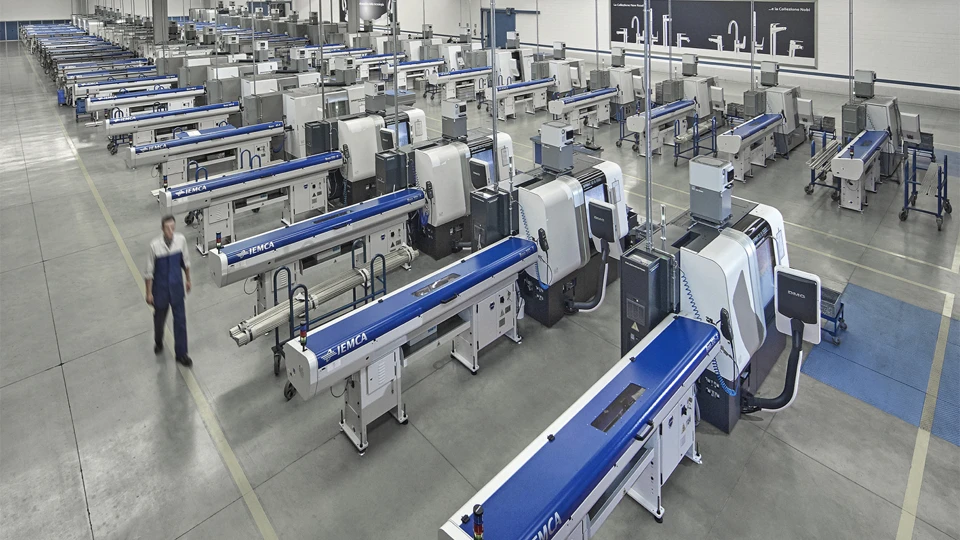
How Does a Bar Feeder Work?
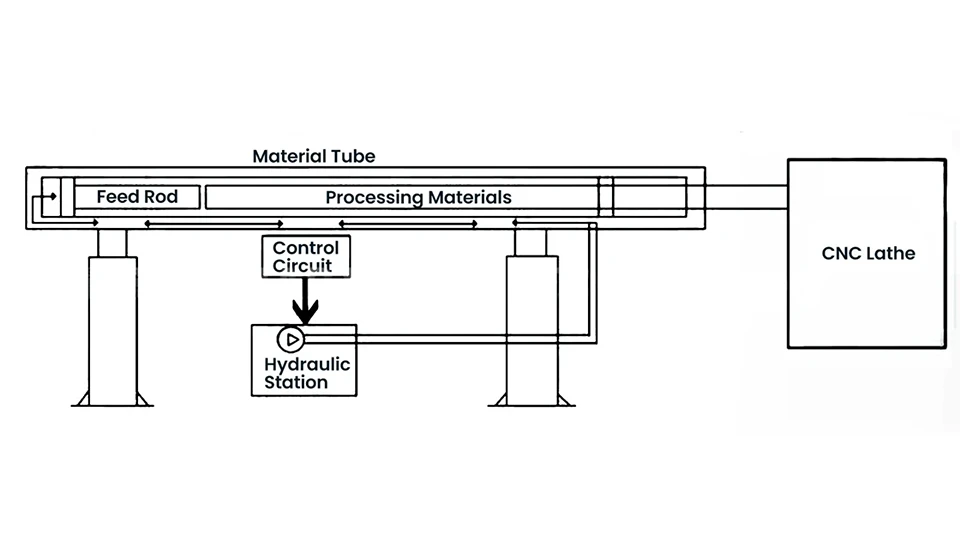
The operation begins when long bars, usually made of steel, aluminum, brass, or other machinable materials, are loaded into the bar feeder’s magazine. These bars are supported and guided through a channel that matches their diameter. Once the CNC machine finishes machining one part, it sends a signal to the bar feeder, instructing it to advance the bar forward by a pre-set length. This signal communication typically follows M-code or I/O signal protocols standardized for CNC automation.
Inside the bar feeder, a pusher mechanism—driven by a servo motor, pneumatic system, or hydraulic actuator—moves the bar forward through a guide channel and into the CNC machine spindle. The pusher ensures steady feed pressure while minimizing vibration or bending, which is especially important for long or slender bars. Some systems use collets or rollers to help maintain axial alignment during the feed.
After the bar has been pushed forward and clamped by the machine’s chuck or collet, the next cycle of machining begins. When the bar stock is nearly consumed and becomes too short to grip properly, it is ejected as a remnant or tail stock, and the feeder automatically loads the next bar from the magazine.
Advanced bar feeders often include features such as automatic diameter adjustment, real-time position sensing, vibration damping, and leftover detection systems. These enhancements further stabilize the feeding process, reduce scrap, and allow the machine to run continuously for hours—or even overnight—without operator supervision.
Bar feeders are most efficient when fully synchronized with the CNC control system. They are programmed to match the cutting cycle time, feeding stroke, and part length, ensuring precise coordination between the feeder and the machine tool.
Key Components of a Bar Feeder
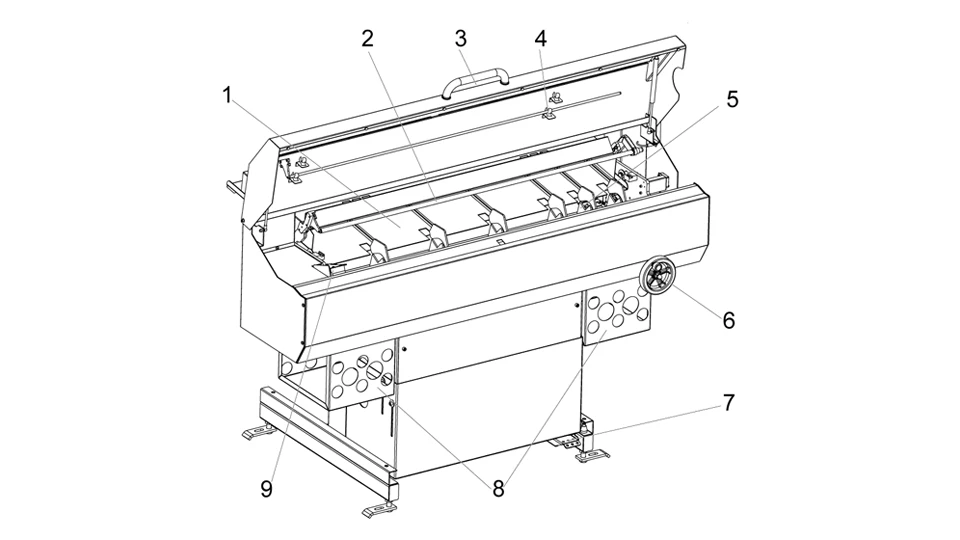
Although bar feeders vary in size, type, and complexity, they all rely on a set of core components that work together to ensure stable and continuous material feeding. Understanding each part helps clarify how the entire system operates.
1 Magazine (Bar Storage)
The magazine is the starting point of the bar feeding process. It holds multiple bars and ensures the machine has enough material for extended unattended operation. Depending on the design, magazines can be horizontal tray-style for easy manual loading, or bundle-type where multiple bars are stacked vertically or angled for gravity-assisted feeding. In either case, the magazine automatically transfers the next bar into the guide channel once the current bar is consumed, minimizing machine downtime.
Efficient magazine design is especially important in high-volume environments. Larger capacity magazines reduce operator intervention, enabling long production runs without interruption. Some advanced systems allow for staggered loading of bars of different diameters, which is useful in flexible manufacturing setups.
2 Guide Channel
After the bar is selected from the magazine, it enters the guide channel. This component is precisely machined or lined with low-friction materials to match the diameter of the bar being fed. Its main purpose is to support and stabilize the bar along its length as it travels into the CNC machine spindle.
Without a proper guide channel, the bar may vibrate or deflect during movement, especially if it’s long, thin, or rotating at high speed. Vibration leads to inaccurate positioning, poor surface finish, and potential tool wear. To prevent this, high-end bar feeders offer multi-point support and sometimes damping systems within the guide tube to ensure smooth and accurate feeding.
3 Pusher Mechanism
The pusher is the active component that physically drives the bar forward. It can be powered by servo motors for precise control, or by pneumatic or hydraulic cylinders in simpler systems. The pusher contacts the rear end of the bar and moves it through the guide channel into the CNC spindle or collet.
The speed and force of the push are critical parameters that must be controlled according to bar material, length, and machining requirements. Inconsistent pushing can cause jams, misfeeds, or machine alarms. Modern bar feeders allow the pusher stroke length and speed to be programmed directly or adjusted through the control panel.
4 Synchronization System
For smooth operation, the bar feeder must be fully synchronized with the CNC machine. When a machining cycle ends, the CNC controller sends a signal to the bar feeder to advance the bar by a specific length for the next cycle. This communication is typically done using M-codes, digital I/O signals, or more advanced serial protocols.
Some synchronization systems include encoders or position sensors that confirm the bar has been fed correctly. In high-speed or high-precision production environments, the timing and accuracy of this interface are critical. Poor synchronization may cause the machine to start cutting before the bar is in position, resulting in part defects or tool damage.
5 Remnant Management System
Once the bar is nearly used up and becomes too short to grip securely, it is considered a remnant or tail stock. If not handled properly, this leftover piece can cause interruptions or even damage the machine. Most bar feeders have built-in systems to detect and automatically eject remnants.
Some feeders use mechanical ejectors, while others retract the pusher and drop the remnant into a collection bin. This automation eliminates the need for the operator to intervene, ensuring smooth transition between bars and reducing cycle interruptions.
6 Optional Features
In addition to the core components, many bar feeders offer optional features that enhance functionality and flexibility. These may include:
- Automatic diameter change systems for quick part changeovers
- Touchscreen control panels for easier setup and diagnostics
- Noise-reduction covers and safety interlocks
- Vibration dampers for slender bar stability
- Leftover material sensors and alarms
- Remote monitoring or IoT modules in smart factories
These features make bar feeders adaptable to a variety of production requirements and machine types, improving uptime and operational safety.
Types of Bar Feeders
Bar feeders come in many types, and selecting the right one depends on the machine it supports, the production volume, bar size, and specific application scenario. In this section, we’ll break down the major types of bar feeders based on structure, drive mechanism, and machine integration. Each classification reflects how the bar feeder is designed and where it fits into the overall manufacturing process.
1 By Structural Design
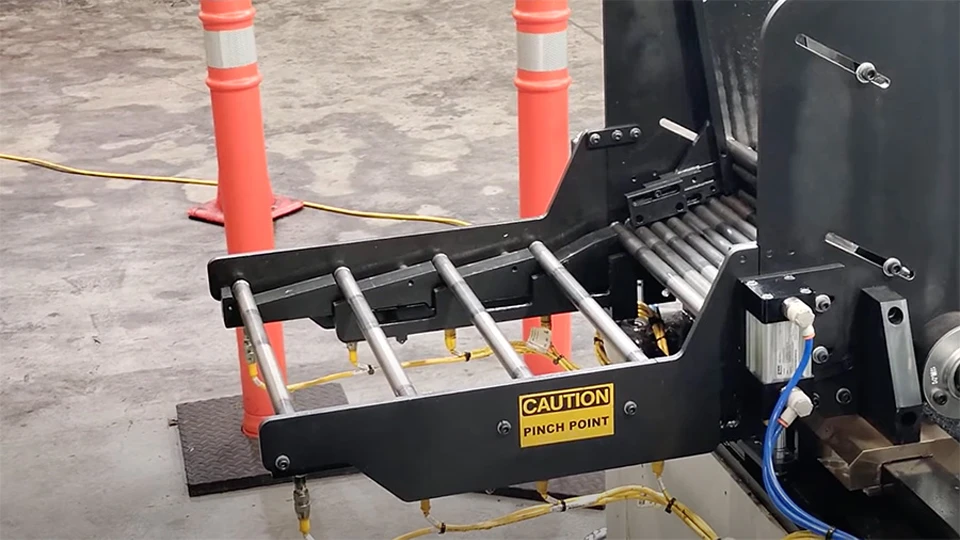
Magazine Bar Feeders
These are the most common type used in high-volume CNC turning applications. They hold multiple bars in a storage rack (magazine) and feed them one by one into the machine as previous bars are consumed. Magazine-type feeders are ideal for long production runs, as they can support hours of unattended operation. They also offer better vibration control and precise alignment for long bars, making them a staple in automotive and aerospace part production.
Short Bar Loaders
Short bar loaders are compact units designed for limited floor space or lower-volume applications. Unlike magazine feeders, they typically hold only one bar at a time. Because of their small footprint and lower cost, short loaders are often used in job shops or flexible production environments. However, they require more operator attention and frequent reloading compared to magazine-style systems.
Floor-Mounted Systems
These heavy-duty systems are used for feeding large-diameter or extra-long bars that exceed the handling limits of conventional feeders. They often involve bar elevators, conveyors, or robotic arms for moving stock from ground level to the spindle. Floor-mounted feeders are common in industries dealing with oilfield parts, shipbuilding components, or structural materials.
2 By Drive Mechanism
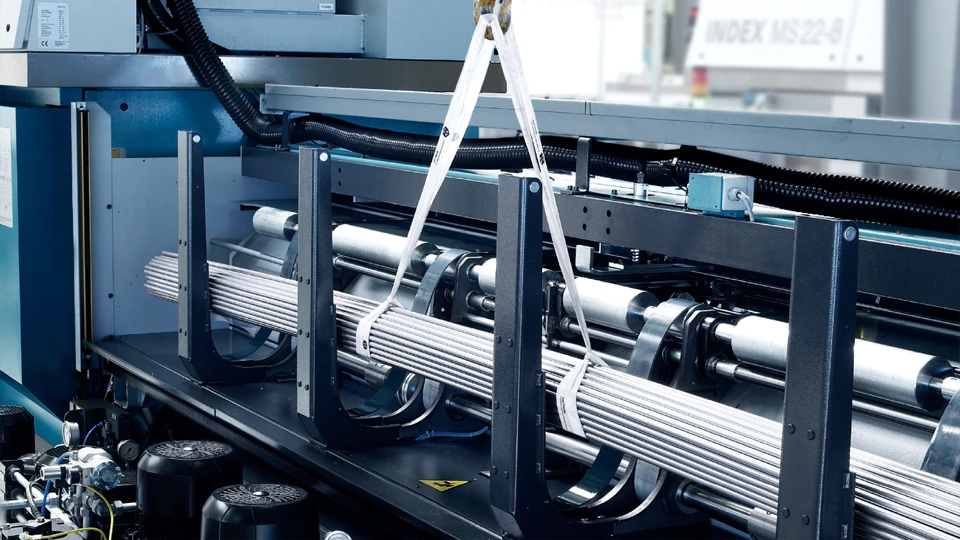
Servo-Driven Bar Feeders
Servo motors offer precise control over feed speed, push length, and force. These feeders are fully programmable and suitable for high-speed, high-accuracy environments. They also allow for faster part changeovers and are easier to integrate with CNC controllers. Servo-driven systems are common in medical, electronics, and high-precision machining sectors.
Pneumatic Bar Feeders
Powered by compressed air, pneumatic feeders offer a cost-effective and simple solution for basic automation. They are generally used for small- to medium-sized bars and have fewer components, resulting in lower maintenance. However, they are less precise than servo-driven systems and can struggle with longer or heavier bars.
Hydraulic Bar Feeders
These systems use fluid pressure to push bars forward and are suitable for heavier materials or longer bars that require more consistent force. Hydraulic feeders are robust and reliable but may involve more complex setup and maintenance. They’re often found in applications where torque and pushing power are prioritized over speed.
3 By Machine Integration
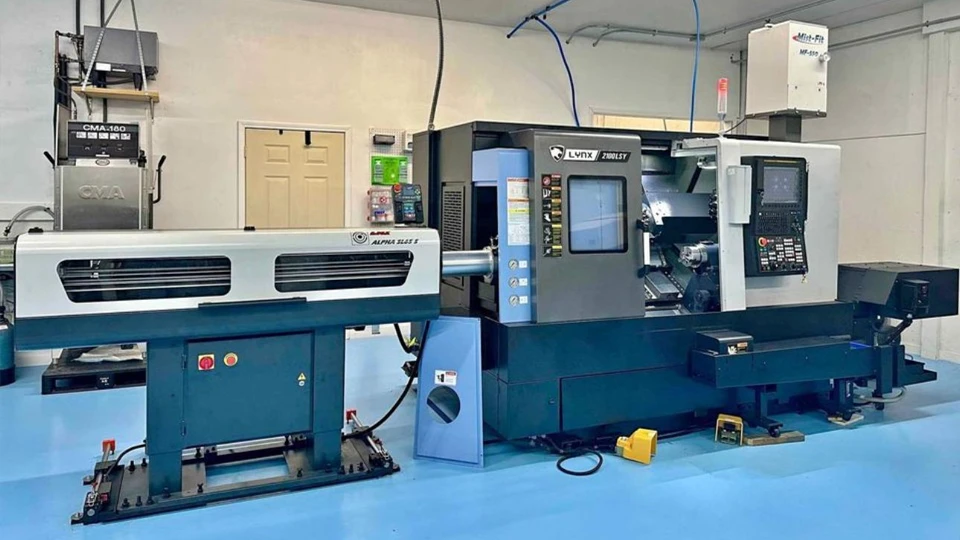
CNC Lathe Feeders
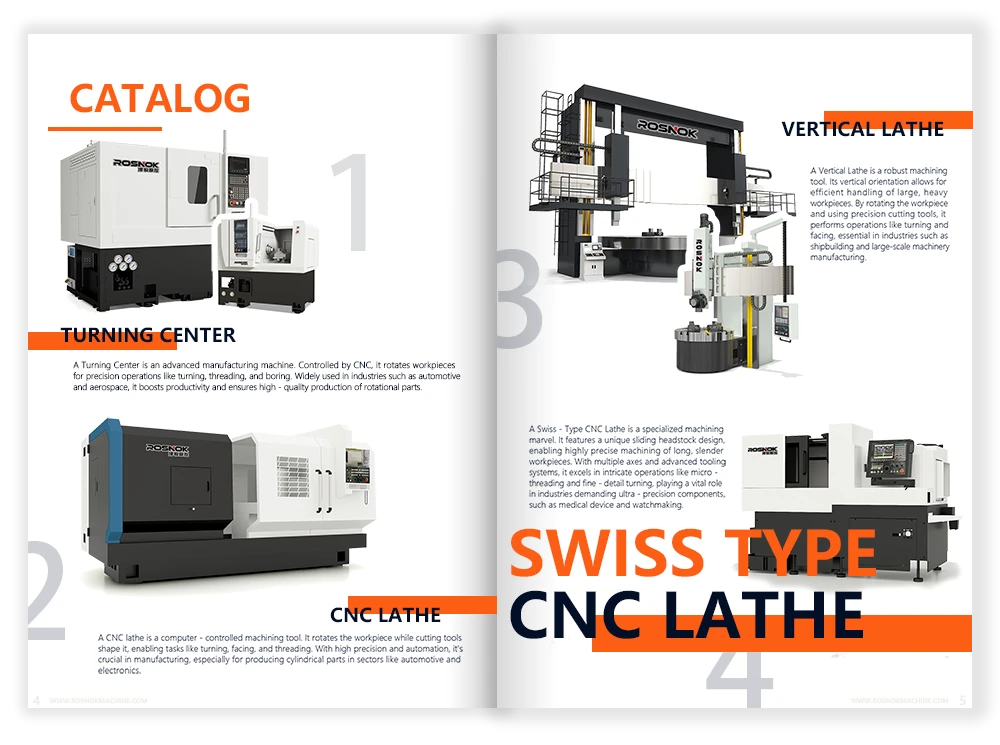
This is the most widely used category. Bar feeders designed for CNC lathes are optimized for turning operations that require continuous bar rotation, steady feed rates, and precise length control. These systems are often paired with fixed or sliding headstock lathes and are essential for industries like automotive and general machining.
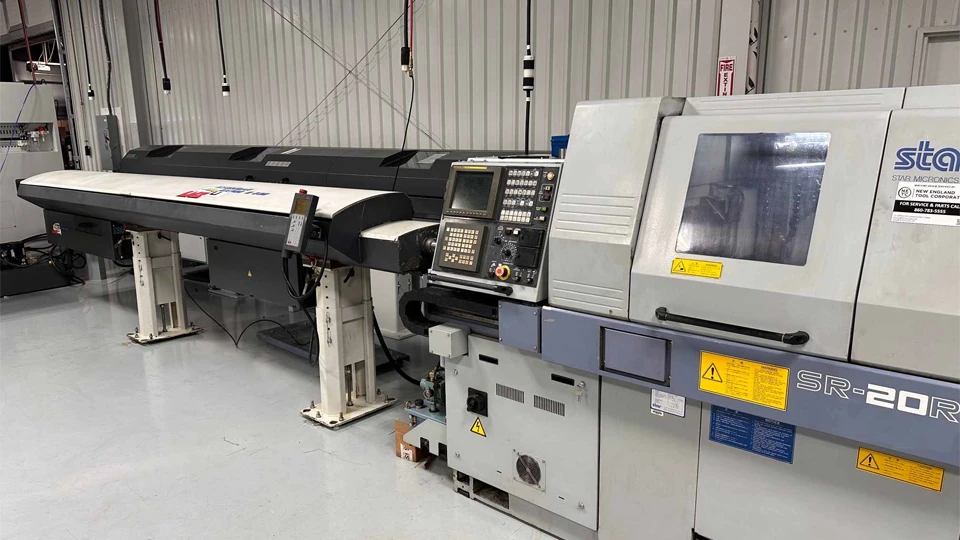
Swiss-Type Lathe Feeders
Used with sliding-head lathes, these feeders are tailored for small-diameter, high-precision workpieces. They offer tighter tolerance control, reduced vibration, and better support for slender bars. Swiss-type feeders are heavily used in medical, dental, watchmaking, and precision electronics applications.
Automatic Cut-Off Machine Feeders
In raw material preparation, bar feeders are used to supply cut-off machines with standard-length bars for shearing or slicing. These systems focus more on feeding large-diameter, soft metals like brass or aluminum and are common in stock preparation zones of metalworking factories.
Non-Lathe Applications
Although most bar feeders are built for lathe-based machining, some are adapted for use with machining centers, special assembly lines, or robotic systems. In these cases, the bar feeder provides a steady stream of round stock for tasks like automatic part insertion, chamfering, or pressing. These scenarios are less common but growing in relevance as custom automation becomes more widespread.
Applications of Bar Feeders in Industry
Bar feeders play a central role in modern machining operations, especially where high output, consistency, and unattended operation are required. Although their primary function is simple—feeding bar stock into a CNC machine—their impact on production efficiency and automation is profound across a range of industries.
Automotive Manufacturing
In the automotive industry, high-volume production of turned components such as shafts, bushings, valve pins, and transmission spacers demands uninterrupted machining. Bar feeders allow CNC lathes to run continuously, minimizing downtime between parts and enabling multi-shift or even lights-out operation. Automotive suppliers benefit from reduced labor costs, tighter production scheduling, and improved part consistency—all of which are essential for meeting OEM quality standards.
Aerospace and Defense
Aerospace components often require tight tolerances, exotic materials, and long cycle times. Bar feeders support these requirements by providing stable, vibration-controlled feeding of titanium, Inconel, or aluminum bar stock. In combination with Swiss-type lathes or multi-axis turning centers, bar feeders help produce precision parts such as fasteners, bushings, actuator pins, and aerospace spacers—all commonly turned from round bar stock. Their ability to maintain stability during long and complex machining cycles is especially valuable in aerospace part certification processes.
Medical Device Industry
In medical manufacturing, bar feeders are used to produce small, high-precision parts such as bone screws, dental posts, orthopedic pins, and implant abutments. These parts are typically machined from stainless steel, titanium, or cobalt-chrome bar stock on Swiss-type lathes. The high repeatability and clean integration of bar feeders help maintain part-to-part consistency, which is essential for regulatory compliance and functional performance.
Electronics and Watchmaking
Micromechanical industries such as electronics and watchmaking rely on bar feeders to automate the production of extremely small and delicate components. Typical examples include pins, connector contacts, miniature spacers, and fasteners. Here, the bar feeder must handle very small-diameter bars—often below 3 mm—with exceptional stability and precision. Feeding vibration or backlash must be virtually eliminated to avoid part deformation or tool wear.
General Metalworking
In broader metalworking shops, bar feeders support flexible production needs. Whether manufacturing hydraulic fittings, pneumatic connectors, machine shafts, or fasteners, bar feeders allow job shops and OEMs to scale production without adding labor. In many shops, bar feeders are integrated with standard two-axis lathes or gang-tool CNC machines, allowing small batches and large orders to run efficiently with minimal changeover time.
Integration with Smart Factories
Bar feeders are increasingly integrated into smart manufacturing environments where CNC machines communicate with MES (Manufacturing Execution Systems) and ERP platforms. They contribute to automated cell configurations, allowing machines to operate with minimal oversight. Features like leftover detection, auto-diagnostics, and remote monitoring help plant managers collect data on productivity, downtime, and scrap rate—supporting lean manufacturing goals.
Benefits of Using a Bar Feeder
Integrating a bar feeder into your CNC setup is not just a matter of convenience—it’s a strategic upgrade that significantly impacts productivity, consistency, and operational cost. Whether you’re running a high-volume production line or a flexible job shop, the benefits of a bar feeder are immediate and measurable.
Increased Production Efficiency
One of the most immediate benefits is the drastic reduction in idle time. A bar feeder ensures that fresh material is always available for the next cycle, eliminating the pauses required for manual loading. This is especially critical in industries like automotive or aerospace, where cycle times and throughput targets are tight. Machines with bar feeders can run continuously—even overnight—enabling lights-out manufacturing and maximizing equipment utilization.
Reduced Labor Dependency
With a bar feeder in place, there’s no longer a need for an operator to manually load each new bar. This reduces the demand for skilled labor and frees up personnel to focus on higher-value tasks like quality inspection, programming, or setup for the next job. In an era of skilled labor shortages, automation through bar feeding becomes an attractive solution.
Improved Part Consistency
Automated bar feeding minimizes variability in how material is presented to the machine. This consistency leads to better part accuracy and repeatability. Because the feed length, feed force, and positioning are all controlled mechanically or electronically, each part begins from a uniform starting point—reducing variation and scrap.
Higher Machine Uptime
Manual loading introduces interruptions, which reduce the spindle’s productive time. By contrast, bar feeders can be synchronized to move material during tool changes or other non-cutting periods, ensuring that the spindle remains engaged as much as possible. The result is a significant boost in Overall Equipment Effectiveness (OEE).
Enhanced Operator Safety
Feeding long or heavy bars manually can be dangerous. Bar feeders eliminate the need for direct operator interaction with raw material during the machining process. Enclosed systems prevent accidental contact, and automatic remnant handling reduces the risk of injury when the bar becomes too short to grip safely.
Cleaner Shop Floor and Material Management
Modern bar feeders come with built-in material containment and chip collection features. This helps maintain a cleaner, more organized shop environment and reduces time spent cleaning around the machine. It also minimizes damage to unfinished parts or machinery caused by misplaced stock.
Better Cost Control and ROI
Although bar feeders require an upfront investment, the long-term savings are significant. Increased throughput, lower labor costs, and reduced material waste translate into higher profitability per machine. Most shops experience ROI within a year—sometimes even sooner in high-volume scenarios.
How to Choose the Right Bar Feeder for Your Shop
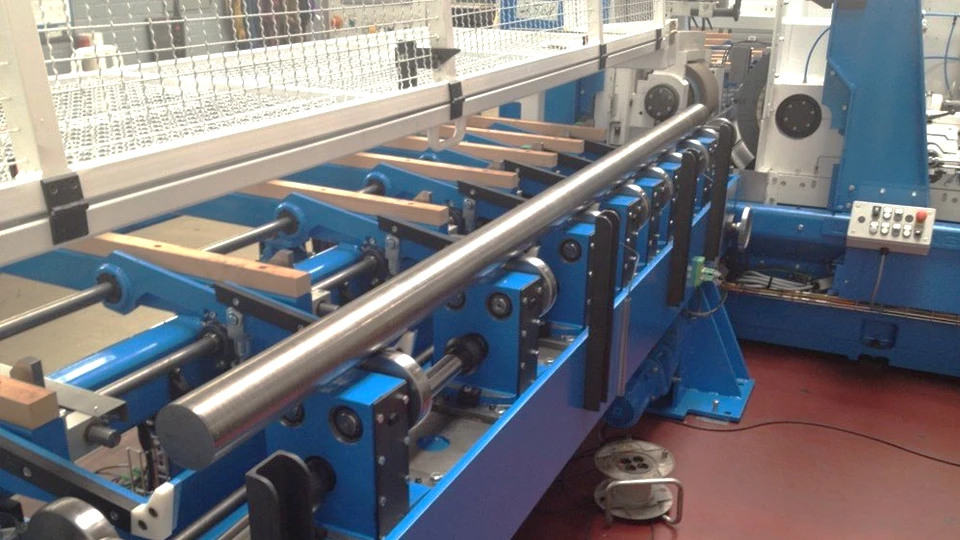
Selecting the right bar feeder is not a one-size-fits-all decision. The wrong choice can lead to poor material handling, frequent downtime, and wasted investment. To make the right decision, you must match the bar feeder’s capabilities with your shop’s specific production requirements, machine types, part sizes, and growth expectations. Here are the key factors to consider:
Match with Machine Type
The first consideration is the machine tool you’ll pair the bar feeder with. For standard CNC lathes with fixed headstocks, you’ll need a conventional magazine-style or short bar loader. If you’re working with Swiss-type lathes (sliding headstock machines), you’ll need a bar feeder specifically designed for high-speed, small-diameter feeding with tighter vibration control.
Some machining centers or specialty assembly lines may also utilize bar feeders for specific automation tasks. In these cases, ensure the bar feeder supports non-rotating feed and integrates with your part handling system properly.
Bar Diameter and Length Capacity
Each bar feeder is built for a specific range of bar diameters and lengths. Choose a model that can comfortably handle your most common stock sizes, while allowing some flexibility for future jobs. Undersized guide channels will increase vibration, while oversized ones will reduce stability.
If you frequently run jobs with long bars (3 meters or more), consider a full-length magazine bar feeder. For short-run production or small spaces, short bar loaders may be more practical.
Material Type and Weight
Different materials behave differently during feeding. For example, stainless steel and titanium are heavier and can generate more friction or wear. Softer metals like aluminum feed more easily but may be prone to bending.
Choose a feeder with appropriate drive force (servo, pneumatic, or hydraulic) and wear-resistant guides suited for your material mix. Also ensure the feeder’s pushing mechanism can handle the weight of full-length bars without backlash or deformation.
Production Volume
High-volume, lights-out production benefits most from full-length, magazine-style feeders with high automation and minimal intervention. Look for features like auto-load, remnant retraction, and smart synchronization if you’re aiming for 24/7 operation.
For shops doing small batches, prototyping, or mixed part runs, simplicity and quick changeover are more valuable. In these cases, a short bar loader with easy diameter adjustment may be more cost-effective.
Integration and Control System Compatibility
Ensure the bar feeder is fully compatible with your CNC machine’s controller. Some feeders communicate via M-codes and digital I/O, while others require serial or network interfaces. Incomplete integration can result in feed timing errors or misfeeds.
If you run a smart shop with centralized monitoring, look for feeders with Industry 4.0 capabilities such as IoT modules, remote diagnostics, or API support.
Floor Space and Shop Layout
Bar feeders can take up considerable floor space, especially full-length magazine types. Make sure you measure the available clearance behind and around the machine. Also consider operator accessibility for loading bars, changing settings, or performing maintenance.
If you’re limited on space, there are compact and modular models available that still support decent feeding lengths without sacrificing precision.
Budget and Return on Investment
While high-end bar feeders offer more features and flexibility, they also cost more. Consider your typical job types and volume before investing. The goal is to strike the right balance between functionality and payback time.
In general, the ROI on a bar feeder is seen within 6–12 months if utilized effectively. Shops with high spindle hours will recover their investment faster through reduced labor and increased output.
Common Mistakes to Avoid When Using a Bar Feeder
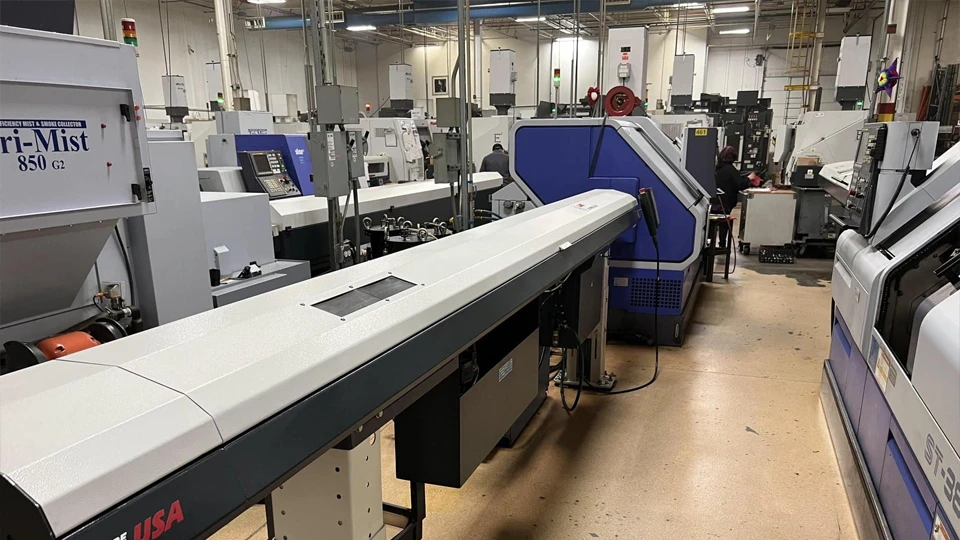
Even the best bar feeder can underperform—or even cause production issues—if it’s set up or used improperly. Many problems stem not from the equipment itself, but from how it’s configured, maintained, or matched to the job. Below are some of the most common mistakes shops make when using a bar feeder, and how to avoid them.
Choosing the Wrong Bar Feeder for the Machine
One of the most fundamental errors is pairing the wrong type of bar feeder with a specific CNC machine. For example, using a standard fixed-headstock bar feeder with a Swiss-type lathe can cause vibration, poor part finish, or even misfeeds. Likewise, installing an oversized full-length bar feeder in a space-constrained area can cause ergonomic and safety issues.
How to avoid: Match the bar feeder model precisely to your machine type, expected part sizes, and production setup. Always consult with the machine tool manufacturer or integrator if unsure.
Poor Alignment with the Spindle
Bar feeders must be aligned with the CNC machine spindle both horizontally and vertically. Misalignment causes bar vibration, excessive wear, tool chatter, or poor part tolerances. Over time, even small shifts in position can lead to significant machining errors or premature damage to guide channels and pusher components.
How to avoid: Use precise setup procedures and alignment tools during installation. Routinely check alignment, especially after machine relocation or maintenance. Some feeders include self-alignment systems—use them correctly.
Inadequate Bar Support or Guide Channel Sizing
If the guide channel does not properly match the bar diameter, you’ll experience vibration, instability, or bar whip during feeding. This leads to surface finish defects and tool wear. Using oversized channels to “save time” on diameter changeovers is a risky practice.
How to avoid: Use correctly sized guide channel inserts for each bar diameter. Invest in quick-change channel kits if you run frequent part variations. For long, thin bars, ensure vibration dampers or bushings are installed where applicable.
Ignoring Synchronization Signals or Timing
Synchronization between the bar feeder and CNC machine is critical. If feed timing is not correctly set, the bar may be pushed too early, too late, or not at all—leading to machine alarms, broken tools, or scrapped parts.
How to avoid: Verify that M-code communication or handshake protocols are properly configured. Check that feed distances, feed speeds, and signals are set up in both the bar feeder and CNC control software.
Skipping Routine Maintenance
Like any automated system, bar feeders require regular maintenance. Accumulated chips, worn pushers, dirty guide channels, or damaged belts can all reduce performance and cause unplanned downtime. Many shops neglect bar feeder maintenance because it’s “not the machine”—until problems arise.
How to avoid: Follow the manufacturer’s maintenance schedule. Clean guide tubes, check pushing mechanisms, and replace worn parts before they fail. Document maintenance and train staff to recognize warning signs like unusual noise or vibration.
Improper Bar Material Selection or Handling
Feeding bent, poorly cut, or dirty bars can cause jams, push failures, or misfeeds. Material must be cut cleanly and kept free of burrs, oil residue, or corrosion. Overly soft or irregular bars may flex during feeding and cause tool crashes.
How to avoid: Use high-quality bar stock from reliable sources. Inspect incoming material before loading, and cut bars square and clean. If needed, deburr the ends and store them in a clean, dry environment before feeding.
Conclusion
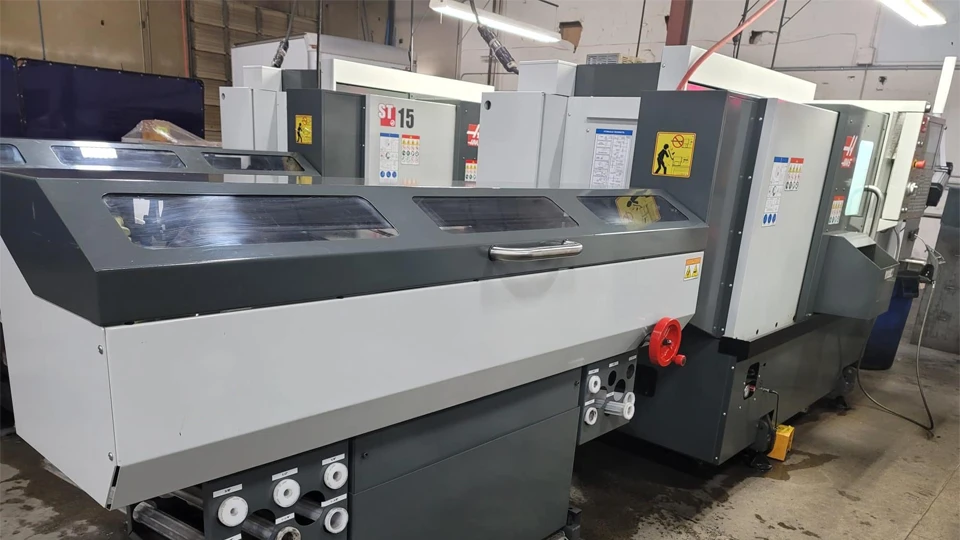
Modern machining no longer relies on manual processes or fragmented automation. The integration of bar feeders has redefined what precision manufacturing means today—continuous, efficient, and reliable production where every spindle hour counts. From high-volume automotive components to micro-scale medical parts, bar feeders have become the silent partner that keeps production lines running smoothly. They transform downtime into uptime, routine into precision, and manual dependency into scalable automation. In every sense, the bar feeder represents the evolution of smart, stable, and predictable metalworking.
Behind every successful automation system stands a foundation of engineering excellence and dependable machinery. That’s where manufacturers like Rosnok have built their reputation—designing CNC lathes, machining centers, and integrated automation solutions that bring out the full potential of systems like bar feeders. From single-machine setups to multi-cell production lines, Rosnok machines are designed for accuracy, reliability, and seamless automation compatibility. For shops ready to move toward a more connected, efficient, and intelligent future in metal machining, Rosnok stands as a trusted partner in precision.