Surface feet per minute matters because it directly affects cutting performance, tool life, surface finish, and machining efficiency. A value that is too high can increase heat and tool wear. A value that is too low can reduce productivity and cutting quality. For CNC machining, SFM is a basic but critical parameter that supports stable, efficient, and repeatable results.
This article will explore how surface feet per minute affects machining results, explain its formula, and clarify its relationship with cutting speed, tool life, surface finish, and machining efficiency.
What is Surface Feet Per Minute (SFM) in Machining?
Surface feet per minute, usually shortened to SFM, is a way to describe cutting speed in machining. It refers to how fast the cutting edge moves across the surface of the workpiece at the point where cutting actually happens. In other words, SFM shows the real surface speed between the tool and the material, not just how fast the spindle is turning.
This distinction matters because machining is not controlled by rotation alone. A spindle may turn at a certain RPM, but the actual cutting speed at the material surface also depends on the diameter at the cutting point and the surface distance traveled during each revolution. Surface feet per minute is therefore a more practical term when discussing real cutting conditions, because it focuses on the speed at the contact zone where heat, friction, and material removal are generated.
The unit of SFM is feet per minute, often written as ft/min. This means it measures how many feet of surface travel past the cutting edge in one minute. It is a linear speed unit, not a rotational unit. That is why SFM and RPM should not be treated as the same concept, even though they are closely related in machining practice.

The Importance of Surface Feet Per Minute in CNC Machining
Surface feet per minute is important in CNC machining because it directly affects how the cut behaves in real conditions. A cutting process may look correct in the program, but if the SFM is not appropriate, the actual result can still become unstable. Excessive heat, premature tool wear, poor surface quality, and low machining efficiency often begin with an unsuitable cutting speed at the tool-workpiece interface.
This is why SFM matters beyond theory. It helps determine whether cutting stays smooth and controlled or becomes aggressive and wasteful. When the value is too high, the tool may wear faster and generate more heat than the process can handle. When it is too low, the machine may remove material too slowly and fail to use the tool efficiently. In both cases, the machining result moves away from the balance that CNC production depends on.
SFM also matters because CNC machining is built on repeatability. A process is only valuable when it can produce the same quality again and again under stable conditions. Surface feet per minute is one of the parameters that supports that consistency. It influences how predictably the tool cuts, how reliably the surface is formed, and how effectively production time is converted into useful output.
For that reason, surface feet per minute should not be seen as just another number in a cutting data sheet. It is a practical control point in machining. When it is selected properly, it helps connect cutting performance, tool life, surface finish, and efficiency into a more stable and economical process.
Factors Affecting SFM in CNC Operations
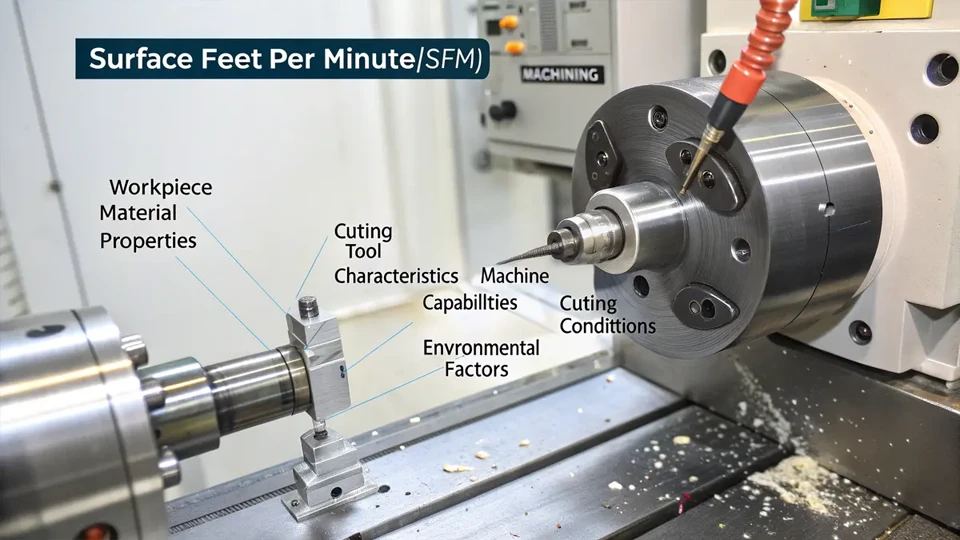
There is no single surface feet per minute value that applies universally across every CNC operation. While tooling catalogs provide reliable starting points, the optimal SFM is always a dynamic target. It must be carefully adjusted based on a matrix of variables that define the physical reality of the cut.
Workpiece Material
The metallurgical properties of the material being machined establish the baseline SFM. Materials with high thermal conductivity and lower hardness, such as aluminum alloys, permit extremely high surface speeds because they evacuate heat efficiently. Conversely, tough materials like titanium, Inconel, or hardened steel generate intense heat and shear resistance at the cutting zone. These require a drastically lower SFM to prevent thermal damage to both the tool and the part. Programmers must always base their initial speed window on the specific machinability rating of the workpiece.
Tool Material
The composition of the cutting tool determines its thermal threshold—exactly how much heat it can endure before its cutting edge degrades. High-Speed Steel (HSS) tools have a relatively low heat tolerance, which strictly limits their maximum surface speed. On the other hand, solid carbide tools or indexable inserts, particularly those enhanced with advanced coatings (like TiAlN or AlTiN), exhibit exceptional heat resistance. This superior metallurgy allows carbide to run at significantly higher speeds, shifting the boundary between the theoretical value and the usable value of the operation.
Machining Conditions
The specific nature of the toolpath forces necessary adjustments to the SFM. A heavy roughing pass with a large depth of cut generates massive tool pressure and heat, usually demanding a more conservative surface speed to maintain safety. In contrast, a light finishing pass can often sustain a higher SFM to shear the material cleanly and optimize cycle time. Furthermore, stable, continuous cutting allows for higher speeds, whereas interrupted cuts (such as milling across a void or turning a hex bar) introduce thermal shock and mechanical impacts, requiring a reduced SFM to protect the tool edge from chipping.
Machine Tool Rigidity
Finally, the physical machine limits the data sheet. Even if the workpiece and cutting tool can theoretically handle an aggressive SFM, the practical limit is ultimately dictated by machine tool rigidity. If the machine’s casting, guideway system, or overall structural stiffness cannot absorb the dynamic forces generated by high-speed cutting, the immediate result is destructive vibration and chatter. Achieving stable performance at higher surface speeds requires a highly rigid machine platform. If the setup lacks this stability, the programmer must lower the SFM to regain process control and protect the workpiece finish.
How Is Surface Feet Per Minute Calculated?
Surface feet per minute is calculated by combining spindle speed with the diameter at the cutting point. In machining, the purpose of this calculation is to convert rotational motion into actual surface cutting speed. Instead of looking at RPM alone, the formula shows how fast the cutting edge is really moving across the material surface.
The Standard SFM Formula
The standard formula is:
This is one of the most common ways to calculate cutting speed in inch-based machining. It is widely used because it connects spindle speed and diameter directly to the actual surface speed at the cutting zone.
What the Formula Means
In the formula, D stands for diameter in inches, and RPM stands for revolutions per minute. The symbol π is used because each revolution covers the circumference of a circle. The division by 12 converts the result from inches per minute into feet per minute, which is the standard unit for SFM.
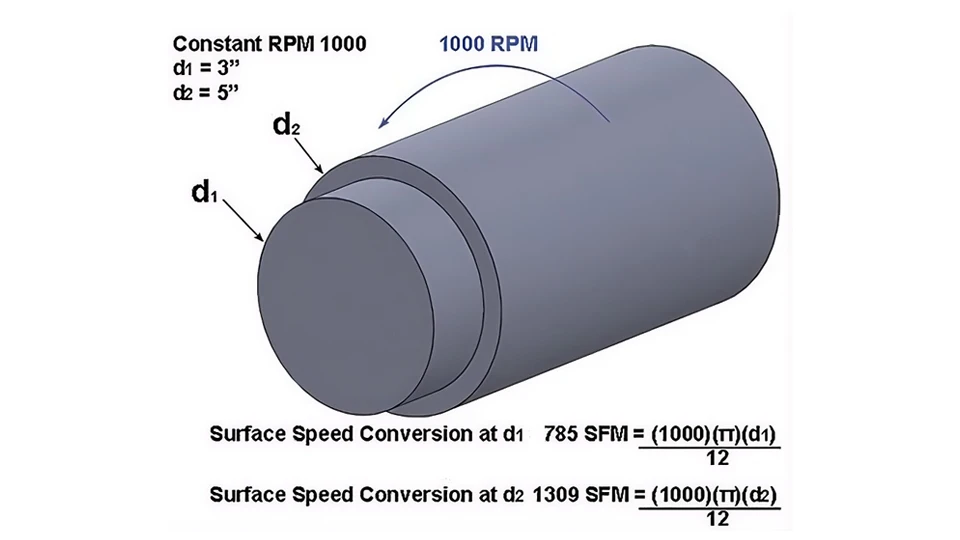
The meaning behind the formula is straightforward. A larger diameter creates a longer circumference, so each revolution covers more surface distance. If RPM stays the same, increasing diameter will increase SFM. That is why the same spindle speed does not always produce the same cutting speed in real machining.
A Simple Calculation Example
Suppose the cutting diameter is 2 inches and the spindle speed is 600 RPM. The calculation is:
The result is about 314.16 ft/min. This means the cutting edge is moving across the material surface at approximately 314 surface feet per minute.
This example shows why the formula matters. It translates spindle rotation into a practical cutting-speed value that can be used to evaluate machining conditions more accurately.
Surface Feet Per Minute vs. RPM: What Is the Difference?
Surface feet per minute and RPM are related, but they do not describe the same thing. RPM, or revolutions per minute, measures how many times the spindle or workpiece rotates in one minute. SFM measures how fast the cutting edge travels across the material surface during that motion.
This difference matters because rotational speed and surface speed are not interchangeable. RPM only tells how fast something is turning. It does not by itself show how much surface distance is covered at the cutting point. SFM does. That is why SFM gives a more direct view of the real cutting speed in machining.
Diameter is the key reason the two values are different. If two tools run at the same RPM but have different diameters, their cutting edges do not travel the same surface distance in one revolution. The larger diameter covers more distance per turn, so it produces a higher SFM even though the RPM is unchanged.
The same logic applies in turning. If the spindle speed stays constant but the cutting diameter changes, the surface feet per minute also changes. This is why machinists cannot judge actual cutting speed from RPM alone. RPM describes rotation. SFM describes the real speed at the contact surface where cutting takes place.
How Does Surface Feet Per Minute Affect Cutting Speed?
When operators and engineers discuss cutting speed, they are often referring to a general concept of how fast a machining process feels or sounds. However, in professional CNC programming, surface feet per minute is the exact, quantifiable measurement of that speed. SFM is not merely related to cutting speed; it is the definitive metric used to express the relative speed at the cutting zone. It defines exactly how fast the tool’s edge is engaging and shearing the workpiece.
Changing the surface feet per minute fundamentally alters the physics of the cut. The most immediate impact of increasing SFM is a drastic rise in friction and heat at the point of contact. This shift in thermal dynamics directly changes the material removal behavior. For some ductile materials, a higher cutting speed helps plasticize the metal just ahead of the cutting edge, allowing for a smoother, cleaner shear. For tougher alloys, that same increase in speed causes the heat to overwhelm the tool, turning a stable cut into a destructive one.
Conversely, lowering the SFM reduces the thermal load but increases the mechanical cutting force required to separate the chip from the base material. If the cutting speed drops too low, the tool stops shearing efficiently and begins to push or tear the metal.
Ultimately, the chosen SFM dictates whether the operation produces a stable or unstable cutting response. It determines chip formation, the distribution of cutting forces, and the smoothness of the cutting action itself. By controlling surface feet per minute, programmers are directly controlling the underlying physical behavior of the cutting speed, ensuring the machine operates within the optimal parameters for that specific material.

How Does Surface Feet Per Minute Affect Tool Life?
In manufacturing, tool life is fundamentally a calculation of cost and stability. The rate at which a cutting tool degrades is intrinsically linked to the thermal and mechanical stresses it endures, and surface feet per minute is the primary controller of those stresses. Understanding this relationship allows programmers to stop guessing and start engineering their tool life.
When SFM Is Too High
Pushing the surface speed beyond the tool’s thermal threshold is the most common cause of premature tool wear. As the surface feet per minute increases, the friction at the tool-workpiece interface generates intense heat. If the speed is too high, this heat is generated faster than it can be evacuated through the metal chips. The excess heat concentrates directly on the cutting edge, leading to rapid flank wear, crater wear, or thermal cracking. Ultimately, this results in unpredictable edge failure, forcing the machine operator to halt production, change tools, and potentially scrap parts.
When SFM Is Too Low
A common misconception on the shop floor is that drastically lowering the cutting speed will safely extend tool life. In reality, when the SFM is too low, the tool often experiences inefficient cutting behavior. Without sufficient speed to generate the necessary heat for material plasticization, the tool tends to push and tear the metal rather than shear it cleanly. This can cause the workpiece material to weld itself to the cutting edge, a destructive condition known as built-up edge. Furthermore, running at abnormally low speeds guarantees lower productivity and poor process economy, making the manufacturing operation fundamentally uncompetitive.
Why Balance Matters
Optimizing tool life is not about running the machine as slowly as possible; it is about finding the exact parameter where the tool performs consistently. The best result comes from a stable and economical speed window where the heat is efficiently carried away by the chip, and the edge wear is gradual and predictable. By selecting a balanced surface feet per minute, manufacturers ensure that the tool lasts long enough to justify its tooling cost, while still cutting fast enough to maintain high overall machining efficiency.

How Does Surface Feet Per Minute Affect Surface Finish?
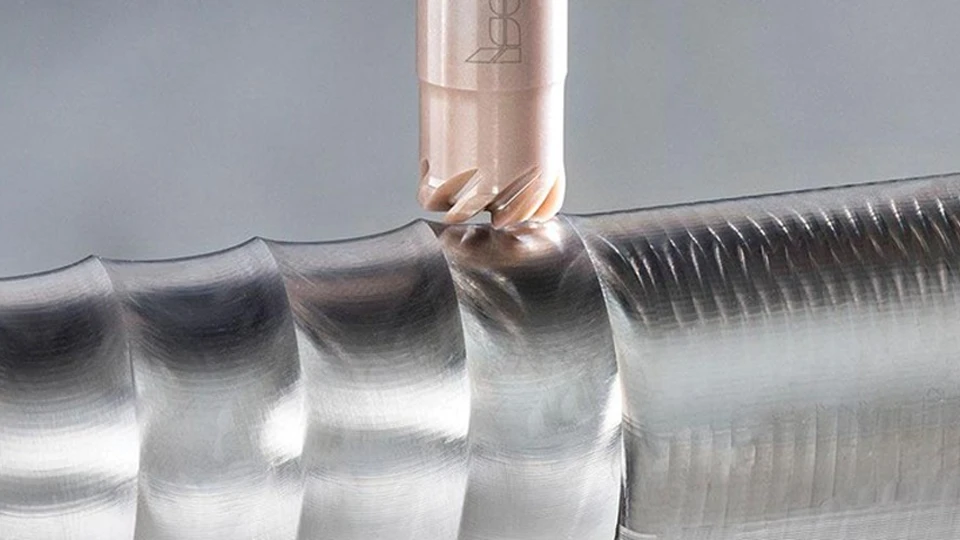
Surface finish is one of the clearest visible results of whether the selected SFM matches the machining condition. When the surface feet per minute is appropriate, the cutting edge engages the material in a more stable and controlled way. This usually helps the process produce a cleaner surface pattern, more consistent texture, and a more predictable final appearance.
If the SFM is too high, the cutting zone may generate more heat than the tool and workpiece can manage effectively. That extra heat can accelerate edge wear, disturb the cutting action, and leave behind a rougher or less consistent finish. In difficult materials, excessive speed may also increase the risk of surface damage caused by unstable contact at the tool-workpiece interface.
If the SFM is too low, the tool may stop shearing the material efficiently. Instead of making a clean cut, it may begin to push, drag, or tear the surface. This often leads to poor finish quality, irregular tool marks, and a less controlled surface appearance. In some cases, low cutting speed can also encourage built-up edge, which further damages surface consistency.
Surface finish is therefore not determined by tool geometry alone. It also depends on whether the selected SFM allows the cut to remain stable from start to finish. A balanced surface speed helps the tool cut cleanly, manage heat more effectively, and maintain a smoother, more repeatable result across the workpiece.
Conclusion
Surface feet per minute may appear to be a simple cutting parameter, but it sits at the center of real machining performance. It connects spindle motion to actual cutting speed at the tool-workpiece interface, and that connection shapes far more than many beginners expect. Across CNC machining, the correct SFM influences cutting behavior, heat generation, tool life, surface finish, and overall efficiency. Once this parameter is understood clearly, machining decisions become less dependent on guesswork and more grounded in process control, consistency, and measurable production results.
In that broader context, machine builders also play an important role in how well cutting parameters perform in practice. A well-designed CNC machine with strong rigidity, stable motion, and dependable build quality gives operators a better foundation for applying SFM effectively in real production. That is one reason manufacturers such as Rosnok continue to focus on CNC machines built for reliable metal machining, helping customers translate machining theory into stable, repeatable, and commercially practical results on the shop floor.