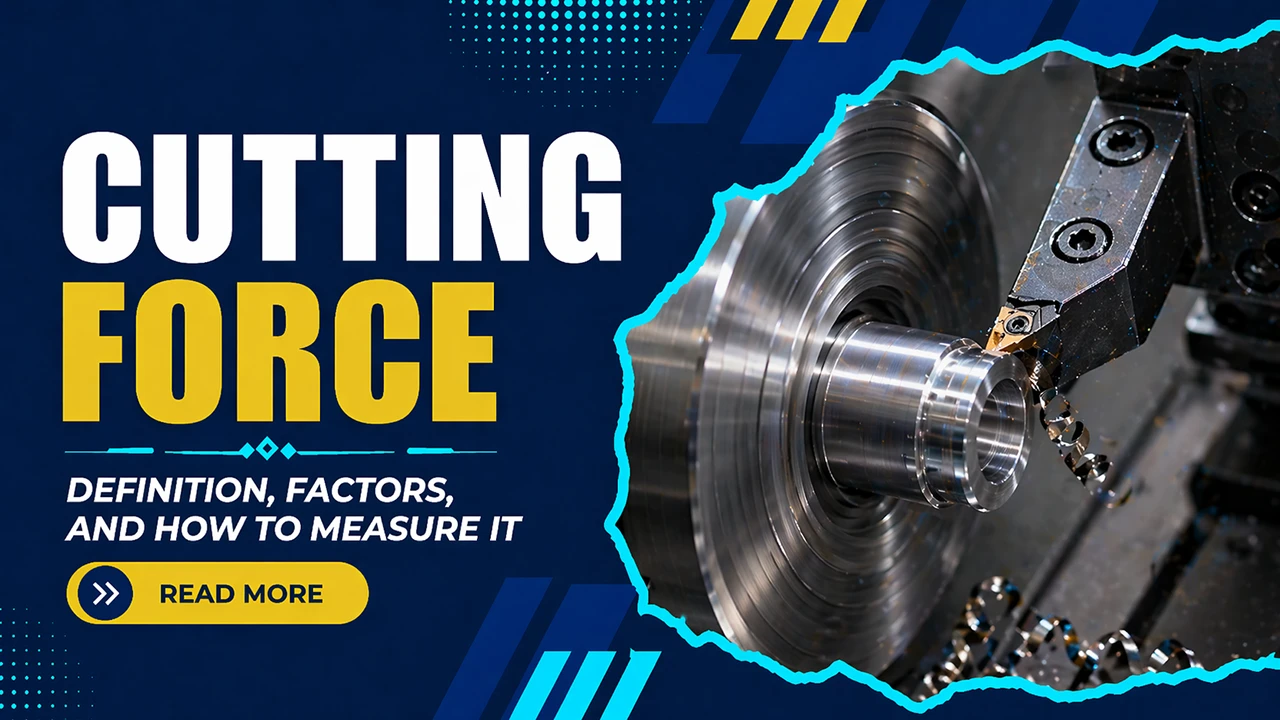
In real machining, cutting force affects far more than material removal itself. It influences tool wear, vibration, surface finish, dimensional accuracy, power consumption, and even the service life of the machine. Whether the process involves turning, milling, drilling, or boring, cutting force plays a central role in process stability and overall machining efficiency. That is why it matters not only in theory, but also in everyday production decisions.
Read on to learn what cutting force means, what factors influence it, how it is measured, and how a better understanding of it can support more reliable machining analysis.
What Is Cutting Force in Machining?
In metalworking, cutting force is the mechanical force generated when a cutting tool engages a workpiece and shears material to form chips. It arises from the physical resistance created during machining, including the elastic and plastic deformation of the material, the shearing action required for chip formation, and the frictional contact between the tool, the chip, and the machined surface. It is one of the most fundamental physical loads in metal cutting because it represents the mechanical effort required to remove material from the workpiece.
Cutting force does not exist as an isolated reaction limited to the cutting edge. Instead, it acts as a continuous mechanical load throughout the machining system, affecting the cutting tool, the workpiece, and the machine structure at the same time. As machining conditions change, both the magnitude and the state of this force can also change, making it a real and active part of the cutting process rather than a purely theoretical value.
What Are the Main Components of Cutting Force?
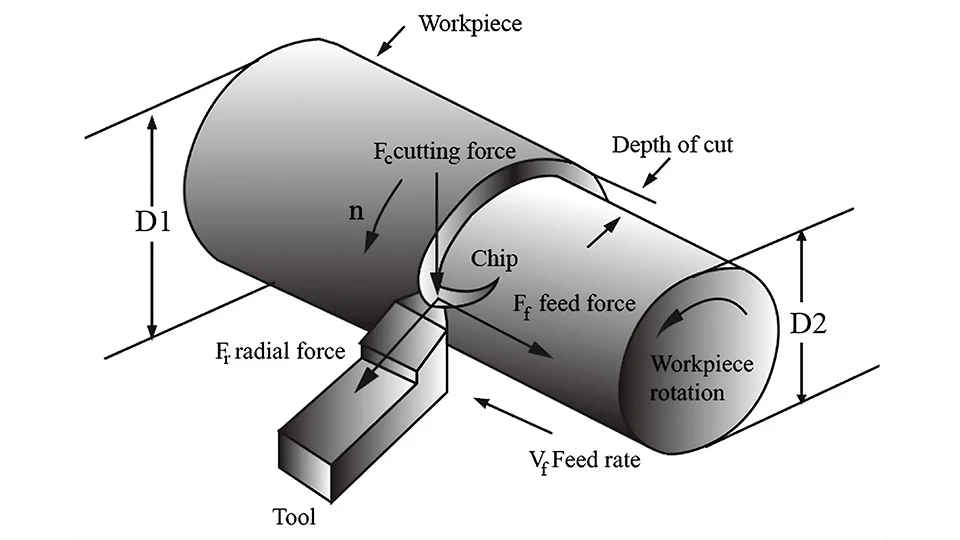
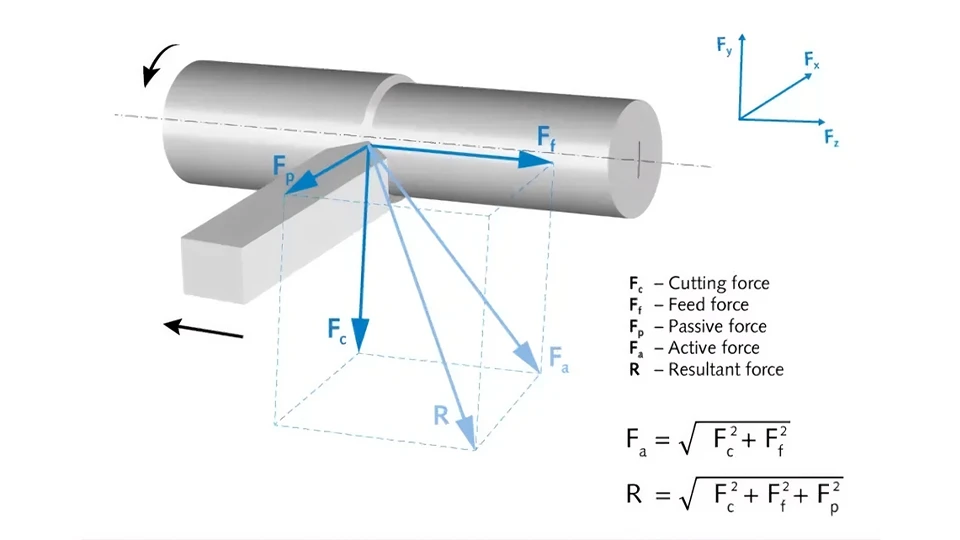
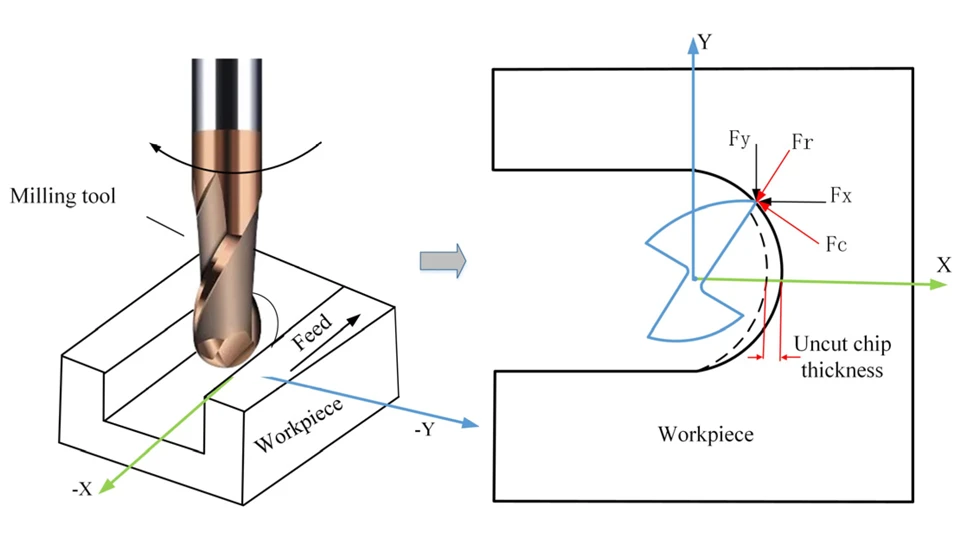
In a dynamic machining environment, the total cutting force is not a single, one-dimensional push. It acts as a three-dimensional spatial vector. To effectively analyze its impact on the machine tool and the workpiece, engineers resolve this resultant force into three mutually perpendicular components based on the Cartesian coordinate system.
Main Cutting Force
The main cutting force acts in the direction of the primary cutting motion, tangential to the workpiece surface. It is typically the largest of the three components, accounting for the vast majority of the total mechanical resistance. Because it directly opposes the rotation of the spindle or the workpiece, this force dictates the required spindle motor torque and is the primary driver of overall power consumption during the machining cycle.
Feed Force
Also known as the axial force, the feed force acts parallel to the direction of the tool feed. It represents the resistance the tool encounters as it is pushed forward into the material. While smaller than the main cutting force, it directly impacts the stability of the feed drive mechanisms. A high feed force tests the structural limits and load capacity of the machine’s ball screws and linear guideways.
Radial Force
The radial force, or thrust force, acts perpendicular to the generated workpiece surface, continuously pushing the cutting tool away from the part. Although it is generally the smallest component in magnitude, its importance is particularly prominent. Because it acts laterally against the tool and workpiece, excessive radial force is the leading cause of tool deflection, workpiece deformation, and machining vibration.
Why Force Direction Matters in Machining
Analyzing cutting force requires looking beyond the total magnitude to understand its directional distribution. A massive main cutting force might simply require a higher-horsepower spindle, but a disproportionately high radial force can destroy dimensional accuracy and trigger severe chatter, even on a highly rigid machine. Therefore, understanding exactly where and how these forces are applied is the first step in diagnosing process instability.
Why Cutting Force Matters in Machining
Cutting force affects far more than the process of material removal itself. Once the tool engages the workpiece, this force begins to influence tool condition, surface generation, dimensional control, process behavior, and machine loading.
Its Effect on Tool Wear and Tool Life
Cutting force has a direct effect on tool wear because it determines how much mechanical load the cutting edge must withstand during machining. When the force becomes too high, stress at the tool edge increases, which can accelerate flank wear, edge chipping, and premature failure. A stable force condition usually supports more predictable tool life, while excessive or fluctuating force often shortens it.
Its Effect on Surface Finish
Cutting force also affects surface finish because the tool must remain stable while passing through the cut. If the force becomes unstable, the tool may vibrate slightly, lose consistent cutting action, or leave irregular marks on the machined surface. As a result, higher or poorly controlled cutting force can lead to rougher finishes and lower surface quality.
Its Effect on Dimensional Accuracy
Dimensional accuracy is closely related to cutting force because force can deflect both the tool and the workpiece. Under load, even a small amount of deformation can shift the actual cutting position away from the intended one. This makes excessive cutting force a common source of size error, profile deviation, and reduced machining precision.
Its Effect on Process Stability
Process stability depends heavily on how cutting force behaves during machining. When the force remains relatively stable, the operation is usually easier to control. When it becomes irregular or too large, the risk of vibration, chatter, and unstable cutting increases. In this sense, cutting force is not only a result of machining conditions, but also an important factor in whether the process remains stable.
Its Effect on Power Consumption and Machine Load
Cutting force is closely tied to power consumption because greater force generally requires greater mechanical effort from the machine. As cutting force rises, the load on the spindle, drive system, and structural components also increases. This means cutting force affects not only the cutting zone itself, but also the overall load state of the machine during operation.
What Factors Influence Cutting Force?
Cutting force does not remain constant during machining. It changes with the material being cut, the selected cutting parameters, the cutting tool itself, and the rigidity of the machining system. In practice, this means cutting force is shaped by both the cutting conditions and the physical environment in which cutting takes place.
Workpiece Material
Workpiece material is one of the most direct factors affecting cutting force. Materials with higher strength, hardness, or toughness usually generate greater resistance during cutting. Different materials also deform and fracture differently, which changes how much force is required to remove material.
Cutting Speed
Cutting speed influences cutting force, but its effect is not always straightforward. In some cases, increasing cutting speed can reduce force slightly because higher temperature in the cutting zone softens the material. In other cases, the effect may be limited or may interact with tool wear and heat generation.
Feed Rate
Feed rate has a strong effect on cutting force because it changes how much material the tool removes as it advances. As feed increases, the uncut chip becomes thicker, and the mechanical load on the tool generally rises. This usually leads to higher cutting force.
Depth of Cut
Depth of cut is another major factor because it determines how much of the cutting edge is engaged with the material. A greater depth of cut usually increases the contact area and the volume of material being removed, which raises cutting force accordingly.
Tool Geometry
Tool geometry directly affects how the tool enters the material and how the chip is formed. Rake angle, clearance angle, edge sharpness, and nose radius can all change the cutting action. A sharper and more favorable geometry often reduces cutting force, while a less favorable geometry can increase resistance and load.
Tool Material and Coating
Tool material and coating influence cutting force mainly through their effect on friction, heat resistance, and cutting behavior. Different tool materials interact differently with the workpiece, and coatings can change the contact condition between the tool and the material. This can alter how force develops during cutting.
Tool Wear Condition
As a tool wears, cutting force usually increases. A worn cutting edge creates more friction and less efficient cutting action, which raises resistance in the cutting zone. This is one reason why cutting force often changes over the life of the tool.
Cutting Fluid and Lubrication
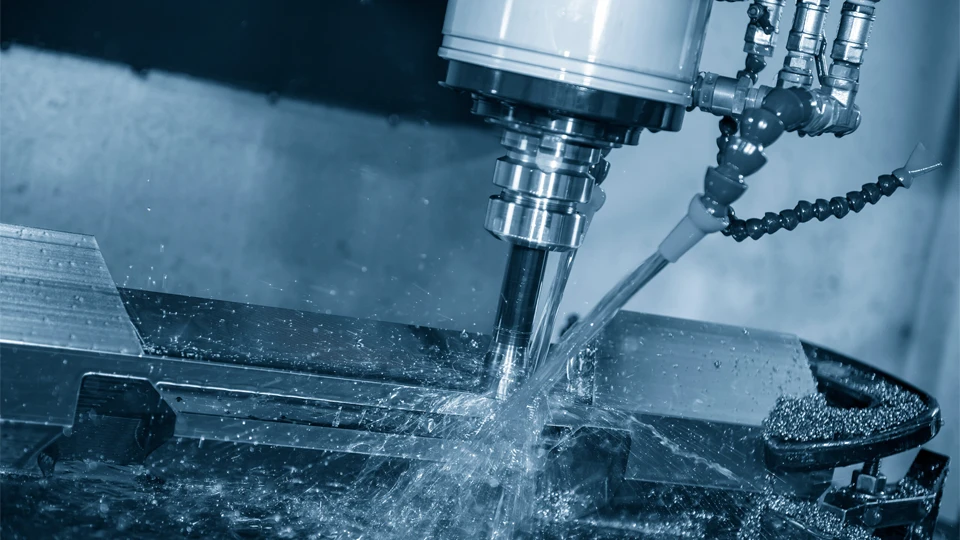
Cutting fluid and lubrication can affect cutting force by reducing friction and helping control heat in the cutting zone. Better lubrication usually makes chip formation and tool-workpiece contact more favorable, which can lower cutting resistance under suitable conditions.
Machine Rigidity and Setup Conditions
Machine rigidity and setup conditions also influence how cutting force behaves in practice. Even if the nominal cutting conditions stay the same, a weak setup, long tool overhang, or poor clamping condition can make the force act less stably on the system. This does not always change the theoretical force itself, but it can strongly affect how that force is transmitted and tolerated during machining.
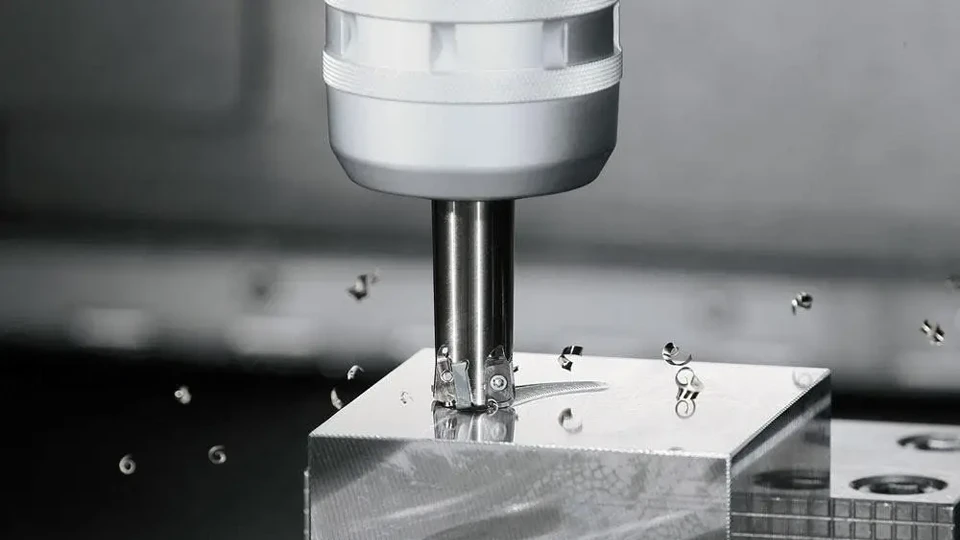
How Cutting Force Behaves in Different Machining Operations
The kinematic differences between various machining operations fundamentally change how the cutting force is applied to the tool, the workpiece, and the machine structure. Recognizing these distinct behavioral patterns is essential for accurate process analysis and machine selection.
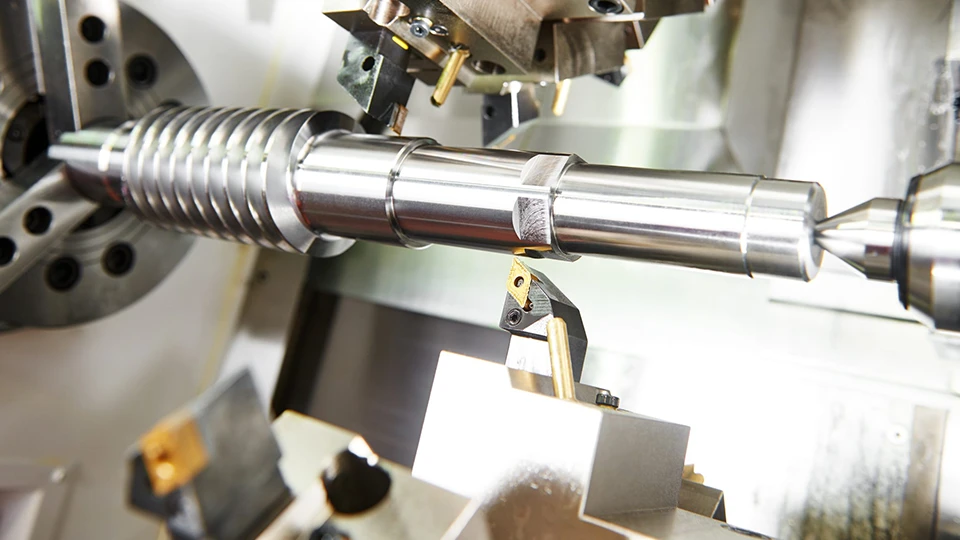
Cutting Force in Turning
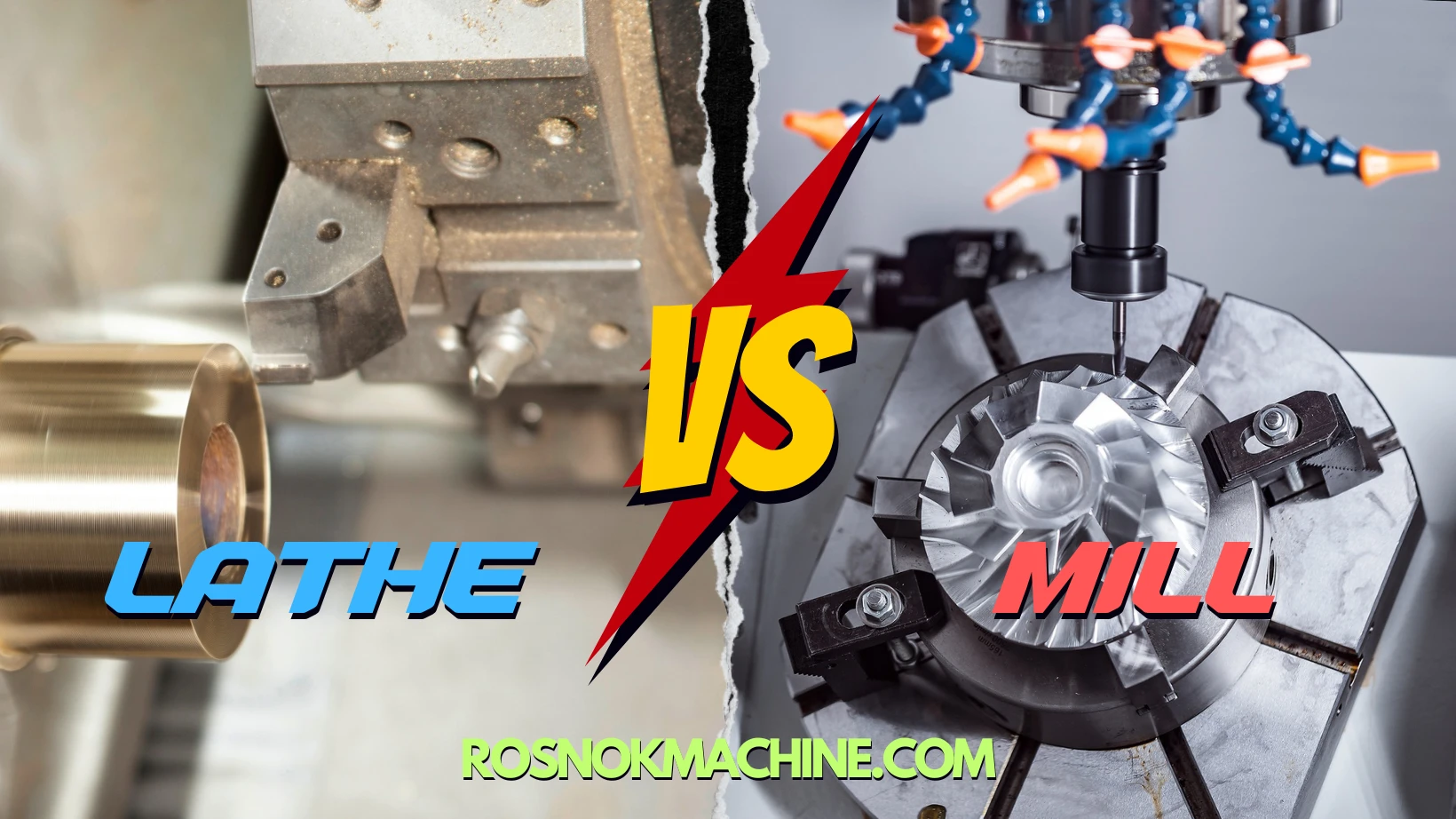
Turning is fundamentally a continuous cutting operation using a single-point tool. During a standard turning pass, the cutting force remains relatively constant, acting as a steady mechanical load on the lathe’s structural components. Because the tool is continuously engaged, the force magnitude usually fluctuates only if the tool encounters hard spots, irregular material allowances, or transitioning geometric features.
Cutting Force in Milling
Unlike turning, milling is an interrupted cutting process characterized by cyclic loading. As each insert on a multi-tooth cutter enters and exits the workpiece, the cutting force rises from near zero to a peak value and then falls again. This continuous mechanical shock and dynamic force fluctuation demand high dynamic stiffness from the machine’s spindle and cast-iron frame to prevent chatter and long-term structural fatigue.
Cutting Force in Drilling
Drilling operations occur in a confined, closed space where the mechanical resistance is highly concentrated. The cutting force here is dominated by two primary vectors: a strong torsional load (torque) generated by the main cutting edges, and a high axial thrust force required to push the chisel edge into solid material. Additionally, as hole depth increases, packed chips can cause severe frictional resistance, leading to force spikes.
Cutting Force in Boring
Boring involves enlarging internal cavities, typically requiring a slender tool (boring bar) with a long overhang. In this operation, the process is highly sensitive to the radial component of the cutting force. Because the long, unsupported bar acts as a cantilever, even relatively light radial forces can push the tool away from the machined surface. This physical setup makes boring especially susceptible to tool deflection, dimensional taper, and vibration.
How Is Cutting Force Measured?
Measuring cutting force is important because it turns cutting behavior into observable data rather than assumption. In machining analysis, this helps engineers study process load, compare cutting conditions, evaluate tool performance, and better understand how force develops during actual material removal.
Why Measuring Cutting Force Matters
Cutting force measurement is useful because many machining problems cannot be judged accurately by appearance alone. Tool wear, unstable cutting, excessive load, and process inefficiency may all relate to force behavior. Measuring force provides a more direct basis for analyzing what is happening in the cut.
Direct Measurement Methods
Direct measurement captures the actual mechanical load close to where it is applied. This is primarily achieved using multi-component dynamometers or force platforms mounted directly under the workpiece or integrated into the tool holder. These devices physically intercept the force path, yielding highly accurate, multi-axis mechanical profiles of the exact force vectors acting on the system.
Indirect Measurement Methods
Indirect measurement does not capture cutting force itself at the cutting interface. Instead, it estimates or infers force from related signals such as spindle power, motor current, vibration, acoustic emission, or drive load. This approach is often more practical in production environments, although its accuracy usually depends on the quality of the model or correlation being used.
Force Sensors Commonly Used in Machining Research
For high-level analytical applications, piezoelectric sensors remain the industry standard. These highly specialized, quartz-based sensors generate a proportionate electrical charge when subjected to mechanical compression or shear. They feature exceptionally high structural rigidity and rapid high-frequency response rates, making them indispensable for capturing dynamic, transient force spikes, such as the initial impact in milling or sudden micro-chipping events.
Advantages and Limitations of Different Measurement Methods
Direct measurement methods usually offer better force fidelity because they measure the load more directly. However, they often require dedicated equipment, careful setup, and added cost. Indirect methods are easier to integrate into real machines in some cases, but they are usually less direct and more dependent on interpretation. In practice, the best method depends on whether the goal is research accuracy, process monitoring, or production feasibility.
Measurement Challenges in Real Production
In real production, cutting force measurement is often more difficult than in laboratory conditions. Limited installation space, machine layout, signal noise, coolant, chip flow, and changing cutting conditions can all affect measurement quality. For this reason, force measurement in industry is often a balance between data quality, system complexity, and practical usability.
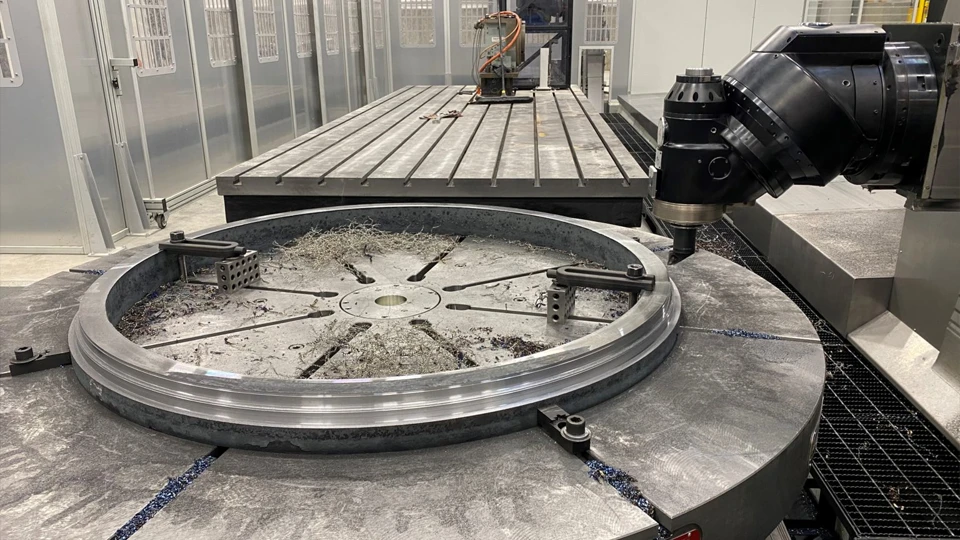
Practical Ways to Control Cutting Force
Once cutting forces are understood and measured, they must be actively managed on the shop floor. Controlling these mechanical loads is not about eliminating them entirely, but rather manipulating them to maintain process stability and maximize efficiency.
Optimize Cutting Parameters
Cutting parameters are one of the most direct ways to control cutting force. Feed rate and depth of cut usually have the strongest influence because they determine how much material the tool removes under load. Cutting speed can also affect force, although its influence is often less direct and may depend on material behavior, heat generation, and tool condition.
Choose the Right Tool Geometry
Tool geometry has a strong effect on how force develops in the cutting zone. A sharper edge, a more favorable rake angle, or a more suitable edge profile can reduce cutting resistance and improve chip formation. Poor geometry, by contrast, can increase load and make the process less stable.
Reduce Overhang and Improve Rigidity
A rigid setup helps the machining system tolerate cutting force more effectively. Long tool overhang, weak clamping, or insufficient support can make the same force behave more aggressively in practice. Reducing overhang and improving rigidity do not necessarily lower the theoretical force, but they can greatly reduce its negative effects on stability and accuracy.
Keep the Tool in Good Condition
Tool condition is closely tied to cutting force control. As wear increases, cutting usually becomes less efficient and mechanical resistance tends to rise. Replacing worn tools in time helps keep force behavior more consistent and reduces the risk of unstable cutting.
Match the Machine and Setup to the Cutting Task
Different cutting tasks place different demands on the machining system. A setup that performs well under light finishing conditions may not remain stable under heavier loads. Matching machine capability, holder strength, clamping quality, and setup rigidity to the actual cutting task is therefore an important part of controlling cutting force in real machining.
Conclusion
Cutting force is far more than a background concept in machining. It is a core mechanical reality that directly shapes tool life, surface finish, dimensional accuracy, process stability, and machine load. A clearer understanding of what cutting force is, what influences it, how it behaves in different operations, and how it can be measured gives manufacturers a stronger basis for making sound machining decisions. In practical terms, better force awareness leads to better process judgment, more stable cutting conditions, and more reliable machining performance.
However, actively managing these extreme mechanical loads ultimately requires a highly rigid physical foundation capable of absorbing severe dynamic forces. This structural integrity is a core focus for specialized CNC machine tool manufacturers like Rosnok. By engineering machining centers and turning equipment with robust cast-iron frames and high-load-capacity motion systems, Rosnok ensures that the physical hardware provides the necessary static and dynamic stiffness to withstand intense cutting forces, allowing for stable, high-precision manufacturing across demanding industrial applications.