In actual machining, chip load has a direct effect on cutting action, material removal efficiency, process stability, and tool performance. If it falls outside a reasonable range, the result may be rubbing instead of cutting, inefficient chip formation, excess heat, premature wear, or unstable machining conditions.
The sections that follow explain how chip load is calculated, which factors influence it, how it relates to real cutting conditions, and what practical mistakes should be avoided when applying it in milling.
What Is Chip Load?
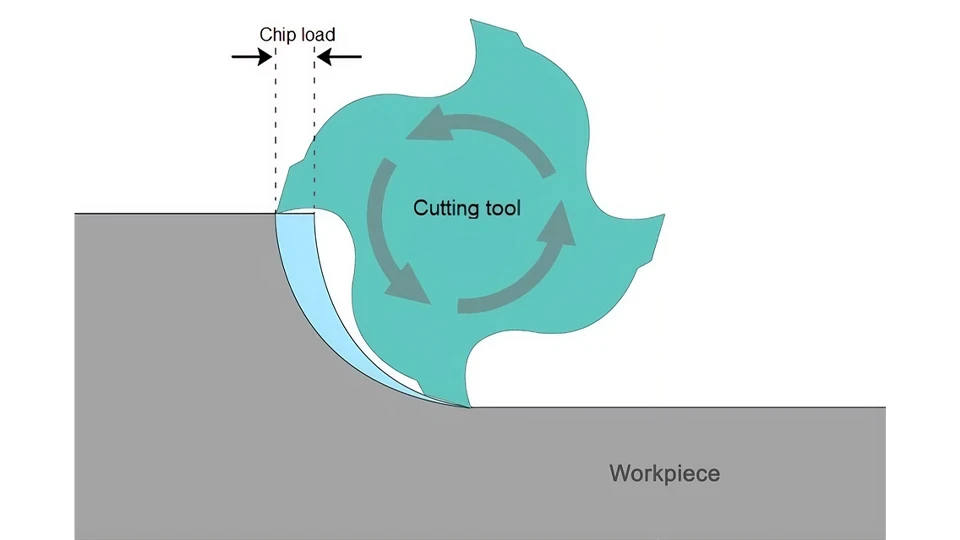
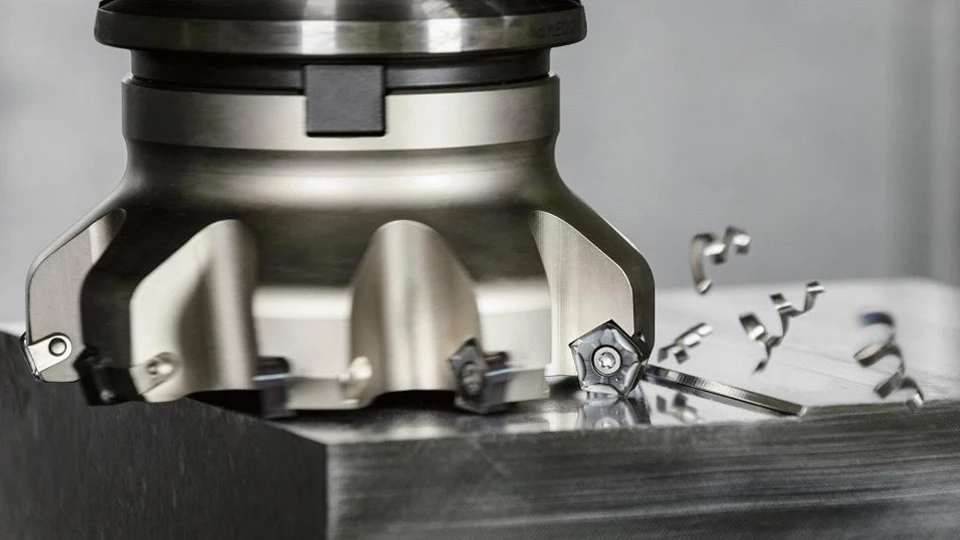
Chip load is the amount of material removed by each cutting edge of a milling tool in one revolution. In milling terminology, it is commonly discussed as feed per tooth (fz), which is used to determine table feed and describe how much work each tooth is doing as the cutter moves through the material.
Chip load is not the same thing as feed rate. Feed rate describes how fast the tool advances relative to the workpiece, while chip load focuses on the share of that motion carried by each tooth. In other words, feed rate is a machine-level movement value, but chip load is a tooth-level cutting value.
At the same time, chip load should not be confused with maximum chip thickness. Sandvik distinguishes feed per tooth from maximum chip thickness and notes that the relationship can change with cutter engagement and entering angle. That means chip load is a foundational milling value, but it is not always identical to the exact chip thickness produced under every cutting condition.
Why Does Chip Load Matter in Machining?
Knowing what chip load means is only the starting point. The next issue is why this value matters and how it is reflected in the real performance of a milling operation.
Chip Load and Cutting Efficiency
Chip load directly affects how effectively each tooth removes material. When the value is within a reasonable range, the cutter shears material more efficiently and supports a stronger material removal rate (MRR). When it is too low or too high, cutting efficiency drops.
Chip Load and Tool Life
Chip load also affects tool life. If the load on each tooth is too light, the cutter may rub instead of cut cleanly. If the load is too heavy, the cutting edge may wear faster or fail earlier. In both cases, tool life is reduced.
Chip Load and Heat Generation
Heat is closely related to chip load. An unsuitable chip load can increase friction, weaken chip formation, and cause unnecessary heat during cutting. Excess heat can shorten tool life and reduce cutting quality.
Chip Load and Process Stability
Chip load influences how stable the milling process remains. A reasonable chip load helps the cutter work under a more balanced cutting condition. An improper chip load can contribute to unstable cutting, inconsistent load on the teeth, and a less reliable process.
Chip Load and Surface Quality
Chip load can also affect the final surface condition of the part. If the cutting action is not stable or the tooth load is not appropriate, the result may be poorer surface quality and less consistent machining results.
What Factors Affect Chip Load?
Chip load is not an isolated number. It is the physical result of several interacting variables in the machining environment. Understanding how these factors influence chip load is essential for adjusting parameters and maintaining optimal cutting conditions.
Feed Rate
Feed rate and chip load share a directly proportional relationship. Assuming the spindle speed and flute count remain constant, increasing the feed rate forces the tool to advance faster through the material. This requires each tooth to take a larger “bite” per revolution, resulting in a heavier chip load.
Spindle Speed
Spindle speed (RPM) has an inversely proportional relationship with chip load. If the feed rate stays the same but the spindle spins faster, the cutting edges pass through the material more frequently. This distributes the same feed distance across more cutting passes, resulting in a smaller, thinner chip load per tooth.
Number of Flutes
The number of cutting edges on the tool also divides the total workload. For a given feed rate and RPM, a tool with more flutes will produce a lighter chip load because the material removal is shared among more teeth. For example, switching from a 2-flute to a 4-flute end mill under the exact same parameters will cut the chip load exactly in half.
Tool Diameter and Tool Type
The physical size and geometry of the cutter dictate its structural capacity. A tool with a larger diameter has a thicker core and can withstand the physical cutting forces of a heavier chip load. Additionally, specific tool geometries—such as tools with different entering angles—can alter the actual chip thickness due to the chip thinning effect, which requires operators to adjust their target chip load accordingly.
Workpiece Material
The machinability of the workpiece material strictly limits the maximum allowable chip load. Softer materials, like aluminum alloys, typically allow for and even require a heavier chip load to prevent built-up edge (BUE) and facilitate proper chip evacuation. Conversely, harder materials, such as tool steel or titanium, impose much higher cutting forces and require a significantly lighter chip load to protect the cutting edge from chipping.
Cutting Conditions and Machine Rigidity
Actual cutting conditions also affect usable chip load. Tool overhang, workholding strength, machine rigidity, vibration, and overall setup stability directly limit how much load the cutter can carry in practice. Even when a theoretical chip load looks acceptable, a weak machine-tool-workpiece system may not support it reliably and often requires a more conservative value.
How Is Chip Load Calculated?
Now that we understand the physical definition and the factors that influence it, the next step is mathematical application. Calculating chip load requires a straightforward formula that connects your programmed machine inputs to the tooth-level cutting result.
The Standard Chip Load Formula
The foundational formula for calculating chip load is:
Note: Depending on your region, the resulting chip load is expressed either as millimeters per tooth [mm/tooth] in the metric system or inches per tooth [IPT] in the imperial system.
What Each Variable Means
In the context of this calculation, the variables represent the following exact inputs:
- Feed Rate: The linear velocity at which the machine axes advance the tool through the workpiece (measured in mm/min or IPM).
- Spindle Speed (RPM): The rotational speed of the machine spindle (measured in Revolutions Per Minute).
- Flutes: The exact number of active cutting edges on the milling tool.
A Simple Chip Load Calculation Example
Let’s apply the formula to a practical milling scenario:
- Feed Rate: 1200 mm/min
- RPM: 6000
- Flutes: 4
Calculation:
In this scenario, the calculation tells us that the programmed chip load is 0.05 mm/tooth, meaning each cutting edge is assigned that load under these cutting parameters.
Reverse Calculation (Finding Feed Rate)
In actual CNC programming, operators usually look up the tooling manufacturer’s recommended target chip load first, and then use it to find the correct feed rate. To do this, simply reverse the formula:
Using the previous numbers as a check:
What Happens When Chip Load Is Too Low or Too High?
Operating outside the optimal chip load range shifts the machining process from efficient shearing to either severe friction or mechanical overload. Both extremes damage tools and parts, but they do so through different physical mechanisms.
What Happens When Chip Load Is Too Low?
When the chip load is insufficient, the cutting edge fails to penetrate the material properly. Instead of cleanly slicing a chip, the tool drags across the workpiece. This rubbing action generates excessive friction and heat. Because the resulting chip is too thin or nearly absent, it cannot remove heat effectively. Much of that heat remains in the cutter-workpiece interface, which can lead to poor chip formation, work-hardening in susceptible materials, and rapid abrasive wear on the tool.
What Happens When Chip Load Is Too High?
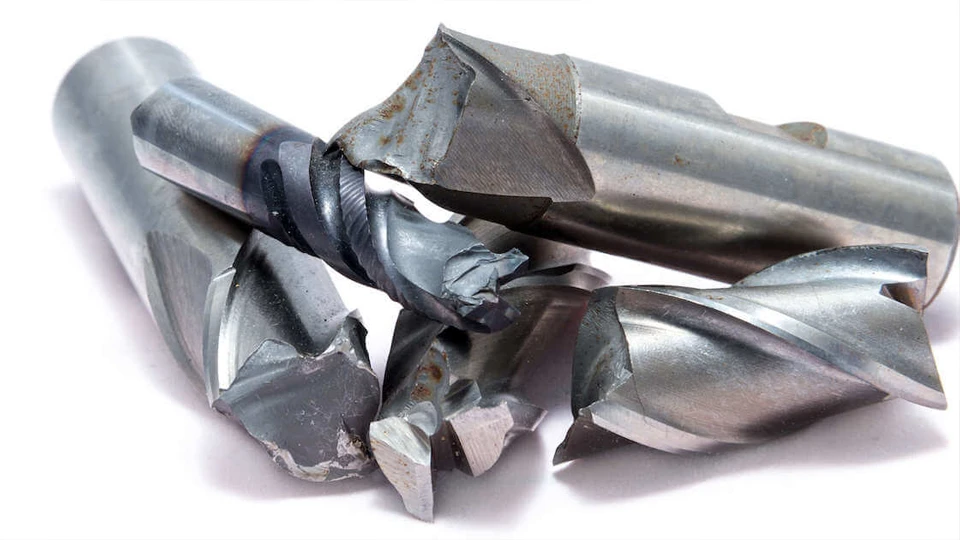
Conversely, an excessive chip load forces the tool to take a larger “bite” than its geometry can structurally handle with stability. Cutting forces rise sharply, and the flute gullets may clog due to the volume of removed material. This mechanical overload can lead to unstable cutting conditions, micro-chipping along the cutting edge, a loss of process control, and a much higher risk of sudden tool breakage.
How to Recognize an Improper Chip Load in Practice
Machinists do not rely on math alone; they diagnose improper parameters by observing the physical feedback of the active cut:
- Sound: A high-pitched, screeching squeal usually indicates rubbing from a chip load that is too low. A heavy, aggressive banging or hammering sound suggests the cutter is overloaded by a high chip load.
- Chip Formation: A healthy cut produces consistent, well-formed chips. Thin, dusty, or stringy chips point to a low load. Thick, fractured, or violently ejected chips indicate an excessive load.
- Heat and Color: If the tool or the workpiece turns blue or smokes while the chips remain uncolored, the chip load is too low (heat is staying in the part). In a proper cut, the chips should change color from the heat, not the tool.
- Surface Appearance: A low chip load often leaves a smeared, burnished, or thermally damaged surface. A high chip load typically results in deep, pronounced scallops, visible chatter marks, or torn material.
Conclusion
Mastering CNC milling is more than just pressing a cycle start button; it is about understanding the physical dialogue between the cutter and the metal. At its core, chip load is the ultimate metric that defines this interaction. By accurately calculating the relationship between feed rate, spindle speed, and flute count, machinists can move beyond guesswork. They can take deliberate control of heat dissipation, optimize material removal rates, and manage tool wear to achieve a highly stable, predictable, and profitable cutting process.
Yet, even the most precisely calculated chip load cannot be successfully applied without a solid physical foundation. Executing optimal tooth loads requires exceptional structural support from the equipment itself to absorb cutting forces and eliminate vibration. This exact mechanical requirement is what drives the engineering behind Rosnok. As a dedicated manufacturer of CNC machine tools, Rosnok specializes in building high-rigidity machining centers designed to seamlessly support demanding chip loads, empowering workshops to turn theoretical cutting efficiency into tangible manufacturing reality.