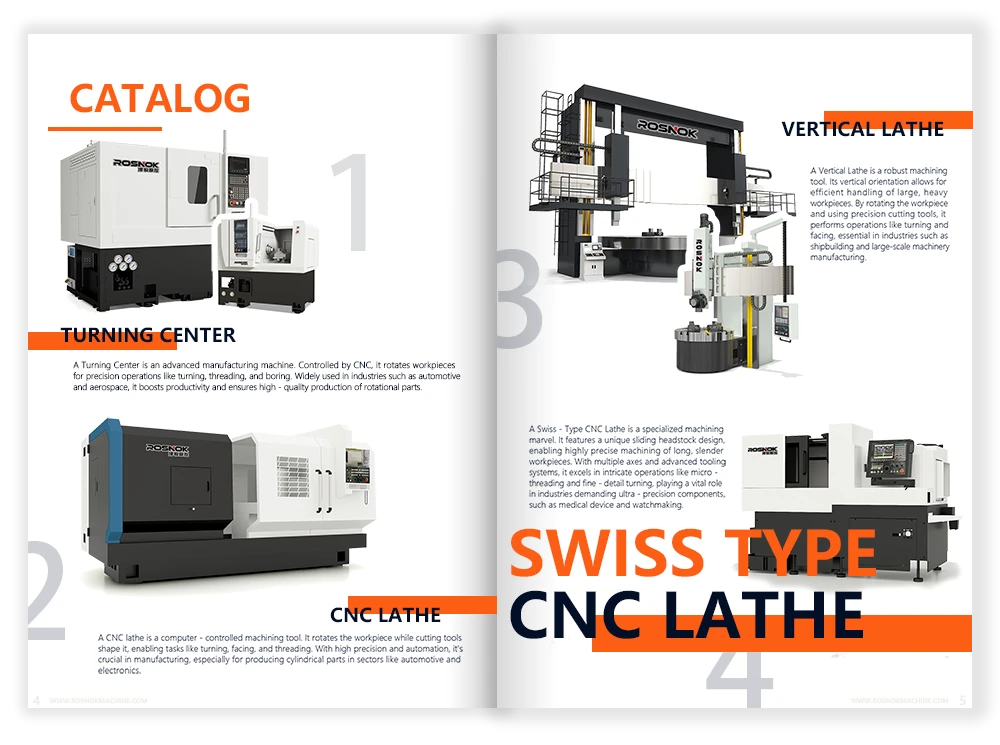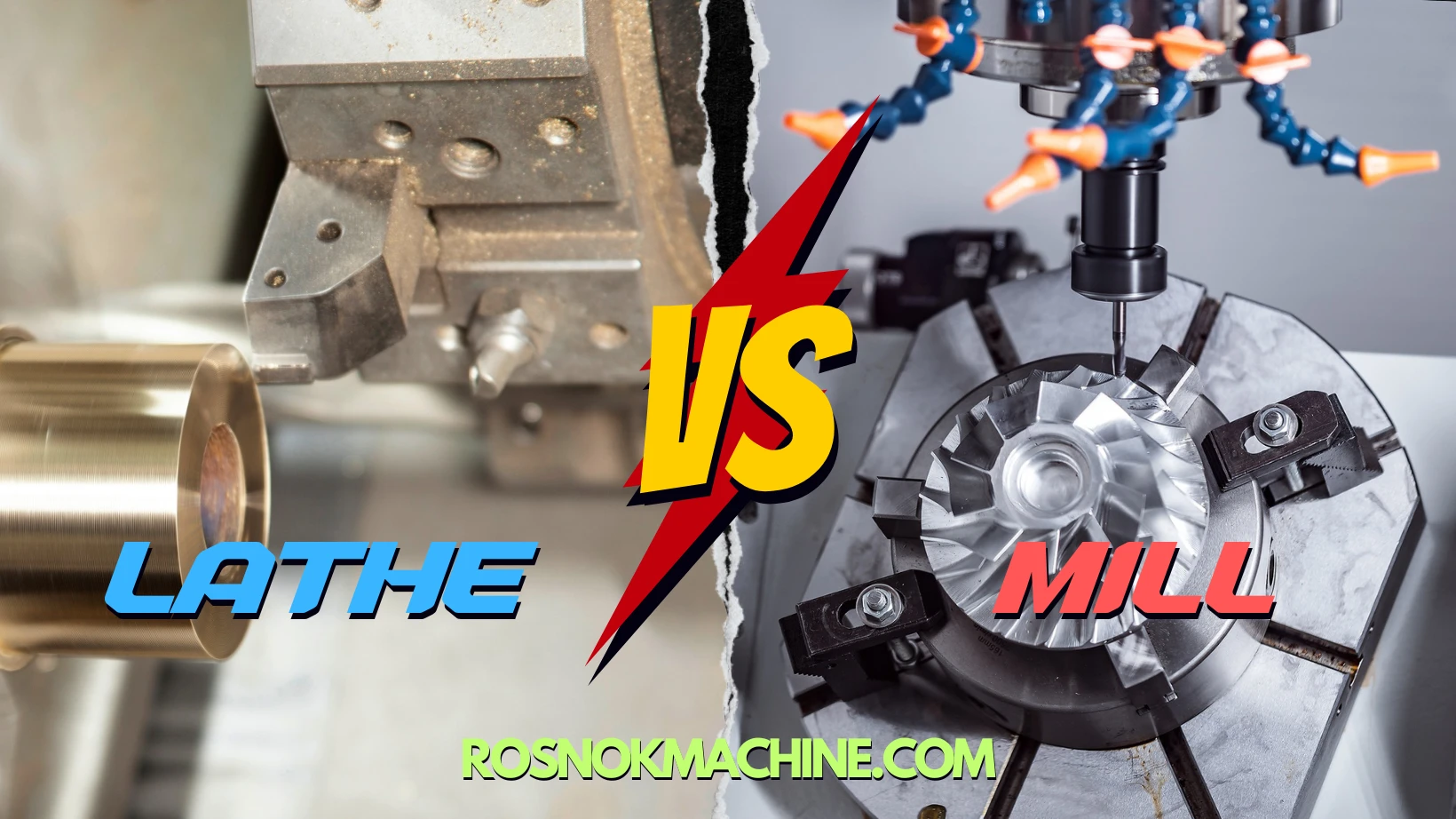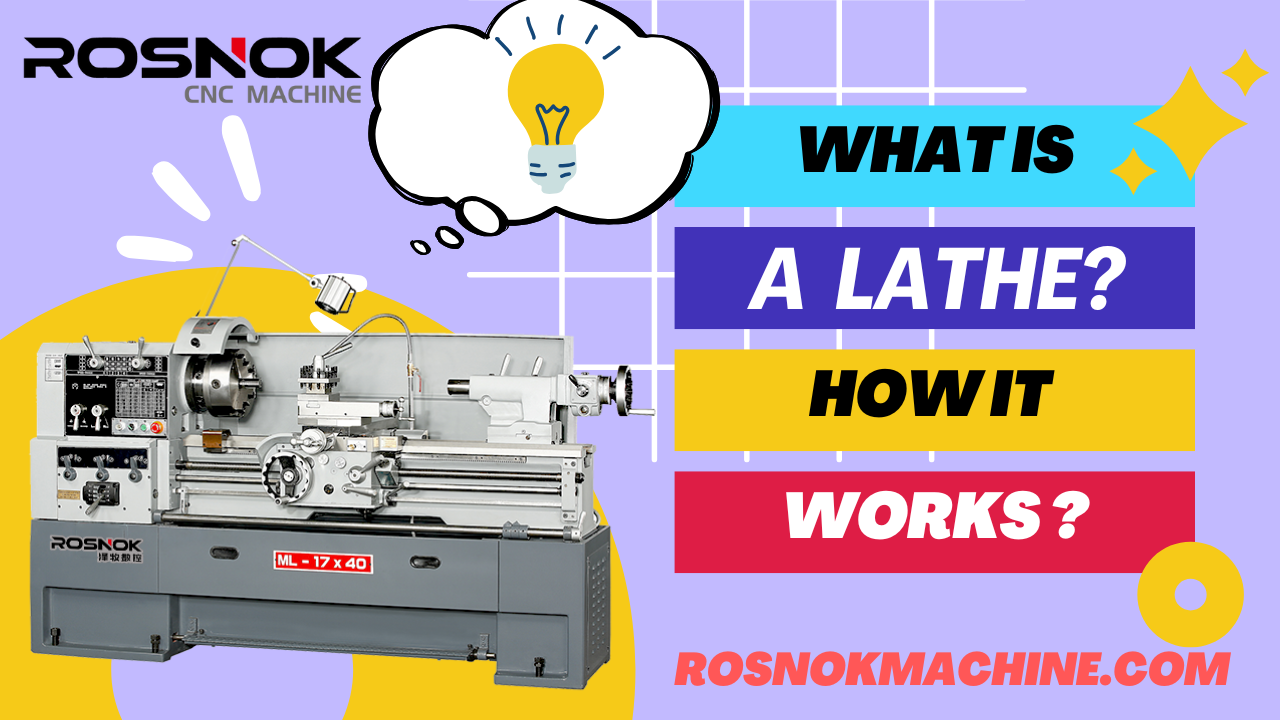
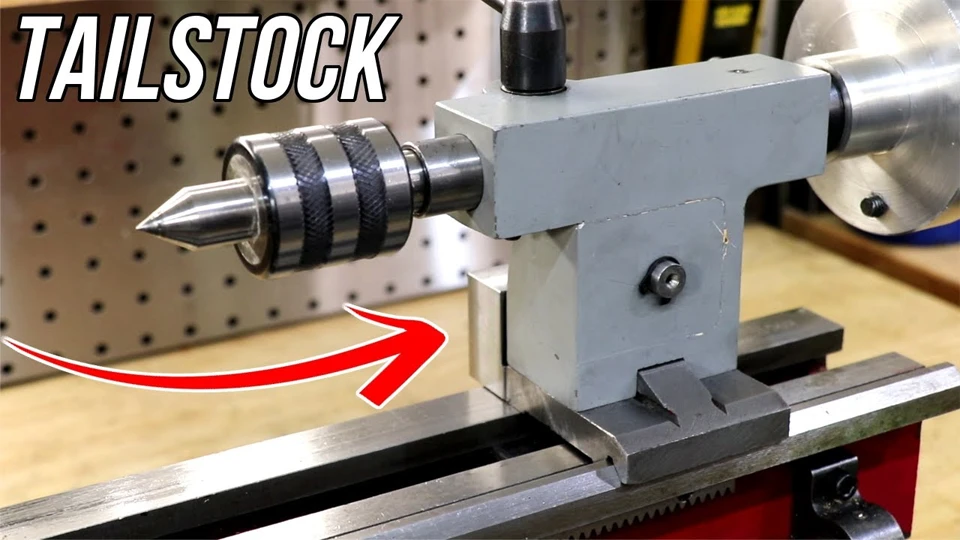
A tailstock is a part of a machine tool that supports the end of a long, thin, or flexible workpiece during machining. It helps keep the part steady while it spins, preventing bending, deflection, or vibration. This makes cutting more accurate and helps protect both the tool and the workpiece. Tailstocks are most commonly found on lathes, but also appear on other machines like grinders, cylindrical borers, and milling machines—anywhere stable axial alignment is needed. Whether turning, drilling, or threading, a tailstock plays a key role in maintaining balance and precision.
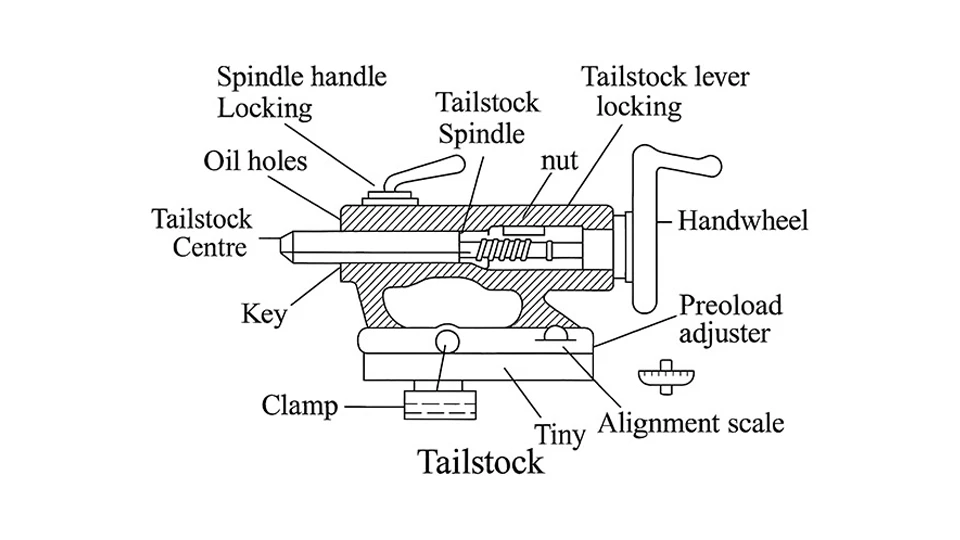
Tailstock Structure and Main Components
1. Base of the Tailstock
The base is the foundation of the tailstock. It sits directly on the lathe bed or machine ways and allows the tailstock to slide back and forth to match the length of the workpiece. Most bases have a guide surface like a dovetail or flat rail, which ensures straight and smooth travel.
Once positioned, the base must be securely locked in place to prevent movement during machining. This is usually done with a clamping lever, cam lock, or hydraulic system. A well-fitted tailstock base ensures rigid support and prevents vibrations that can affect machining accuracy.
2. Quill and Spindle Interface
The quill—also known as the sleeve or barrel—is a cylindrical part that slides inside the tailstock housing. It moves forward or backward to bring the tailstock center into contact with the workpiece. Inside the quill is a bore with a Morse taper (like MT2 or MT3), which holds tooling such as centers or drill bits securely.
Precision is key here. The quill must slide smoothly without wobble, or it can throw the workpiece off-center. Many quills have engraved depth markings to help control feed during drilling or boring.
3. Tool Holding: Dead vs Live Center
The tool at the front of the quill is typically called the center. It supports the rotating workpiece and keeps it aligned. There are two main types:
- Dead center: Doesn’t rotate; good for slow speeds and heavy cuts with lubrication.
- Live center: Rotates with the part using internal bearings; better for high-speed operations and reduces friction.
Choosing the right center affects surface finish, tool wear, and workpiece stability.
4. Tailstock Handwheel and Feed Mechanism
At the rear of the tailstock is a handwheel used to move the quill forward or backward. Inside, a screw mechanism converts the wheel’s rotation into linear movement. For precise operations like center drilling or reaming, this feed must be smooth and backlash-free.
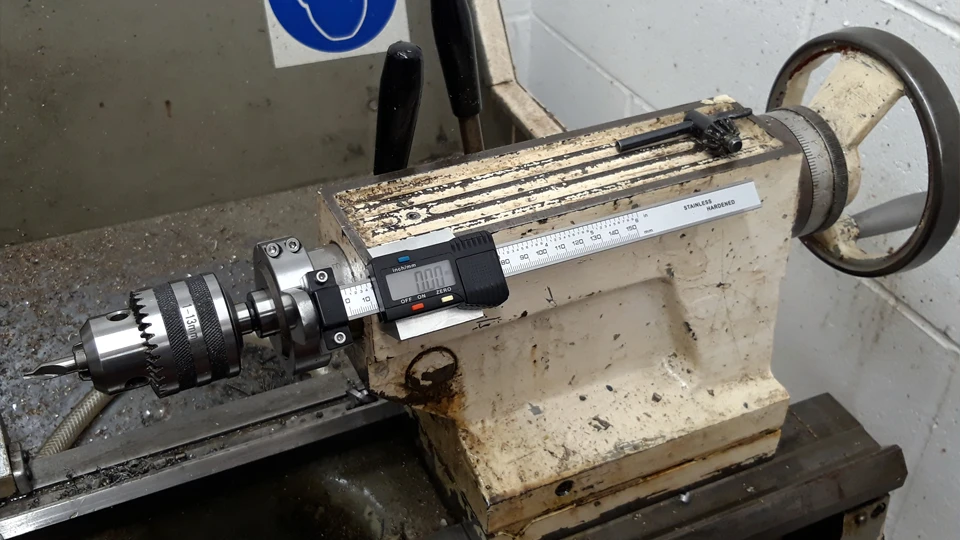
Some machines have micrometer dials for fine feed measurement, while advanced CNC lathes may use servo or hydraulic drives to automate this movement.
5. Locking Systems Explained
Tailstocks have two critical locking systems:
- Base lock: Fixes the entire tailstock body on the machine bed.
- Quill lock: Secures the quill once extended to prevent movement during cutting.
Manual locks use levers or bolts, while hydraulic or pneumatic systems are used in CNC setups for faster, consistent locking. Poor locking can cause tool chatter or alignment issues.
6. Alignment Adjustments and Fine Tuning
Precise alignment between the tailstock center and the machine spindle is crucial. If the two are even slightly misaligned, it can cause tapered parts, increased tool wear, or workpiece bending.
Tailstocks usually have lateral adjustment screws at the base. These allow fine-tuning the left-right position for perfect coaxial alignment. Once calibrated, the settings are typically left untouched unless re-alignment is needed.
7. Modern Tailstock Features (Optional)
Advanced tailstocks on CNC or special-purpose machines may include extra features like:
- Coolant-through quill for deep hole drilling
- Pressure sensors to monitor support force
- Motorized quill feed or programmable positioning
- Quick-change adapters for faster tool swaps
These features improve automation, reduce setup time, and enhance precision in high-volume production.
What Does a Tailstock Do? – Its Main Functions
The tailstock plays a crucial role in many machining operations, especially when working with long, slender, or flexible workpieces. While it may look simple from the outside, its function is anything but minor. The tailstock’s job is to stabilize, support, and assist in precision tasks that would otherwise be difficult or impossible to perform reliably. Below, we break down its main functions and how it contributes to machining performance.
1. Supports Long and Thin Workpieces
When turning a long shaft or rod, gravity and cutting forces can cause the workpiece to sag or deflect, especially near the free end. This is a serious problem because even slight bending can result in poor dimensional accuracy, uneven surface finishes, or even tool breakage. By supporting the far end of the workpiece with a center tool mounted in the tailstock, the machinist ensures that the part remains straight and balanced throughout the process.
This support becomes especially critical when machining parts like:
- Drive shafts
- Threaded rods
- Axles
- Rollers
- Long tubes
In these cases, the tailstock prevents chatter and vibration that would otherwise ruin the part or slow down the process.
2. Enhances Axial Alignment and Coaxial Accuracy
Maintaining perfect alignment between the spindle and the workpiece is key to achieving high precision. The tailstock, when properly aligned, ensures that the cutting tool engages the workpiece evenly along the centerline. Without this support, misalignment could lead to tapering errors or off-center features.
For tasks like:
- Center drilling
- Deep-hole boring
- Tapping
- Reaming
The tailstock helps guide the tool in a perfectly straight line, minimizing deviation. Especially in CNC applications, tight tolerances depend on this consistent alignment throughout the machining cycle.
3. Assists in Drilling and Tapping Operations
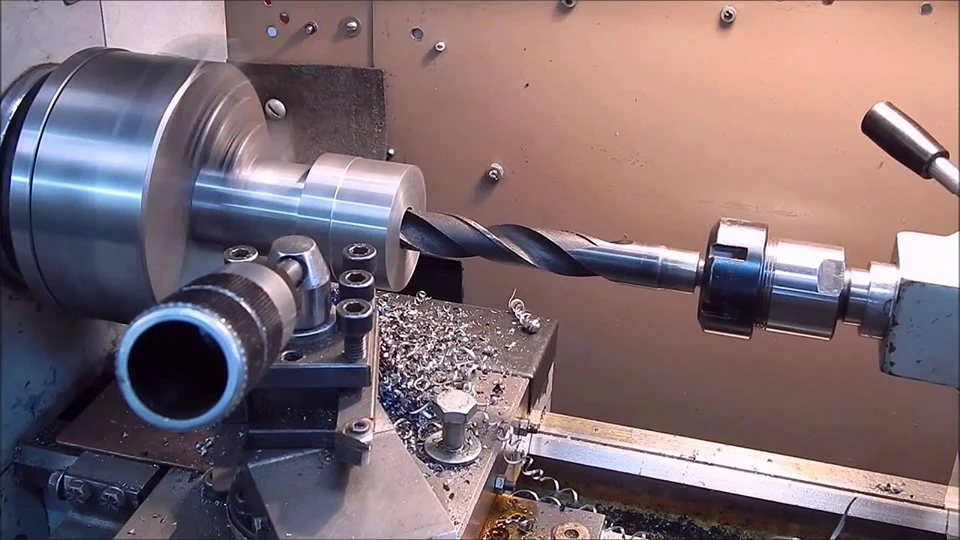
A tailstock isn’t just for support—it’s also a tool holder. By inserting a drill chuck, tap holder, or boring tool into the tailstock’s Morse taper, it can be used to perform a range of axial machining tasks.
For example:
- Drilling a center hole before turning
- Boring a hole down the center of a shaft
- Tapping threads into an already-drilled hole
- Reaming a hole to improve roundness and finish
Because the tool is fed manually or mechanically through the tailstock quill, the operator has full control over depth and feed rate. The axial alignment provided by the tailstock ensures that holes are straight and properly centered.
4. Reduces Workpiece Vibration and Tool Chatter
Tailstock support greatly reduces the chance of vibration, also known as chatter, during turning or drilling. Chatter not only affects the surface finish but can also:
- Shorten tool life
- Create uneven wear on inserts
- Damage machine components
- Increase noise and operator fatigue
By clamping the workpiece securely between the headstock and tailstock, the machine operates more smoothly and quietly. This is especially important in high-speed applications or when machining tough materials like stainless steel, titanium, or hardened alloys.
5. Improves Surface Finish and Dimensional Accuracy
A stable, vibration-free setup leads directly to better surface quality. When a long part is properly supported, the tool can make consistent, uninterrupted contact with the surface, reducing the likelihood of ridges, waviness, or inconsistent diameter.
The tailstock also reduces deflection during heavy cuts or when using extended tool holders. This makes it possible to achieve tighter tolerances and improves part repeatability in production environments.
This is why many industries—automotive, aerospace, and medical—rely on tailstocks to meet strict quality control standards.
6. Protects Tools and Machine Components
When a workpiece is unsupported and begins to flex or vibrate under cutting pressure, the cutting edge of the tool may experience uneven load. This accelerates wear, causes tip breakage, and places stress on the tool holder and spindle bearings.
The tailstock absorbs part of the axial and radial force, acting as a counterbalance. As a result, cutting tools last longer, the spindle runs cooler, and machine downtime is reduced. Over time, this improves overall shop productivity and reduces maintenance costs.
7. Enables Safer Machining
From a safety standpoint, using a tailstock can significantly reduce the risk of:
- Workpiece ejection due to loss of grip
- Sudden tool crash caused by deflection
- Operator injury from unpredictable vibration
By adding an extra point of contact and control, the tailstock helps maintain stability and predictability throughout the machining process. This is especially useful for training environments or when handling unusual workpieces.
8. Adapts to Many Machining Scenarios
Tailstocks are not just for simple turning. Their ability to hold different tools and move axially makes them versatile for tasks like:
- Multi-stage turning setups
- Thread chasing or follow rest integration
- Use with tailstock turrets for quick tool changes
Their flexibility makes them indispensable in both manual and CNC environments, from job shops to mass production lines.
Types of Tailstocks
Tailstocks may seem similar at first glance, but there are actually several different types designed to match specific machine configurations, automation levels, and machining needs. From manual systems on traditional lathes to advanced hydraulic or programmable versions on CNC equipment, each type of tailstock offers its own advantages and trade-offs. Understanding the main categories helps users choose the right configuration for their machine and application.
1. Fixed vs. Adjustable Tailstocks
One of the most basic distinctions is between fixed and adjustable tailstocks:
- Fixed tailstock: Mounted permanently at a set location on the machine bed. These are common on small or specialized machines where the tailstock only needs to serve a single setup.
- Adjustable tailstock: Can be moved along the bed to accommodate different workpiece lengths. Most standard lathes and CNC turning centers use this type.
Adjustable tailstocks increase versatility, but they also require proper locking and alignment mechanisms to ensure stability during use.
2. Manual Tailstocks
Manual tailstocks are operated entirely by hand. The operator positions the base, locks it, then uses a handwheel to advance the quill toward the workpiece. These are the most common type found on:
- Engine lathes
- Bench lathes
- Toolroom lathes
They are reliable, easy to maintain, and cost-effective. However, they depend heavily on the operator’s skill for consistent alignment and force application.
Manual tailstocks are ideal for small shops, training centers, or low-volume environments where flexibility and simplicity are valued over automation.
3. Hydraulic and Pneumatic Tailstocks
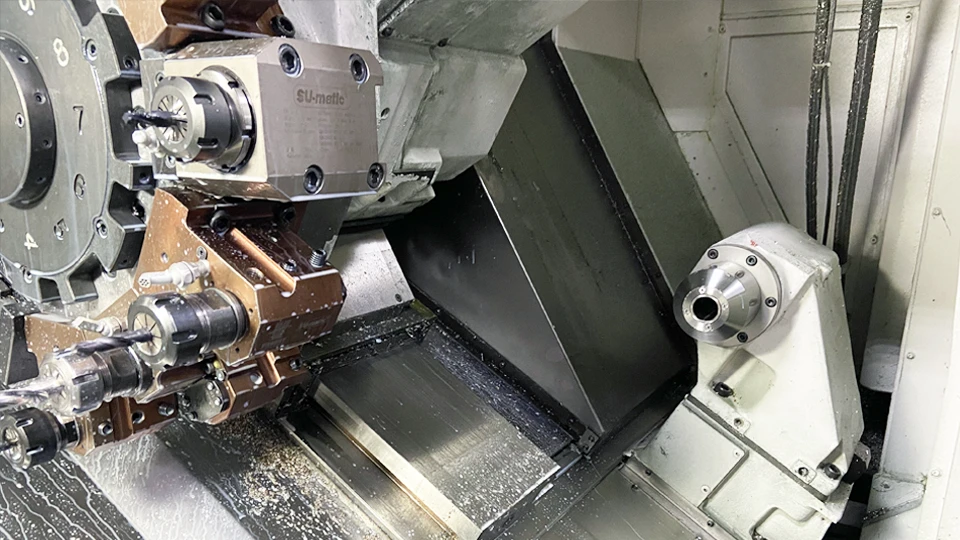
In modern CNC turning centers and automated production lines, tailstocks are often powered by hydraulic or pneumatic systems. These use pressurized fluid or air to move the quill or lock the base in place, replacing the need for manual effort.
Key advantages include:
- Consistent force application
- Faster positioning and cycle times
- Integration with CNC programs for automatic movement
- Reduced operator fatigue
Hydraulic tailstocks are especially useful in high-volume production where repeatability and time savings matter. Pneumatic systems offer similar benefits with a simpler setup, though they may be limited in force compared to hydraulic versions.
4. Programmable or CNC-Controlled Tailstocks
For maximum automation and precision, some CNC machines feature fully programmable tailstocks. These are controlled via the machine’s CNC controller, allowing:
- Automatic extension and retraction
- Force-controlled engagement
- Synchronization with other axes or tool changes
- Custom positioning for multi-step operations
These tailstocks often include built-in sensors, servo motors, and pressure feedback systems. They’re common in advanced CNC lathes used in automotive, aerospace, and precision part manufacturing where minimal downtime and operator intervention are essential.
5. Specialized Tailstocks
There are also niche tailstock types built for specific use cases:
- Heavy-duty tailstocks: Reinforced designs for supporting very large or heavy parts in vertical or horizontal lathes.
- Dual tailstocks: Used when supporting both ends of a part with separate features, such as long threaded shafts.
- Turret tailstocks: Feature rotating holders for multiple tools or centers, enabling faster tool changes in complex operations.
- Telescopic tailstocks: Offer extended quill travel for deep-hole drilling or long component setups.
These are typically used in industries like oil and gas, shipbuilding, and power generation where the workpieces are exceptionally long or require custom setups.
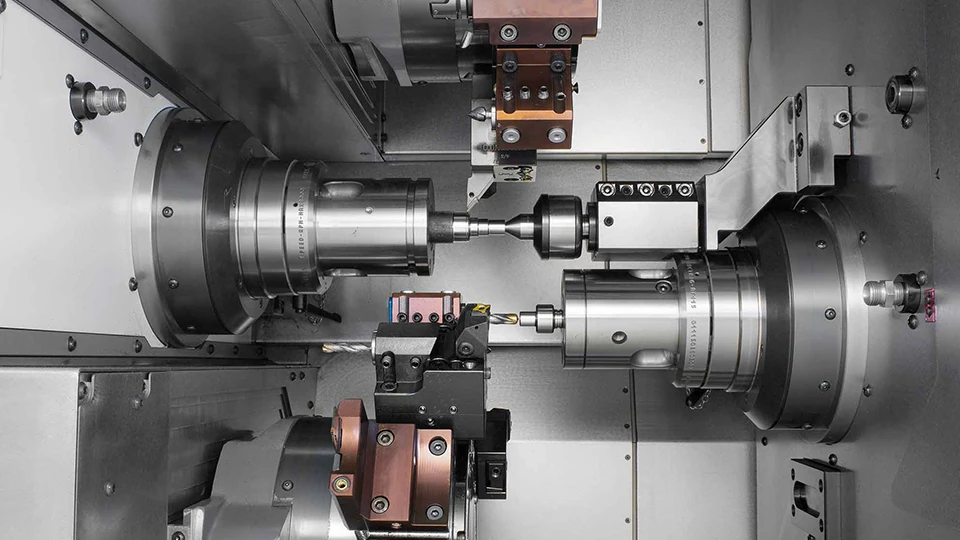
Machines That Use Tailstocks
Tailstocks are essential components in various machine tools, especially when the task involves machining long, slender, or flexible workpieces. While most commonly associated with lathes, tailstocks are also used in other equipment that requires precise axial alignment and support. In this section, we’ll focus on several machine types where true tailstocks are commonly used.
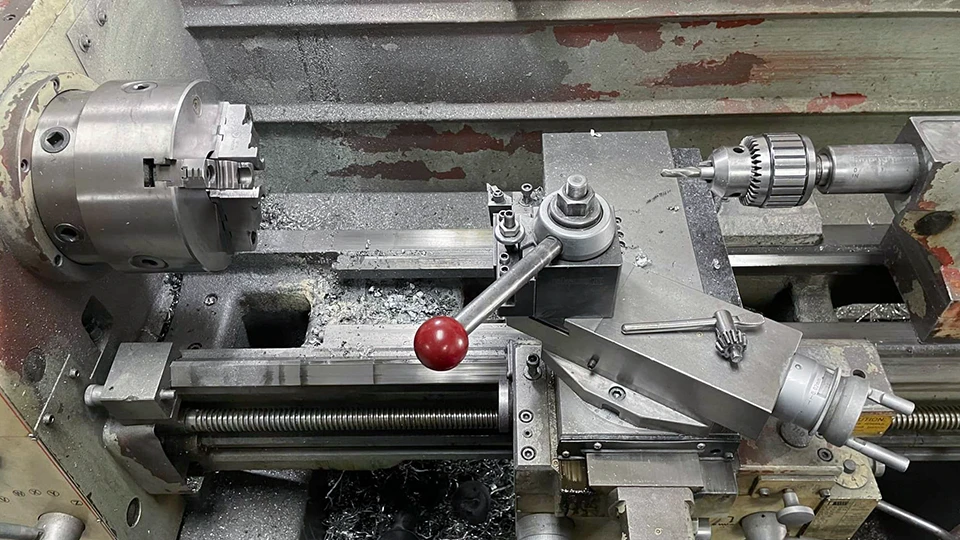
1. Lathes
Lathes are the most traditional and prevalent machines equipped with tailstocks. In these machines, the tailstock is mounted opposite the headstock and serves several critical purposes:
- Supporting long workpieces during turning
- Holding tools like drill bits, reamers, or center drills
- Preventing deflection or vibration under cutting forces
- Assisting in concentricity and axial alignment
Whether on a manual lathe or a CNC lathe, the tailstock operates similarly. The operator (or machine) positions the tailstock along the bed, locks it into place, and uses the quill to advance a live or dead center into the end of the workpiece. This configuration is essential when machining shafts, spindles, rollers, and other parts where unsupported ends could bend or vibrate during cutting.
Tailstocks are also found on heavy-duty and large-bore lathes, where they may include hydraulic actuation, programmable movement, or enhanced load-bearing capability. In every case, the core function remains the same: providing rigid axial support and maintaining precise alignment.
2. Milling Machines
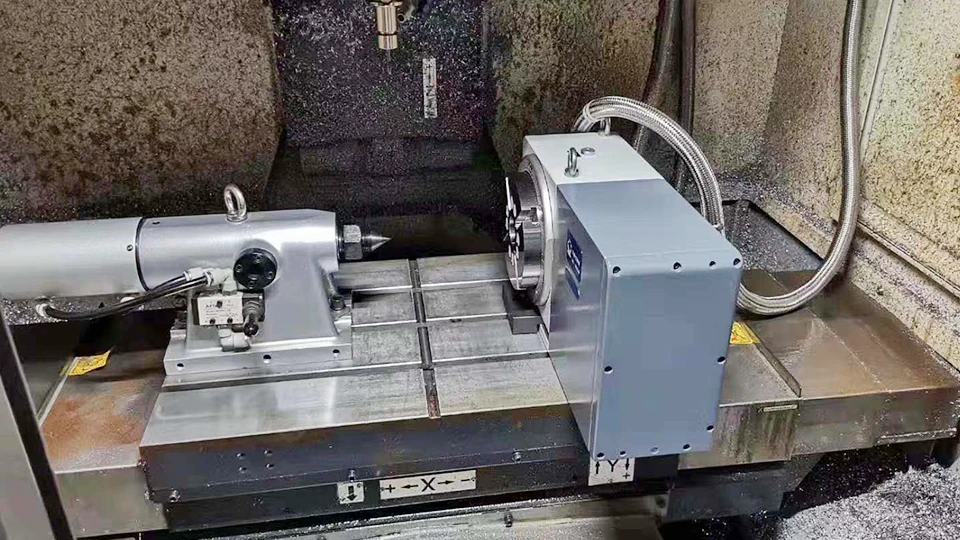
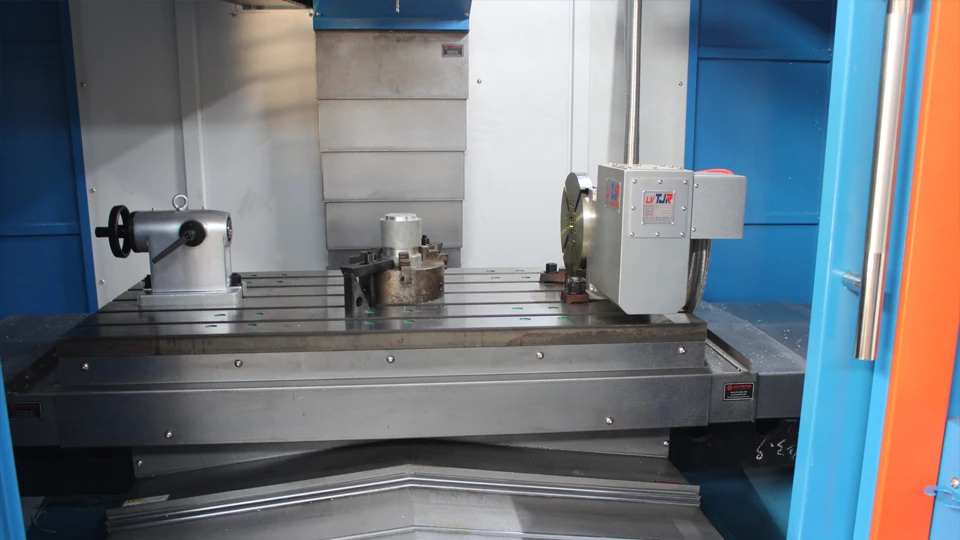
In conventional milling operations, tailstocks are not commonly used. However, when a rotary table or fourth axis is installed for indexing or continuous rotation, a tailstock often becomes necessary to support the free end of the rotating shaft or workpiece.
In this setup, the tailstock is mounted opposite the rotary device on the machine table and aligned to the rotational axis. It performs many of the same tasks as it does on a lathe:
- Supporting long or heavy parts mounted between centers
- Reducing bending and deflection during complex 3D contouring or helical milling
- Enabling precise angular machining along curved paths
Tailstocks in milling are especially useful in aerospace, mold-making, and precision gear machining, where long components must be rotated and milled with high accuracy. Though these tailstocks may vary in design, they follow the same principle—providing end support and improving machining rigidity.
3. Turning and Milling Centers
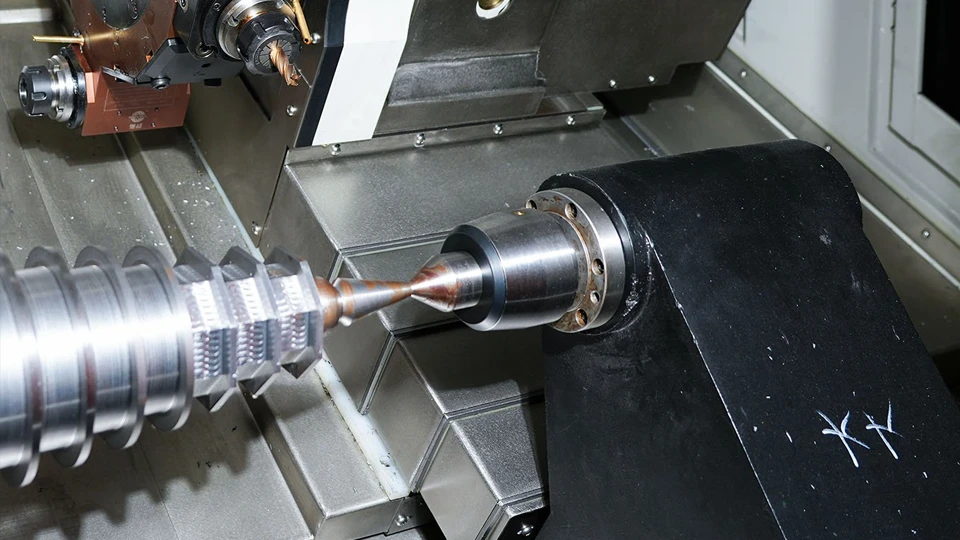
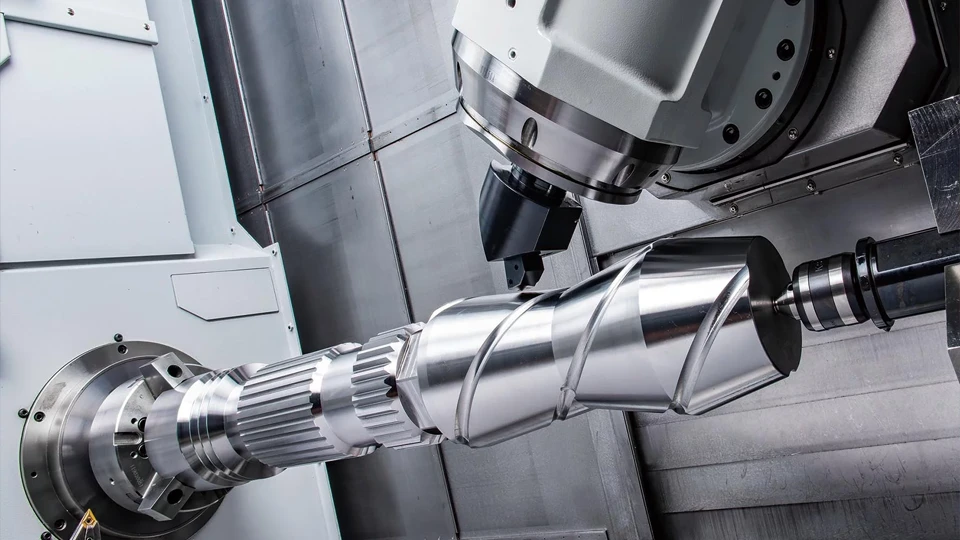
Many turning and milling centers—also known as mill-turn machines—are designed to handle complex parts in a single setup. When these machines process long or slender components, a tailstock becomes essential to maintain stability and precision during the turning phase.
Tailstocks in turning-milling centers are used for:
- Supporting the free end of long workpieces during turning
- Preventing vibration or deflection under cutting loads
- Maintaining concentricity between turning and milling operations
- Enhancing tool life by reducing mechanical stress on the spindle
By integrating a tailstock into a multi-function platform, these machines ensure high accuracy even when switching between operations. This is particularly valuable in aerospace, automotive, and precision engineering applications where part integrity and machining efficiency are critical.
How to Align and Adjust a Tailstock
Even the best-designed tailstock is only effective if it’s properly aligned. Misalignment—whether vertical or horizontal—can cause tapering, tool deflection, or even damage to the workpiece and machine. That’s why regular inspection and precise adjustment of the tailstock are essential parts of machine maintenance and setup.
1. Why Alignment Matters
A tailstock must align perfectly with the machine’s spindle axis. If it’s off:
- Horizontally, the turned part may taper along its length.
- Vertically, tool engagement may be uneven, causing chatter or surface defects.
- Axially, improper tool contact can damage both the workpiece and tooling.
This is especially important in applications where high precision is required—such as shaft turning, drilling from the tailstock, or center-to-center alignment between operations.
2. Common Alignment Checks
Operators use several simple methods to check tailstock alignment:
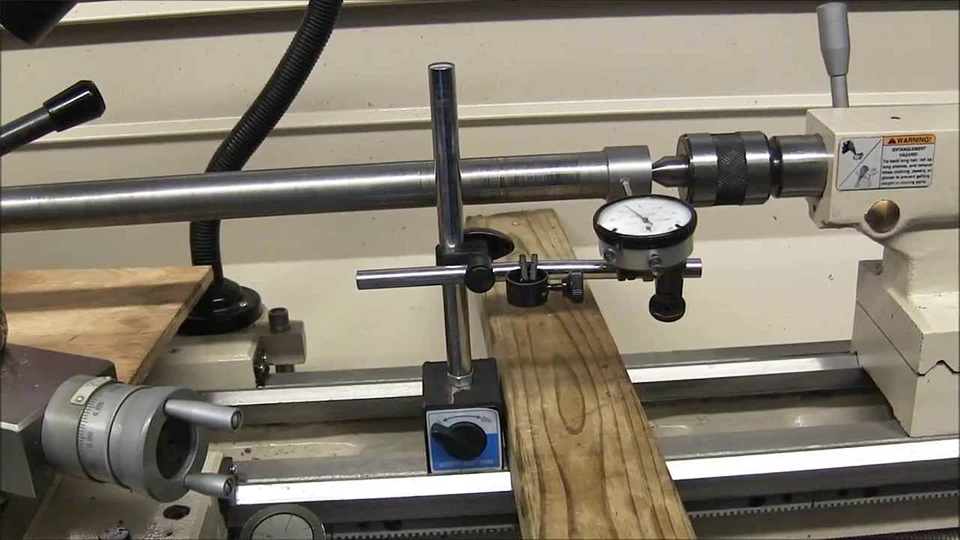
- Test bar method: A straight bar is mounted between centers and a dial indicator is used to check runout.
- Taper test: A test piece is turned and then measured with a micrometer to detect any tapering.
- Cross-slide reference: The cutting tool is moved along the workpiece and checked for depth consistency.
- Dial indicator on tailstock quill: Measures movement or misalignment while extending or retracting the quill.
These checks help identify whether the tailstock needs horizontal or vertical adjustment—or if there’s wear in the tailstock base or bed.
3. Adjusting the Tailstock
If misalignment is found, the tailstock can be corrected using adjustment screws or shims:
- Horizontal adjustment: Most tailstocks have two screws at the base. Turning them moves the tailstock left or right relative to the spindle.
- Vertical adjustment: Less common and more complex—may involve shimming under the tailstock base or adjusting sliding surfaces.
- Quill runout: If the quill itself is misaligned or worn, it may need regrinding or replacement.
Once adjusted, the alignment should be rechecked to confirm the correction. In production settings, this is often part of regular preventive maintenance.
4. CNC Tailstock Alignment
In CNC machines with programmable tailstocks, alignment is typically handled during machine setup or via internal calibration routines. However, physical alignment still matters:
- Setup technicians must ensure the mechanical components are square to the bed.
- Parameters for quill pressure and travel must be correctly set in the CNC controller.
- Alignment should be verified after any crash, maintenance, or relocation.
Accessories and Tooling for Tailstocks
A tailstock alone is just a structural support—its versatility and functionality come from the tooling and accessories that can be mounted into it. Choosing the right tailstock tools not only improves machining quality but also expands what your machine can do.
1. Live Centers
Live centers are one of the most common tailstock tools. They rotate with the workpiece and are supported by internal bearings.
Advantages:
- Reduce friction at high speeds
- Improve surface finish and accuracy
- Ideal for high-RPM or long-run jobs
Live centers come in various tip designs—standard point, carbide-tipped, bull nose, extended reach—depending on part geometry and application.
2. Dead Centers
Unlike live centers, dead centers do not rotate. Instead, they stay fixed while the workpiece spins against them.
Best used for:
- Low-speed operations
- Short cycle runs
- High-rigidity setups (when lubricated properly)
Dead centers require lubrication to avoid excessive wear and are often used in grinding or when maximum stiffness is needed.
3. Drill Chucks
A tailstock can also hold a drill chuck, allowing the use of:
- Twist drills
- Center drills
- Reamers
- Taps (in some manual operations)
This setup enables accurate axial hole-making directly from the tailstock, which is common in both manual and CNC machines for center drilling, pilot holes, or reaming.
4. Boring Bars and Reamers
For specialized work, boring tools and reamers may be held in the tailstock to enlarge existing holes or improve surface finish. This is more common in older machines or manual lathes, as modern CNCs tend to use turret tooling.
5. Extended Support Tools
Some tailstocks support custom or extended-length tooling such as:
- Pipe centers for hollow parts
- Faceplate attachments
- Steady rests or tailstock-mounted bushings
- Quick-change adapters for high-mix production
In special applications like oilfield machining or large-diameter shafts, custom tailstock tooling ensures safe, accurate, and efficient part handling.
Common Tailstock Problems and How to Fix Them
Even though tailstocks are simple in construction, they can cause serious machining issues if not maintained or operated properly. From poor alignment to quill wear, tailstock-related problems often lead to tapering, chatter, or even tool breakage. Recognizing these issues early—and knowing how to fix them—can save time, materials, and money.
1. Tapered Workpieces
Symptoms: The diameter of a turned part is slightly larger at one end.
Causes:
- Misalignment between tailstock center and spindle
- Worn tailstock ways or bed
- Improper tool setup or tailstock offset
Fixes:
- Perform an alignment check using a test bar or dial indicator
- Adjust tailstock position using lateral screws or realign mounting
- Inspect machine bed and sliding surfaces for wear
2. Excessive Vibration or Chatter
Symptoms: Tool marks, poor surface finish, or audible chatter during cutting.
Causes:
- Lack of support on long workpieces
- Worn or loose live center
- Overextended quill reducing rigidity
Fixes:
- Ensure tailstock is correctly positioned and locked
- Replace or lubricate the live center
- Minimize quill extension when possible
3. Tailstock Quill Sticking or Jamming
Symptoms: The quill doesn’t move smoothly or gets stuck during operation.
Causes:
- Dirt or chips inside quill mechanism
- Lack of lubrication
- Rust or internal wear
Fixes:
- Clean and lubricate the quill and internal threads
- Inspect for scoring or damage
- In severe cases, regrind or replace the quill
4. Tailstock Not Holding Tool Securely
Symptoms: Tool slips or shifts during operation.
Causes:
- Worn Morse taper in the quill
- Oil or debris on contact surfaces
- Incorrect taper size or poorly fitting tool
Fixes:
- Clean both the taper socket and tool shank
- Replace worn tools or tailstock sleeve
- Consider using a drawbar or locking mechanism if available
5. Tailstock Won’t Stay Aligned
Symptoms: Frequent loss of alignment even after adjustment.
Causes:
- Loose mounting bolts or worn alignment keys
- Uneven machine bed wear
- Repeated collisions or rough handling
Fixes:
- Tighten and inspect all fasteners and keys
- Shim the tailstock or re-scrape the base as needed
- Retrain operators on proper movement and locking procedures
Conclusion
A tailstock may look like a simple accessory, but throughout this article we’ve seen how essential it is to stable, accurate, and reliable machining. Whether supporting a long shaft, guiding a drill, or preventing vibration, the tailstock quietly ensures that every cut stays on center and every dimension remains consistent. It plays a steady, often overlooked role—yet without it, many machining tasks would become risky, imprecise, or even impossible. From understanding its structure to mastering alignment and maintenance, the value of a well‑used tailstock becomes obvious the moment precision truly matters.
In today’s competitive manufacturing environment, machine builders who focus on stability and long-term performance often stand out. One such company is Rosnok—a manufacturer known for producing high‑precision CNC machines equipped with reliable tailstock systems and durable structural designs. By prioritizing both mechanical integrity and practical usability, Rosnok helps ensure that every component—whether turned, drilled, or milled—meets the demands of modern industry with confidence.