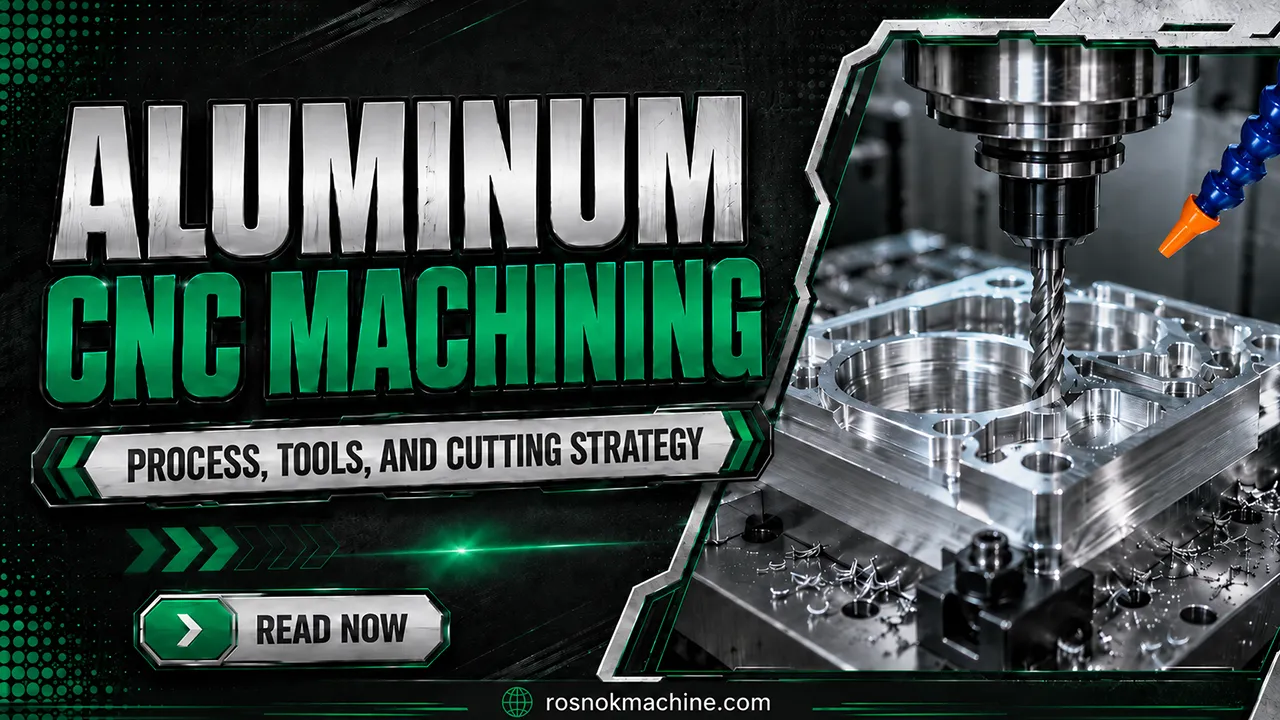
Aluminum is widely used in automotive parts, aerospace components, electronics housings, medical devices, molds, and industrial equipment because it is lightweight, corrosion-resistant, and easy to machine. However, poor cutting strategy can still cause built-up edge, poor finish, dimensional error, tool wear, or unstable production. That is why aluminum CNC machining requires a clear understanding of both material and process.
This guide explains aluminum CNC machining from process, tools, cutting parameters, surface finish, common problems, and practical strategies for producing stable, accurate aluminum parts.
What Is Aluminum CNC Machining?
Aluminum CNC Machining is a subtractive manufacturing process that uses computer-controlled machine tools to remove material from aluminum workpieces and produce precise finished parts. The machine follows programmed tool paths to cut, drill, mill, turn, bore, tap, or contour the aluminum until it reaches the required shape, size, tolerance, and surface condition.
In real manufacturing, aluminum CNC machining is not only about removing material quickly. Aluminum is softer than many steels, but it still requires proper control. If the tool path, clamping, spindle speed, feed rate, or chip evacuation is poorly managed, the part may suffer from burrs, poor surface finish, dimensional error, or tool adhesion.
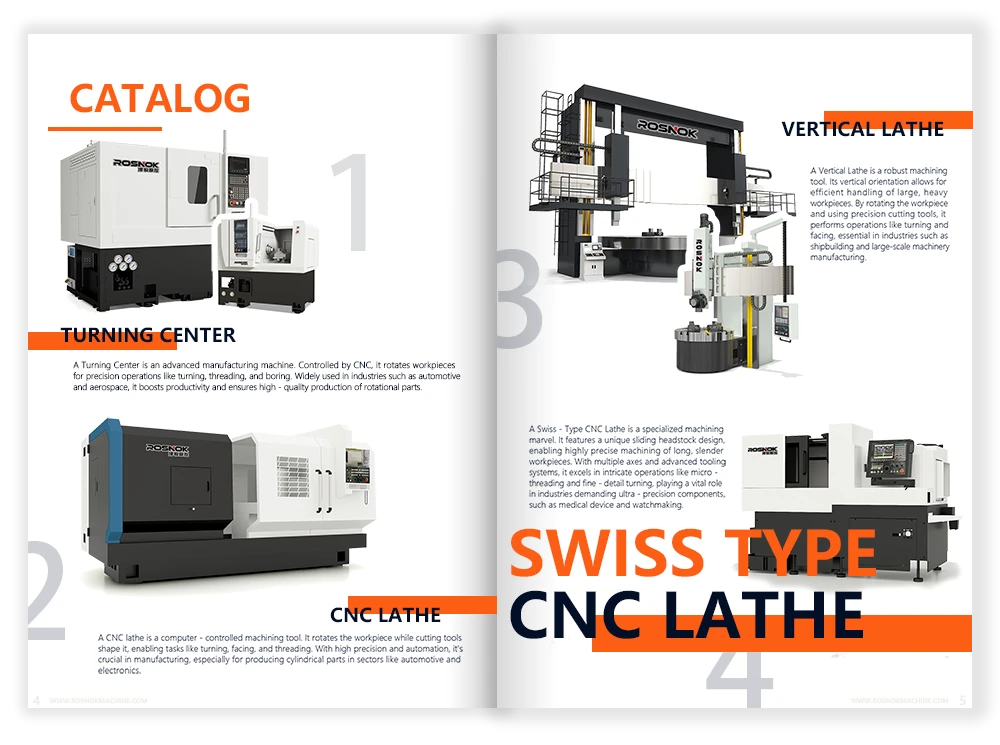
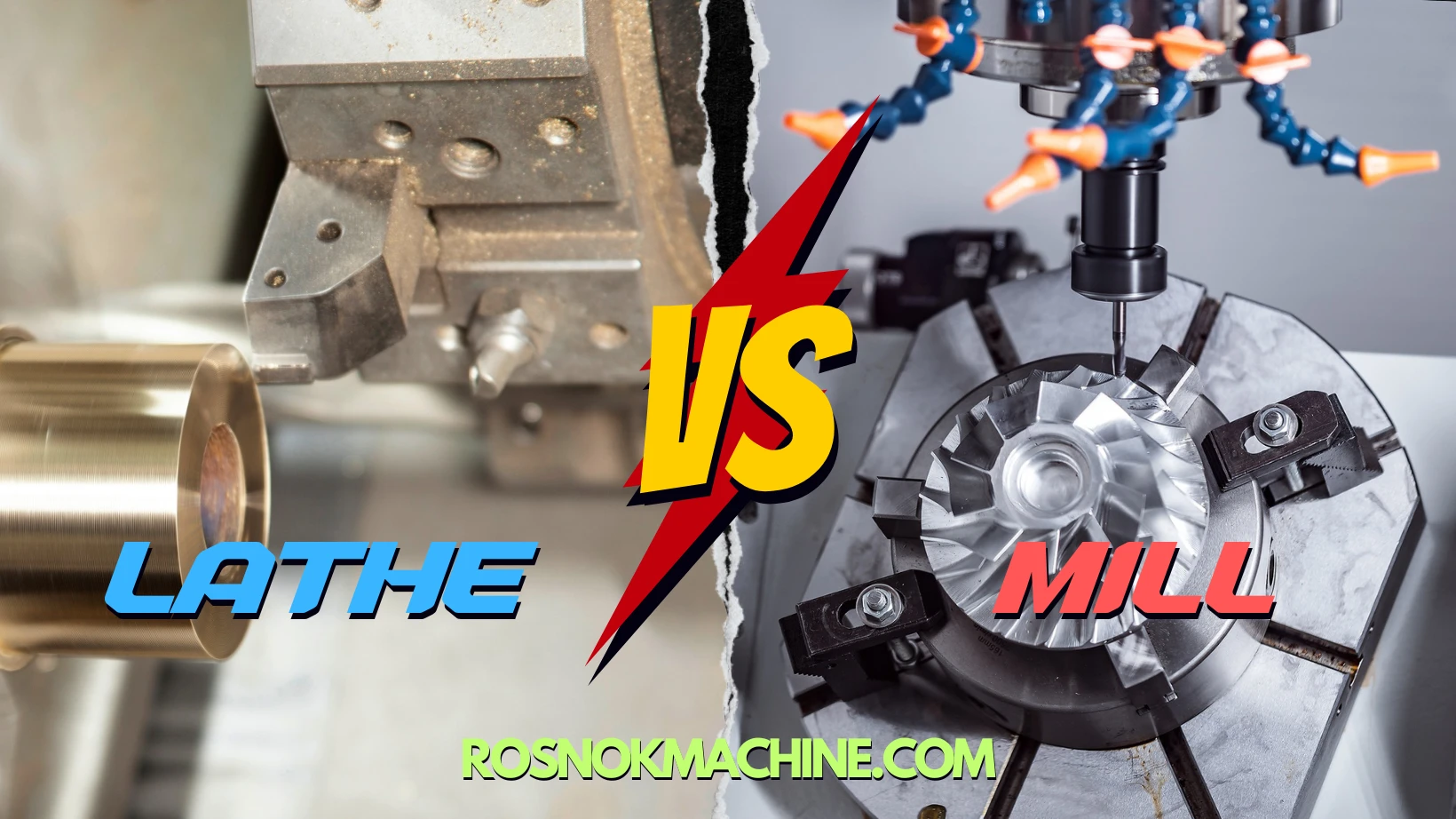
Common aluminum CNC machining operations include milling flat surfaces, machining pockets, cutting slots, drilling holes, tapping threads, turning outer diameters, boring internal holes, and finishing complex contours. These operations may be completed on CNC milling machines, machining centers, CNC lathes, or Swiss-type CNC lathes, depending on the part geometry and production requirement.
The main value of aluminum CNC machining is that it can turn lightweight aluminum materials into functional parts with reliable precision. It supports tight dimensions, clean edges, consistent hole positions, smooth surfaces, and repeatable production quality. For industries such as automotive, aerospace, electronics, medical equipment, molds, and industrial machinery, this combination of material performance and machining accuracy is the reason aluminum remains one of the most widely used CNC materials.
Why Is Aluminum Suitable For CNC Machining?
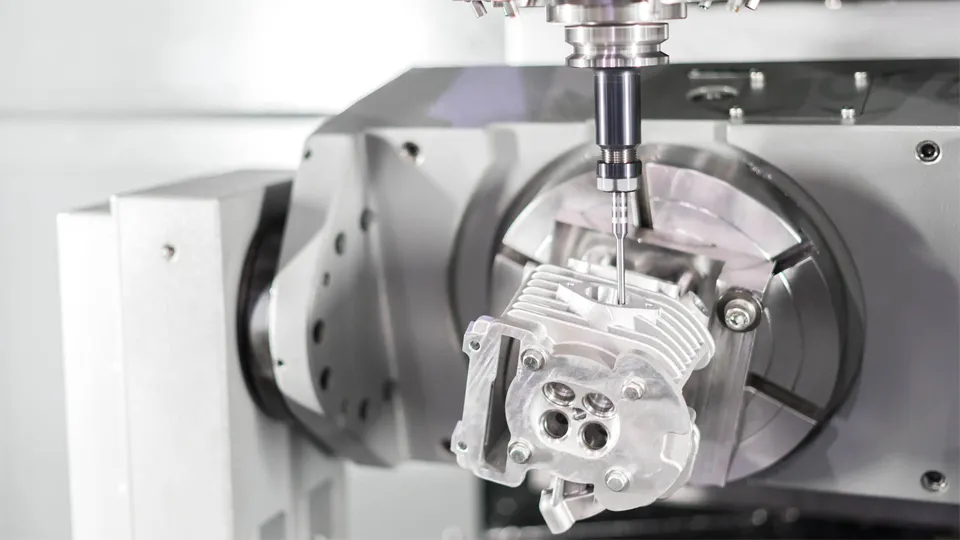
Aluminum is suitable for CNC machining because it offers a strong balance between machinability, weight, strength, corrosion resistance, and surface treatment performance. Compared with many harder metals, aluminum can usually be cut at higher speeds with lower cutting resistance, which helps improve machining efficiency and reduce tool load.
Its lightweight property is one of the main reasons it is used in automotive, aerospace, electronics, and automation equipment. When a part needs to reduce weight without losing necessary structural function, aluminum often becomes a practical material choice. It can be machined into brackets, housings, panels, heat sinks, connectors, fixtures, and many other functional components.
Aluminum also has good thermal conductivity and natural corrosion resistance. This makes it useful for parts that need heat dissipation, environmental stability, or long-term service in industrial conditions. In many applications, aluminum parts can also be anodized, bead blasted, polished, or coated after CNC machining to improve appearance, wear resistance, and corrosion protection.
However, good machinability does not mean aluminum is always easy to control. During aluminum CNC machining, soft and ductile material behavior can cause built-up edge, burrs, chip sticking, thin-wall deformation, or surface scratches. These problems are usually not caused by the material alone. They are often related to tool sharpness, cutting parameters, clamping method, chip evacuation, and process stability.
That is why aluminum is not just a “soft metal for easy cutting.” It is a highly practical CNC material, but it still requires proper machining strategy. When the process is well controlled, aluminum can deliver high accuracy, clean surface finish, efficient production, and reliable part performance.
Common Aluminum Grades Used In CNC Machining
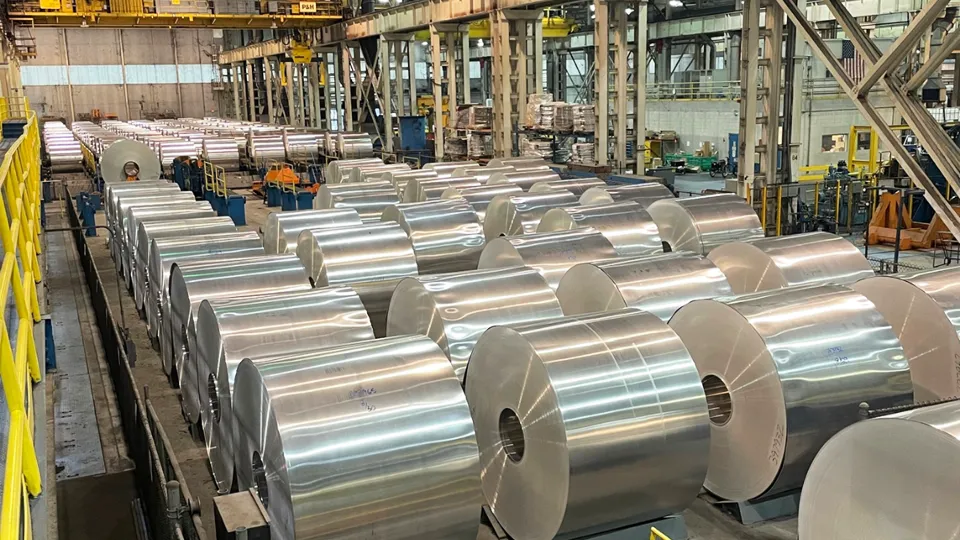
Selecting the correct aluminum grade is a fundamental step before any cutting begins. Different alloys possess distinct mechanical properties that directly influence both the final application of the part and its behavior during the CNC machining process.
6061 Aluminum
6061 aluminum is one of the most commonly used grades in aluminum CNC machining. It offers a good balance of strength, machinability, corrosion resistance, weldability, and cost. It is widely used for machine parts, brackets, housings, frames, fixtures, and automation components.
For many general industrial parts, 6061 is a practical starting point because it is stable to machine and easy to source. It also works well with common surface treatments such as anodizing and bead blasting.
7075 Aluminum
7075 aluminum is known for its high strength. It is often used in aerospace parts, high-load fixtures, precision structural parts, and applications where weight reduction and strength are both important.
Compared with 6061, 7075 is usually harder and less forgiving during machining. It requires stable clamping, sharp tools, and controlled cutting conditions. It can produce high-quality parts, but poor machining control may lead to tool wear, chatter, or dimensional instability.
2024 Aluminum
2024 aluminum has high strength and good fatigue resistance, making it suitable for aerospace structures, mechanical components, and parts exposed to repeated stress. It is often chosen when mechanical performance is more important than corrosion resistance.
The main limitation is that 2024 does not offer the same corrosion resistance as some other aluminum grades. For this reason, surface protection or coating may be required after machining, depending on the application environment.
5052 Aluminum
5052 aluminum is valued for its corrosion resistance and formability. It is often used for sheet metal parts, panels, covers, marine-related components, electronic enclosures, and parts that need good environmental resistance.
In CNC machining, 5052 is usually more common in plate or sheet-type workpieces. Because it is softer than high-strength aluminum grades, tool sharpness and burr control are important when machining edges, holes, and thin features.
Cast Aluminum
Cast aluminum is often used for parts with complex blank shapes, such as pump bodies, valve housings, motor housings, and mechanical casings. CNC machining is usually applied after casting to finish critical surfaces, holes, threads, and sealing areas.
The machining challenge is that cast aluminum may contain porosity, hard spots, or uneven material structure. These issues can affect tool life, surface finish, and dimensional consistency, so inspection and stable machining allowance are important.
| Aluminum Grade | Key Feature | Common Use | Machining Note |
|---|---|---|---|
| 6061 | Balanced strength and machinability | Frames, brackets, housings | Easy to machine and widely used |
| 7075 | High strength | Aerospace parts, fixtures | Needs stable cutting and rigid setup |
| 2024 | High fatigue resistance | Aircraft and mechanical parts | Often needs corrosion protection |
| 5052 | Good corrosion resistance | Panels, covers, enclosures | Watch burrs on soft edges |
| Cast Aluminum | Complex near-net shapes | Pump bodies, housings | Watch for porosity and hard spots |
Main Aluminum CNC Machining Processes
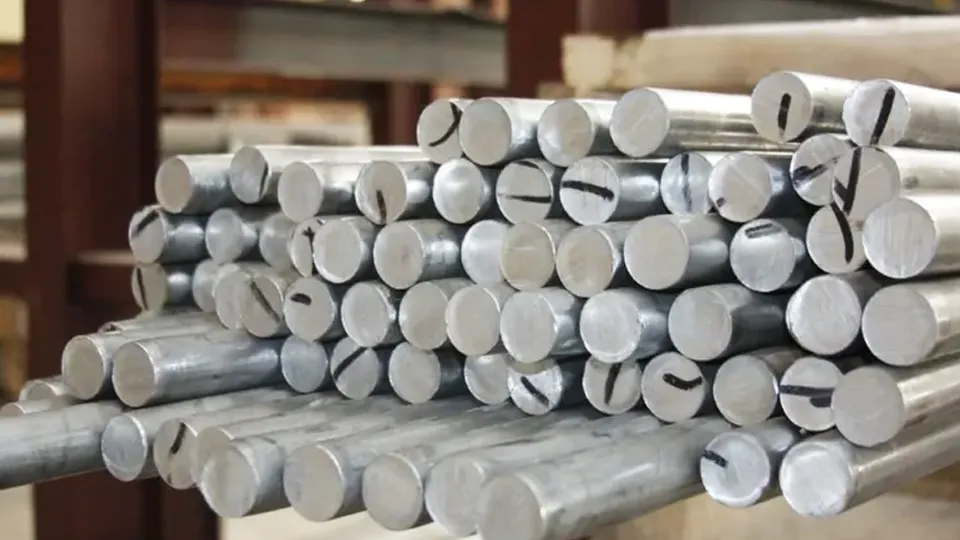
Aluminum CNC machining usually combines several cutting operations instead of relying on one single process. A finished aluminum part may need rough milling, finish milling, drilling, tapping, boring, facing, chamfering, and surface preparation before it meets the required drawing specification.
CNC Milling
CNC milling is one of the most common processes for aluminum parts. It is used to machine flat surfaces, slots, pockets, contours, cavities, and complex shapes. The rotating cutter removes material while the workpiece or tool moves along programmed paths. This process is widely used for housings, plates, brackets, mold parts, and structural components.
CNC Turning
CNC turning is used when the aluminum part has a rotational shape. Typical examples include shafts, sleeves, bushings, discs, threaded parts, connectors, and round housings. During turning, the workpiece rotates while the cutting tool removes material from the outer diameter, inner hole, end face, groove, or thread area.
Drilling And Tapping
Drilling and tapping are common in aluminum CNC machining because many aluminum parts require mounting holes, threaded holes, locating holes, or assembly features. Although aluminum is easier to drill than harder metals, chip evacuation and burr control are still important, especially in deep holes, small holes, and blind threaded holes.
Boring
Boring is used when a hole needs better accuracy, roundness, or surface finish than ordinary drilling can provide. It is often applied to bearing seats, locating holes, hydraulic ports, and precision assembly holes where size control and coaxiality matter.
Facing
Facing is used to create flat reference surfaces or clean end faces on aluminum parts. A stable facing operation helps improve part positioning, assembly contact, sealing performance, and later inspection accuracy.
Chamfering And Deburring
Chamfering and deburring help remove sharp edges, improve assembly safety, and prepare the part for later surface treatment. This step is especially important for aluminum because burrs can remain on hole edges, thin walls, slots, and contour exits.
The key point is that aluminum CNC machining is a process chain. Each step affects the next one. Poor roughing may leave uneven stock for finishing. Poor drilling may affect tapping quality. Poor burr control may affect anodizing, assembly, or final inspection. A stable process plan makes the finished aluminum part more accurate, cleaner, and easier to control in production.
CNC Milling Aluminum Explained
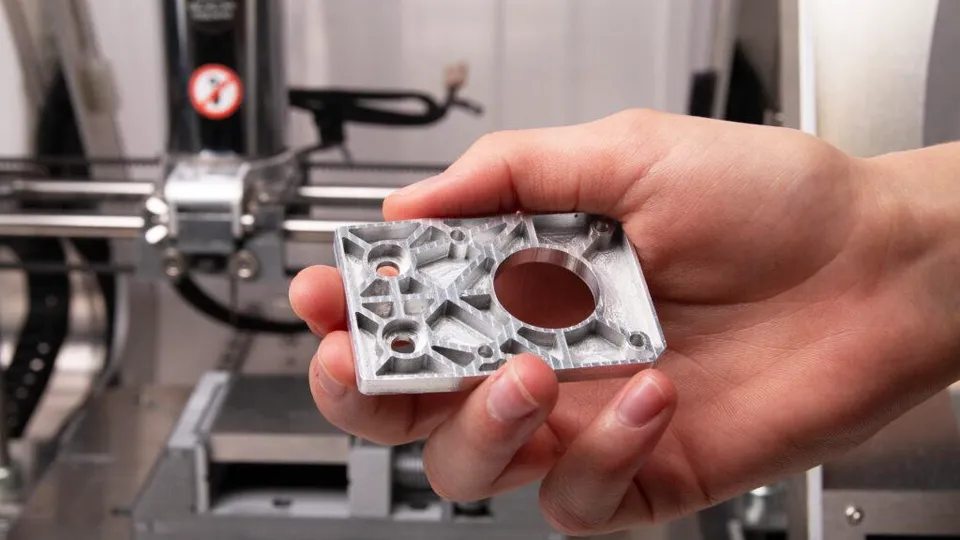
CNC milling is one of the most important processes in aluminum CNC machining. It is used to create flat faces, pockets, slots, contours, cavities, holes, and complex 3D features. Because aluminum is lightweight and easy to cut, milling can often achieve high material removal rates, but stable chip evacuation, sharp tools, and proper cutting paths are still essential.
Face Milling
Face milling is used to produce flat surfaces on aluminum parts. It is common for plates, housings, mounting surfaces, mold bases, and structural components. The goal is not only to make the surface flat, but also to control surface finish, thickness, and reference accuracy.
For aluminum face milling, tool sharpness and spindle stability are important. A dull cutter may smear the surface instead of cutting it cleanly. If the feed is unstable or the tool runout is too large, visible tool marks, vibration patterns, or uneven surface texture may appear.
Pocket Milling
Pocket milling removes material inside a closed or semi-closed area. It is widely used for lightweight structures, electronic housings, mold cavities, fixture plates, and parts with internal recesses. In aluminum machining, pocket milling is often efficient because the material can be removed quickly.
The main challenge is chip evacuation. Chips trapped inside a pocket can be recut by the tool, causing poor surface finish, heat buildup, tool wear, and dimensional errors. Smooth tool paths, suitable stepovers, and enough coolant or air blast help keep the cutting area clean.
Slot Milling
Slot milling is used to machine grooves, channels, keyways, and narrow features. It is more demanding than open-side milling because the cutter is often surrounded by material on both sides. This increases cutting load and makes chip removal harder.
For aluminum slot milling, the tool should have enough flute space to evacuate chips. If chips are packed inside the slot, the tool may rub, vibrate, or break. Reducing cutting depth, using adaptive paths, or machining the slot in several passes can make the process more stable.
Contour Milling
Contour milling is used to machine outer profiles, curved edges, steps, and complex shapes. It is common in brackets, covers, aerospace parts, automation components, and custom aluminum plates. The accuracy of contour milling depends on tool path quality, cutter rigidity, fixture stability, and machine movement.
For better results, roughing and finishing should be separated. Roughing removes most of the material, while finishing uses a lighter cut to control the final dimension and surface quality. This reduces tool pressure and helps avoid deflection, especially on thin walls or long edges.
Drilling And Tapping Aluminum
Drilling and tapping are common after milling because most aluminum parts require assembly holes, threaded holes, locating holes, or mounting features. Aluminum is generally easier to drill than steel, but it can still produce long chips, burrs, and built-up material on the cutting edge.
For drilling, sharp tools and good chip evacuation are important. For tapping, proper lubrication helps prevent thread tearing or galling. Blind holes need special attention because chips can accumulate at the bottom and damage the thread. In precision aluminum parts, hole quality directly affects assembly accuracy and long-term reliability.
CNC Turning Aluminum Explained
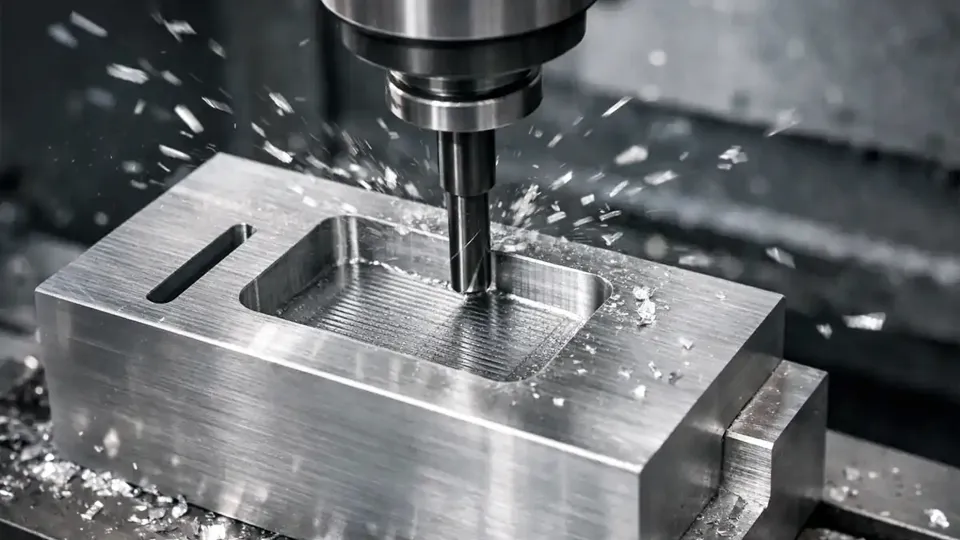
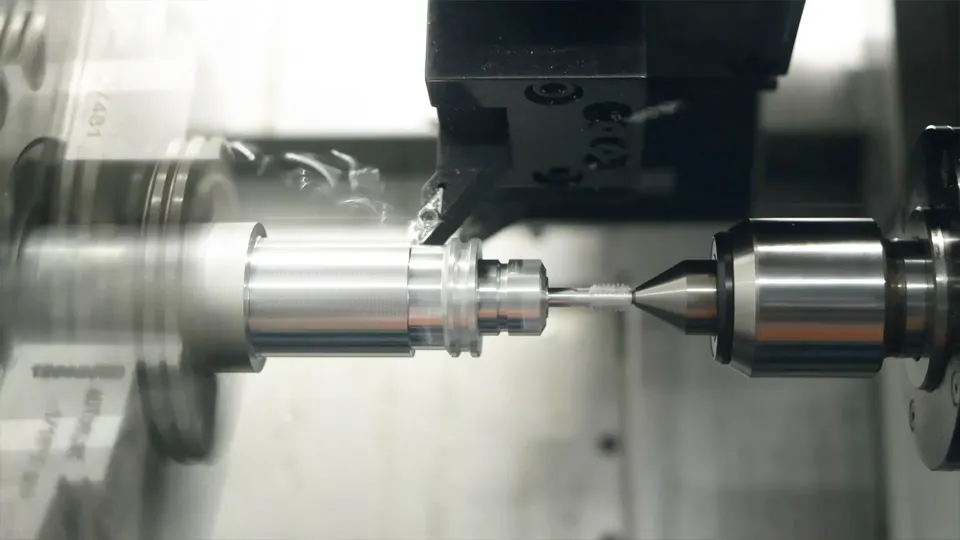
CNC turning is used to machine aluminum parts with rotational features. It is suitable for shafts, sleeves, bushings, discs, spacers, threaded parts, connectors, and round housings. In turning, the aluminum workpiece rotates while the cutting tool removes material from the outside diameter, inside diameter, end face, groove, or thread area.
Compared with milling, turning is more focused on round geometry and coaxial features. It is especially useful when the part needs good concentricity, smooth cylindrical surfaces, accurate diameters, or repeatable thread quality. For aluminum parts, sharp inserts, stable clamping, and controlled chip breaking are important because aluminum chips can become long, sticky, or difficult to clear.
External Turning
External turning is used to machine the outer diameter of aluminum parts. It can create straight diameters, steps, tapers, grooves, and shoulders. This process is common for aluminum shafts, pins, spacers, and round mechanical components.
The key is to control tool pressure and surface finish. If the insert is dull or the feed is not suitable, aluminum may smear instead of cutting cleanly. For long or thin parts, excessive cutting force can also cause deflection and dimensional error.
Internal Boring
Internal boring is used to enlarge or finish an existing hole. It is often applied to aluminum sleeves, bearing seats, valve bodies, housings, and precision assembly holes. Compared with drilling, boring can provide better hole size control, roundness, and surface quality.
Because boring tools often have longer overhang, vibration control is important. A rigid boring bar, proper cutting depth, and stable feed help avoid chatter marks and tapered holes.
Facing
Facing creates a flat end surface on a rotating aluminum workpiece. It is used to control part length, prepare reference faces, improve assembly contact, or finish sealing surfaces.
A good facing operation should leave a clean surface without heavy circular marks, burrs, or raised material near the center. Tool nose radius, feed rate, and spindle stability all affect the final result.
Threading
Threading is used to create internal or external threads on aluminum parts. It is common for connectors, fastener holes, pipe fittings, adjustment parts, and assembly components.
Aluminum threads can be damaged if the tool is dull, lubrication is insufficient, or chips are not cleared properly. Internal threads, blind holes, and fine threads need extra care because chip packing can tear the thread surface or reduce fitting accuracy.
Swiss-Type Aluminum Turning
Swiss-type aluminum turning is used for small, slender, and high-precision parts. It is common in electronics, medical devices, precision connectors, miniature shafts, and small mechanical components.
The advantage is that the material is supported close to the cutting area, which helps reduce deflection during machining. This makes it suitable for long, thin aluminum parts that are difficult to control on a standard lathe. For complex small parts, Swiss-type turning can also combine turning, drilling, milling, and tapping in one machining cycle.
Best Cutting Tools For Aluminum CNC Machining
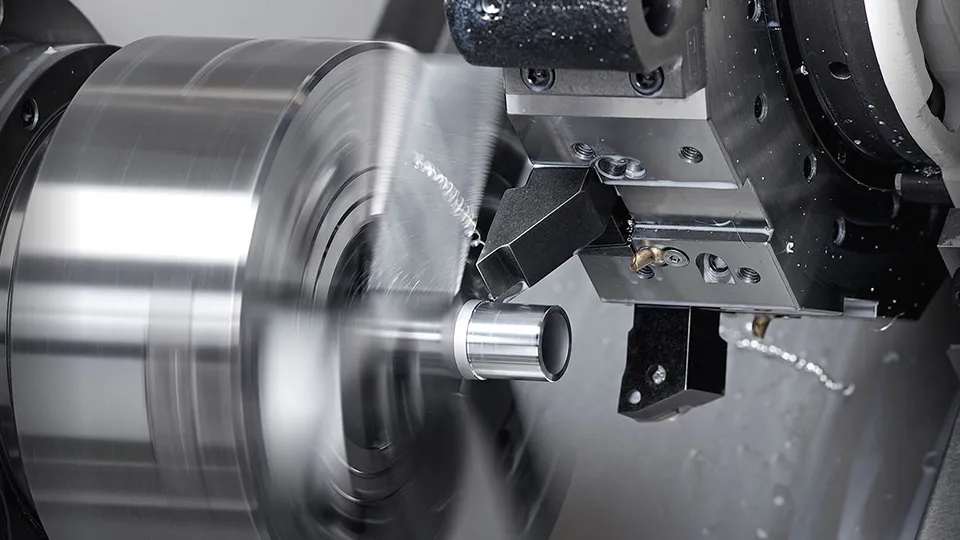
Cutting tools have a direct influence on aluminum CNC machining quality. Because aluminum is soft, ductile, and prone to sticking, the best tool is not always the hardest tool. It should be sharp, smooth, rigid, and able to evacuate chips quickly without rubbing or generating excessive heat.
Carbide End Mills
Carbide end mills are widely used for CNC milling aluminum because they offer good rigidity, wear resistance, and high-speed cutting capability. They are suitable for roughing, finishing, pocketing, contouring, and slotting operations.
For aluminum, a sharp cutting edge is more important than heavy edge strength. If the tool edge is too blunt, it may push and smear the material instead of cutting it cleanly. This can cause poor finish, burrs, and built-up edge.
Polished Flute Tools
Polished flute tools are especially useful for aluminum machining. The smooth flute surface helps chips flow out more easily and reduces material adhesion on the tool.
This matters because aluminum chips can stick to the cutting edge or flute under heat and pressure. Once chips stop flowing smoothly, the tool may recut chips, increase cutting temperature, and leave rough marks on the part surface.
Two-Flute And Three-Flute End Mills
Two-flute end mills provide more chip space, making them useful for slotting, pocketing, and deeper cuts where chip evacuation is difficult. They are often preferred when removing a large amount of aluminum quickly.
Three-flute end mills provide a balance between chip evacuation and cutting efficiency. They can often run with higher feed rates while still keeping enough flute space for aluminum chips. For many aluminum milling jobs, three-flute tools are a practical choice for both roughing and finishing.
High Helix End Mills
High helix end mills help pull chips away from the cutting zone and reduce cutting resistance. They are useful when machining aluminum surfaces that require cleaner edges, smoother finishes, or more stable cutting.
The higher helix angle can also reduce vibration in many aluminum milling operations. However, tool holding and workpiece clamping still need to be stable, especially when machining thin walls or deep pockets.
Drills And Taps For Aluminum
Drills for aluminum should have sharp edges, smooth flutes, and good chip evacuation. For deep holes, chip removal is more important because packed chips can scratch the hole wall, increase heat, or break the drill.
Taps for aluminum should reduce friction and prevent thread tearing. Proper lubrication is important, especially for blind holes and fine threads. In production, thread quality should be checked regularly because aluminum threads can look acceptable while still having poor fitting strength.
Tool Coating For Aluminum
Aluminum machining does not always require a heavy coating. In many cases, tool geometry, edge sharpness, and flute smoothness are more important than coating thickness.
When coating is used, the goal is usually to reduce friction and prevent aluminum from sticking to the cutting edge. Low-friction coatings such as DLC or TiB2 may help in some aluminum applications, especially in high-speed cutting or sticky aluminum alloys. The coating should support clean cutting, not make the edge too rounded.
Cutting Strategy For Aluminum CNC Machining
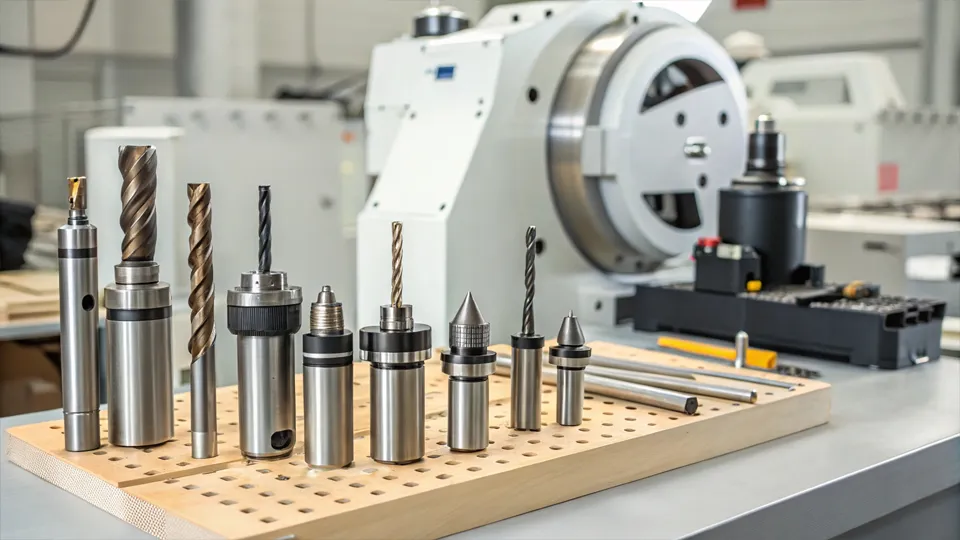
Cutting strategy determines whether aluminum CNC machining is fast, stable, and accurate. Aluminum can often be machined at high speed, but speed alone does not guarantee quality. The process must balance spindle speed, feed rate, chip load, cutting depth, tool engagement, heat control, and chip evacuation.
Use High Spindle Speed With Stable Feed
Aluminum usually supports higher spindle speeds than many harder metals because it has lower cutting resistance. Higher speed can improve productivity and help produce a cleaner surface when the tool, machine, and setup are stable.
However, high speed must be matched with proper feed. If the spindle speed is high but the feed is too low, the tool may rub instead of cut. This creates heat, built-up edge, and poor surface finish. A stable feed keeps the tool cutting clean chips instead of polishing the material.
Keep Chip Load Reasonable
Chip load is the amount of material removed by each cutting edge. It is one of the most important factors in aluminum CNC machining. If chip load is too small, the tool rubs and generates heat. If it is too large, cutting force increases and may cause chatter, tool deflection, or rough surfaces.
A reasonable chip load keeps cutting efficient and predictable. It also helps the chip carry heat away from the cutting zone, which is important for reducing material sticking and maintaining tool life.
Use Proper Depth Of Cut And Width Of Cut
Depth of cut and width of cut should match the tool diameter, machine rigidity, workpiece shape, and fixture stability. Heavy cutting can improve material removal rate, but it also increases tool pressure and vibration risk.
For aluminum roughing, larger material removal can be used when the setup is rigid and chip evacuation is good. For finishing, a lighter and more stable cut is usually better. It helps control final dimensions, surface finish, and edge quality.
Improve Chip Evacuation
Chip evacuation is critical in aluminum CNC machining. Aluminum chips can be long, soft, and sticky. If chips remain in the cutting zone, they may be cut again by the tool, damaging the surface and increasing tool wear.
Air blast, coolant, proper flute design, and open tool paths can help remove chips quickly. This is especially important in pocket milling, slot milling, deep drilling, and blind holes where chips are more likely to accumulate.
Control Heat During Cutting
Aluminum conducts heat well, but local heat at the cutting edge can still cause problems. Excessive heat may lead to built-up edge, tool adhesion, dimensional drift, or poor surface quality.
Heat control depends on sharp tools, correct chip load, suitable coolant or air blast, and avoiding unnecessary rubbing. In many aluminum operations, the goal is not only to cool the tool, but also to make chips leave the cutting area before they damage the surface.
Separate Roughing And Finishing
Roughing and finishing should have different goals. Roughing removes most of the material efficiently. Finishing controls the final size, surface quality, edge condition, and tolerance.
Leaving a consistent finishing allowance is important. If roughing leaves uneven stock, the finishing tool will experience changing cutting forces, which can affect accuracy and surface finish. A stable finishing pass with a sharp tool gives aluminum parts better consistency and cleaner results.
Common Problems In Aluminum CNC Machining
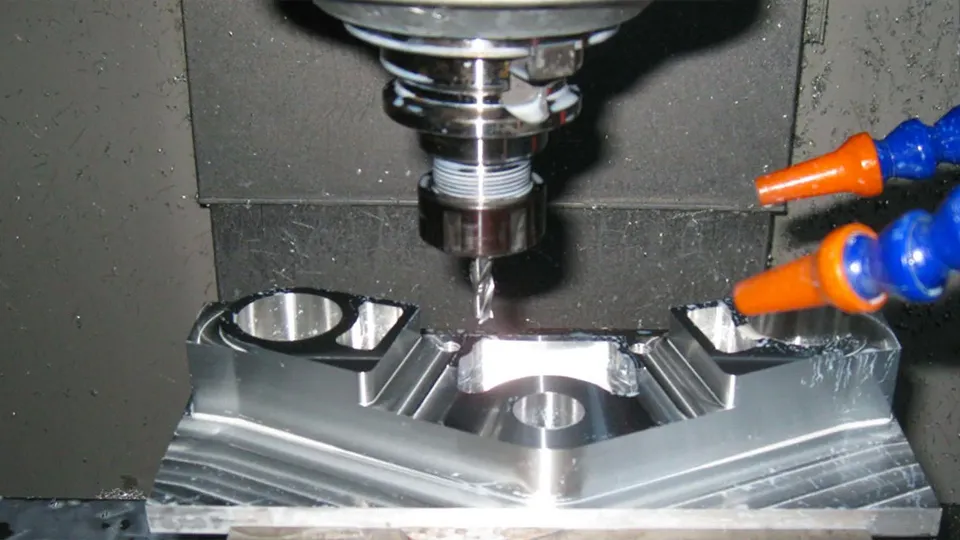
Aluminum CNC machining is generally efficient, but several problems can still appear if the cutting process is not well controlled. Most issues come from aluminum’s soft and ductile behavior, poor chip evacuation, unstable cutting conditions, weak clamping, or unsuitable tool geometry.
Built-Up Edge
Built-up edge happens when aluminum material sticks to the cutting edge during machining. Once this layer forms, the tool no longer cuts with its original sharp geometry. It may create rough surfaces, unstable dimensions, burrs, and sudden tool wear.
This problem is common when cutting heat is too high, lubrication is poor, the tool is dull, or the chip load is too small. Sharp tools, proper feed, smooth flutes, and effective coolant or air blast can reduce material adhesion.
Burr Formation
Burrs often appear on hole edges, thin walls, slots, pockets, and contour exits. Aluminum is easy to cut, but its ductility makes it likely to bend or tear at the edge instead of separating cleanly.
Burrs affect assembly, appearance, surface treatment, and inspection. Better tool sharpness, proper exit strategy, optimized feed, and controlled finishing passes can reduce burr formation. Deburring may still be required for precision or visible parts.
Poor Surface Finish
Poor surface finish may appear as tool marks, scratches, vibration patterns, smeared material, or uneven texture. In aluminum CNC machining, this is often caused by dull tools, chip recutting, tool runout, unstable feed, poor clamping, or machine vibration.
A clean surface usually requires sharp tools, stable cutting, good chip removal, and a separate finishing pass. If chips remain on the surface during cutting, even a good tool can leave scratches or cloudy marks.
Thin-Wall Deformation
Thin-wall aluminum parts are easy to deform because aluminum has lower stiffness than steel. Clamping force, cutting force, heat, and internal stress can all change the final shape of a thin feature.
This problem is common in housings, covers, lightweight brackets, and aerospace-style parts. A better approach is to use balanced machining, reduce cutting pressure, leave temporary support when possible, and finish thin walls with light, stable cuts.
Tool Chatter
Chatter is a vibration problem that creates noise, poor surface finish, tool marks, and unstable dimensions. It often happens when the tool overhang is too long, the fixture is not rigid enough, the cutting parameters are aggressive, or the part itself is thin and flexible.
Reducing tool overhang, improving clamping, adjusting spindle speed and feed, and using a more stable tool path can help control chatter. In aluminum machining, avoiding vibration is especially important because surface defects can appear quickly.
Thread Damage
Aluminum threads can be damaged by chip packing, poor lubrication, dull taps, wrong tapping speed, or weak thread design. The result may be torn threads, rough flanks, poor fitting, or reduced holding strength.
Blind holes require more attention because chips have limited space to escape. Proper tap selection, lubrication, chip control, and thread inspection are important, especially for parts that need repeated assembly or reliable fastening.
| Problem | Common Cause | Practical Solution |
|---|---|---|
| Built-up edge | Heat and material adhesion | Use sharp tools, proper feed, and better lubrication |
| Burrs | Ductile material, dull tool, poor exit strategy | Optimize tool path, feed, and deburring method |
| Poor finish | Vibration, chip recutting, tool wear | Improve rigidity, chip removal, and finishing pass |
| Thin-wall deformation | Clamping force, cutting force, heat | Use staged machining and lighter finishing cuts |
| Chatter | Long tool overhang or weak setup | Reduce overhang, improve clamping, and adjust parameters |
| Thread damage | Chip packing or poor lubrication | Use proper taps, lubrication, and chip control |
How To Improve Aluminum CNC Machining Accuracy?
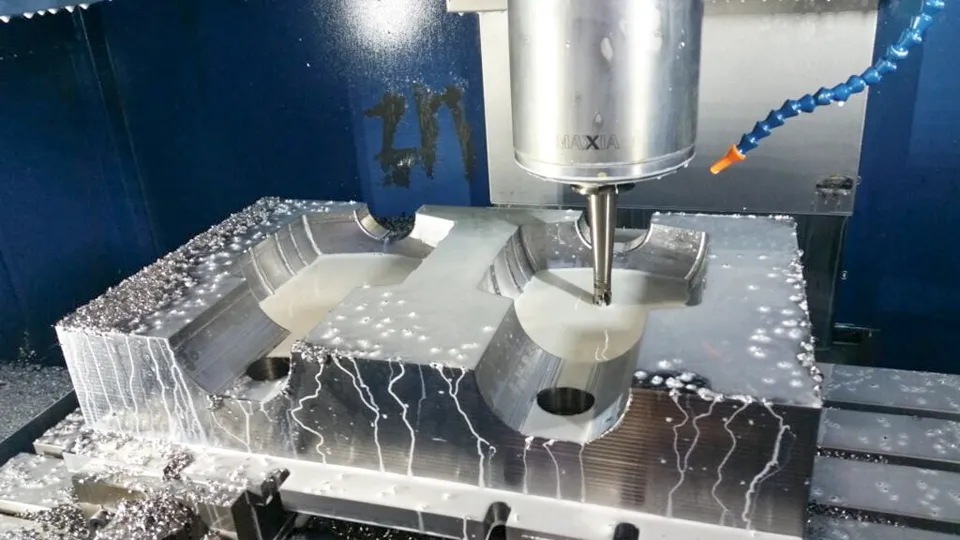
Accuracy in aluminum CNC machining depends on the whole process, not only the machine or the cutting tool. A precise part requires stable material, rigid clamping, suitable cutting parameters, controlled heat, correct tool compensation, and reliable inspection. If one factor is unstable, the final dimension may still drift even when the machine itself is accurate.
Control Workholding
Workholding is the first factor to control. Aluminum parts can deform if the clamping force is too high or uneven. Thin plates, housings, and lightweight structures need fixtures that support the part properly without squeezing critical surfaces. Soft jaws, vacuum fixtures, custom supports, or staged clamping may be used depending on the part shape.
Maintain Tool Condition
Tool condition directly affects dimensional stability. A sharp tool cuts aluminum cleanly and reduces cutting force. A worn tool increases heat, burrs, and dimensional variation. Tool runout should also be controlled because even small runout can create uneven cutting load, poor surface finish, and inaccurate hole or contour dimensions.
Control Cutting Heat
Thermal control is important for precision aluminum parts. Aluminum conducts heat well, but local temperature changes during cutting can still affect part size, especially on thin-wall or high-tolerance parts. Proper coolant, air blast, stable chip load, and avoiding tool rubbing help reduce heat-related error.
Plan The Machining Sequence
Process sequence has a strong influence on accuracy. Roughing should remove most of the material while leaving consistent stock for finishing. Finishing should use lighter cuts, stable tool paths, and fresh or well-controlled tools. For parts with tight tolerances, inspection after roughing or semi-finishing can help detect deformation before the final pass.
Use Measurement And Offset Control
Measurement should be part of the machining process. First-piece inspection, tool offset correction, in-process checks, and final inspection help keep production stable. In batch aluminum CNC machining, small changes in tool wear, temperature, or clamping condition can accumulate, so regular measurement is necessary to maintain consistent accuracy.
Surface Finish In Aluminum CNC Machining
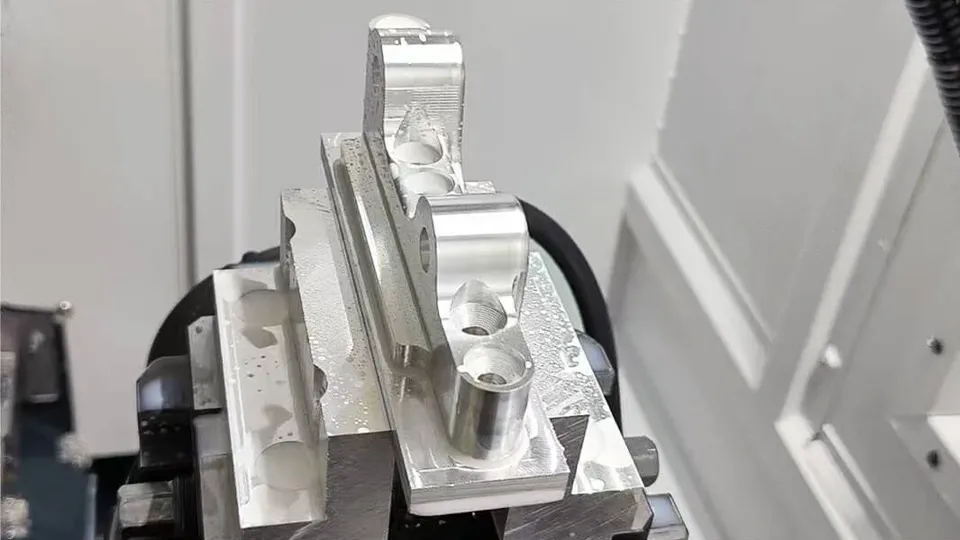
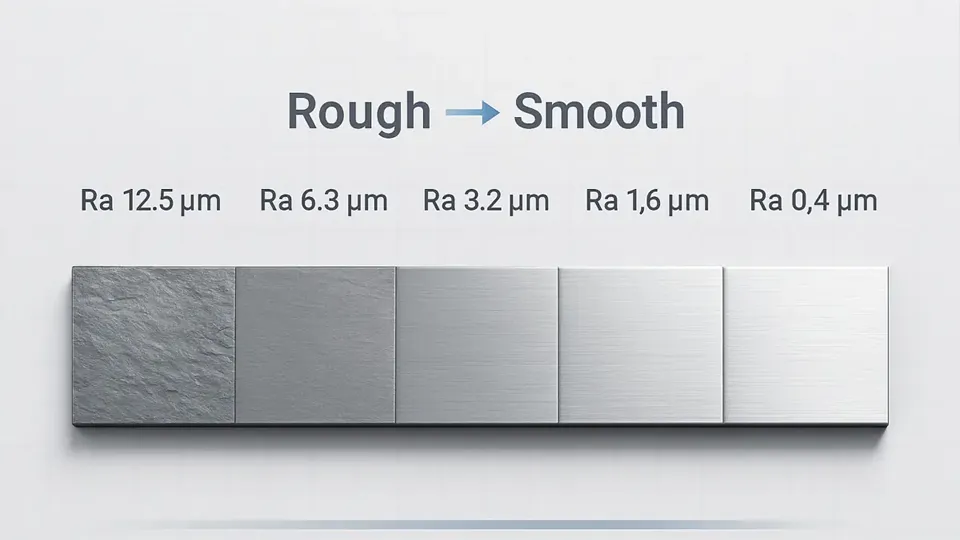
Surface finish in aluminum CNC machining refers to the final texture and quality of the machined surface. It is not only about appearance. A good surface finish can affect assembly fit, sealing performance, friction, coating adhesion, anodizing quality, and long-term part reliability.
Aluminum can produce a clean and bright surface when the cutting process is stable. However, it can also show scratches, tool marks, smeared material, burrs, or cloudy areas if the tool is dull, chips are recut, or vibration occurs. This is why surface finish must be controlled during machining, not only corrected after machining.
What Affects Aluminum Surface Finish?
Several factors influence the surface finish of CNC machined aluminum. Tool sharpness is one of the most important. A sharp tool cuts cleanly, while a worn tool can rub, smear, or pull material at the edge.
Spindle runout, tool holding accuracy, feed rate, cutting depth, and machine vibration also affect the final surface. Chip evacuation is equally important. If aluminum chips stay in the cutting zone, they may scratch the finished surface or create uneven texture.
Coolant or air blast can help remove chips and control heat. For visible parts or parts that need anodizing, even small scratches and tool marks should be managed carefully because surface treatment may make them more noticeable.
How To Get Better Surface Finish?
A better aluminum surface finish usually starts with a stable finishing strategy. Roughing should remove most of the material, while finishing should use a sharp tool, light and consistent cutting load, stable feed, and good chip removal.
Tool overhang should be kept as short as possible to reduce vibration. Fixtures should hold the part firmly without causing deformation. For pockets, slots, and thin walls, chip evacuation must be planned carefully because trapped chips are a common cause of scratches and poor finish.
For high-appearance aluminum parts, machining marks should be controlled before surface treatment. Anodizing, polishing, brushing, or bead blasting can improve appearance, but they cannot fully hide deep chatter marks, dents, or uneven machining defects.
Aluminum Surface Treatment After CNC Machining
Aluminum surface treatment after CNC machining is used to improve corrosion resistance, wear resistance, appearance, coating adhesion, and service life. It should not be treated as a simple cosmetic step. For many aluminum parts, surface treatment directly affects final performance, assembly quality, and long-term reliability.
Anodizing
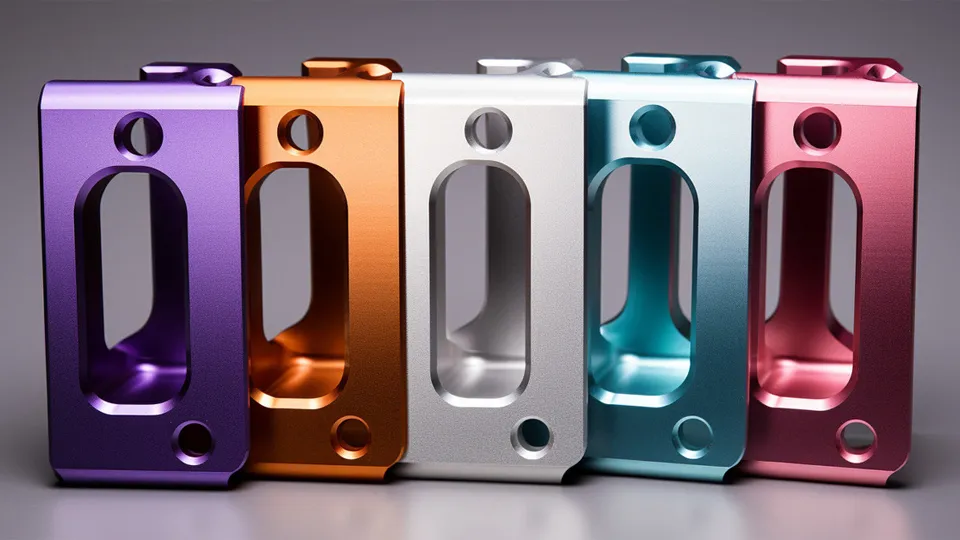
Anodizing is one of the most common surface treatments for CNC machined aluminum. It improves corrosion resistance, increases surface hardness, and provides a cleaner appearance. It can also produce different colors such as black, silver, red, blue, or gold.
Anodizing is widely used for electronic housings, brackets, panels, automation parts, aerospace components, and visible aluminum parts. However, it can slightly change final dimensions, especially on holes, threads, mating surfaces, and tight-tolerance features.
Hard Anodizing
Hard anodizing is used when the part needs higher surface hardness, better wear resistance, and longer service life. It is suitable for sliding parts, fixture components, pneumatic parts, industrial machine parts, and aluminum parts working under repeated friction.
Compared with standard anodizing, hard anodizing usually creates a thicker coating. This means dimensional control is more critical. For precision parts, coating thickness, masking areas, and final tolerance should be clearly defined before production.
Bead Blasting
Bead blasting creates a uniform matte surface on aluminum parts. It is often used for enclosures, panels, covers, visible machine parts, and electronic housings. It can reduce the visual contrast of light tool marks and make the surface look more consistent.
However, bead blasting is not a replacement for good machining. It cannot remove deep chatter marks, dents, scratches, or serious surface defects. If the machined surface is poor, bead blasting may only make the defect less sharp, not truly eliminate it.
Powder Coating
Powder coating provides color, corrosion protection, and a thicker protective layer. It is often used for equipment covers, machine frames, protective guards, industrial panels, outdoor aluminum parts, and structural components.
Because powder coating is relatively thick, it may affect holes, threads, mounting faces, and precision fitting areas. Critical areas often need masking to keep dimensions and assembly surfaces within requirement.
Electroplating And Chemical Conversion Coating
Chemical conversion coating is commonly used to improve corrosion protection, paint adhesion, or electrical conductivity, depending on the process type. It is useful for aluminum parts that need functional surface protection without a thick decorative layer.
Electroplating can also be applied to aluminum, but it requires careful pretreatment because aluminum forms an oxide layer quickly. This makes process control more demanding than plating on some other metals.
Polishing And Brushing
Polishing and brushing are mainly used for appearance control. Polishing can create a brighter and smoother surface, while brushing creates a directional texture. These treatments are common on decorative parts, instrument panels, electronic housings, and high-end equipment covers.
Both processes can change edge appearance and surface texture. On precision parts, they should be controlled carefully because aggressive polishing or brushing may affect small features, sharp edges, or local dimensions.
How Surface Treatment Affects CNC Machined Aluminum Parts
Surface treatment can affect final dimension, hole size, thread fit, surface roughness, color consistency, coating adhesion, masking requirements, and assembly performance. For this reason, treatment requirements should be considered during machining planning, not only after parts are finished.
| Surface Treatment | Main Purpose | Common Use | Machining Note |
|---|---|---|---|
| Anodizing | Corrosion resistance and appearance | Housings, brackets, panels | Allow for coating thickness |
| Hard Anodizing | Wear resistance and hardness | Industrial parts, sliding components | Control final tolerance |
| Bead Blasting | Matte surface texture | Enclosures, visible parts | Cannot hide deep tool marks |
| Powder Coating | Thick protection and color | Frames, covers, outdoor parts | Mask threads and fitting areas |
| Polishing | Bright appearance | Decorative parts | May affect edges |
| Brushing | Directional texture | Panels, covers | Keep texture direction consistent |
For high-precision aluminum parts, holes, threads, sealing faces, mating surfaces, and assembly areas should be reviewed before surface treatment. Masking, coating allowance, or post-treatment finishing may be needed to keep the part functional after the surface layer is applied.
Aluminum CNC Machining Applications
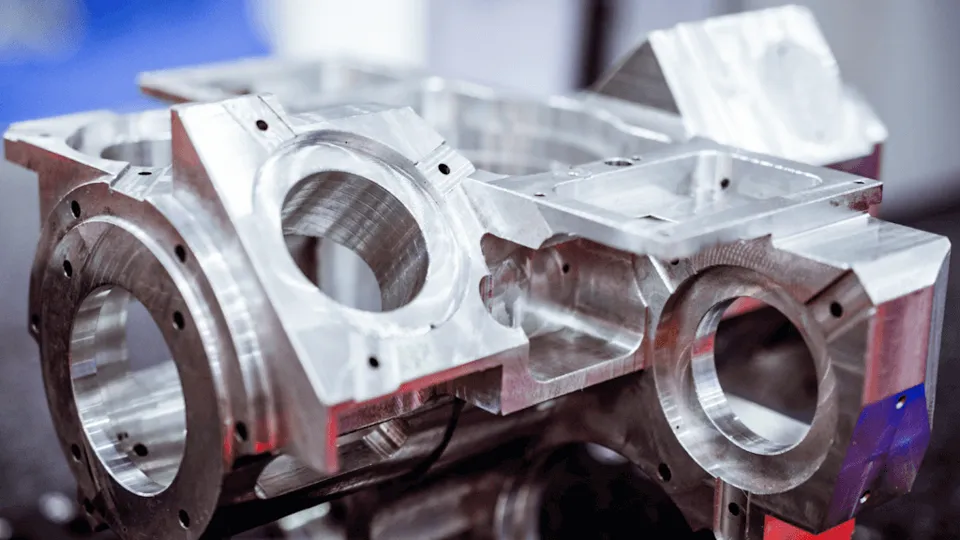
Aluminum CNC machining is used across many industries because aluminum parts can combine low weight, practical strength, good corrosion resistance, and precise geometry. Its applications are especially common where manufacturers need reliable parts that are easy to machine, assemble, finish, and produce repeatedly.
Automotive Industry
In the automotive industry, aluminum CNC machining is used for brackets, housings, spacers, valve parts, battery components, transmission-related parts, and lightweight structural components. As vehicles become lighter and more energy-efficient, aluminum parts help reduce weight while maintaining functional strength.
For electric vehicles, aluminum is also common in battery trays, cooling plates, motor housings, and electronic control housings. These parts often require accurate holes, flat mounting surfaces, and stable sealing areas.
Aerospace Industry
Aerospace applications use aluminum because of its strength-to-weight ratio and machinability. CNC machined aluminum parts can be found in structural brackets, aircraft fittings, panels, housings, frames, and precision support components.
In this field, dimensional accuracy and process control are very important. Even when the part looks simple, machining stability, material grade, surface condition, and inspection requirements must be carefully controlled.
Electronics Industry
Aluminum CNC machining is widely used in electronics for housings, heat sinks, connectors, panels, frames, and precision enclosures. Aluminum’s thermal conductivity makes it useful for parts that need heat dissipation, while its appearance after anodizing or bead blasting is suitable for visible products.
Electronic aluminum parts often require clean edges, accurate holes, good surface finish, and consistent color after treatment. Small burrs, scratches, or uneven surfaces can affect both appearance and assembly.
Medical Industry
In the medical industry, CNC machined aluminum is often used for equipment parts, instrument housings, surgical tool components, positioning fixtures, and non-implant structural parts. These parts usually require clean machining, stable dimensions, and reliable surface quality.
Aluminum is useful when the part needs to be lightweight, corrosion-resistant, and easy to handle. For medical equipment components, surface finish and edge quality are especially important because they affect cleaning, handling, and assembly.
Mold And Fixture Manufacturing
Aluminum is commonly used for molds, fixtures, jigs, inspection tools, and prototype tooling. It is easier and faster to machine than many tool steels, making it useful for short-run molds, production fixtures, and lightweight tooling plates.
In fixture manufacturing, aluminum can reduce handling weight while still providing enough rigidity for many applications. Good machining accuracy is important because fixture quality directly affects the repeatability of the parts produced on it.
Industrial Equipment
Industrial equipment uses CNC machined aluminum parts in machine frames, mounting plates, automation parts, pneumatic components, protective covers, brackets, guide blocks, and custom mechanical assemblies.
These parts often need a balance of strength, corrosion resistance, clean appearance, and machining efficiency. For factories and equipment builders, aluminum CNC machining helps produce parts that are functional, lightweight, and easy to integrate into larger mechanical systems.
Practical Tips For Stable Aluminum CNC Machining
Stable aluminum CNC machining comes from controlling small details consistently. Aluminum is not difficult to cut, but it is easy to scratch, deform, stick to tools, or produce burrs when the process is careless. The goal is not only to machine fast, but to machine repeatably.
Do Not Only Pursue High Spindle Speed
Aluminum can usually run at high spindle speed, but higher speed is not always better. If feed rate, tool condition, chip evacuation, and fixture rigidity do not match the speed, the tool may rub, generate heat, or leave poor surface marks. Speed should serve stable cutting, not replace process control.
Keep Cutting Tools Sharp
Sharp tools are essential for aluminum. A dull tool increases cutting force, creates burrs, raises temperature, and may cause built-up edge. For finishing operations, tool condition should be checked more carefully because even slight wear can affect surface finish and dimensional accuracy.
Make Chip Evacuation A Priority
Chip evacuation is one of the most practical factors in aluminum CNC machining. Chips left in pockets, slots, holes, or around thin walls can be recut and scratch the surface. Air blast, coolant, proper flute design, and tool path planning help keep chips away from the cutting zone.
Separate Roughing And Finishing
Roughing and finishing should not use the same logic. Roughing removes material efficiently. Finishing controls final dimensions, surface finish, and edge quality. Leaving consistent stock for finishing helps reduce cutting force changes and gives the final pass a more stable condition.
Control Thin-Wall Deformation Early
Thin-wall aluminum parts should be planned carefully from the first operation. If too much material is removed too early, the part may lose support and deform. A staged machining method, balanced stock removal, and lighter finishing cuts help keep thin walls more stable.
Avoid Damaging Aluminum During Clamping
Aluminum is softer than steel, so clamping can leave dents, marks, or deformation. Fixtures should support the part well without applying unnecessary pressure on finished or visible surfaces. Soft jaws, protective contact surfaces, and balanced clamping force can improve part consistency.
Check Surface Before Treatment
Surface treatment can improve appearance and protection, but it cannot fully repair poor machining. Burrs, deep tool marks, chatter, scratches, and dents should be controlled before anodizing, bead blasting, polishing, or coating. Some treatments may even make defects more visible.
Plan Coating Allowance And Masking
For aluminum parts with tight holes, threads, sealing faces, or mating surfaces, surface treatment must be considered before machining is finalized. Coating thickness, masking areas, and post-treatment requirements should be clear in advance to avoid assembly problems after finishing.
Monitor Dimensions In Batch Production
In batch aluminum CNC machining, part quality can change gradually because of tool wear, temperature, chip buildup, or clamping variation. Regular inspection, tool offset correction, and first-piece confirmation help keep production stable and reduce scrap.
Conclusion
Mastering aluminum CNC machining is not merely about cutting a yielding metal; it is a continuous pursuit of manufacturing excellence where speed, precision, and structural integrity perfectly align to bring advanced engineering concepts to life. Translating these concepts into physical reality demands a strict adherence to process fundamentals, encompassing a deep understanding of specific alloy behaviors, the selection of polished tool geometries for rapid chip evacuation, the exact separation of roughing and finishing cycles, and the vigilant management of thermal dynamics across the entire workflow.
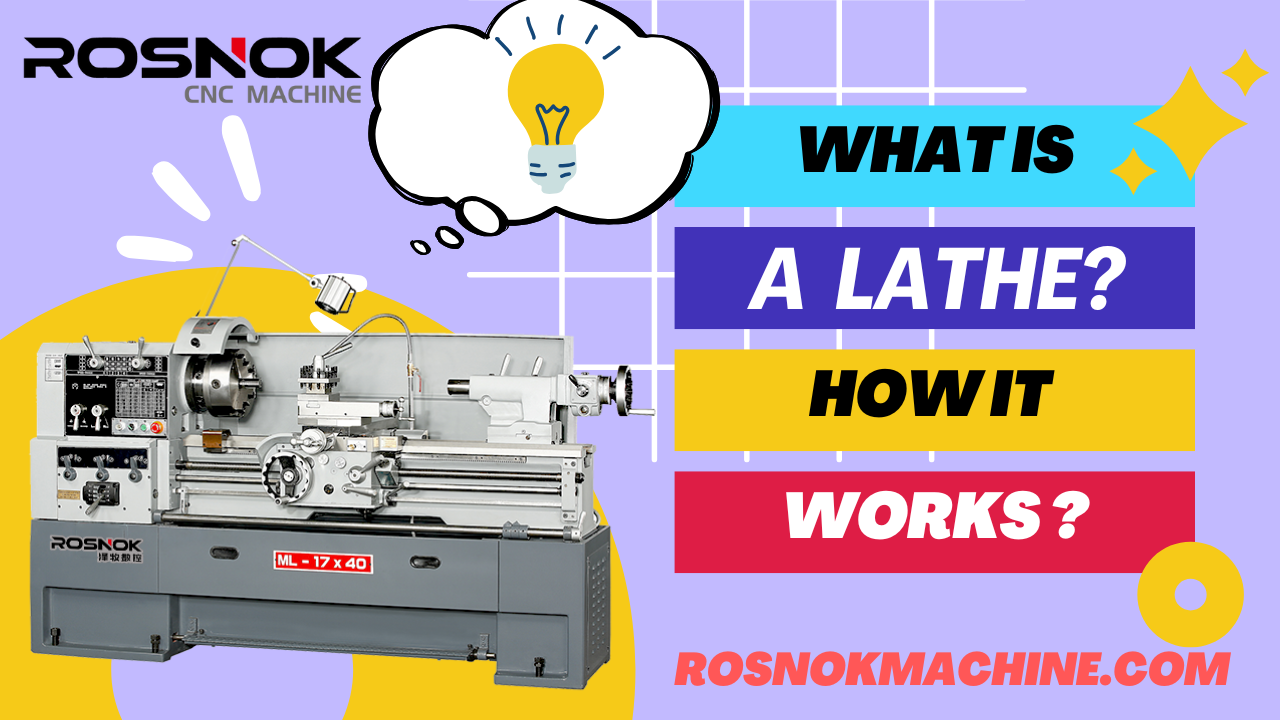
For manufacturers that need stable metal-cutting capability, the machine behind the process is also part of the result. Rosnok focuses on CNC lathes, machining centers, milling machines, Swiss-type lathes, and other CNC machine tools for metal machining, helping workshops build a more reliable foundation for aluminum CNC machining and broader precision manufacturing needs.