How Does a Spindle Work?
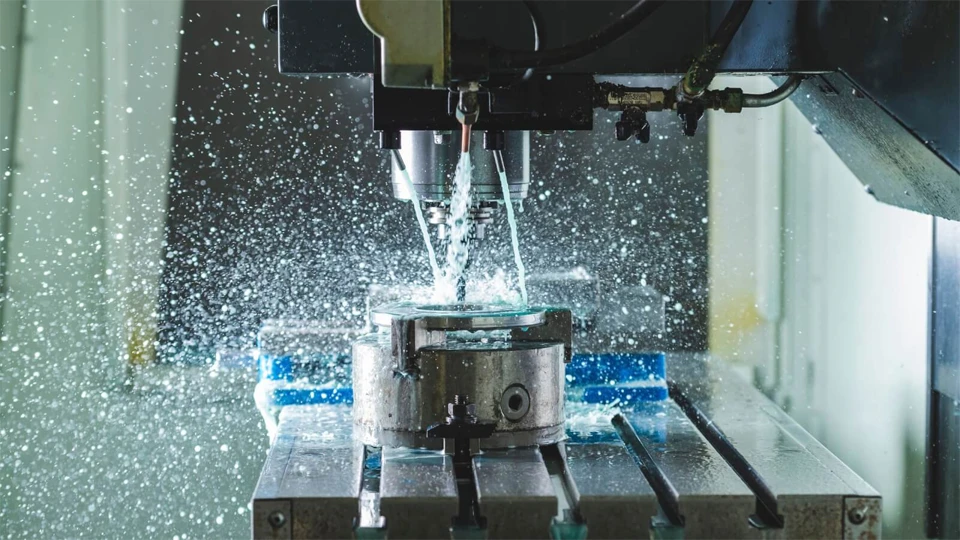
A spindle works by receiving rotational power from the machine’s motor, through belts, gears, or a built-in drive, and transferring that motion to the cutting process. Its basic job is simple: it turns something at a controlled speed so material can be removed accurately and efficiently. In machine tools, that rotating element is either the cutting tool or the workpiece, depending on the type of machine.
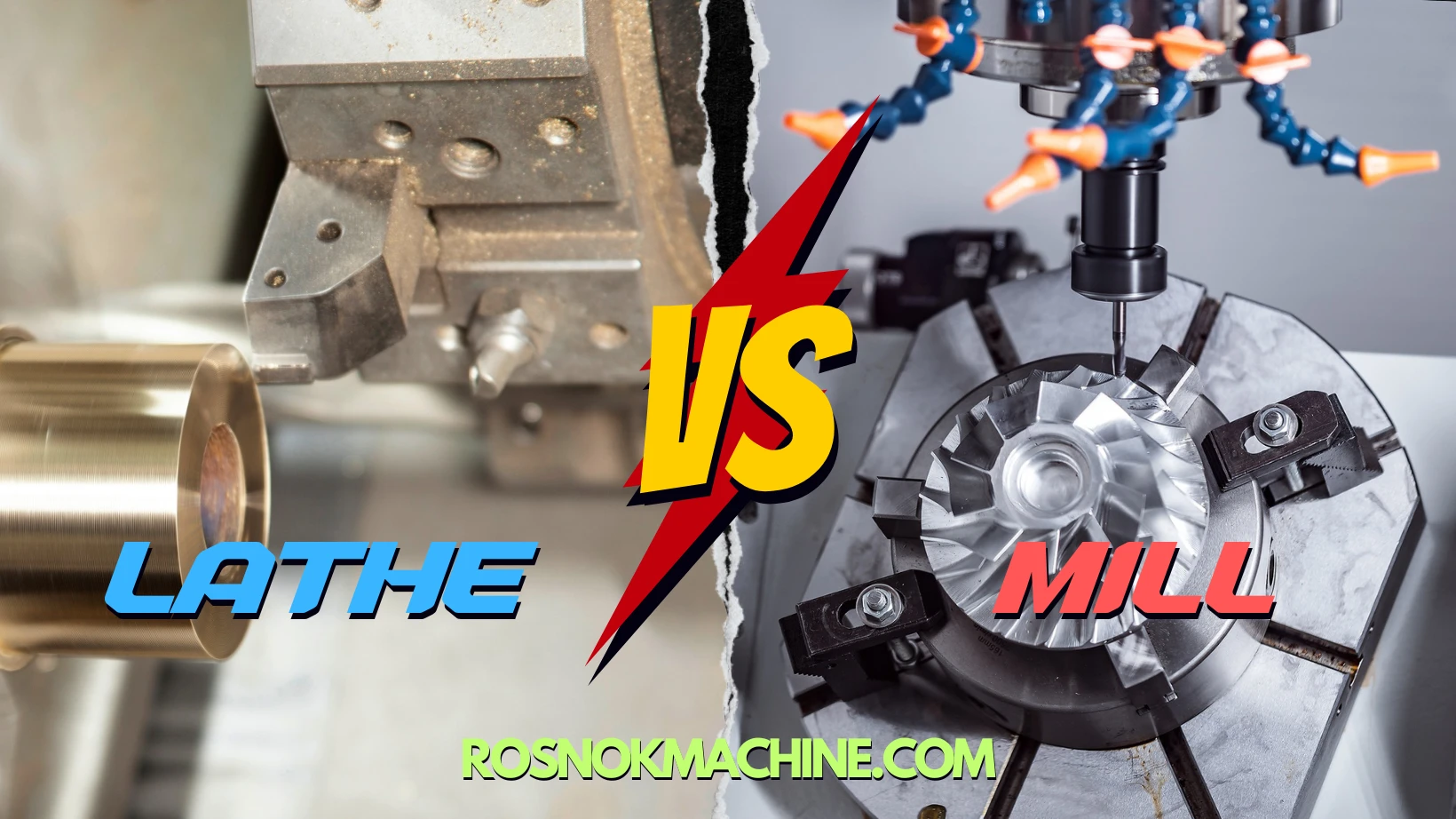
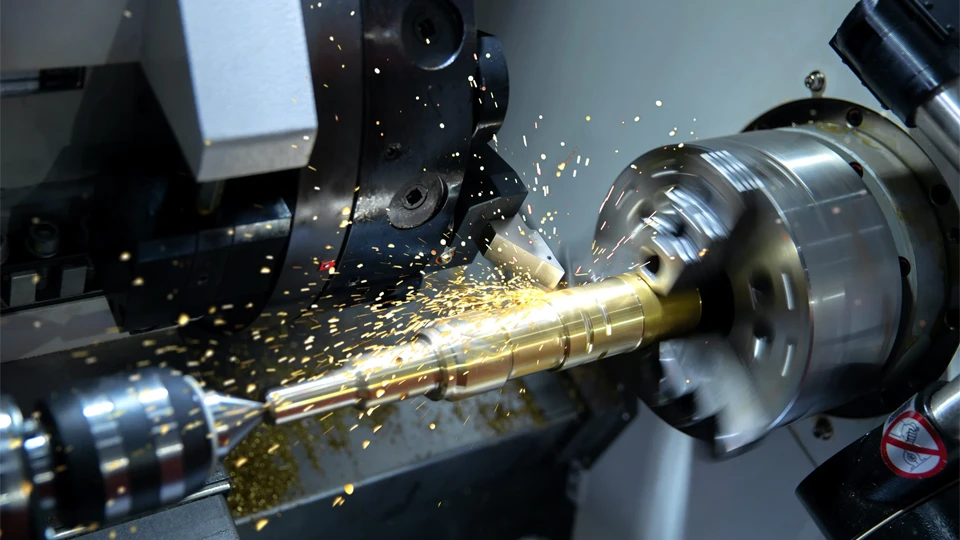
In milling machines and machining centers, the spindle rotates the tool. The tool cuts the stationary or moving workpiece as the machine feeds it along the programmed path. In lathes, the configuration is reversed. The spindle rotates the workpiece, while the cutting tool moves into it to remove material. Although the setup is different, the working principle is the same. The spindle provides the main rotary motion that makes machining possible.
This rotary motion must be controlled, not just generated. A spindle does not simply spin at one fixed speed. It must run at the right speed for the material, tool size, and cutting task. During light finishing, it may run faster to support cleaner surface quality. During heavier cutting, it may need lower speed and stronger torque to keep the cut stable. This is why spindle performance is closely connected to machining conditions rather than RPM alone.
The spindle also works as the link between machine power and actual cutting action. Power comes from the machine, but the spindle is the point where that power becomes usable motion. It must also maintain stable rotation under cutting loads so the machining process remains controlled. If the spindle cannot transfer that motion smoothly and consistently, the machining process becomes unstable. That is why spindle operation is always tied to three practical factors: rotation, force, and control.
In short, a spindle works by converting machine power into controlled rotary motion for machining. Whether it spins the tool or the workpiece, its role is to keep the cutting process moving in a stable, precise, and repeatable way.
Main Parts of a Spindle System
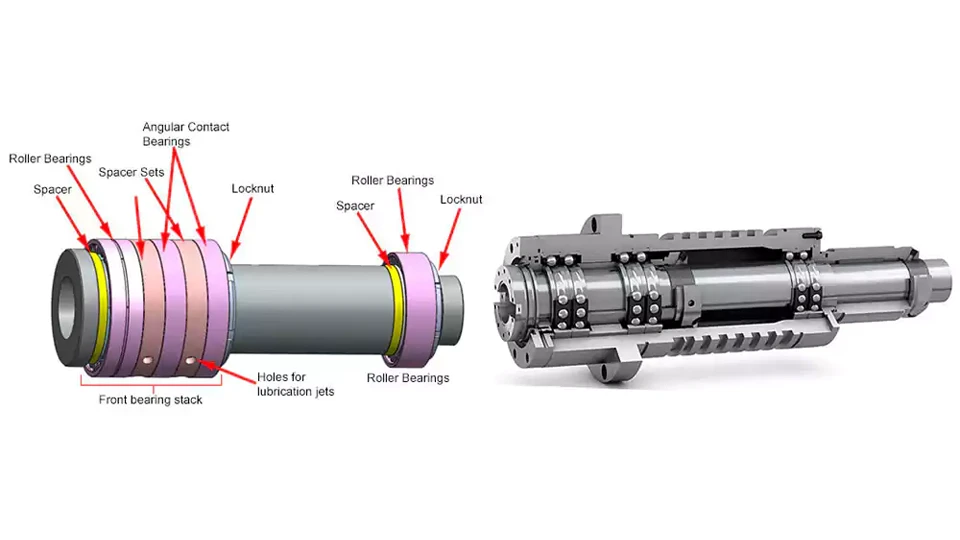
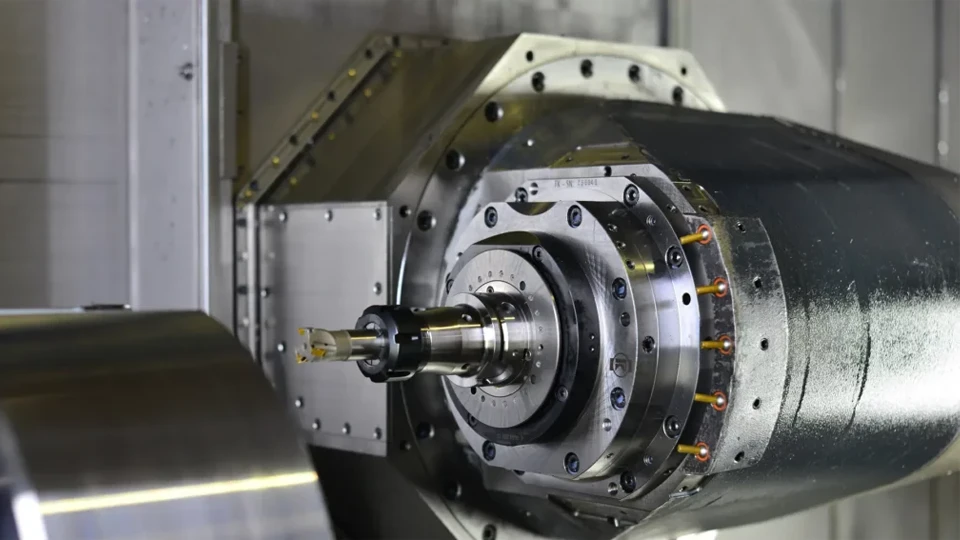
A spindle is not a single part. It is a system made of several closely matched components that work together to deliver precise rotary motion in machining. To understand spindle performance, it is important to understand the basic parts that make that motion possible.
Spindle Shaft
The spindle shaft is the central rotating body of the system. It carries the tool or the workpiece and transfers rotational motion into the cutting zone. Because it is the main rotating element, its accuracy directly affects how smoothly the spindle runs during operation.
Bearings
Bearings support the spindle shaft and keep its rotation controlled. Their job is to guide the shaft, reduce unwanted movement, and carry the radial and axial loads generated during machining. In practical terms, bearings are essential to stable spindle motion.
Spindle Nose or Taper
The spindle nose or taper is the connection point between the spindle and the tool holder, chuck, or other workholding element. This interface allows the spindle to transmit motion to the cutting tool or the workpiece in a secure and repeatable way. It must also provide precise alignment and repeatable positioning during operation.
Drive Connection
The drive connection links the spindle to the machine’s power source. Depending on the machine design, this connection may work through belts, gears, or an integrated motorized arrangement. Its role is to deliver rotational input to the spindle in a controlled manner.
Lubrication and Cooling Support
Lubrication and cooling support help the spindle system run under proper operating conditions. Since the spindle rotates continuously during machining, friction and heat must be managed carefully. These support functions help reduce friction, manage heat, and limit thermal expansion during operation.
In simple terms, a spindle system includes the rotating shaft, its support components, its connection interface, its drive path, and its operating support. Each part serves a different purpose, but all of them must work together as one precise system.
Why Is the Spindle So Important in Machining?
The spindle is important because it directly affects how well a machine tool performs in real cutting conditions. A machine may have a strong structure and an advanced control system, but if the spindle cannot deliver stable and accurate rotary motion, machining quality will suffer.
Machining Accuracy
The spindle has a direct effect on machining accuracy because it influences how truly the tool or workpiece rotates during cutting. Lower runout helps the machine produce parts that meet tighter dimensional and geometric requirements. For this reason, spindle quality is closely linked to repeatable machining results.
Surface Finish
The spindle also affects surface finish. By minimizing vibration and chatter, a stable spindle allows the tool to engage the material more evenly, which supports a cleaner and more consistent surface finish.
Cutting Performance
Cutting performance depends heavily on how well the spindle supports the machining process. A good spindle helps the machine maintain steady cutting action instead of unstable engagement with the material. This matters in both roughing and finishing, because the spindle influences how effectively the machine turns power into controlled cutting work.
Tool Life and Production Consistency
The spindle matters for more than a single part. It also affects tool life and production consistency across longer runs. Stable rotary motion helps protect the cutting tool by reducing irregular cutting loads, which can support longer tool life and more consistent production. In production environments, that consistency is often just as important as peak performance.
In short, the spindle is important because it influences the quality, stability, and consistency of machining. It is not just a rotating component inside the machine. It is one of the main factors that determines whether cutting performance stays accurate, repeatable, and reliable.
Spindle Speed, Torque, and Stability Explained
Spindle performance is not defined by speed alone. In real machining, spindle speed, torque, and stability must work together. A spindle that looks strong on paper may still perform poorly if one of these three factors does not match the cutting task.
Spindle Speed
Spindle speed refers to how fast the spindle rotates, usually measured in revolutions per minute. Higher speed is often useful for small tools, light cuts, and materials that benefit from faster cutting action. However, high speed is not automatically better. If spindle speed is too high for the tool, material, or setup, cutting quality can become harder to control.
Torque
Torque is the spindle’s ability to keep turning under load. It becomes especially important when the machine is making heavier cuts, using larger tools, or working on tougher materials. A spindle with insufficient torque may still rotate at the commanded speed in theory, but it will struggle to maintain cutting force in practice. In many spindle designs, higher torque is available at lower speeds for heavier cutting, while torque typically decreases as spindle speed rises toward maximum RPM.
Stability
Stability is the spindle’s ability to keep rotary motion smooth and controlled during machining. This matters because cutting is not a no-load condition. The spindle must continue rotating in a predictable way while the tool is engaged with the material. Good stability helps the machine maintain a more consistent cut from start to finish. Poor stability makes the spindle more likely to generate vibration or chatter during cutting, which reduces control over the machining process.
Why These Three Must Be Balanced
These three factors should be evaluated together, not separately. Speed supports cutting efficiency, torque supports load-carrying ability, and stability supports control. A spindle with high speed but poor stability is not ideal. A spindle with strong torque but poor speed matching is not ideal either. Good spindle performance comes from balance, not from a single impressive number.
In simple terms, speed determines how fast the spindle turns, torque determines how strongly it can cut under load, and stability determines how well it maintains control during the process. Understanding these three factors together is essential to understanding real spindle performance.
Common Spindle Problems and Their Causes
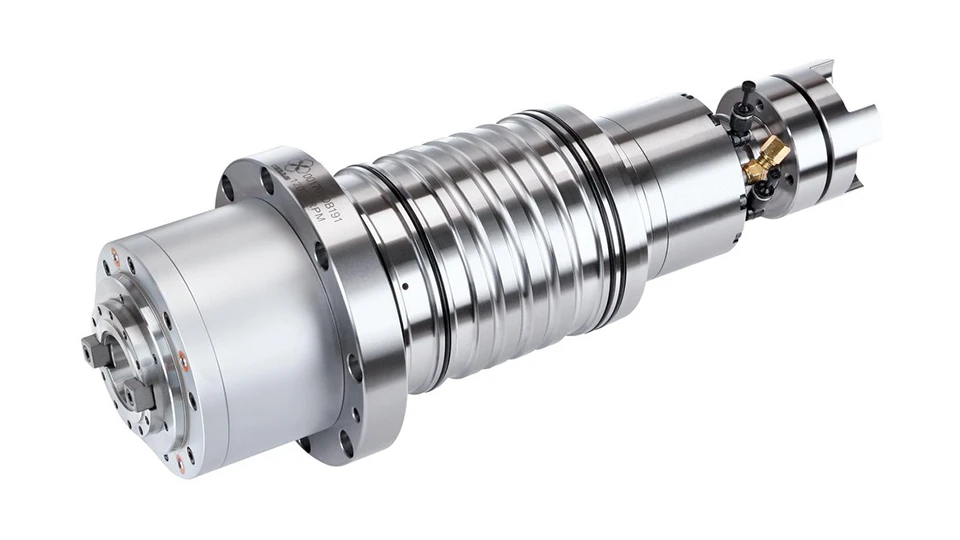
Even a well-designed spindle can lose performance if operating conditions, cutting loads, or component quality are not properly controlled. In most cases, spindle problems do not appear as one dramatic failure at the start. They show up gradually through changes in sound, cutting behavior, accuracy, or surface quality.
Vibration
Vibration is one of the most common spindle-related problems in machining. It often appears when the spindle cannot maintain smooth rotary motion under cutting load. Common causes include imbalance, poor rigidity, unstable cutting conditions, or loss of support inside the spindle system. Once vibration increases, the cutting process becomes harder to control and may leave chatter marks on the workpiece surface.
Runout
Runout means the tool or workpiece does not rotate perfectly true around the intended axis. This problem can come from spindle wear, poor alignment, or an inaccurate connection between the spindle and the tool holder or workholding element. Even a small increase in runout can reduce machining accuracy, create uneven tool loading, and accelerate tool wear.
Overheating
Spindle overheating usually develops when friction, load, or speed exceeds what the system can manage under normal operating conditions. It may also be linked to poor lubrication or insufficient cooling support. Excess heat makes stable operation harder to maintain and can gradually affect spindle condition over time. Excessive heat can also lead to thermal expansion, which makes dimensional control more difficult during machining.
Loss of Rigidity
A spindle that loses rigidity becomes less capable of holding stable cutting motion under force. This problem may come from internal wear, weakened support, or unsuitable cutting conditions that place too much stress on the spindle system. When rigidity drops, the machine often becomes more sensitive to load changes during machining.
Bearing Wear
Bearing wear is a common underlying cause behind many spindle problems. As bearings lose condition, the spindle may become less accurate, less stable, and less capable of handling cutting loads smoothly. This is why bearing condition is often closely connected to overall spindle performance.
In simple terms, common spindle problems usually appear as unstable motion, rising heat, reduced accuracy, or declining surface quality. These problems often develop from a combination of load, wear, alignment loss, and operating stress rather than from a single cause alone.
Conclusion
A spindle may look like just one rotating part inside a machine tool, but in real machining, it carries far more weight than that. It is where motion becomes control, and where machine power becomes real cutting performance. From the way it works to the way it affects accuracy, surface finish, torque, stability, and long-term consistency, the spindle remains one of the most important elements in any machining process. To understand the spindle is to understand why one machine cuts with confidence while another struggles to hold quality.
For manufacturers that care about machining performance in real production, spindle quality should never be treated as a minor specification. As a manufacturer of CNC lathes, machining centers, milling machines, vertical lathes, pipe thread lathes, and other metalworking equipment, Rosnok places strong emphasis on spindle reliability, machining stability, and practical performance in demanding industrial applications. This focus reflects the company’s broader approach to machine design, where consistent cutting performance begins with dependable core components.