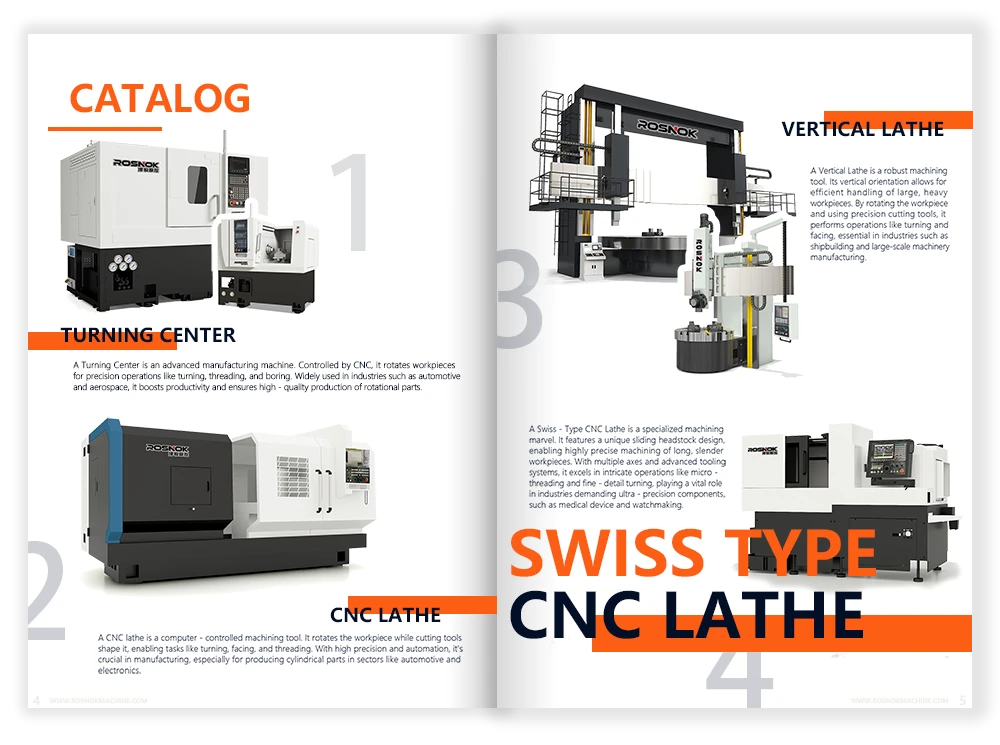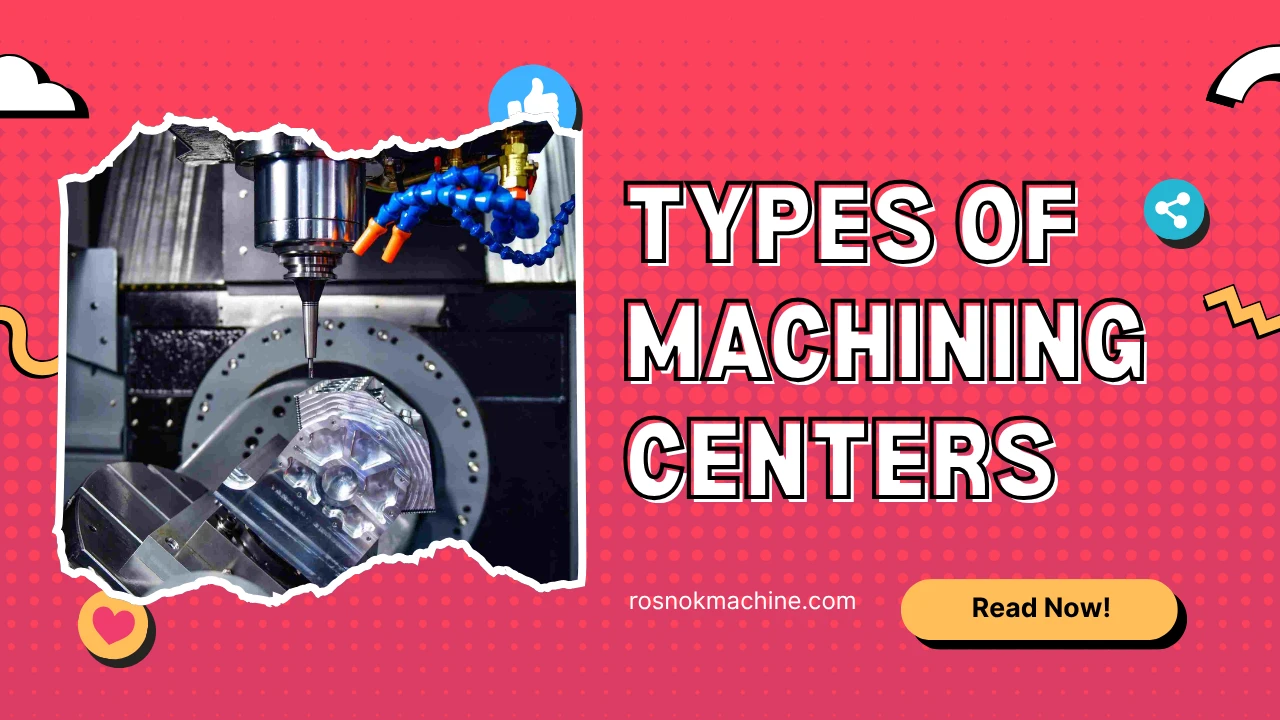
The main types of machining center include vertical machining centers (VMC), horizontal machining centers (HMC), and gantry machining centers. Each type is classified based on the orientation of the spindle and the machine structure. VMCs have a vertically oriented spindle and are best suited for surface milling, slotting, and mold processing. HMCs have a horizontal spindle and offer excellent chip evacuation, making them ideal for multi-face machining and heavy-duty cutting. Gantry machining centers feature a bridge-type structure, providing high rigidity and stability for large, complex, or oversized workpieces.
Classification by Machine Structure
Machining centers can be classified into three major types based on their structural configuration: Vertical Machining Centers (VMCs), Horizontal Machining Centers (HMCs), and Gantry Machining Centers. These structural differences directly influence how the machine performs in terms of cutting efficiency, chip evacuation, workpiece size, machining precision, and suitable applications.
Vertical Machining Centers (VMCs)
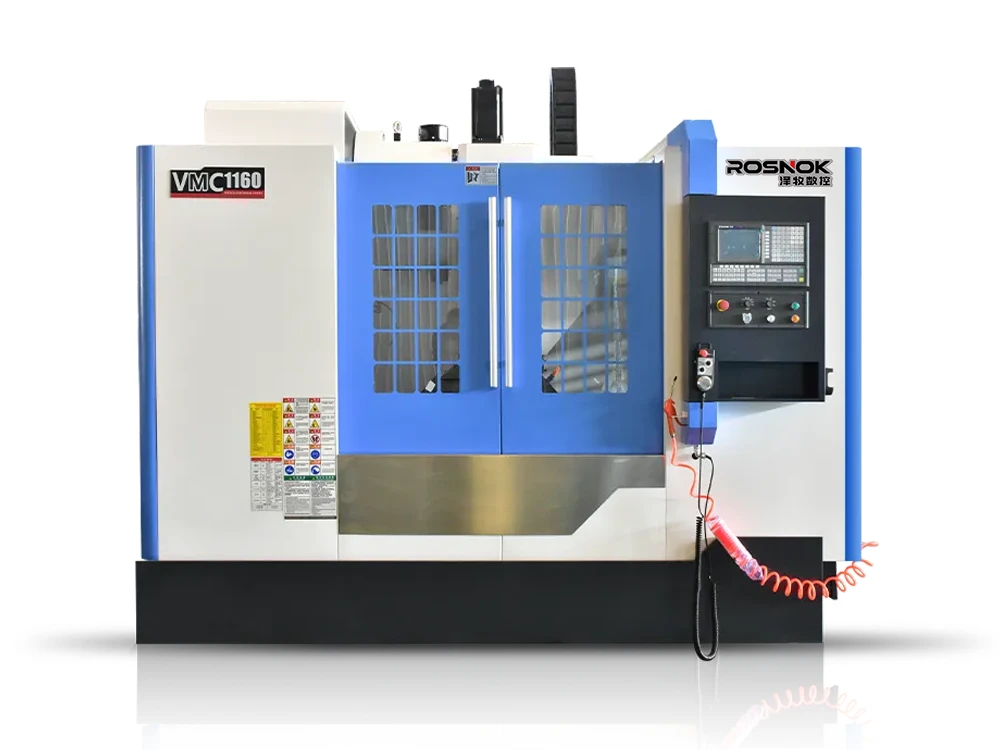
Vertical machining centers feature a vertically oriented spindle, with the cutting tool approaching the workpiece from above. The worktable lies flat beneath the spindle, making it easy to load and unload parts. This design offers a compact footprint, cost efficiency, and excellent visibility of the machining process, which is why VMCs are widely used in general-purpose machining.
VMCs are particularly effective for operations such as surface milling, cavity cutting, slotting, and light-to-medium duty contouring. However, their design can limit performance in terms of chip evacuation—especially in deep cavity or high-volume metal removal processes—where chips tend to accumulate and may require active coolant systems or manual cleaning.
Precision levels in VMCs are typically high, especially when machining flat surfaces and vertical features. However, since the machine is generally limited to three-axis movement, additional fixtures or rotary tables are often needed for multi-face machining tasks. VMCs are best suited for smaller to mid-sized parts with simple to moderately complex geometries.
Horizontal Machining Centers (HMCs)
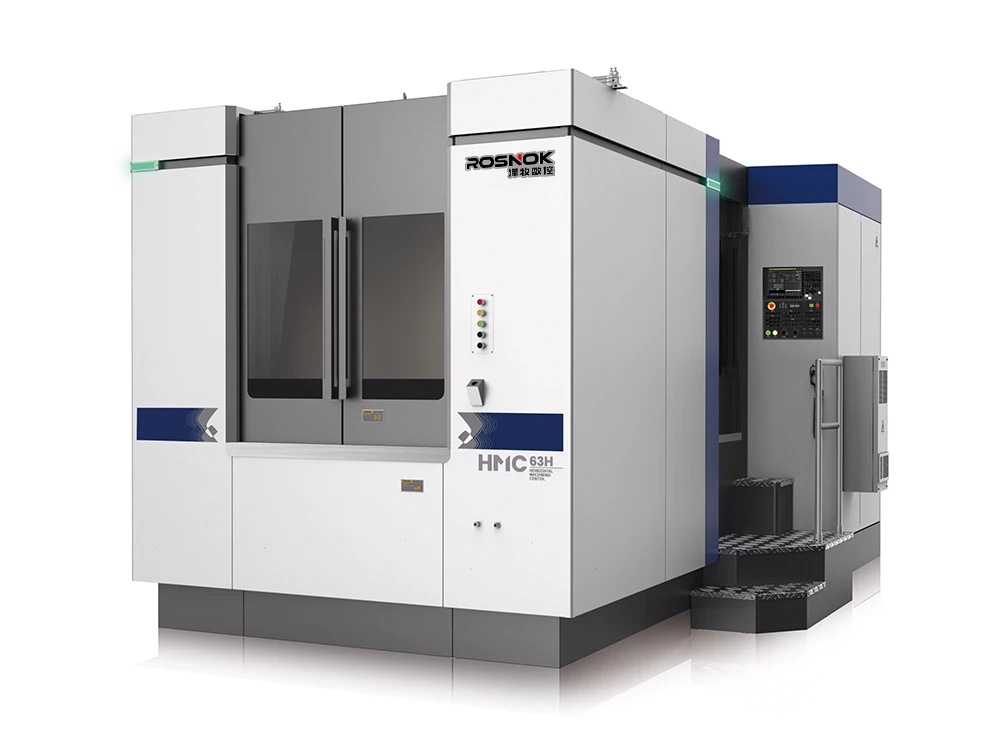
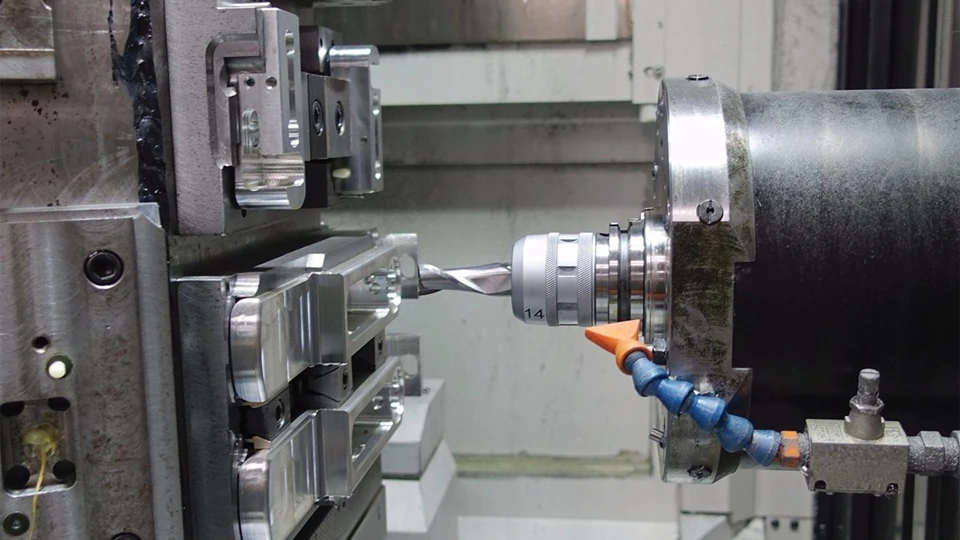
Horizontal machining centers have a spindle that is mounted horizontally, allowing the cutting tool to engage the workpiece from the side. The workpiece is usually mounted on a rotary table that can index between different sides, enabling multiple face operations in a single setup.
This horizontal orientation offers excellent chip evacuation due to gravity, reducing the risk of tool wear and thermal distortion caused by chip accumulation. HMCs are ideal for deep-hole drilling, pocket milling, and heavy-duty roughing of complex or box-type components, such as engine blocks, transmission housings, and industrial valves.
In terms of structure, HMCs are generally more rigid than VMCs and can support higher feed rates and larger tools. Their automatic pallet changers and larger tool magazines allow for continuous, unattended machining in high-production environments. While they take up more floor space and are typically more expensive, the productivity gains and machining versatility often justify the investment for batch or series production.
Gantry Machining Centers
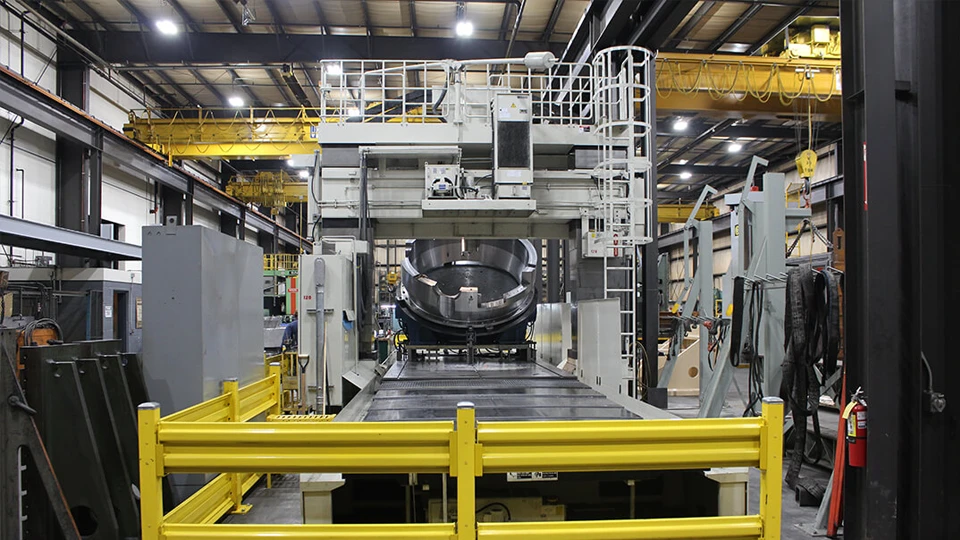
Gantry machining centers, also known as bridge-type machining centers, feature a design where the spindle moves along a crossbeam supported by two vertical columns on either side of the worktable. This layout offers exceptional rigidity and is capable of handling extremely large and heavy parts.
Unlike VMCs or HMCs, gantry machines have a stationary worktable and a moving bridge, which allows for superior precision over long distances. Their structural symmetry minimizes thermal expansion and deflection, making them suitable for high-tolerance machining of large aerospace parts, molds, dies, and structural components.
Gantry machining centers often support five-axis configurations and large tool changers. Their robust construction enables high-speed machining with heavy cutting forces, and the open work area facilitates crane loading of oversized parts. However, they require significant floor space, reinforced foundations, and controlled environments to maintain machining stability and precision.

Classification by Number of Axes
Machining centers are commonly classified by the number of linear and rotational axes they operate on. The number of axes directly determines the machine’s capability to perform complex machining operations, reduce repositioning steps, and achieve higher accuracy in multi-face or multi-angle cutting. The most common classifications are 3-axis, 4-axis, and 5-axis machining centers, each offering unique advantages depending on the workpiece geometry and production requirements.
3-Axis Machining Centers
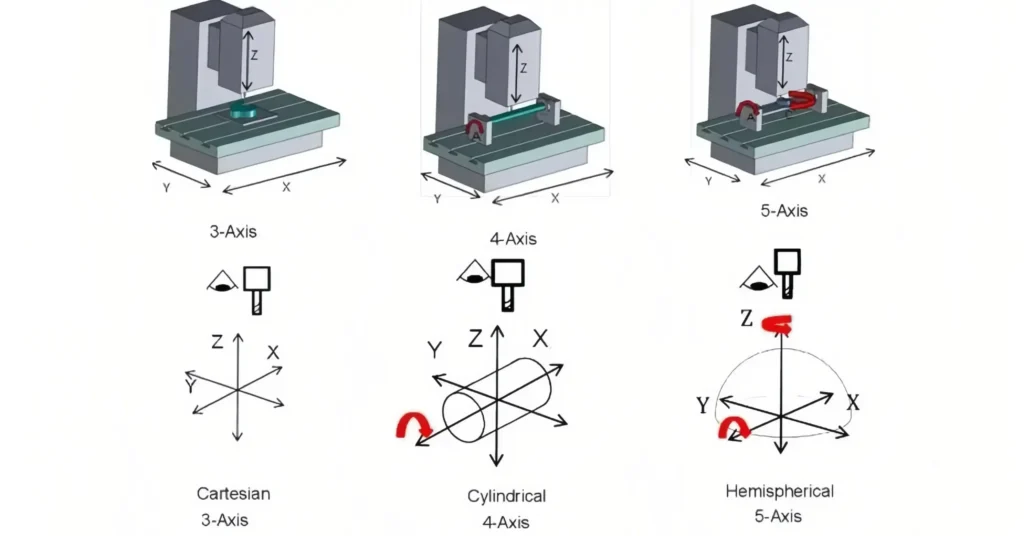
A 3-axis machining center operates on the X, Y, and Z linear axes. The cutting tool moves in three straight directions—left to right, front to back, and up and down—while the workpiece remains stationary on the table. This setup is the most basic and widely used configuration in the industry.
3-axis machines are ideal for simple operations like face milling, slotting, drilling, and contouring of prismatic parts. They are cost-effective, easy to program, and suitable for small to medium-sized production batches. However, they require manual or fixture-based repositioning to access multiple sides of a complex part, which can introduce alignment errors and increase setup time.
Because of these limitations, 3-axis machining is best suited for parts with relatively flat geometry or single-face features. In industries like automotive tooling, general machinery, and basic metal fabrication, 3-axis machines continue to play a foundational role in everyday production.
4-Axis Machining Centers
A 4-axis machining center adds a rotational axis—usually referred to as the A-axis—to the three linear axes. This axis typically allows the workpiece to rotate around the X-axis, enabling access to multiple sides of the part without manual repositioning.
The introduction of a fourth axis significantly improves machining efficiency for cylindrical parts, complex geometries, and components that require features on multiple sides. It also reduces the need for additional fixtures and setups, saving time and improving accuracy.
4-axis machines are commonly used in industries such as aerospace and medical manufacturing, where contouring around a part or simultaneous multi-face machining is required. While programming is more complex than with 3-axis systems, many modern CAM software solutions make it manageable even for intermediate operators.
5-Axis Machining Centers
5-axis machining centers are the most advanced and versatile in this classification. They operate on the three linear axes (X, Y, Z) plus two additional rotational axes, often referred to as the A and B axes or A and C axes, depending on machine design. These allow the cutting tool to approach the workpiece from virtually any angle.
There are two main types of 5-axis configurations:
- 3+2 machining, where the part is positioned using two rotational axes and held static during cutting
- Simultaneous 5-axis machining, where all five axes move together in real time
The ability to perform complex surface contouring, undercutting, and freeform geometry machining in a single setup makes 5-axis centers ideal for industries like medical implants, turbine blade manufacturing, and high-precision mold making.
In addition to increasing part complexity and surface finish quality, 5-axis machining reduces lead time and manual intervention, improves tool life by maintaining optimal cutting angles, and often eliminates the need for multiple machines. However, the investment cost is significantly higher, and it requires more skilled programming, robust CAM software, and precision tooling.
Summary Comparison
| Axis Type | Movement | Advantages | Common Applications |
|---|---|---|---|
| 3-Axis | X, Y, Z | Simple, cost-effective, ideal for flat parts | General machining, basic metal parts |
| 4-Axis | X, Y, Z + A | Multi-face machining, less setup | Aerospace, fixtures, cylindrical parts |
| 5-Axis | X, Y, Z + A + B/C | Complex surfaces, fewer setups, high precision | Medical, aerospace, mold & die |
Choosing the right number of axes depends heavily on part geometry, precision requirements, production volume, and investment capacity. While 5-axis centers offer unmatched flexibility, 3- and 4-axis machines remain highly relevant for a wide range of industrial tasks.
Applications of Each Type of Machining Center
Each type of machining center—vertical, horizontal, and gantry—offers distinct structural and functional advantages, which translate directly into suitability for specific industries, part geometries, and production goals. Understanding how these machines are applied in real-world manufacturing environments helps determine their ideal use cases and maximize productivity.
Applications of Vertical Machining Centers (VMCs)
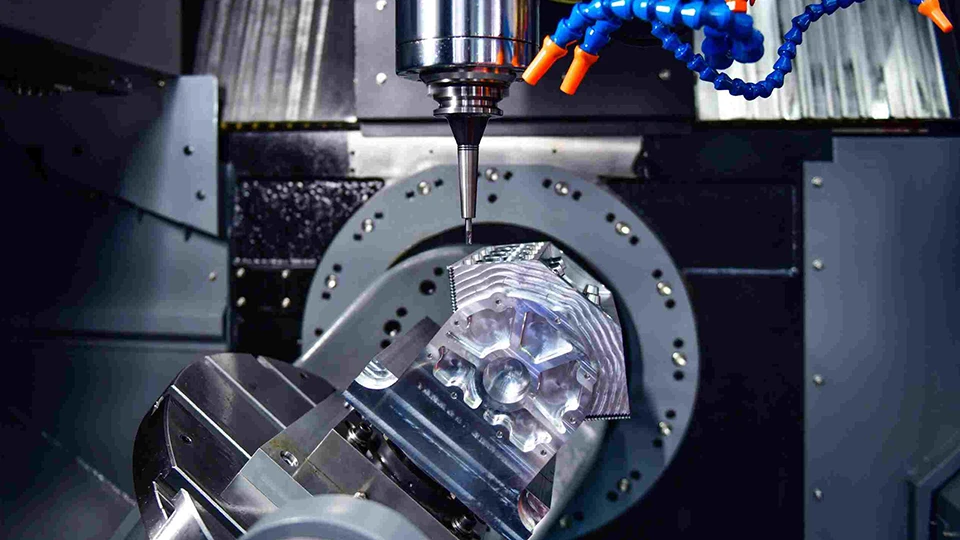
Vertical machining centers are extensively used in a wide range of industries due to their versatility, ease of use, and lower initial investment. They are particularly effective for machining flat or shallow parts, as well as for contour milling, pocketing, drilling, tapping, and general surface work.
Common applications include:
- Mold and Die Manufacturing: VMCs are widely used to machine plastic injection molds, die-cast tools, and stamping dies. Their vertical structure is well-suited for detailed surface work and cavity milling.
- Automotive Components: Small engine brackets, housings, and aluminum transmission covers are often machined on VMCs.
- Electronics and 3C Industry: VMCs are frequently used for precise machining of aluminum casings, mobile device frames, and small enclosures.
- General Metal Fabrication: Ideal for machining flanges, plates, and basic prismatic parts.
Because of their relatively compact size, VMCs are commonly found in both high-mix, low-volume job shops and production-oriented factories. They also support automation add-ons such as tool changers and fourth-axis rotary tables, increasing their flexibility.
Applications of Horizontal Machining Centers (HMCs)
Horizontal machining centers are engineered for multi-face machining, deep cavity milling, and medium-to-large part production. The horizontal spindle orientation allows for better chip flow, which is crucial for maintaining machining stability and part quality in complex and high-volume applications.
Typical applications include:
- Automotive Industry: Engine blocks, transmission housings, and gearbox casings are commonly produced using HMCs due to their ability to machine multiple faces in one setup.
- Heavy Equipment Manufacturing: Large cast iron and steel components such as hydraulic housings and structural frames are efficiently processed on horizontal machines.
- Valve and Pump Bodies: These often feature complex internal and external features that benefit from the multi-face machining capability of HMCs.
- Batch and Series Production: HMCs are frequently used in automated lines with pallet changers for continuous operation and minimal operator input.
Because they reduce the need for manual repositioning and offer better chip management, HMCs are favored in environments that demand consistent quality and high output.
Applications of Gantry Machining Centers
Gantry machining centers are designed for large, heavy, and highly complex workpieces, often in industries where precision over long travel distances is essential. The bridge-type structure offers high rigidity, making these machines capable of both high-speed light finishing and heavy-duty roughing on oversized components.
Key applications include:
- Aerospace: Gantry machines are used to machine large aircraft structural components such as wing spars, fuselage sections, and landing gear housings.
- Energy Sector: Turbine casings, wind power hubs, and large generator components are typically processed on gantry centers due to their size and complexity.
- Shipbuilding and Marine Equipment: Long, welded steel components, propeller structures, and ship frames require the machining envelope and power of gantry systems.
- Die and Mold for Automotive and Aerospace: Large injection molds, die-cast tools, and stamping dies benefit from the rigid, precise construction of gantry machines.
Due to their physical size and the need for specialized facility infrastructure, gantry machining centers are typically found in high-value production environments where large-scale precision is non-negotiable.
Summary
| Machine Type | Ideal Applications | Industry Examples |
|---|---|---|
| VMC | Flat or shallow parts, mold cavities | Mold & die, automotive, electronics |
| HMC | Multi-face box parts, deep cavity work | Automotive, industrial equipment |
| Gantry | Large, heavy, complex parts | Aerospace, energy, shipbuilding |
Each machine type delivers optimal performance when aligned with the right application scenario. Selecting the proper machining center structure based on workpiece size, material, and complexity is critical to maximizing both productivity and part quality.
How to Choose the Right Types of Machining Center
Selecting the most suitable machining center for a manufacturing operation involves more than just comparing machine specifications. It requires a careful evaluation of production needs, workpiece characteristics, available shop space, precision requirements, and long-term operational goals. Choosing the wrong machine type can result in underutilized equipment, production delays, and increased operating costs.
Step 1: Evaluate Workpiece Size and Geometry
The physical size, weight, and complexity of the parts being machined are often the most decisive factors when choosing between vertical, horizontal, and gantry configurations.
- Small to Medium Flat Parts: Best suited for vertical machining centers due to their accessibility and visibility.
- Box-Type or Multi-Sided Parts: Horizontal machining centers allow multi-face processing in one setup.
- Oversized or Heavy Parts: Gantry machines offer the stability and travel range necessary for large workpieces.
If a single workpiece requires high-precision features on multiple faces, HMCs and 5-axis machines are preferable. For parts with simple planar features, a 3-axis VMC is often sufficient.
Step 2: Match Axis Capability to Part Complexity
The number of axes a machining center offers directly correlates with the complexity of parts it can produce.
- 3-axis machines are ideal for basic geometries.
- 4-axis machines allow rotation for multi-face machining.
- 5-axis machines are essential for freeform surfaces, undercuts, and complex contours.
For manufacturers in industries such as aerospace, medical implants, or mold and die production, where part geometries are often complex and organic, 5-axis machining becomes essential. However, for high-volume machining of repeatable parts with simpler features, 3- or 4-axis machines often deliver the best balance of capability and cost-efficiency.
Step 3: Assess Production Volume and Automation Goals
- Low-volume, high-mix environments benefit from the flexibility of VMCs and manual setups.
- High-volume, repeatable production justifies the investment in HMCs with pallet changers and automation systems.
- Lights-out machining or unattended production is better supported by HMCs and gantry centers equipped with tool management and pallet pooling systems.
Consider whether your shop runs one shift or operates around the clock. Machines with larger tool magazines, automated probing, and part handling systems significantly improve ROI in high-throughput operations.
Step 4: Consider Accuracy and Surface Finish Requirements
Different applications demand different levels of precision and finish:
- Standard tolerance parts such as brackets or flanges can be machined on VMCs or HMCs.
- High-precision parts with complex surfaces may require simultaneous 5-axis machining.
- Large parts that require precision over long distances should be produced on a rigid gantry platform.
Machines with thermal compensation, glass scales, and high-end control systems offer enhanced repeatability and dimensional control for tight-tolerance applications.
Step 5: Analyze Floor Space and Budget Constraints
Physical shop constraints often determine the type of equipment that can be installed:
- VMCs have the smallest footprint and lowest capital cost.
- HMCs require more space but provide higher throughput per square meter.
- Gantry machines demand significant floor space and reinforced foundations.
From a cost perspective, initial machine price is only one part of the equation. Maintenance, operator training, tooling, fixturing, energy usage, and downtime risks all contribute to total cost of ownership (TCO).
Common Mistakes to Avoid
- Buying “more machine” than needed: Over-specifying machine capabilities adds cost without performance gains if the application doesn’t demand it.
- Ignoring chip evacuation: Poor chip management can reduce tool life and affect part quality.
- Underestimating setup complexity: Multi-face machining on a 3-axis machine may require more setups than expected, increasing labor cost.
- Not planning for automation: Failing to anticipate automation upgrades can limit scalability later on.
Decision Flow Summary
| Factor | Best Choice |
|---|---|
| Small, simple parts | 3-axis VMC |
| Multi-face parts | 4-axis or HMC |
| Complex geometries | 5-axis machining center |
| Large or heavy parts | Gantry machining center |
| High-volume production | HMC with automation |
| Limited floor space | Compact VMC or 3-axis model |
Choosing the right machining center is a strategic decision that impacts not only product quality but also production efficiency and long-term profitability. A machine that aligns well with your shop’s capabilities and business goals will deliver the highest value over time.
Conclusion
Understanding the different types of machining centers is fundamental to mastering modern manufacturing. From vertical to horizontal to gantry structures, and from basic 3-axis setups to complex 5-axis systems, each type serves a specific role in the precision machining world. These classifications are not just technical labels—they represent the range of capabilities, flexibility, and specialization that machining operations demand today.
For manufacturers seeking to navigate this landscape with clarity, a clear grasp of structural differences and axis configurations is essential. And for those looking to bring this understanding into practice, established machine tool manufacturers like Rosnok play a vital role—offering a complete lineup that includes vertical machining centers, horizontal machining centers, and gantry machining centers, precisely matching diverse industrial needs—from general-purpose milling to complex aerospace component manufacturing.