CNC spindle types can be confusing, even for experienced machinists. Choose the wrong one, and you’ll face vibration, heat, and uneven finishes that destroy precision. Each spindle type behaves differently under load, and misunderstanding these differences can silently reduce your machine’s accuracy and lifespan.
There are four main CNC spindle types: belt-driven, gear-driven, direct-drive, and built-in motor spindles. Belt-driven spindles use pulleys to balance cost and flexibility. Gear-driven models deliver high torque for heavy-duty cutting. Direct-drive spindles offer speed and precision for fine machining, while built-in motor spindles combine both power and accuracy for high-end applications. Understanding these four types is the key to choosing the right spindle for your CNC machine.
In this guide, You’ll learn how each type works, their pros and cons, and how to select the one that best fits your machining goals, materials, and production demands.
The 4 Main Types of CNC Spindles
CNC spindles come in several configurations, each designed to meet specific machining needs. Understanding the main types of CNC spindles helps manufacturers match spindle performance with their production goals. In this section, we’ll explore the four most common spindle systems—belt-driven, gear-driven, direct-drive, and built-in motor spindles—examining how each works and where it performs best in real-world applications.
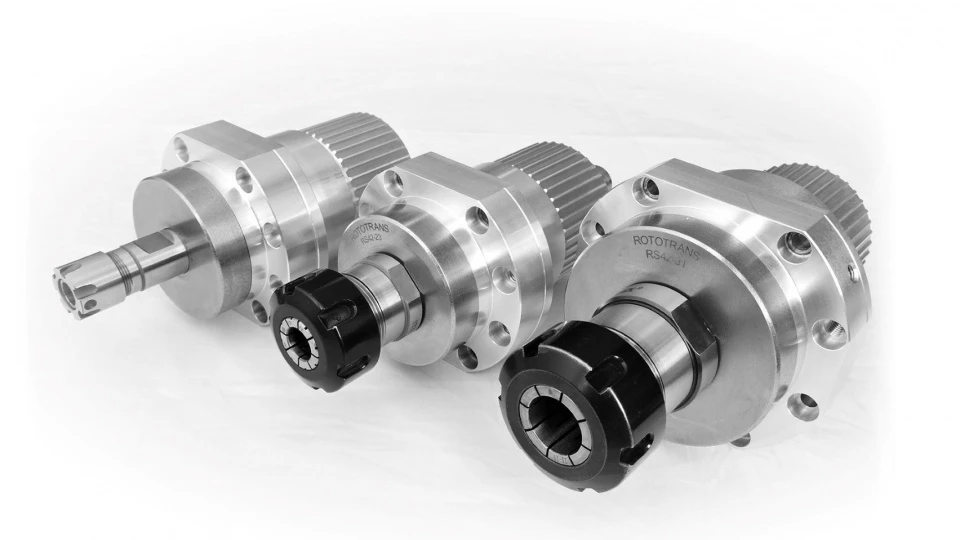
Belt-Driven Spindle
Working Principle
The belt-driven spindle is the most widely used and time-tested design among all types of CNC spindles. It transfers rotational power from the motor to the spindle shaft through a flexible belt and pulley system. By swapping pulleys with different diameters, operators can easily adjust spindle speed and torque to suit a variety of machining tasks. This design also isolates the motor from cutting vibrations, helping protect motor bearings and extend service life. Because it relies on mechanical simplicity rather than complex electronics, the belt-driven spindle remains one of the most reliable and cost-effective solutions for small and medium-sized CNC machines.
Advantages
- Cost-effective and simple to maintain: belt-driven spindles are inexpensive to produce and require only straightforward maintenance, such as periodic belt replacement.
- Wide speed adjustability: pulley changes allow operators to achieve a broad range of spindle speeds, suitable for various materials and cutting conditions.
- Effective shock absorption: the belt naturally dampens cutting shocks, reducing vibration transmitted to the motor and extending machine life.
- High availability and reliability: spare parts are widely accessible, and this spindle type has a long track record of dependable operation in different CNC configurations.
Disadvantages
- Limited precision at high speeds: the belt’s elasticity can cause minor rotational fluctuations, reducing surface accuracy during fine finishing.
- Restricted torque transmission: friction-based power transfer limits its performance under heavy or deep-cutting conditions.
- Heat buildup and wear over time: continuous operation can stretch or overheat the belt, leading to reduced consistency and efficiency.
- Increased noise and vibration: as the belt ages, vibration and slippage may rise, making it less ideal for precision-focused CNC spindle types.
Typical Applications
Belt-driven spindles are commonly found in the following machining environments:
- Training and educational CNC machines: ideal for classrooms or workshops where simplicity and safety are priorities.
- Small vertical machining centers: widely used for machining aluminum, brass, and other light metals.
- Light- to medium-duty production workshops: provide a practical balance of performance, flexibility, and cost efficiency.
- Prototype and general-purpose machining: suitable for environments requiring frequent spindle speed adjustments and diverse material cutting.
Gear-Driven Spindle
Working Principle
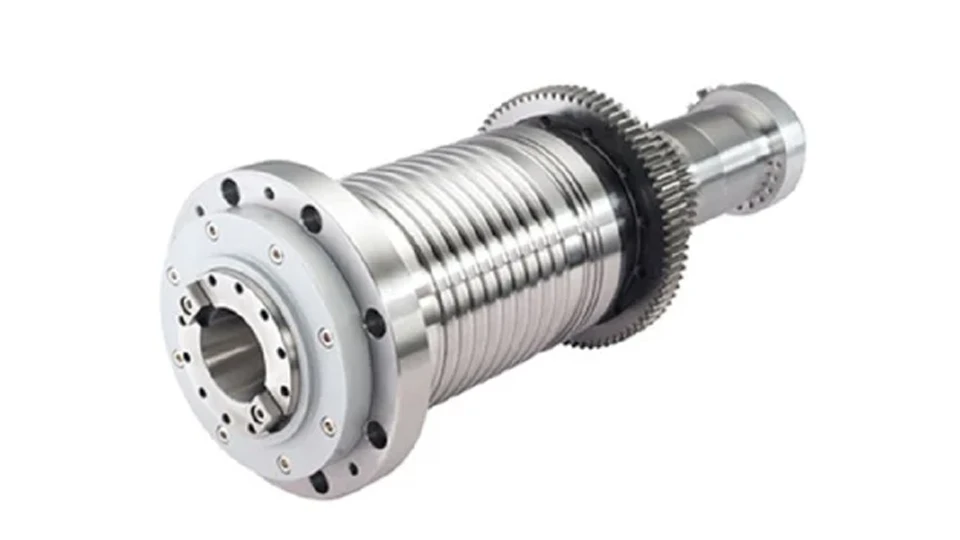
The gear-driven spindle is designed for strength and torque, making it one of the most robust configurations among all types of CNC spindles. Power from the motor is transmitted directly through a precision gear train, allowing the spindle to deliver high torque even at low rotational speeds. This mechanical setup ensures stable power delivery and excellent cutting force for heavy-duty machining operations. Because torque transfer is achieved through interlocking gears instead of friction, the spindle maintains consistent speed and torque under load. As a result, gear-driven spindles are widely used in CNC machines where rigidity, power, and reliability are critical.
Advantages
- High torque output: capable of transmitting significant power at low speeds, ideal for heavy and deep cutting operations.
- Superior rigidity: the gear-driven structure minimizes spindle deflection, ensuring dimensional accuracy during demanding cuts.
- Stable cutting performance: mechanical gear engagement maintains consistent torque under varying loads.
- Long service life: precision-ground gears and hardened materials provide durability and stable operation for years.
Disadvantages
- Higher noise levels: metal-to-metal contact between gears produces noticeable mechanical noise during operation.
- Complex maintenance: requires regular lubrication, alignment checks, and gear clearance adjustments.
- Potential vibration transmission: unlike belt systems, gears transmit more vibration directly to the spindle and motor.
- Higher manufacturing cost: precision gears increase production cost and maintenance requirements compared to simpler CNC spindle types.
Typical Applications
Gear-driven spindles are preferred in applications that demand high torque and cutting stability, including:
- Mold and die manufacturing: ensures deep and heavy cuts in hardened steel materials.
- Heavy-duty machining centers: used in large horizontal or vertical machining setups for industrial-scale operations.
- Shipbuilding and energy equipment production: handles thick, dense materials requiring constant torque output.
- Automotive and mechanical part fabrication: ideal for roughing and precision finishing in engine blocks and large housings.
Direct-Drive Spindle
Working Principle
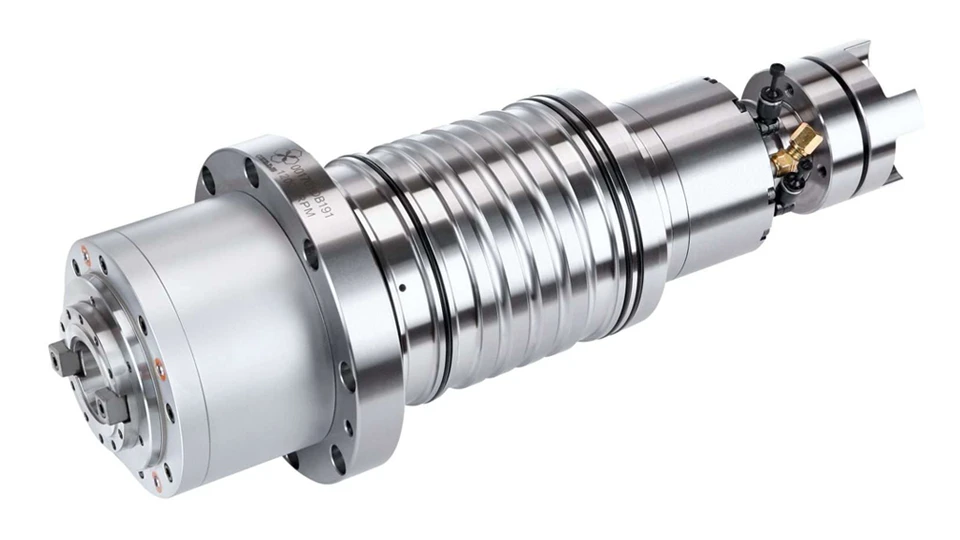
The direct-drive spindle represents one of the most advanced designs among all types of CNC spindles. Instead of relying on belts or gears, the spindle rotor is directly connected to the motor’s stator, creating a completely integrated drive system. This direct coupling eliminates mechanical transmission losses, resulting in highly responsive acceleration, precise speed control, and virtually zero backlash. The absence of intermediate components also reduces vibration and noise, leading to smoother cutting performance. Direct-drive spindles are often equipped with high-precision encoders, allowing micro-level speed regulation ideal for fine surface finishing and complex multi-axis machining operations.
Advantages
- Exceptional precision and speed control: the absence of belts or gears enables near-instant response to speed commands and extremely consistent rotation.
- Minimal vibration and noise: direct connection between motor and spindle reduces mechanical resonance, improving surface finish quality.
- Low maintenance requirements: with no belts or gears to replace, maintenance frequency and mechanical wear are greatly reduced.
- High dynamic performance: ideal for high-speed cutting and contouring applications that demand quick acceleration and deceleration.
Disadvantages
- Lower torque at low speeds: while excellent for high-speed machining, direct-drive systems lack the torque needed for heavy-duty cutting.
- Higher production cost: the integrated design and high-precision components make these spindles more expensive to manufacture.
- Temperature sensitivity: extended high-speed operation can generate heat, requiring efficient cooling systems to maintain precision.
- Limited use in rough machining: not suitable for processes involving aggressive material removal or large-diameter tools.
Typical Applications
Direct-drive spindles are primarily used in precision machining environments where surface quality and speed are essential, including:
- Mold and die finishing: provides superior surface smoothness for complex contours and mirror finishes.
- Aerospace component machining: ensures dimensional accuracy for lightweight, high-strength materials such as titanium and aluminum alloys.
- Medical device and instrument production: supports high-speed, micro-precision cutting for implants and surgical tools.
- Electronics and optics industries: ideal for milling, engraving, and micro-drilling applications requiring nanometer-level accuracy.
Built-in Motor Spindle
Working Principle
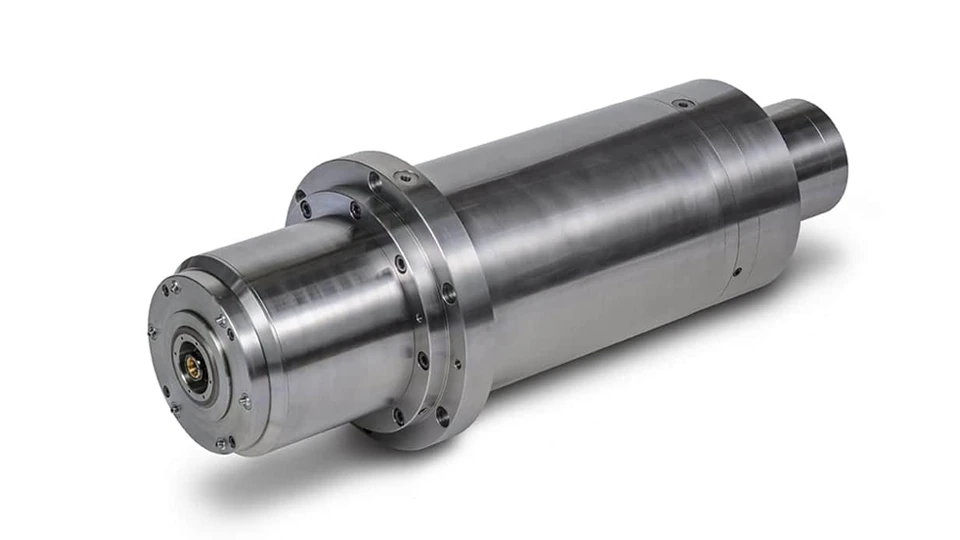
The built-in motor spindle—often called an “integrated motor spindle”—is the most advanced configuration among all types of CNC spindles. In this design, the motor’s rotor is directly integrated inside the spindle shaft, while the stator is built into the spindle housing. This one-piece construction eliminates the need for couplings, belts, or gears, achieving a perfectly balanced and compact design. Because the magnetic field directly drives the spindle rotation, the system delivers high torque, ultra-high speed, and superb precision simultaneously. Most built-in motor spindles employ water or oil cooling systems to maintain temperature stability during long machining cycles, ensuring accuracy even under demanding production conditions.
Advantages
- Ultra-high speed capability: supports rotational speeds exceeding 40,000 to 60,000 rpm, ideal for high-speed cutting and fine surface finishing.
- Superior precision and balance: the fully integrated design minimizes vibration and thermal deformation, maintaining micron-level accuracy.
- Quiet and stable operation: low mechanical noise and minimal vibration enhance surface quality and tool life.
- Compact design with efficient cooling: built-in liquid cooling systems control temperature effectively, ensuring stable machining performance.
Disadvantages
- High manufacturing and repair cost: integration of the motor within the spindle makes production and maintenance more expensive.
- Complex servicing requirements: once damaged, the spindle often needs complete replacement rather than individual component repair.
- High cooling demands: continuous high-speed operation requires a stable cooling infrastructure, increasing system complexity.
- Limited retrofit options: upgrading or replacing a built-in spindle may involve redesigning the entire machine head assembly.
Typical Applications
Built-in motor spindles are typically found in high-end CNC equipment and industries where precision and surface finish are critical, such as:
- Aerospace manufacturing: used for machining complex titanium and composite parts requiring both high speed and precision.
- Medical and dental component production: supports ultra-fine finishing for implants and instruments.
- Five-axis machining centers: ideal for high-speed, multi-angle cutting operations in complex geometries.
- High-precision mold and toolmaking: ensures consistent accuracy in micro-detail and mirror-polish surface machining.
Comparing the Four CNC Spindle Types
Comparing the different CNC spindle designs is essential to understanding how each performs under specific machining conditions. The four main types of CNC spindles—belt-driven, gear-driven, direct-drive, and built-in motor—differ in torque, speed, accuracy, and maintenance needs. The comparison below outlines these technical differences, helping readers visualize how each spindle type fits into various machining environments and production demands.
| Feature / Parameter | Belt-Driven Spindle | Gear-Driven Spindle | Direct-Drive Spindle | Built-in Motor Spindle |
|---|---|---|---|---|
| Speed Range (rpm) | 3,000–12,000 (variable by pulley) | 2,000–8,000 (torque-focused) | 10,000–30,000 (high-speed) | 20,000–60,000 (ultra-high-speed) |
| Torque Output | Moderate | Very high | Moderate to low | High (depending on motor size) |
| Precision | Medium | High | Very high | Ultra-high |
| Vibration & Noise | Low | High | Very low | Very low |
| Maintenance Needs | Simple (belt replacement) | Complex (gear lubrication) | Minimal | Specialized (cooling, electronics) |
| Initial Cost | Low | Medium | High | Very high |
| Ideal Applications | General, medium-duty machining | Heavy cutting, molds | Precision finishing, aerospace | High-speed, five-axis machining |
Summary and Insights (Revised)
Each spindle type offers a distinct balance between speed, torque, precision, and cost.
- Belt-driven spindles are best suited for general-purpose machining that values flexibility and affordability.
- Gear-driven spindles provide the power and rigidity needed for cutting tough materials or handling large tools.
- Direct-drive spindles excel in precision and smooth performance, ideal for high-speed, high-accuracy operations.
- Built-in motor spindles combine compact design with ultra-high precision, serving advanced manufacturing sectors such as aerospace, medical, and tooling industries.
By comparing these characteristics, we can clearly see how each spindle type fulfills specific machining priorities and production environments.
How to Choose the Right CNC Spindle for Your Needs
Choosing the right spindle is one of the most important decisions in CNC machine configuration. The right spindle directly affects machining precision, cycle time, energy efficiency, and tool life. Since each spindle design serves different operational goals, the best choice depends on what materials you cut, how much torque you need, and the type of production you run. The following guidelines will help you evaluate which spindle type best aligns with your machining requirements and investment priorities.
Evaluate Speed, Torque, and Accuracy Requirements
Every machining task has its own performance priorities.
- If speed and fine surface finish matter most → choose direct-drive or built-in motor spindles.
- If torque and heavy load capacity are critical → gear-driven spindles deliver the most reliable performance.
- If balance and versatility are needed → belt-driven spindles provide stable, all-around capability for medium-duty work.
Understanding your cutting goals ensures your spindle works at optimal efficiency without over-specification or unnecessary expense.
Match Spindle Type with Machining Material
Different materials require different torque and speed combinations.
- Steel and cast iron: prefer high-torque, high-rigidity setups such as gear-driven spindles for roughing; belt-driven can handle medium-duty cuts with proper tooling and feeds.
- Aluminum and light alloys: belt-driven or direct-drive spindles suit high-speed machining and fine finishing.
- Titanium and heat-resistant alloys: prioritize torque and rigidity for roughing (often gear-driven); use direct-drive or built-in motor spindles for high-speed finishing. Other spindle types can also machine these materials when tooling, coolant, and parameters are optimized.
When selecting from various types of CNC spindles, consider the cutting resistance and surface finish requirement of your target material.
Consider Production Volume and Operation Mode
Your production type strongly influences the ideal spindle configuration.
- Small batch or prototype production: flexibility matters more than torque. Belt-driven or direct-drive spindles offer easy setup and wide speed ranges.
- Mass production: consistency and endurance are key; built-in or gear-driven spindles handle continuous workloads better.
- Mixed production: where materials and operations vary, a well-balanced belt-driven spindle offers versatility and cost control.
Efficient spindle selection ensures both productivity and long-term reliability across different production environments.
Balance Cost, Maintenance, and Longevity
A spindle’s purchase price is only part of its total cost of ownership.
- Belt-driven spindles: low initial cost and simple maintenance make them ideal for shops that prioritize budget and flexibility.
- Gear-driven spindles: offer longer service life but need frequent lubrication and alignment checks.
- Direct-drive and built-in motor spindles: higher cost but less mechanical wear, saving maintenance time over years of use.
When comparing types of CNC machine spindles, factor in both initial and ongoing costs, including downtime, cooling, and replacement cycles.
Future-Proof Your Investment
Spindle technology continues to evolve with smart sensors and integrated control systems.
When choosing your CNC machine, consider upgrade paths and compatibility. A spindle that supports modular components, real-time monitoring, and predictive maintenance will extend equipment lifespan and keep your operation competitive.
For most manufacturers, selecting from proven CNC spindle types with reliable service and spare-part availability remains the best long-term strategy.
Summarize
Choosing the correct spindle is not about picking the most expensive one, but about finding the configuration that matches your machining goals. By assessing your materials, production scale, and maintenance capabilities, you can confidently decide which spindle type will deliver the best balance between performance, cost, and precision.
Conclusion
Every CNC machine starts with its spindle — the true core of precision, stability, and performance. From the traditional belt-driven systems to the torque-heavy gear-driven designs, and from the ultra-responsive direct-drive units to the integrated built-in motor spindles, each type serves a purpose. What we’ve learned is simple: there is no “best” spindle, only the one that fits your materials, production goals, and investment strategy. Understanding these differences empowers manufacturers to make decisions that define accuracy, reliability, and long-term efficiency on the shop floor.
Behind every spindle choice is a story of craftsmanship and engineering commitment — and that’s what drives us at Rosnok. With decades of expertise in CNC lathe and machining center design, we build machines that integrate the right spindle technologies for each application. From consultation to delivery and beyond, our mission is to help manufacturers achieve the perfect balance of precision, productivity, and value in every project they run.