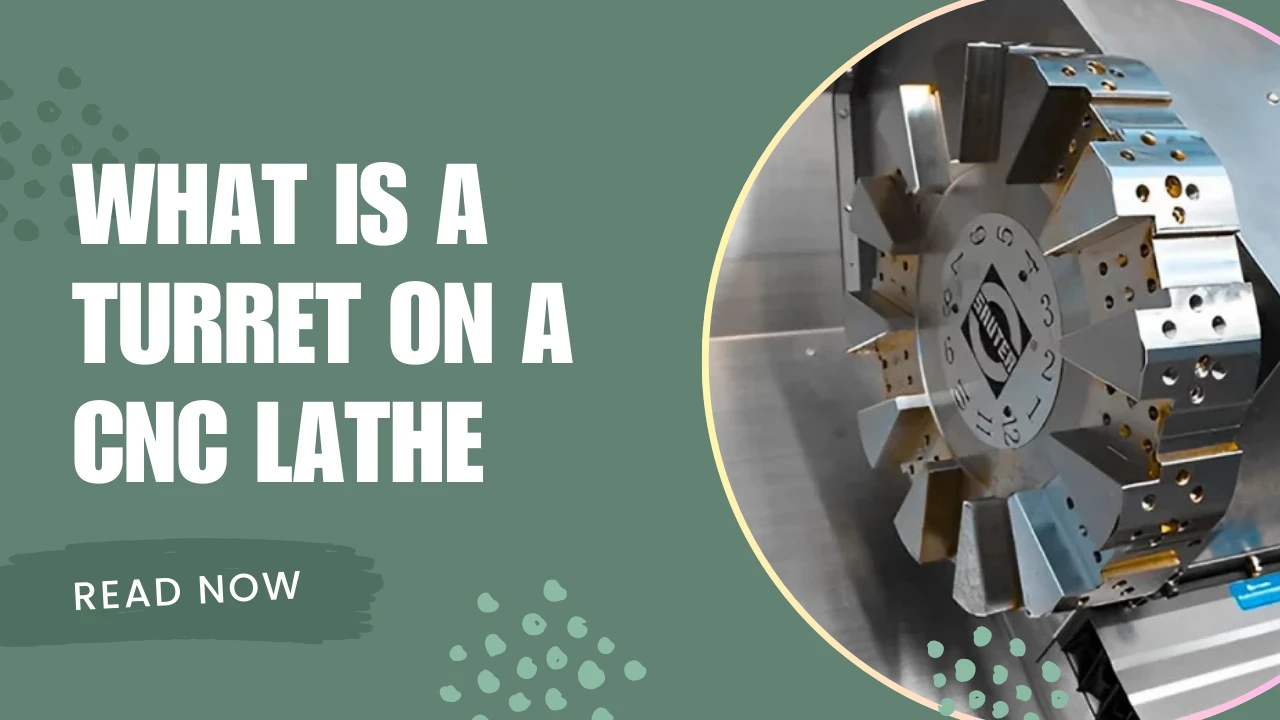
How Does a Turret on a CNC Lathe Work?
A turret on a CNC lathe works by indexing to the required tool station, locking that tool into the correct machining position, and then allowing the CNC system to carry out the programmed operation. In practical use, the turret functions as the machine’s automatic tool-changing unit. Instead of stopping the process for manual tool replacement, it rotates to present the next tool when the program calls for it. This is what allows a CNC lathe to complete multiple machining operations in sequence with better efficiency, stable repeatability, and shorter cycle times.
The Indexing Process
The indexing process is the basic motion that allows the turret to move from one tool station to another. When the CNC program calls a specific tool, the turret rotates until the required station reaches the working position. This movement must be both fast and accurate. The turret cannot simply rotate to the next position; it must also stop at the correct angular location so the selected tool aligns properly with the cutting path.
Indexing is the mechanism that makes automatic tool change possible on a CNC lathe. Without it, the machine would not be able to switch efficiently from one operation to the next during a single cycle. For example, the turret may first position an external turning tool, then index to a boring bar, and then move again to a threading tool. In many modern CNC lathes, turret indexing is servo-driven, which helps improve indexing speed and supports shorter tool-to-tool times.
Tool Positioning, Locking, and Repeatability
After the turret reaches the required station, it must lock the tool firmly in place before cutting begins. This step is just as important as the indexing motion itself. A turret that rotates correctly but does not lock securely cannot maintain stable machining performance. During cutting, the tool is exposed to cutting forces, vibration, and heat, so the locking system must hold the station in a precise and repeatable position.
This is where positioning, locking, and repeatability become critical. Positioning refers to whether the turret brings the selected tool to the correct working location. Locking ensures that the station remains rigid during cutting. Repeatability refers to whether the turret can return that same tool to the same position consistently over repeated cycles. In production machining, this matters because even small variations in tool position can affect part dimensions, surface finish, and process stability.
In many high-precision CNC lathes, the turret locking system may use a curvic coupling or a similar precision interface to achieve strong clamping force and consistent repeatability. This is one reason a well-designed turret does more than rotate between tools. It must also lock securely and repeat that positioning cycle with dependable precision.
How the CNC Control Communicates With the Turret
The turret does not operate independently. Its motion is controlled by the CNC system, which sends commands based on the machining program. When a tool is called, the control tells the turret which station to move to, waits for the indexing and locking sequence to finish, and then allows the cutting operation to continue. This coordination connects the turret directly to the rest of the machining process.
From the operator’s point of view, the sequence appears simple because the machine changes tools automatically during the cycle. In the background, however, the control must confirm that the turret has indexed to the correct station and locked properly before machining starts. This helps ensure both safe operation and stable cutting performance. In simple terms, the CNC control provides the command logic, while the turret performs the mechanical tool change that makes multi-step turning possible.
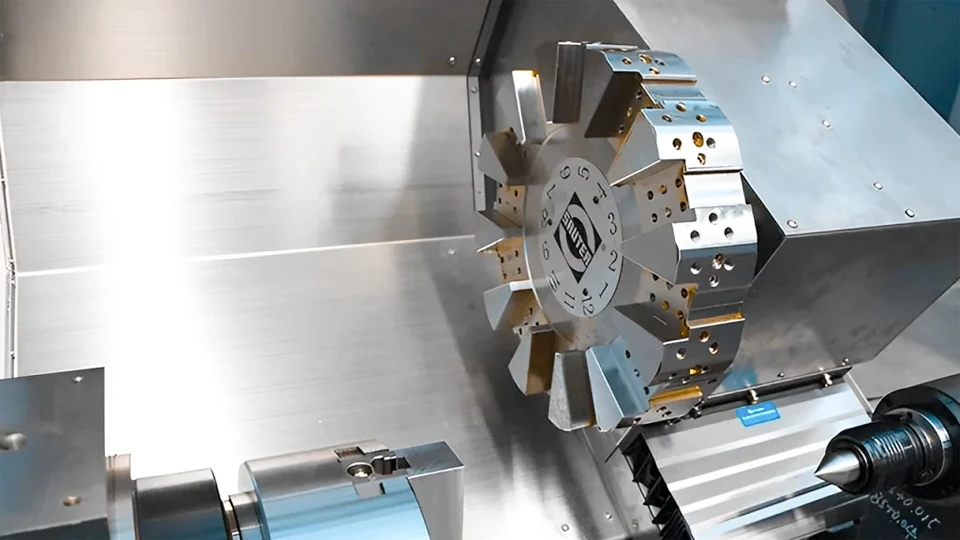
Main Parts of a Turret on a CNC Lathe
To understand how a turret works in practice, it also helps to look at its main structural parts. A turret is not just a rotating tool carrier. It is a coordinated assembly made up of the turret body, tool stations, indexing components, locking elements, and, in some configurations, live tooling interfaces. Each part has a specific role in making tool changes accurate, stable, and repeatable.
Turret Body
The turret body is the main structural housing of the turret assembly. It supports the tool stations, contains the indexing and locking mechanisms, and provides the rigidity needed during machining. Because the turret is exposed to cutting forces, vibration, and repeated movement, the body must be strong enough to maintain stability under real production conditions.
In practical terms, the turret body acts as the foundation of the entire tool-holding system. If the body lacks rigidity, even a well-designed indexing or locking system cannot perform consistently. That is why the structural quality of the turret body directly affects machining stability and repeatability.
Tool Stations
Tool stations are the individual mounting positions on the turret where cutting tools or tool holders are installed. Each station is assigned a tool for a specific operation, such as turning, boring, grooving, or threading. When the turret indexes, it rotates one of these stations into the working position.
These stations are commonly built around tooling interface standards such as VDI or BMT, which affect how tool holders are mounted and aligned. The number and layout of tool stations influence how many tools the machine can keep ready at one time. This is what allows a CNC lathe to move through several operations without manual tool changes.
Indexing Mechanism
The indexing mechanism is the part of the turret that controls rotation from one station to another. Its job is to move the turret accurately to the commanded position when the CNC system calls a tool. This mechanism must work with both speed and precision, because poor indexing performance can slow the cycle or affect tool alignment.
In modern CNC lathes, indexing is often servo-driven for faster response and better control, while hydraulic systems are also widely used in many turret designs. Regardless of the drive method, the key requirement is the same: the indexing mechanism must bring the correct station into position reliably over repeated cycles.
Clamping and Locking System
After indexing is complete, the clamping and locking system secures the selected station in place for cutting. This part of the turret is critical because cutting loads cannot be carried safely by rotational positioning alone. The station must be locked firmly enough to resist movement during machining.
A strong locking system improves rigidity, supports dimensional consistency, and helps the turret return to the same position repeatedly. In many high-precision turret designs, locking accuracy is one of the main factors behind repeatability and stable cutting performance.
Live Tooling Interface in Advanced Configurations
In advanced turret configurations, some stations are designed to support live tooling. This means the turret can do more than hold static turning tools. It can also transmit power to rotating tools used for operations such as drilling, tapping, or milling. To make that possible, the turret needs an interface that connects the live tool holder to the machine’s drive system.
Not every turret includes this feature, but when it is available, it expands the machine’s machining range significantly. This is especially useful for parts that require more than standard turning operations, because it allows multiple processes to be completed on the same machine with fewer secondary setups.
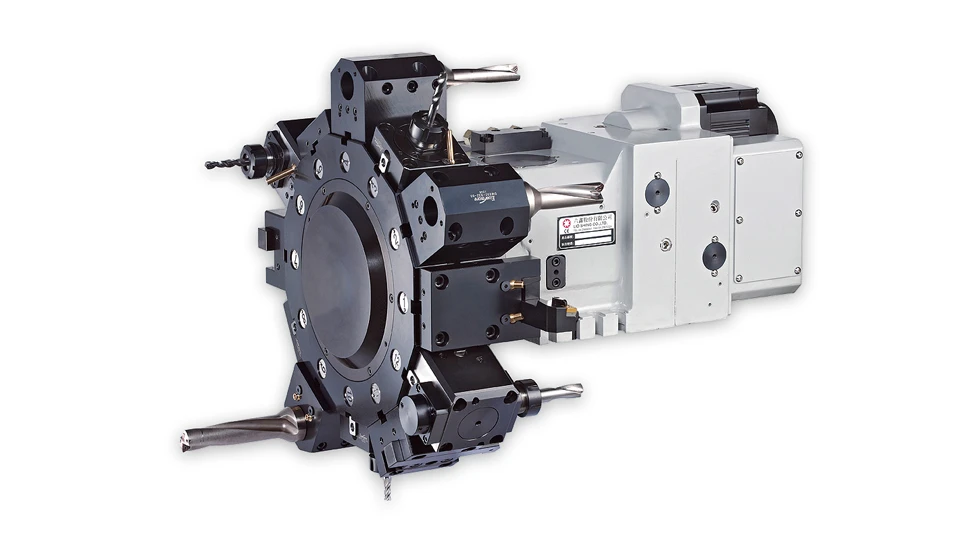
Types of Turrets on CNC Lathes
Not all turrets are built the same. Different turret types affect how tools are mounted, how indexing is driven, and what kinds of machining operations the lathe can handle. Understanding these differences helps explain why one turret may be better suited to a specific production task than another.
VDI Turret vs BMT Turret
VDI and BMT are two common turret interface standards used on CNC lathes. They define how tool holders are mounted to the turret and how the tooling is positioned. In simple terms, they affect the connection between the turret and the tool holder rather than the basic function of the turret itself.
A VDI turret typically uses cylindrical shank tool holders mounted in standardized radial or axial positions. A BMT turret uses a bolted base-mount design that creates a more rigid connection between the holder and the turret face. In practice, BMT is often preferred where higher rigidity is needed, especially in heavier cutting applications or where stable high-precision finishing is important. VDI systems are also widely used and are often valued for tooling convenience and flexibility in multi-variety machining environments.
Hydraulic Turret vs Servo Turret
Turrets can also be classified by how the indexing motion is driven. In hydraulic turret systems, hydraulic force is used to support indexing and locking functions. In servo turret systems, a servo motor controls the indexing motion with a higher level of speed and positional control.
Both designs are common in CNC lathes. Hydraulic systems remain widely used in many machine platforms, while servo turrets are often favored in newer machines that require faster indexing response and shorter tool-change times. The main difference is not the purpose of the turret, but how the indexing movement is generated and controlled.
Static Turret vs Live Tool Turret
Another important distinction is whether the turret supports only static tools or also supports live tooling. A static turret is designed for standard turning operations such as turning, facing, boring, grooving, and threading. In this setup, the cutting action mainly depends on the rotating workpiece and the feed motion of the tool.
A live tool turret can also drive rotating tools for operations such as drilling, tapping, and milling. This expands the machine’s capability beyond standard turning and allows more operations to be completed in one setup. By performing additional processes on the same machine, manufacturers can reduce secondary setups, minimize handling-related variation, and improve overall machining consistency.
Turret Configurations by Station Count
Turrets are also described by the number of tool stations they provide, such as 8-station, 10-station, or 12-station configurations. The station count determines how many tools can remain mounted and ready for use during machining. A higher station count can improve flexibility by allowing more tools to stay available in one cycle.
However, more stations are not always automatically better. The right configuration depends on part complexity, tooling requirements, and the type of production being planned. In some cases, adding more tools and larger holders can also increase the risk of interference, especially when machining larger-diameter parts or working within limited space around the spindle and work zone. For simple parts, a lower station count may be enough. For complex or multi-step machining, a larger station count can provide a clear advantage by reducing setup changes and keeping more tools ready at the machine.
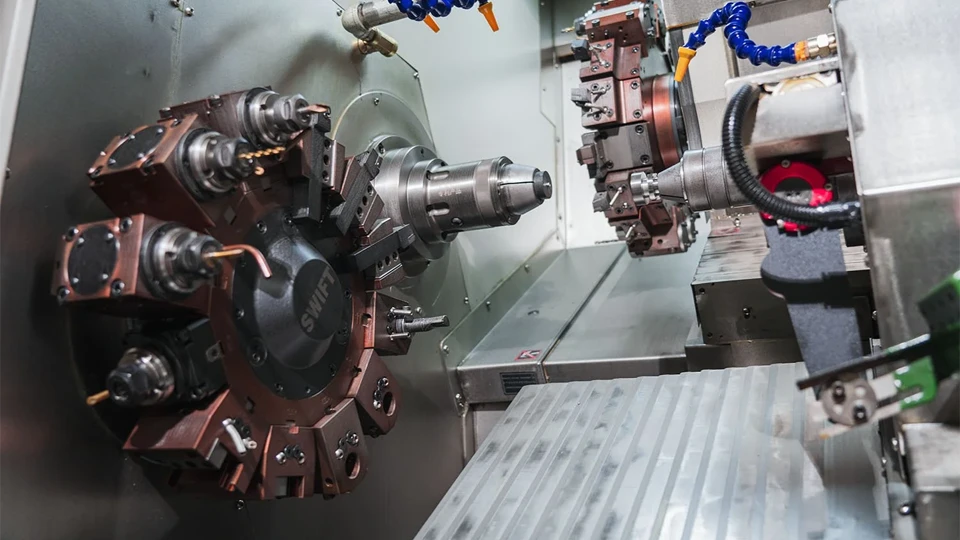
Why Is the Turret Important on a CNC Lathe?
The turret is one of the key components on a CNC lathe because it directly affects machining efficiency, repeatability, and overall process stability. A machine may have adequate spindle power and travel, but without a reliable turret, it cannot change tools smoothly or maintain stable multi-step machining. In real production, the turret plays a major role in cycle time, machining consistency, and process flexibility.
Faster Tool Changes and Shorter Cycle Times
One of the biggest advantages of a turret is that it allows the machine to change from one tool to another automatically. Instead of stopping the cycle for manual tool replacement, the turret indexes to the next station and keeps the machining sequence moving. This reduces non-cutting time and helps shorten overall cycle times.
That matters especially in repeat production. When a part requires several operations, even a small reduction in tool-change time can improve total output over a full shift. For many manufacturers, this is one of the clearest reasons why turret performance matters.
Better Accuracy and Repeatability
A turret is also important because it helps the machine return each tool to a consistent working position. In CNC turning, accuracy is not only about reaching the correct position once. It is also about repeating that positioning reliably over many cycles. A well-designed turret supports that consistency through accurate indexing and secure locking.
This directly affects machining quality. If tool positioning varies from cycle to cycle, the result can be dimensional error, unstable surface finish, or loss of process control. Even small variations in tool position can lead to higher scrap rates and greater production cost over time. That is why turret repeatability is closely connected to stable production quality.
Greater Flexibility for Complex Parts
A turret increases machining flexibility by keeping multiple tools ready on the machine at the same time. This allows a CNC lathe to move through different operations in one setup instead of stopping for repeated manual changes. As part geometry becomes more complex, that flexibility becomes more valuable.
This is especially important when the process includes several turning steps or when advanced configurations use live tooling for additional operations. In those cases, the turret helps the machine handle a broader range of part features without unnecessary interruption. It also reduces the need for repeated manual intervention, which helps limit operator-dependent variation during more complex machining cycles.
Higher Productivity in Volume Manufacturing
In volume production, the value of the turret becomes even more visible. Faster tool changes, stable repeatability, and better process continuity all support higher output over time. The turret does not create productivity by itself, but it plays a major role in allowing the machine to run efficiently over repeated cycles.
For manufacturers producing the same part or part family in larger quantities, this consistency is critical. A reliable turret helps reduce interruptions, supports predictable machining, and makes the overall production process easier to control.
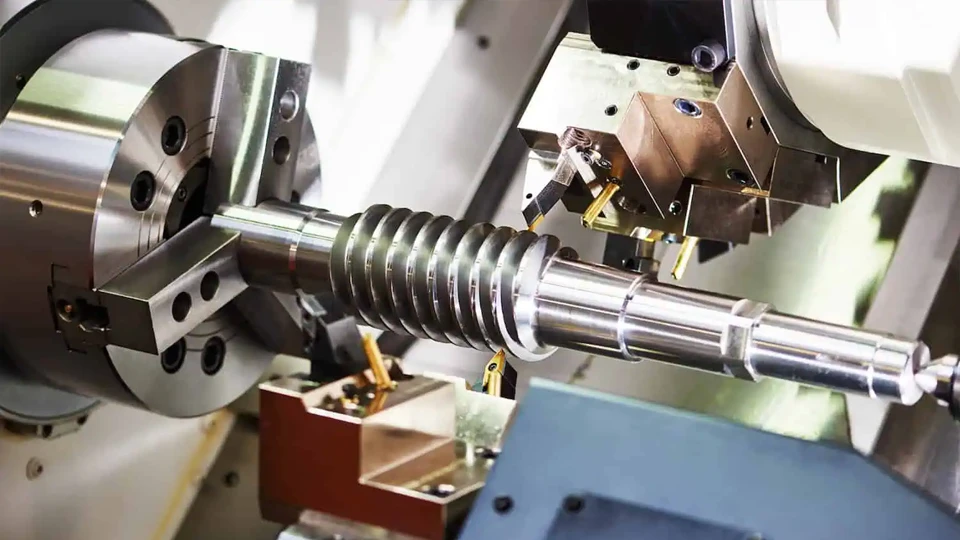
Turret on a CNC Lathe vs Tool Post
A turret and a tool post are both used to hold tools on a lathe, but they are not the same. Understanding the difference helps explain why turrets are more common in modern CNC turning.
What Is the Difference?
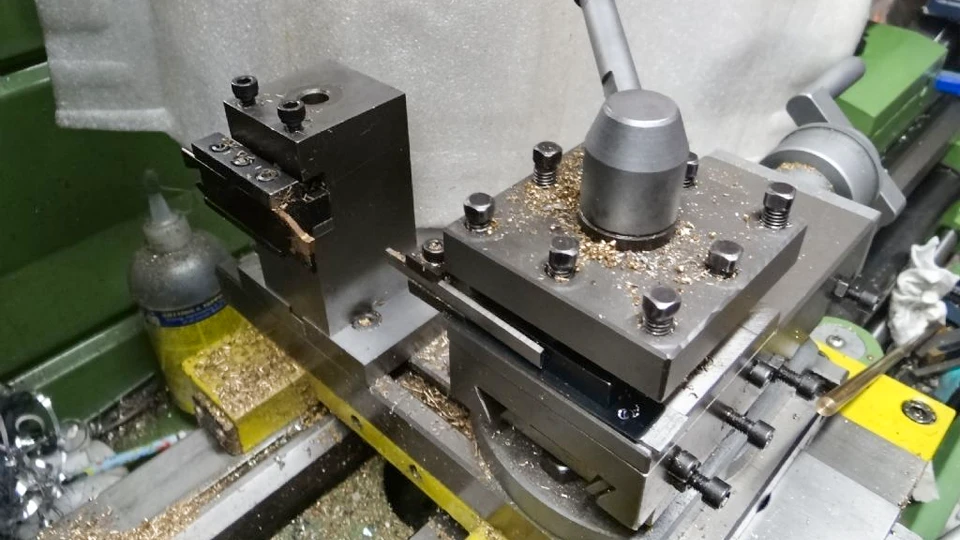
A tool post is typically designed to hold one tool, or a limited number of tools, in a simpler arrangement. It is common on conventional lathes, often in the form of a manual quick-change tool post, where the operator changes or repositions tools manually. Its main purpose is to secure the cutting tool during machining.
A turret, by contrast, is designed to hold multiple tools at the same time and index automatically from one station to another. This allows the machine to switch between operations without stopping for manual tool changes. That is the key functional difference. A tool post mainly holds the tool in place, while a turret manages multiple tools as part of an automated machining cycle.
Why CNC Turrets Are More Suitable for Automated Production
In automated production, the machine needs to perform several operations in sequence with as little interruption as possible. A turret supports this by keeping multiple tools ready and indexing to the required station when the program calls for it. This reduces manual intervention and helps the machine maintain a more continuous workflow.
That makes CNC turrets more suitable for repeat production, complex parts, and multi-step machining. A tool post can still work well for simpler or less automated turning tasks, but it does not provide the same level of flexibility or cycle-time efficiency. Beyond automation, a well-designed turret can also provide greater rigidity and more consistent repeatability than a basic tool post, especially in more demanding machining conditions. In practical terms, the turret is better suited to modern CNC production because it supports faster tool changes, more stable process flow, and a higher level of automation.
Common Problems With a CNC Lathe Turret
A CNC lathe turret must index accurately, lock securely, and hold tools consistently under cutting load. When any of these functions becomes unstable, machining quality and production efficiency can decline quickly. That is why turret problems are often seen not only in machine alarms, but also in poor surface finish, dimensional variation, longer cycle times, and unplanned downtime.
Indexing Errors
Indexing errors happen when the turret does not rotate to the correct station position or fails to stop at the exact commanded location. In practical machining, this can lead to tool mispositioning, incorrect tool calls, or interruption of the machining cycle. Even small indexing deviations can affect tool alignment and reduce process stability.
These errors may be related to wear, control issues, sensor problems, or poor mechanical condition in the indexing system. Whatever the cause, the result is the same: the machine cannot rely on the turret to present the correct tool accurately and repeatably.
Poor Locking Performance
After indexing, the turret must lock the selected station firmly before cutting begins. If the locking force is weak or inconsistent, the tool may lose rigidity under cutting load. This can lead to chatter, unstable dimensions, poor surface finish, and increased tool wear.
Poor locking performance is especially problematic in heavier cuts or long production runs, where even small movement at the turret can affect part quality. A turret that indexes correctly but does not lock securely still cannot support stable machining.
Tool Misalignment
Tool misalignment occurs when the mounted tool is not positioned correctly relative to the workpiece and programmed cutting path. This problem may come from turret positioning error, holder installation issues, wear in the mounting surfaces, or incorrect setup. In any case, misalignment reduces machining accuracy and can create inconsistent cutting results.
In production, tool misalignment often appears as size variation, poor finish, unexpected tool wear, or difficulty maintaining stable tolerances. Because the turret is the reference point for multiple tools, alignment problems can affect more than one operation in the same cycle.
Wear, Vibration, and Maintenance Issues
Like other machine components, a turret is subject to wear over time. Repeated indexing, locking, cutting forces, chips, coolant exposure, and vibration all affect long-term condition. If maintenance is neglected, these factors can gradually reduce accuracy, repeatability, and overall reliability.
Vibration is another common issue because it can affect both the turret structure and the cutting process. Excessive vibration may come from poor locking, worn components, improper tooling setup, or demanding cutting conditions. Regular inspection, correct lubrication, clean mounting surfaces, and timely maintenance are all important for keeping turret performance stable over the long term.
Conclusion
A turret on a CNC lathe is far more than a simple tool holder. It is one of the key systems that makes modern CNC turning faster, more accurate, and more flexible. From indexing and locking to tool capacity, rigidity, and repeatability, the turret directly influences how efficiently a machine performs in real production. When manufacturers understand how a turret works, what types are available, and what problems to watch for, they are in a much better position to improve machining consistency, reduce downtime, and choose the right CNC lathe for long-term production needs.
For manufacturers looking beyond theory and toward practical machine performance, the quality of the turret should never be treated as a minor detail. As a specialized manufacturer of CNC lathes and other metalworking machines, Rosnok focuses on reliability, machining stability, and long-term production value. With that foundation, customers can approach machining efficiency, part quality, and future production planning with greater confidence.