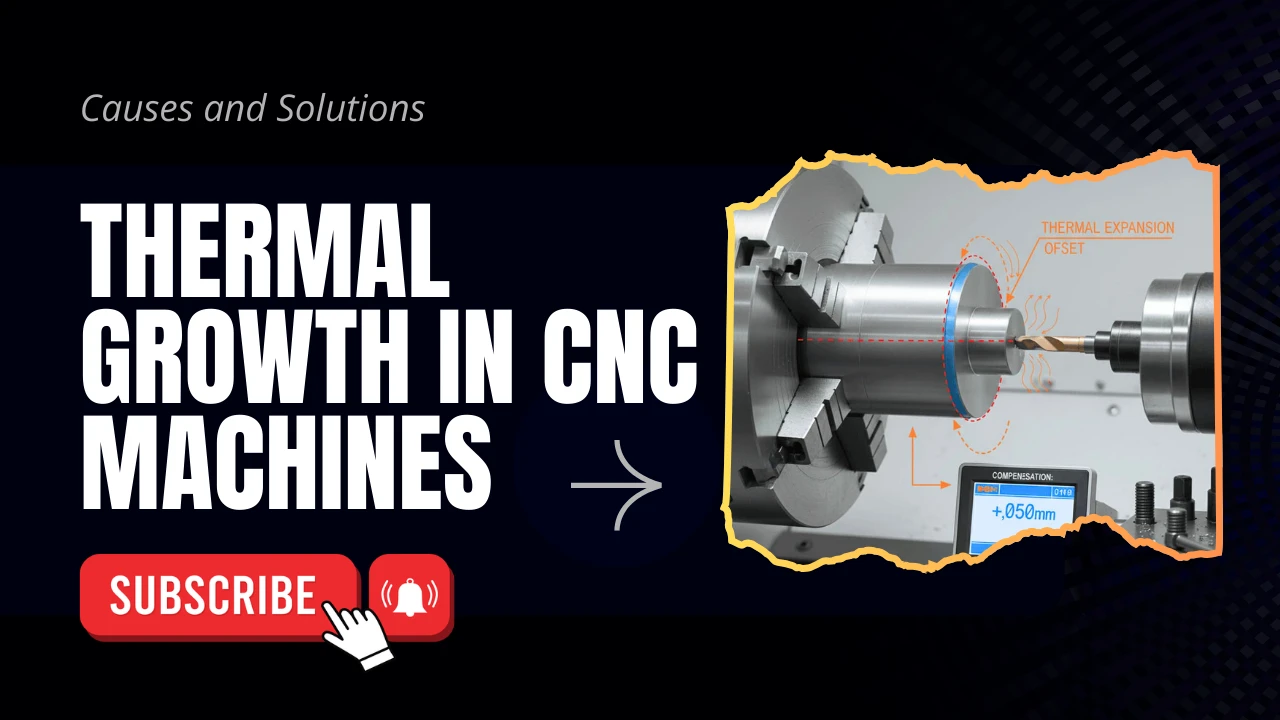
The answer lies in a silent precision killer: Thermal Growth.
Thermal Growth in CNC machines is one of the most underestimated causes of machining inaccuracy. As spindle systems heat up, ball screws expand, guideways shift, and structural components deform microscopically. These thermal changes may seem minor, but in high-precision manufacturing, even a few microns of expansion can lead to scrap parts, unstable batch quality, and increased production costs.
Understanding Thermal Growth is essential for manufacturers who demand consistent precision. In this article, I will break down its causes and share proven solutions used in modern CNC design.
What Is Thermal Growth in CNC Machines?
1 Definition of Thermal Growth
Thermal Growth in CNC machines refers to the dimensional change of machine components caused by temperature variation during operation.
When a CNC machine runs, multiple internal heat sources are generated. These include spindle rotation, bearing friction, motor operation, cutting heat, and mechanical transmission. As temperature rises, metal components expand. This expansion alters the geometric relationship between structural elements, leading to positional deviation.
Thermal Growth is not visible to the naked eye. However, in precision machining, even micron-level changes can significantly affect part accuracy.
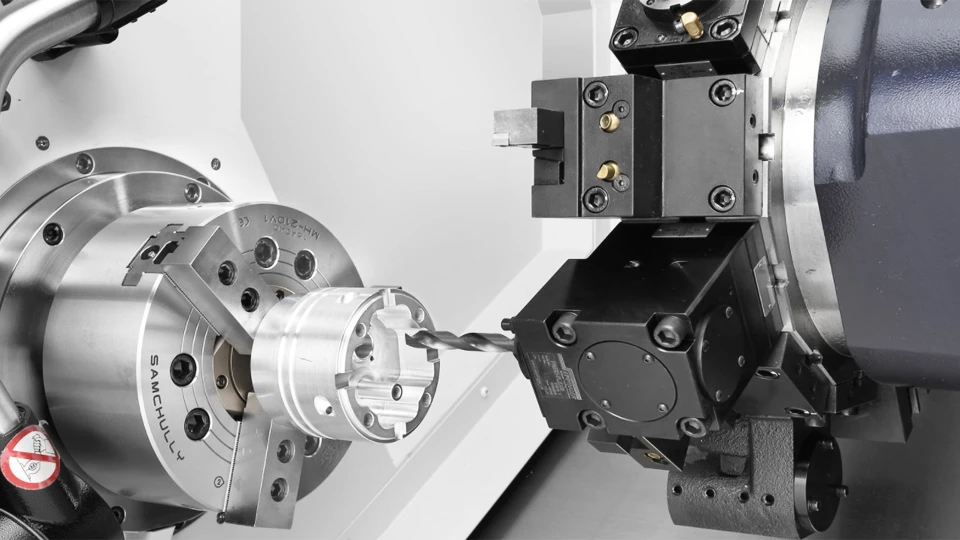
2 The Physical Principle Behind Thermal Growth
Thermal Growth is governed by the fundamental law of linear thermal expansion.
The basic equation is:
ΔL = α × L × ΔT
Where:
- ΔL = change in length
- α = coefficient of linear expansion
- L = original length
- ΔT = temperature change
Every structural material used in CNC machines has a defined expansion coefficient. For example, typical gray cast iron has a coefficient around 10–12 × 10⁻⁶ /°C. Steel structures are slightly higher.
This means:
If a 1,000 mm structural component experiences a 10°C temperature increase, it may expand by approximately 0.1 mm.
In high-precision machining, 0.1 mm is unacceptable. Even 5–10 microns can cause tolerance failure.
3 Why Thermal Growth Is Not Uniform
In real machining environments, temperature does not rise uniformly across the entire machine.
Some areas heat faster:
- Spindle housing
- Bearing seats
- Ball screws
- Motor mounts
Other parts remain cooler:
- Machine base
- Lower frame
- External casting surfaces
This uneven temperature distribution causes asymmetric expansion.
When expansion is not symmetrical, structural distortion occurs. Instead of simple length increase, components may bend, tilt, or shift slightly. This geometric shift directly affects axis positioning and tool alignment.
Thermal Growth is therefore not just “expansion.”
It is a dynamic structural deformation process.
4 Thermal Growth vs. Thermal Drift
Thermal Growth describes the physical expansion.
Thermal Drift describes the positional deviation that results from that expansion.
In CNC machining, what operators usually observe is not the expansion itself, but:
- Gradual dimensional offset
- Axis zero shift
- Repeatability reduction
Thermal Growth is the root cause.
Thermal Drift is the machining consequence.
5 Why Thermal Growth Matters in Modern CNC Machines
Modern CNC machines operate at:
- Higher spindle speeds
- Faster feed rates
- Longer continuous production cycles
High-speed machining generates more heat.
Continuous production reduces thermal equilibrium time.
As machining speed increases, the influence of Thermal Growth becomes more significant.
This is why Thermal Growth control has become a critical design consideration in modern CNC systems.
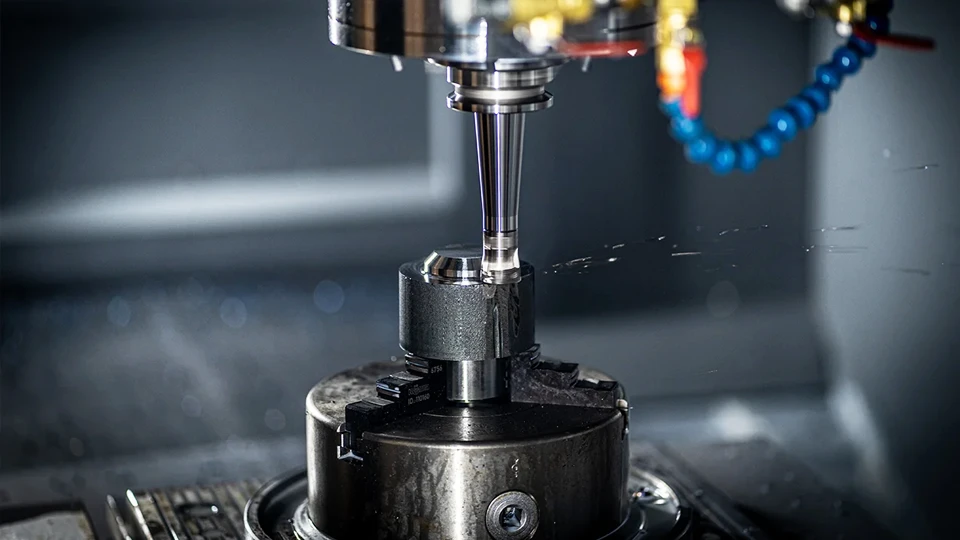
What Causes Thermal Growth in CNC Machines?
1 Spindle Thermal Growth
The spindle is one of the primary heat sources in a CNC machine.
During operation, the spindle rotates at high speed. Heat is generated from:
- Bearing friction
- Motor electromagnetic losses
- Belt or coupling transmission
- Internal lubrication shear
High-speed spindles generate significantly more heat due to higher rotational velocity. Even precision bearings produce friction under load.
As spindle temperature rises, the spindle shaft and housing expand. Because the heat is concentrated in the spindle assembly, this expansion is localized and often axial.
In most vertical and horizontal machining centers, spindle Thermal Growth primarily results in Z-axis offset, directly affecting hole depth, surface step height, and facing accuracy.
Spindle Thermal Growth is typically one of the earliest thermal effects observed during machine warm-up.
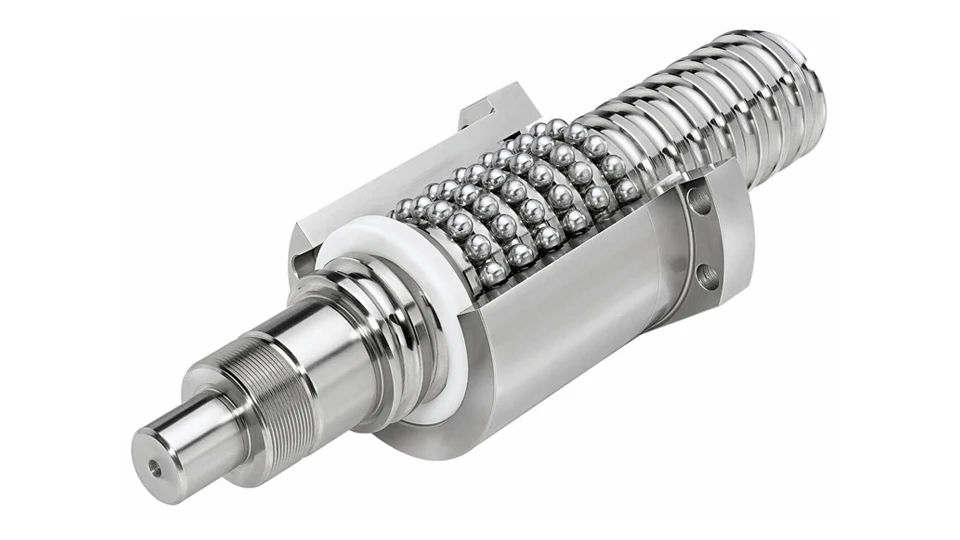
2 Ball Screw Expansion
Ball screws convert rotary motion into linear axis movement.
During rapid feed or continuous axis motion, friction occurs between:
- Ball elements
- Nut housing
- Screw shaft
Although ball screws are designed for high efficiency, they are not friction-free. Continuous motion generates heat along the screw length.
As temperature increases, the screw shaft expands longitudinally.
Because ball screws are responsible for axis positioning, even small axial expansion can shift the commanded position relative to the actual mechanical location. This directly affects positioning accuracy and repeatability, especially during long production cycles.
Ball Screw Expansion is often progressive during continuous machining.
3 Guideway and Structural Heat Accumulation
Guideways support and guide axis movement.
Heat accumulation in guideways comes from:
- Sliding friction (in box ways)
- Rolling contact (in linear guides)
- Cutting force transmission
- Nearby motor heat conduction
In addition, structural components such as the column, bed, and saddle absorb heat from adjacent systems.
Unlike spindle heat, which is concentrated, structural heat spreads gradually through conduction.
This creates temperature gradients across the machine frame.
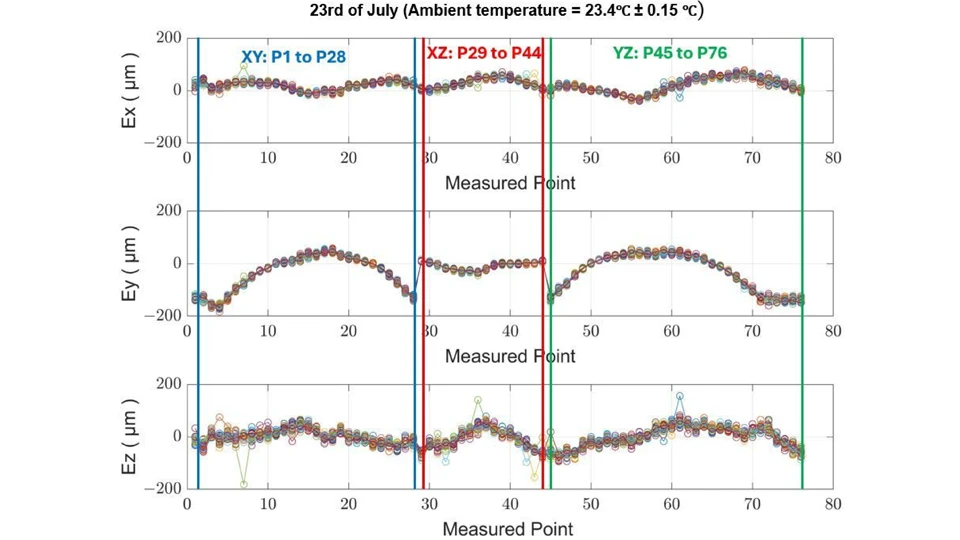
When heat distribution is symmetrical, expansion tends to be predictable. However, non-symmetrical heat accumulation, such as a motor mounted on one side of the column, may cause structural bowing or tilting. This type of deformation is more complex than simple linear expansion and cannot be represented as a single-axis shift.
These gradients contribute to uneven expansion.
4 Coolant Temperature Variation
Cutting generates significant heat at the tool–workpiece interface.
Coolant systems are designed to remove part of this heat. However:
- Coolant temperature can fluctuate
- Return coolant may carry residual heat
- Tank temperature may rise during long runs
If coolant temperature is not stable, it becomes an indirect thermal source.
Coolant does not only act as a cooling medium. When not properly temperature-controlled, it can function as a heat carrier, transferring cutting heat back into the machine structure through recirculation. This may extend thermal influence beyond the cutting zone.
Because coolant flows through the cutting zone and sometimes near structural components, temperature variation influences thermal balance inside the machine.
5 Ambient Temperature Influence
External environment also contributes to Thermal Growth.
Workshop temperature can vary due to:
- Seasonal change
- Day–night cycles
- HVAC instability
- Heat generated by surrounding machines
Large cast iron structures respond slowly to temperature change. However, over time, ambient variation affects the entire machine geometry.
Environmental influence is usually gradual but persistent.
How Thermal Growth Affects CNC Accuracy
Thermal Growth does not stay inside the structure.
It directly translates into machining deviation.
The impact is measurable.
The impact is progressive.
And in high-precision production, the impact is costly.
1 Dimensional Drift
The most visible effect of Thermal Growth is dimensional drift.
As internal components expand, axis reference positions shift slightly. The machine still follows programmed coordinates, but the physical geometry has changed.
Common manifestations include:
- Gradual increase in bore depth
- Step height variation during long runs
- Diameter deviation in batch production
- Size inconsistency between first and last part
Z-axis drift is often observed in spindle-related expansion.
Linear axis drift is commonly linked to ball screw elongation.
In many machining centers, spindle-related Z-axis Thermal Growth directly affects counterbore depth and face milling flatness. Even a few microns of axial expansion can push hole depth or surface height beyond tolerance.
Dimensional drift is usually progressive rather than sudden.
This is why it is sometimes misdiagnosed as tool wear.
In some production environments, parts measured directly on a warm machine may appear within tolerance. However, after the part cools down to room temperature, dimensional deviation may exceed specification. This thermal-state difference is one of the most common sources of unexpected quality rejection in batch manufacturing.
2 Geometric Error
Thermal Growth does not only affect size.
It also affects geometry.
When structural expansion is symmetrical, the impact may resemble uniform offset.
However, when heat distribution is uneven, geometric distortion occurs.
Typical geometric consequences include:
- Straightness deviation along axis travel
- Parallelism change between axes
- Squareness error between X and Y axes
- Coaxiality deviation in multi-operation machining
Structural bowing or column tilting may alter spindle-to-table alignment.
This affects not just position, but spatial orientation.
Geometric errors are more complex than dimensional drift because they change the machine’s internal geometry.
3 Surface Quality Impact
Thermal Growth also influences surface finish and stability.
When axis position shifts microscopically:
- Tool engagement depth changes
- Cutting force distribution shifts
- Vibration characteristics may vary
This can result in:
- Surface waviness
- Slight roughness variation
- Inconsistent finish between parts
In high-speed machining, even small positional change can alter cutting dynamics.
Surface quality deviation is often subtle, but in precision industries, it becomes critical.
Engineering Solutions to Control Thermal Growth
Thermal Growth cannot be eliminated.
But it can be controlled, balanced, and compensated through engineering design.
Effective control requires addressing three levels:
- Structural design
- Thermal management
- System compensation
Each level targets a different mechanism of thermal deviation.
1 Structural Design Optimization
Structural symmetry is the foundation of thermal stability.
When heat distribution is symmetrical, expansion tends to remain geometrically predictable. This design philosophy is often referred to as thermally neutral design, where even if expansion occurs, the spindle centerline remains geometrically stable relative to the machine reference, and deformation is directed along controlled axes rather than causing lateral displacement.
Therefore, machine structure should be designed with:
- Symmetrical column layout
- Centralized spindle mounting
- Balanced motor positioning
- Uniform mass distribution
Shorter thermal transmission paths reduce cumulative expansion. Compact axis layouts minimize elongation risk.
High-rigidity cast iron structures also help stabilize temperature gradients by slowing uneven deformation.
Structural design determines how heat transforms into displacement.
2 Spindle Cooling Systems
Because spindle Thermal Growth often appears first and primarily affects Z-axis accuracy, spindle temperature control is critical.
Common engineering solutions include:
- Oil-cooled spindle jackets
- Circulating coolant systems
- Temperature-controlled lubrication
Maintaining spindle temperature within a narrow range reduces axial growth fluctuation.
Active spindle cooling stabilizes bore depth consistency and face milling height control during long production runs.
Without temperature regulation, spindle heat accumulation becomes progressive and unpredictable.
3 Ball Screw Cooling
Ball screws expand along their length during continuous axis movement.
To control this:
- Internal cooling channels can be integrated
- Oil circulation systems can stabilize temperature
- Preloaded dual-nut systems reduce backlash variation
Cooling does not eliminate expansion completely.
But it reduces thermal gradient along the screw shaft.
Stable screw temperature improves positioning accuracy and repeatability consistency.
4 Thermal Compensation Technology
Modern CNC systems can apply software-based thermal compensation.
This typically involves:
- Temperature sensors installed on spindle and structure
- Real-time thermal data acquisition
- Axis offset correction algorithms
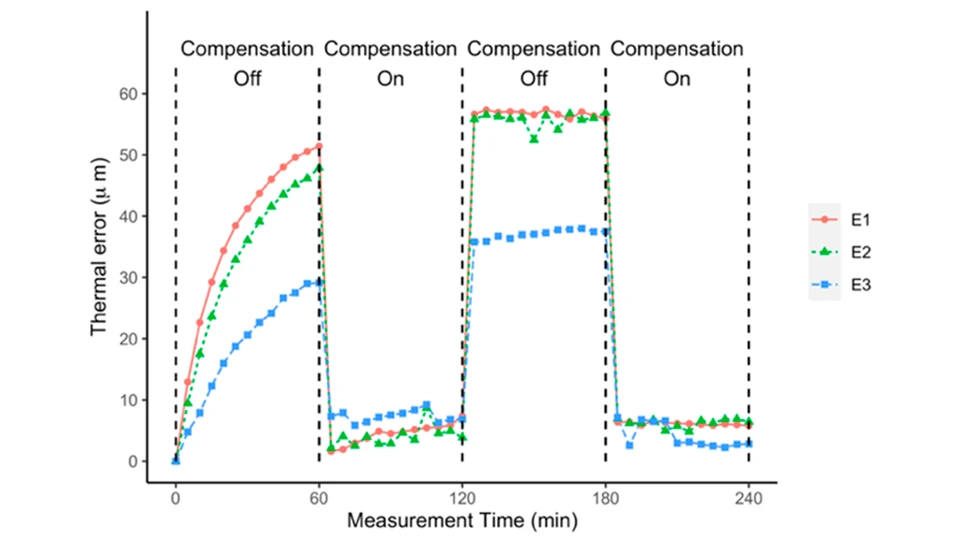
Compensation adjusts command position based on measured temperature change.
It does not prevent expansion.
It counteracts its positional effect.
Compensation is generally effective for predictable linear drift along a single axis. However, for complex spatial deformation such as structural tilting or column bowing, software correction has limited effectiveness.
Effective compensation requires accurate thermal modeling.
Poor calibration may introduce new errors.
5 Warm-Up Strategy
Thermal stability improves once the machine reaches equilibrium.
A controlled warm-up procedure helps reduce initial drift.
Typical strategies include:
- Running spindle at incremental speeds
- Cycling axes before production
- Allowing sufficient stabilization time
Understanding the machine’s thermal equilibrium point is essential for consistent batch production.
Starting precision machining before stabilization increases deviation risk.
Warm-up is not optional in high-accuracy environments.
Conclusion
Thermal Growth is not a visible defect. It does not trigger alarms. It does not stop the machine. Yet over time, it silently shifts geometry, alters axis relationships, and compromises precision. In modern high-speed and high-accuracy manufacturing, even micron-level deviation can translate into dimensional drift, geometric error, and surface instability. Understanding where heat originates, how it propagates, how it is measured, and how it is engineered under control is no longer optional. Structural symmetry, spindle cooling, screw stabilization, intelligent compensation, and controlled warm-up together form a systematic approach to maintaining thermal stability in CNC machines.
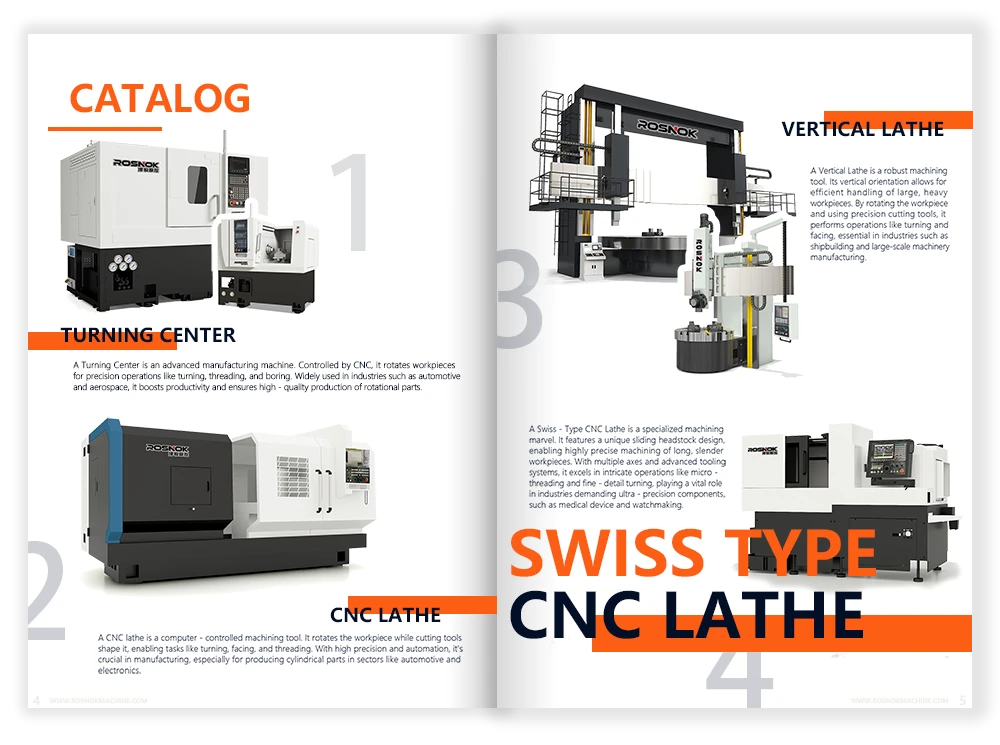
For manufacturers who demand long-term precision rather than short-term performance, machine design philosophy matters. Rosnok focuses on structural balance, thermal symmetry, controlled spindle temperature, and stable mechanical architecture across its CNC lathes and machining centers. Thermal behavior is considered from the foundation up, because precision is not only programmed — it is engineered into the machine itself.