Introduction to Lathe Swing Dimensions
In lathe terminology, swing refers to the maximum diameter of a workpiece that can rotate on the spindle without interference from the machine’s structure. It is a geometric constraint that defines the largest possible size of the part that the lathe can physically accommodate.
Swing values are among the first parameters to look at when assessing a lathe’s machining capacity. They appear in technical documentation and are critical for understanding the usable space around the spindle. There are typically three swing-related terms:
- Swing over bed
- Swing over cross slide
- Swing over gap
Each represents a different part of the machine and has its own limitations. While they are all measured as diameters, they do not mean the same thing and cannot be used interchangeably.
What Is Swing Over Bed
Swing over bed refers to the maximum diameter of a workpiece that can rotate freely above the lathe bed without making contact. It is measured as a straight line passing through the spindle center and extending to the closest point of obstruction on either side—typically the flat bed ways. The total swing is calculated as twice the center height, meaning the vertical distance from the spindle center to the top surface of the bed.
This value defines the theoretical maximum diameter that the lathe can handle without considering any additional components like the tool post or cross slide. It provides a clear baseline of the lathe’s physical limits and is always larger than other swing values, such as swing over cross slide.
Several design elements influence swing over bed. These include the bed width, spindle height, and overall frame geometry. In general, heavier lathes with larger beds have higher swing capacities, making them more suitable for turning large-diameter workpieces.
Swing over bed is a universal specification found in lathes. It typically appears first in technical documentation and provides a baseline for machine size comparison. However, this value alone can be misleading, as it does not account for space lost to components like the cross slide or tool post.

What Is Swing Over Cross Slide
Swing over cross slide refers to the maximum diameter of a workpiece that can rotate without interference above the lathe’s cross slide—also known as the compound or tool carriage area. This value is always smaller than the swing over bed, because the cross slide assembly sits higher and closer to the spindle center, reducing the available clearance.
The swing over cross slide is measured vertically from the spindle center down to the top surface of the cross slide, then doubled to give the full diameter. This measurement reflects the realistic machining space when the carriage is in its standard working position, and is especially relevant when turning parts with deep cuts, large diameters, or when using bulky tool holders.
Because the cross slide occupies vertical space, it limits the usable machining diameter even if the swing over bed is large. For instance, a lathe may offer a swing over bed of 400 mm, but only 250 mm over the cross slide. If this value is ignored, it may result in tool interference, insufficient clearance, or an inability to complete certain operations.

What Is Swing Over Gap
Swing over gap refers to the maximum diameter of a workpiece that can rotate freely in the recessed section of a lathe bed known as the gap. This feature is typically found in gap bed lathes, where a removable segment of the bed near the headstock can be temporarily detached to create a wider space for large-diameter parts.
The measurement is taken from the spindle center vertically down to the base of the gap opening, then doubled to determine the total swing diameter available in that specific area. The resulting swing over gap is always larger than swing over bed, since the gap provides extra clearance not normally available along the entire length of the bed.
Gap beds are particularly useful when working with short but oversized components—such as flywheels, pulleys, or flanges—that require a large turning diameter but not an extended turning length. By removing the gap section, the lathe can handle workpieces that would otherwise exceed its standard swing limits.
This structural design offers added flexibility without permanently increasing the lathe’s footprint or cost. However, the expanded capacity is limited to the region immediately above the gap. The rest of the bed still adheres to the original swing over bed and swing over cross slide dimensions.

Why Swing Over Bed, Cross Slide, and Gap Matter
Each swing value on a lathe—bed, cross slide, and gap—represents a specific geometric boundary that defines the machine’s usable space. Taken together, they provide a complete picture of the maximum workpiece size that can be mounted and rotated without collision.
Swing over bed defines the general size limit along the entire bed length. Swing over cross slide reflects the actual clearance during most machining operations, especially when the carriage is positioned under the cutting zone. Swing over gap extends the usable diameter in a limited area near the headstock, offering occasional large-diameter capacity.
Ignoring any of these values can lead to an incorrect assessment of the machine’s capabilities. For example, a large swing over bed may suggest that a bulky part can be turned, but if the cross slide obstructs the path, the part may not fit. Likewise, assuming that swing over gap applies across the full bed is a common misunderstanding—it only applies where the removable gap section exists.
Understanding how these three values interact helps operators and engineers evaluate the realistic turning envelope of the machine. It also aids in job planning, workholding setup, and compatibility checks between part dimensions and machine structure—before any machining begins.

Swing Dimensions and Machining Safety Considerations
Swing values are not only important for defining geometric limits, but also play a direct role in ensuring safe machining practices. Attempting to mount a workpiece that exceeds or barely fits within the specified swing area can result in mechanical interference, tool crashes, or excessive vibration during operation.
When a part’s diameter closely matches the swing over bed or cross slide, even small protrusions from the chuck jaws or tool holders can lead to collisions. This is especially risky at high spindle speeds, where imbalance or minimal clearance may cause the part to strike nearby components, damaging both the machine and the tooling.
Clearances must also account for dynamic factors. Cutting tools may protrude during feed motion, and fixtures like steady rests or tailstocks introduce additional spatial constraints. Swing values define static limits, but operators must allow extra margin to accommodate real-time movement and potential runout in the workpiece.
To maintain a safe machining envelope, professionals often recommend leaving a minimum clearance buffer between the part’s outer diameter and the swing limit. This buffer varies depending on machine size and cutting conditions, but it’s a critical consideration when working with parts that approach the lathe’s maximum capacity.

Conclusion
Understanding swing over bed, swing over cross slide, and swing over gap is fundamentally about understanding the physical boundaries of a lathe. These terms are not abstract specifications—they describe how much space truly exists around the spindle and where that space changes. When viewed together, they form a complete picture of a lathe’s turning envelope, helping clarify what can rotate safely, what may interfere, and where structural limits actually lie. Swing over bed defines the general diameter limit, swing over cross slide reflects realistic working clearance, and swing over gap extends capacity only within a localized section of the machine.
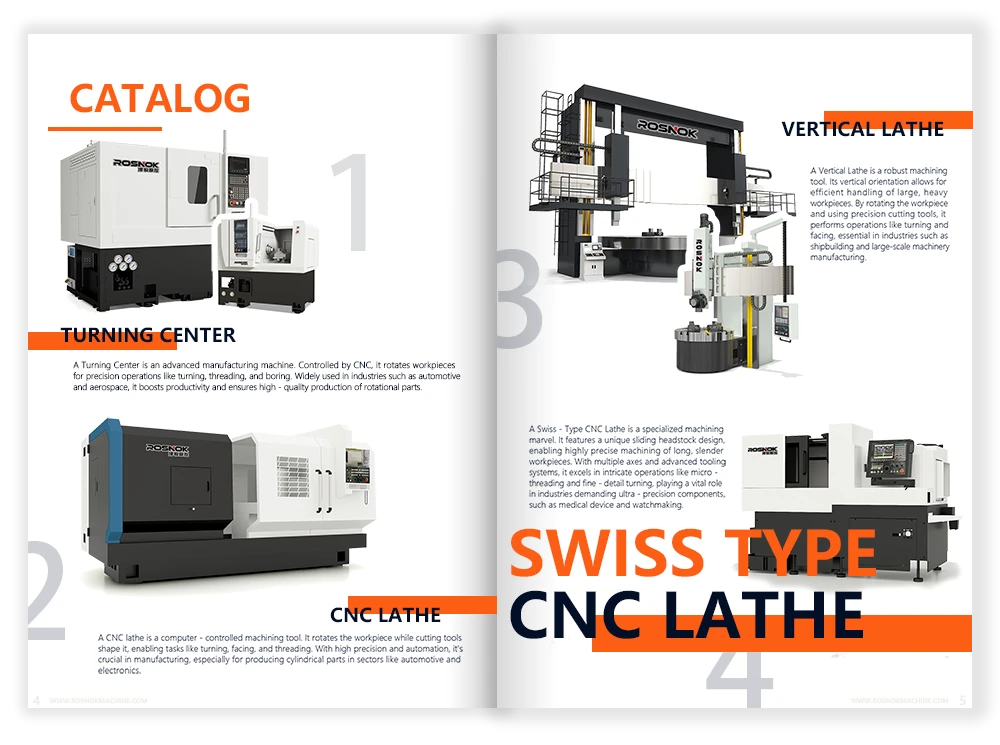
Structural limits like swing values only translate into real-world performance when reflected in the machine’s physical design. Rosnok, as a CNC machine manufacturer specializing in lathes and metalworking equipment, integrates these constraints into its engineering—producing machines where frame geometry, spindle height, and carriage layout are developed around practical machining envelopes rather than abstract specifications. This approach is reflected across Rosnok’s CNC lathe lineup, including standard flat-bed models, gap bed lathes, and Swiss-type machines, where structural configuration is matched to different workpiece sizes and turning requirements.