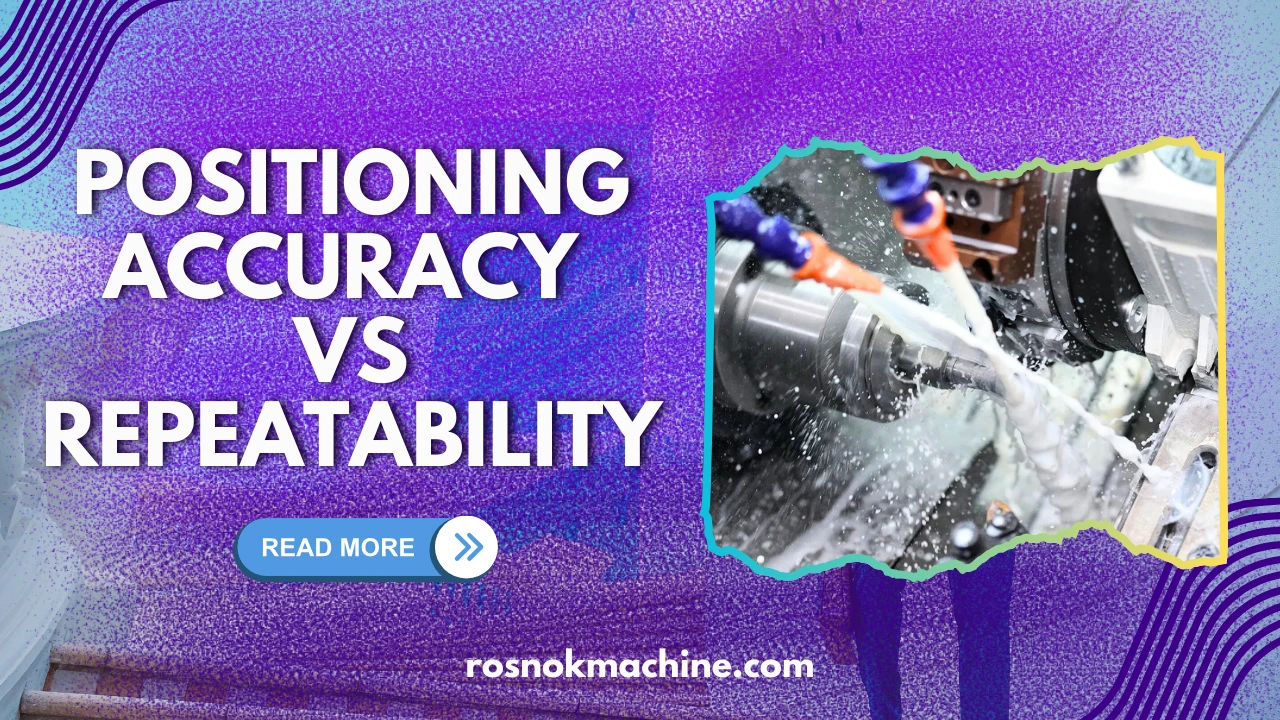
Positioning accuracy and repeatability are distinct metrics in CNC machining. Positioning accuracy describes how closely an axis reaches the commanded position, while repeatability describes how consistently it returns to that same position over repeated movements. Put simply, one is about reaching the target, and the other is about returning to it consistently.
Read on to explore how positioning accuracy and repeatability are measured in CNC machines, what affects each one, and why both matter in practical machining.
What Is Positioning Accuracy in CNC Machining?
Positioning accuracy in CNC machining refers to how closely a machine axis reaches the commanded position. When the control system sends an axis to a specific coordinate, the machine is expected to stop at that exact point, but in practice there may be a small difference between the commanded position and the actual position reached. The smaller that difference is, the better the positioning accuracy. In simple terms, positioning accuracy shows how accurately a CNC machine can move to a target location.
A simple example makes this easier to understand. If a CNC machine is commanded to move an axis to 100.000 mm, but the actual position reached is 99.992 mm, then the difference is 0.008 mm. That difference is the positioning error. If the machine stops closer to the target, its positioning accuracy is better. This is why positioning accuracy is commonly used to describe how precisely a CNC machine can reach a programmed coordinate.
What Is Repeatability in CNC Machining?
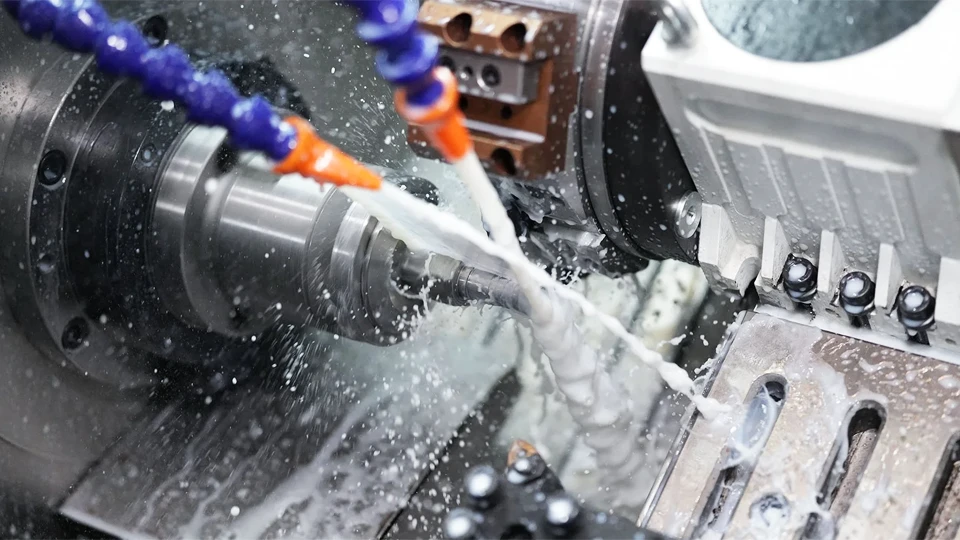
Repeatability in CNC machining refers to how consistently a machine axis returns to the same position over repeated movements. When the control system commands the axis to move to one coordinate again and again, the machine will only return to nearly the same position each time if its motion remains stable. The smaller the variation, or spread, among those repeated positions, the better the repeatability. In simple terms, repeatability shows how consistently a CNC machine can return to the same target location.
A simple example makes this easier to understand. Imagine commanding an axis to move to 100.000 mm five times. If the machine stops at 99.992 mm every time, its repeatability is nearly perfect, even though it does not reach the commanded position exactly. The focus here is not on hitting the target perfectly, but on the machine’s ability to reproduce the same result over and over again.
Positioning Accuracy vs Repeatability: What Is the Real Difference?
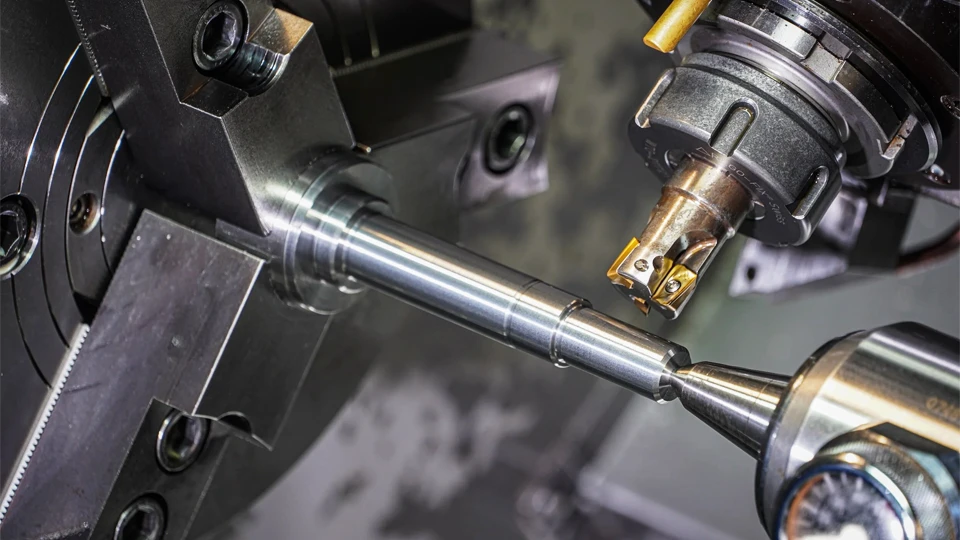
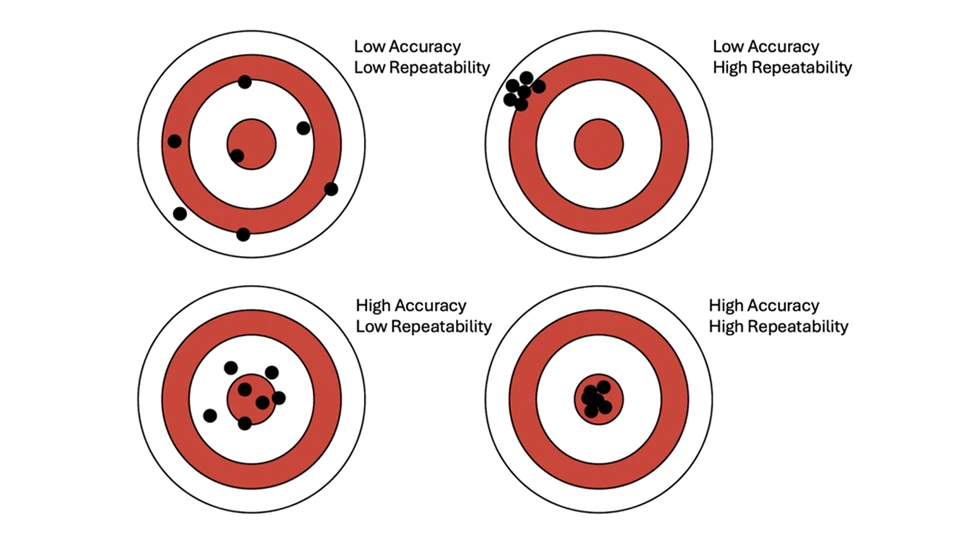
Positioning accuracy and repeatability are often confused because both describe the precision of axis movement. However, they do not answer the same question. Positioning accuracy asks whether the axis reaches the commanded position correctly, while repeatability asks whether it can return to the same result consistently over repeated movements.
This distinction becomes important when the machine does not stop exactly at the target. If an axis is commanded to move to 100.000 mm and reaches 99.992 mm every time, its repeatability is very high because the result is consistent. At the same time, its positioning accuracy is limited because the actual position remains 0.008 mm away from the commanded point. In other words, one metric evaluates closeness to the target, while the other evaluates consistency of return.
That is why these two metrics should not be treated as interchangeable. They are related, but they describe different aspects of CNC motion performance, which is why both are listed separately in machine specifications.
How Positioning Accuracy and Repeatability Are Measured
Understanding the difference between these two metrics is only the first step. To evaluate them correctly, it is also necessary to understand how each one is tested on a CNC machine. The measurement process matters because the result depends not only on the machine itself, but also on how the test is carried out and under what conditions the data is collected.
How Positioning Accuracy Is Measured
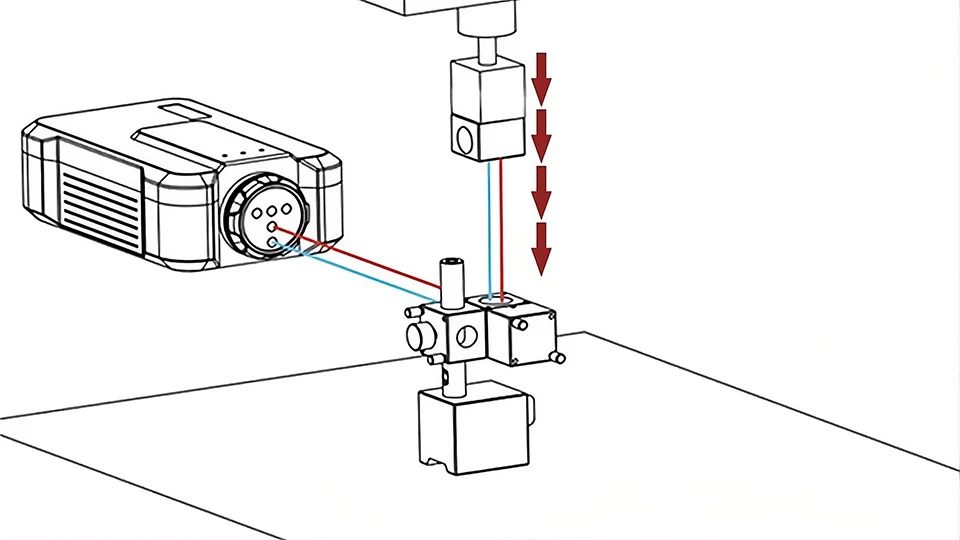
Positioning accuracy is measured by commanding an axis to move to a defined position and then comparing the commanded coordinate with the actual position reached. The difference between those two values is the positioning error. This test is typically repeated at multiple points along the axis travel, because positioning performance may not remain identical across the full stroke. In industrial testing, this is commonly measured with tools such as a laser interferometer or a high-precision linear scale. The goal is to determine how accurately the machine reaches the intended location.
How Repeatability Is Measured
Repeatability is measured by commanding the axis to return to the same position multiple times and then observing how closely those repeated results match one another. In this case, the main concern is not whether the machine reaches the exact commanded point, but whether the results remain highly consistent from one attempt to the next. The smaller the spread among those repeated positions, the better the repeatability.
Why Test Conditions Matter
Test conditions matter because measurement results can change depending on how the test is performed. Factors such as axis travel range, approach direction, machine temperature, and overall machine condition can all influence the final values. It also matters whether the axis approaches the same point from one direction only or from both directions, since bidirectional testing can reveal differences that may not appear in a one-way test. In many cases, these tests are performed in line with recognized standards such as ISO 230-2. For that reason, positioning accuracy and repeatability should only be compared meaningfully when they are measured under clear and consistent conditions.
What Affects Positioning Accuracy in CNC Machines?
Positioning accuracy depends on more than the CNC control itself. Even when a machine is given the correct command, the axis still has to travel through a real mechanical and control system before it reaches the target position. That means positioning error can come from multiple sources, including mechanical transmission, thermal change, servo behavior, and overall machine structure.
Mechanical Sources of Positioning Error
Mechanical error is one of the most direct causes of reduced positioning accuracy. If components such as the ball screw, guideway, coupling, or bearing system do not transmit motion precisely, the axis may stop slightly short of the commanded point or move slightly beyond it. Backlash, wear, assembly deviation, and geometric imperfection can all contribute to this kind of error. In simple terms, if the motion system cannot convert command into movement accurately, positioning accuracy will suffer.
Thermal and Control-Related Factors
Positioning accuracy can also change when thermal and control conditions are not stable. As the machine runs, heat from the spindle, servo motors, ball screws, and surrounding environment can cause small expansions in key components, which may shift the actual axis position. At the same time, servo tuning, feedback resolution, and control response also affect how precisely the machine follows the commanded coordinate. Design measures such as preload and, in some cases, ball screw pretensioning can also help limit the positioning shift caused by thermal growth. Even a well-built machine can show positioning deviation if thermal growth or control response is not managed properly.
Why Axis Design and Rigidity Matter
Axis design and machine rigidity also play a major role in positioning accuracy. A rigid, thermally stable cast structure with good damping characteristics helps the axis move and stop more predictably, especially under changing load and temperature conditions. A weak or less stable structure is more likely to deform, vibrate, or shift under load. The design of the axis travel system, support arrangement, and machine base all influence how reliably the commanded position can be reached. In practice, better rigidity usually means the machine can hold its intended position more accurately and with less variation from one location to another.
What Affects Repeatability in CNC Machines?
Repeatability depends on whether a CNC axis can produce nearly the same motion result again and again under the same conditions. Even when the commanded position does not change, the repeated stop point can still vary if the motion system lacks stability. In practice, repeatability is closely tied to the consistency of the drive system, the stability of servo behavior, and the mechanical condition of the axis over time.
Stability in Repeated Axis Motion
Stable repeated motion is the foundation of good repeatability. If the same axis command produces slightly different stopping behavior from one cycle to the next, repeatability will decline even when the machine appears to be functioning normally. Small changes in friction, load, settling behavior, or motion smoothness can all affect how tightly repeated positions remain grouped. In simple terms, repeatability depends on the machine producing nearly the same motion outcome every time the same command is given.
Backlash, Servo Behavior, and Wear
Backlash is one of the clearest mechanical threats to repeatability because it reduces consistency when the axis reverses direction or approaches the same point from opposite sides. In repeated back-and-forth motion, even a small amount of mechanical play can cause the axis to settle differently from one approach to the next. Servo behavior matters as well. If the control system allows too much variation before a position is treated as complete, repeated stopping consistency can decline. Wear also matters because as transmission parts lose preload or experience progressive wear, the axis becomes less able to reproduce the same result over time.
Why Repeatability Can Change Over Time
Repeatability is not always a fixed machine characteristic. It can change as temperature rises, lubrication condition shifts, components wear, or the axis experiences long-term changes in friction and preload. Even if a machine shows good repeatability during an initial test, that result may not remain identical after long production hours or different operating conditions. This also explains why proper lubrication and periodic mechanical inspection matter for maintaining repeatable performance over time.
Positioning Accuracy vs Repeatability in Real CNC Performance
In actual machine operation, positioning accuracy and repeatability do not always appear in the same way. A machine may show stable repeated motion yet still remain offset from the target, or it may reach the target closely without maintaining the same consistency over time.
Why One Good Number Does Not Tell the Whole Story
A single good specification value does not automatically mean the overall motion performance is equally strong in every respect. A machine can show very good repeatability because its repeated motion stays highly consistent, while its positioning accuracy remains less ideal because the result is still offset from the commanded point. The opposite can also happen in practical testing. Looking at only one number can create a simplified picture that does not fully reflect how the machine actually behaves.
How These Metrics Appear in Actual Machining
In actual machining, these two metrics show up through the way a machine reaches and repeats programmed positions. Positioning accuracy is reflected in how closely machined features match their intended coordinates, so weaker positioning accuracy often appears as dimensional deviation or feature location error. Repeatability is reflected in how consistently the same motion result is reproduced from one cycle to the next, so weaker repeatability often appears as unstable part-to-part results or shifting tolerance performance in repeated production. When both are strong, machine behavior tends to look both precise and stable.
Why a Machine Can Perform Well in One Respect but Not the Other
A machine can perform well in one respect but not the other because these two metrics describe different motion behaviors. One reflects how close the axis comes to the target, while the other reflects how consistently the result is repeated. In real operation, a machine may maintain highly stable repeated motion and still remain slightly away from the commanded point, or it may reach the target closely in one instance without repeating that result as consistently over time. Positioning error can often be reduced through calibration or compensation, while poor repeatability is usually harder to correct because it points to inconsistency in the machine’s underlying motion behavior.
Conclusion
Positioning accuracy vs repeatability is not just a technical comparison on a specification sheet. It is a practical way to understand how a CNC machine really behaves. One shows how closely the axis reaches the commanded position, while the other shows how consistently that result can be repeated over time. When these two metrics are understood separately and evaluated correctly, it becomes much easier to judge machine precision, interpret performance data, and see why a machine can appear strong in one area but weaker in another.
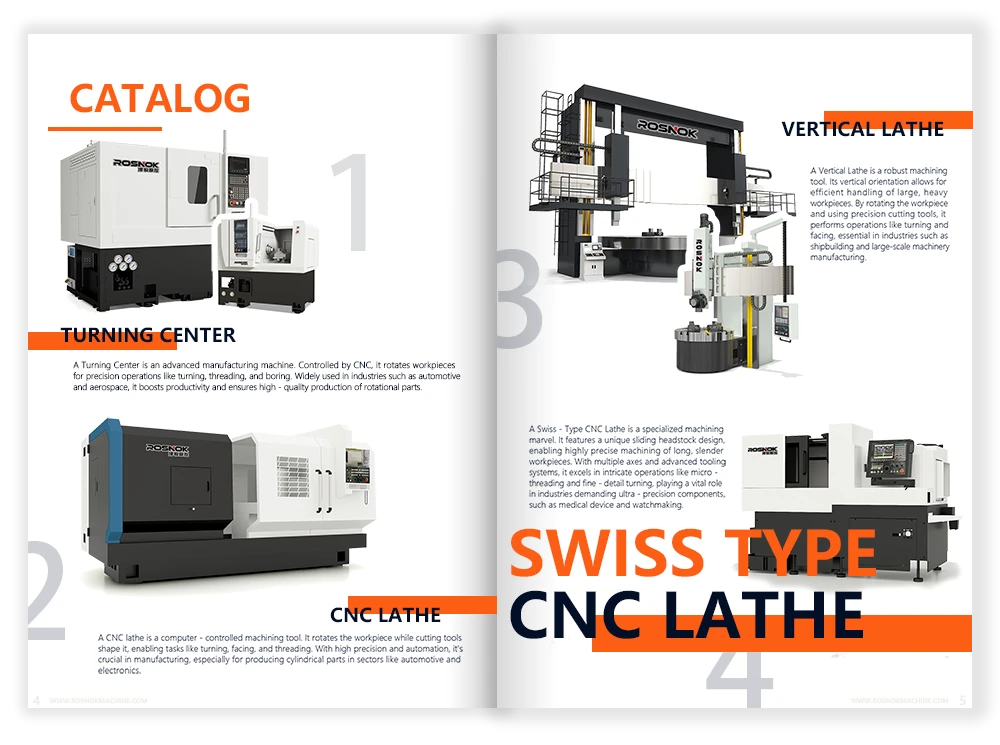
For manufacturers that care about real machining performance, this distinction matters from the very beginning of machine selection and process planning. At Rosnok, CNC machine design is approached with that same understanding in mind, because stable motion behavior, structural rigidity, and dependable machining performance all begin with how accurately and consistently a machine can move. That is why Rosnok continues to focus on practical precision in CNC lathes, machining centers, milling machines, and other metalworking solutions built for real production demands.