In real machining, machining allowance directly affects dimensional accuracy, tool load, surface finish, production efficiency, and part stability. If the allowance is too large, cutting time, tool wear, and machining cost increase. If it is too small, defects from casting, forging, heat treatment, or rough machining may remain on the final surface.
A small allowance decision can change the final result of an entire machining process. The following sections explain its definition, types, influencing factors, calculation logic, and practical control methods.
What Is Machining Allowance?
Machining allowance is the specific layer of extra material intentionally left on a workpiece surface before rough, semi-finish, or finish machining operations. It represents the physical material that exists between the raw blank and the final finished part.
This material is not random excess stock or manufacturing waste. It is a planned and controlled reserve for subsequent cutting. By leaving this allowance, engineers give the machining process enough workable material to reach the required size, shape, tolerance, and surface quality.
In practical manufacturing, machining allowance provides the necessary cutting depth for removing unstable material from previous stages. This may include rough blank surfaces, oxidation layers, casting skin, forging scale, minor deformation, or irregular material left after earlier machining.
The exact amount of this reserved material is not arbitrary. It must be determined according to the workpiece material, blank condition, machining process, machine tool capability, and the required engineering tolerance.
Why Is Machining Allowance Important in Machining?
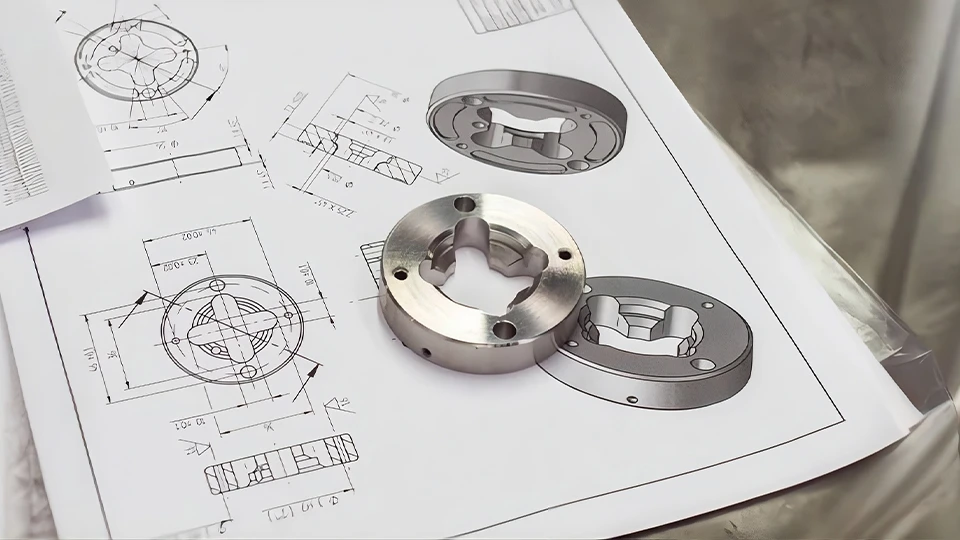
Machining allowance is important because it gives the machining process a controllable material layer to work with. Without this reserved material, the cutting tool may not have enough depth to correct blank errors, remove unstable surfaces, or bring the part to its final drawing size.
In actual production, blanks are rarely perfect. Castings may have rough skin. Forgings may have scale. Welded parts may have distortion. Heat-treated parts may have dimensional change. Even a roughly machined part can still carry tool marks, uneven surfaces, or slight geometric errors. Machining allowance creates the margin needed to remove these problems before the final surface is formed.
It also affects machining stability. A suitable allowance helps the cutting tool maintain a steady cutting load. This supports better size control, smoother surface formation, and more predictable tool performance. When allowance is not properly planned, the process becomes harder to control, even if the machine tool and cutting program are correct.
From a production perspective, machining allowance influences quality, efficiency, tool life, and manufacturing cost. It is not only a size difference between blank and finished part. It is a process parameter that connects material preparation, machining route, and final inspection.
Main Functions of Machining Allowance
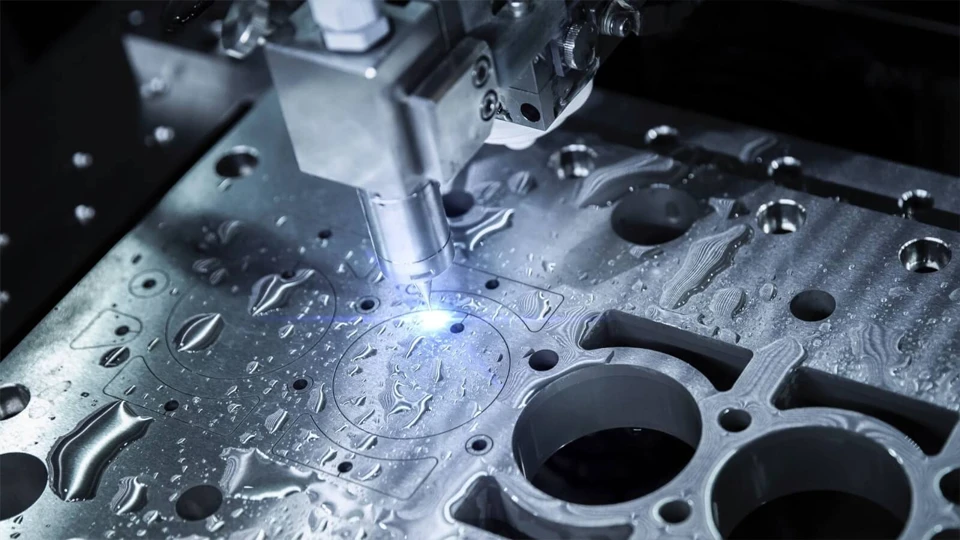
Machining allowance has several practical functions in machining. Its purpose is not only to leave material for cutting, but to make the final machining result more controllable, stable, and accurate.
Removing Surface Defects
One major function of machining allowance is to remove surface defects from the blank or previous process.
Castings may contain rough skin, sand marks, pores, or uneven surfaces. Forgings may have scale, decarburized layers, or deformation marks. Welded parts may have heat-affected surfaces. Rough-machined parts may still have tool marks or burrs.
A proper machining allowance gives the cutting tool enough material to remove these unstable surface layers and expose a cleaner, more reliable metal surface.
Correcting Shape and Position Errors
Machining allowance also helps correct shape and position errors.
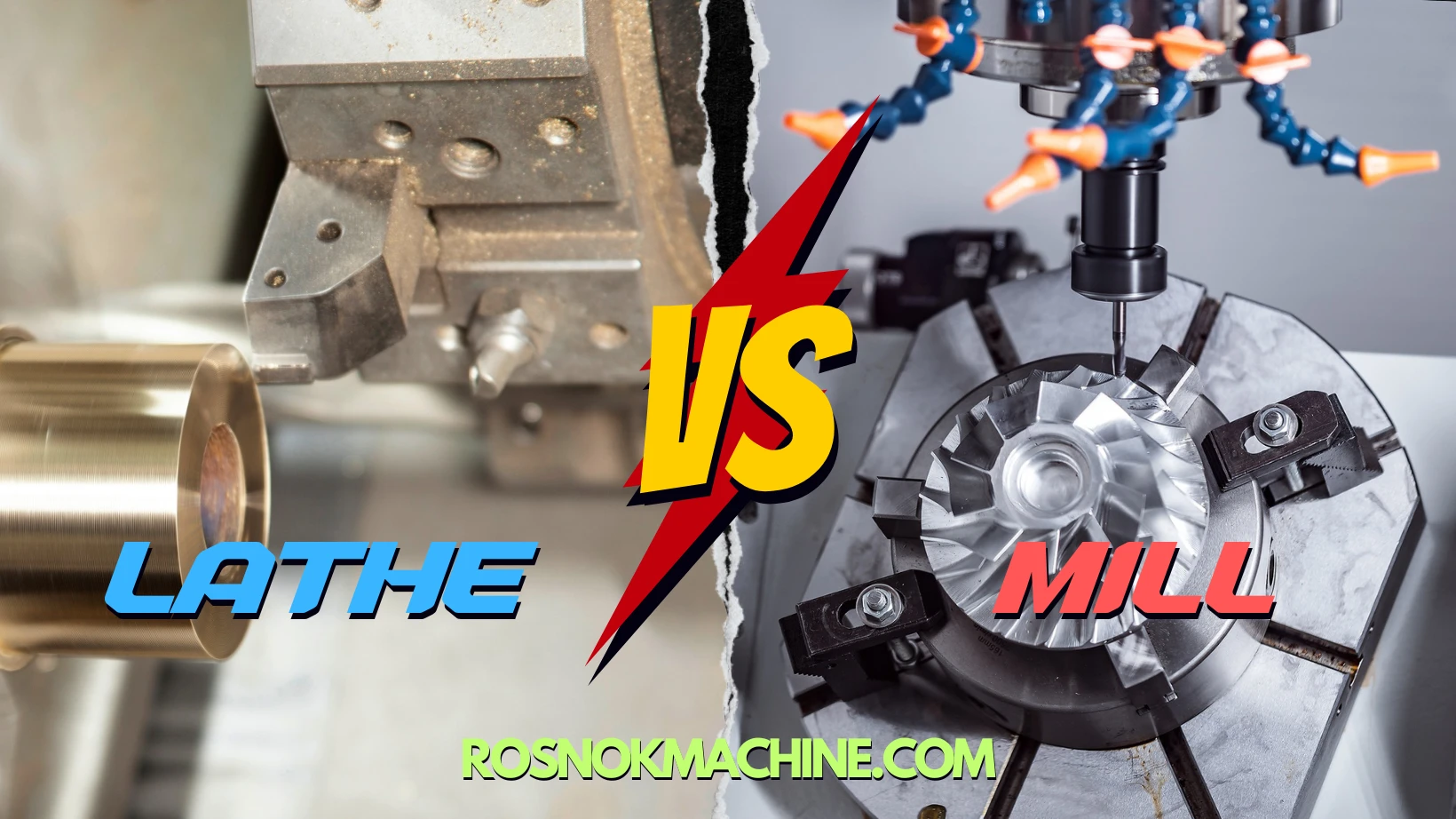
A blank may not be perfectly round, flat, straight, or concentric. During machining, extra material allows the tool to gradually correct these deviations. For example, turning can improve roundness and cylindricity. Milling can improve flatness. Boring can improve hole alignment and internal diameter accuracy.
Without enough allowance, the tool may reach the final size before the original shape error is fully removed.
Ensuring Final Dimensional Accuracy
Machining allowance provides the material basis for reaching the final drawing size.
In most cases, a part cannot move directly from blank to final tolerance in one cut. The process needs enough stock for rough machining, possible semi-finishing, and final finishing. Each stage removes part of the allowance and brings the workpiece closer to the required dimension.
This is especially important for parts with tight tolerances, where the final cut must be stable and predictable.
Improving Surface Finish
A stable finishing cut needs a suitable amount of material.
If the finishing allowance is reasonable, the cutting tool can remove a continuous and controlled layer from the surface. This helps reduce visible tool marks, surface waviness, and roughness variation.
If there is not enough material left for finishing, the tool may only rub or cut unevenly. The result can be poor surface quality, even when the final size appears close to the drawing.
Compensating for Deformation
Machining allowance also provides space to compensate for deformation.
Workpieces may deform during clamping, rough cutting, heat treatment, stress release, or cooling. Thin-walled parts, long shafts, large plates, and welded structures are especially sensitive to this problem.
By reserving enough material before the final operation, manufacturers can correct part of this deformation in later machining stages and improve final part stability.
Types of Machining Allowance
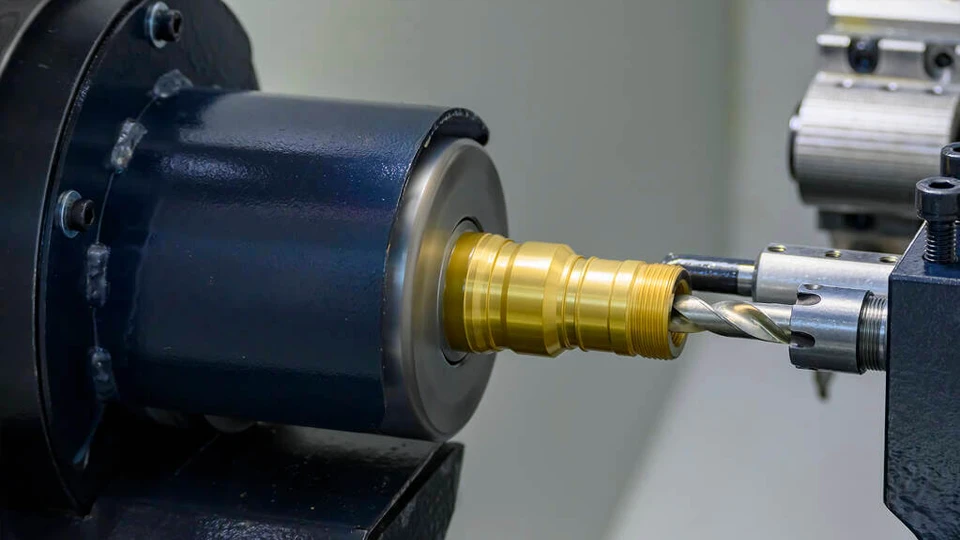
Machining allowance can be classified in different ways according to the machining stage, process route, and machined surface. These categories help engineers distribute material more clearly instead of treating all allowance as one fixed value.
Total Machining Allowance
Total machining allowance refers to the total amount of material that must be removed from the blank to reach the final finished dimension.
For example, if a shaft blank has a diameter of 52 mm and the final required diameter is 50 mm, the total machining allowance on the diameter is 2 mm. This does not mean one cutting pass must remove all 2 mm. It only describes the total difference between the blank size and the final size.
Total machining allowance is usually considered during blank selection and process planning.
Process Machining Allowance
Process machining allowance refers to the allowance assigned to each machining step.
A part may need rough machining, semi-finishing, and finishing. Each stage removes a different amount of material. For example, from a total allowance of 2 mm, rough turning may remove most of the material, semi-finishing may correct the shape further, and finishing may remove the final small layer.
This type of allowance helps make the machining route more controlled.
Rough Machining Allowance
Rough machining allowance is the material arranged for rough cutting.
Its main purpose is to remove most of the excess stock quickly and prepare the workpiece for later operations. Rough machining usually uses a larger depth of cut and focuses more on material removal efficiency than final accuracy.
However, rough machining should not remove too much material at once if the part is easy to deform.
Semi-Finishing Allowance
Semi-finishing allowance is the material left for the semi-finishing stage.
This stage sits between rough machining and final finishing. It helps improve shape accuracy, reduce the influence of rough machining errors, and create a more stable surface for the final cut.
Semi-finishing is often used when the part has tighter tolerance, higher surface requirements, or deformation risk.
Finishing Allowance
Finishing allowance is the small amount of material left for the final machining operation.
This allowance directly supports the final size, tolerance, and surface finish. It should be enough for the cutting tool to form a continuous and stable cut, but not so large that it creates excessive cutting force or heat during finishing.
For precision parts, finishing allowance must be especially consistent.
Surface Machining Allowance
Surface machining allowance refers to the allowance left on a specific machined surface.
Different surfaces on the same part may require different allowances. An outer diameter, inner hole, end face, plane, groove, or step may each have its own machining allowance depending on its function and accuracy requirement.
This classification is useful because not every surface on a part needs the same level of machining. Critical fitting surfaces usually need more careful allowance planning than non-critical surfaces.
Factors Affecting Machining Allowance
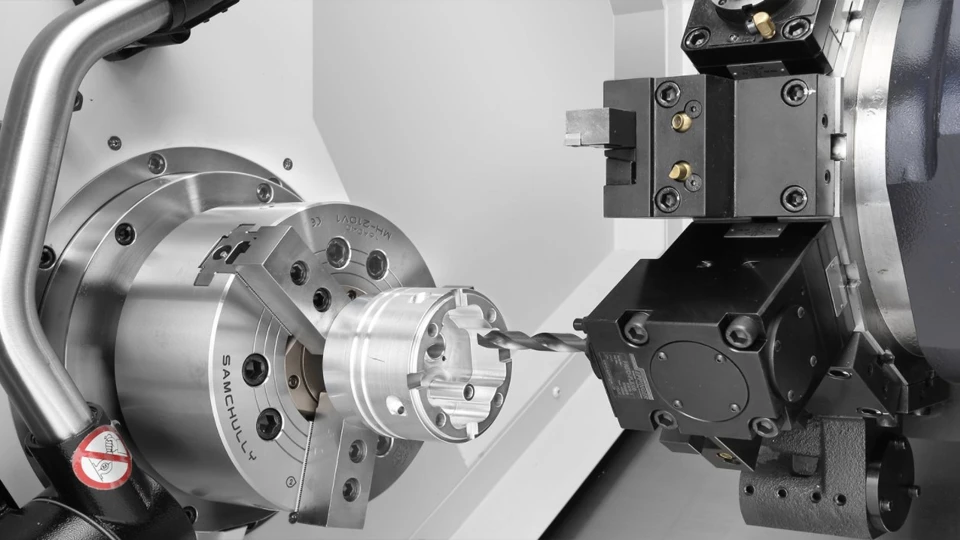
Machining allowance is not selected by guesswork. It is influenced by the workpiece material, blank quality, part structure, accuracy requirement, machining route, and process stability. The more difficult the part is to machine or control, the more carefully the allowance must be planned.
Workpiece Material
Different materials require different machining allowance because their cutting behavior is not the same.
Carbon steel, cast iron, stainless steel, aluminum alloy, titanium alloy, and high-temperature alloy all respond differently to cutting force, heat, tool wear, and deformation. For example, aluminum is usually easier to cut, but it may stick to the tool edge. Stainless steel and titanium are more difficult to machine and may generate more heat. Cast iron may have hard skin or surface inclusions from the blank stage.
The material condition also matters. A normalized steel part, a quenched part, and an annealed part may need different allowance planning even if the material grade is similar.
Blank Manufacturing Method
The way the blank is made has a strong influence on machining allowance.
Cast blanks often have rough surfaces, draft angles, sand marks, and dimensional variation. Forged blanks may have scale, deformation, and uneven stock distribution. Welded structures may have heat distortion and residual stress. Rolled bars and plates are usually more regular, but they may still have surface defects or internal stress.
A blank with poor dimensional accuracy or rough surface condition usually needs a larger machining allowance than a blank with stable size and clean surface.
Part Size and Shape
The size and shape of the part affect how much allowance can be safely removed.
Large parts often have greater blank variation and stronger internal stress. Thin-walled parts are easy to deform during clamping and cutting. Long shafts may bend under cutting force. Deep holes are difficult to keep straight and stable. Complex curved surfaces may require more careful allowance distribution to avoid uneven cutting load.
In general, the more sensitive the part is to deformation, the more important it is to control not only the amount of allowance, but also how evenly it is distributed.
Required Accuracy and Tolerance
The final tolerance requirement directly affects allowance planning.
Parts with loose tolerance may not need many machining stages. Parts with tight tolerance usually need a more controlled process, such as rough machining, semi-finishing, finishing, or grinding. Each stage needs a reasonable amount of stock so the next operation can correct the errors left by the previous one.
High-precision parts do not simply need “more allowance.” They need allowance that is stable, predictable, and properly distributed between operations.
Surface Roughness Requirement
Surface roughness also influences machining allowance.
A surface with a low roughness requirement may be finished with a normal cutting pass. A surface that requires better smoothness usually needs a stable finishing allowance, suitable tool condition, and proper cutting parameters.
If the remaining allowance is too uneven, the finishing tool may cut with changing load. This can affect surface texture and make roughness harder to control.
Heat Treatment and Internal Stress
Heat treatment can change the size and shape of a workpiece.
Processes such as quenching, tempering, carburizing, nitriding, or stress relieving may cause expansion, shrinkage, warping, or surface hardening. For this reason, allowance is often reserved before and after heat treatment, especially on precision surfaces.
Internal stress is another key factor. When material is removed during rough machining, stress may be released and the part may deform. Proper allowance planning gives later operations enough stock to correct this change.
Machine Tool Rigidity and Accuracy
Machine tool performance affects how reliably machining allowance can be removed.
A rigid machine tool can handle heavier cutting with less vibration and deflection. A machine with better positioning accuracy can remove allowance more consistently. Spindle stability, guideway precision, feed system accuracy, and thermal stability all influence the final result.
When the machine tool has limited rigidity or accuracy, the allowance should be planned more conservatively, especially for finishing operations.
Cutting Tool and Cutting Parameters
The cutting tool determines how the allowance is removed.
Tool material, tool geometry, nose radius, coating, sharpness, and wear condition all affect cutting force, heat, chip formation, and surface quality. Cutting speed, feed rate, and depth of cut must also match the allowance.
A large allowance with an unsuitable tool may cause chatter, rapid wear, or poor surface finish. A small allowance with a dull tool may lead to rubbing instead of clean cutting.
Clamping and Workholding Method
Clamping affects both deformation and machining stability.
A workpiece must be held firmly, but excessive clamping force can distort thin walls, sleeves, plates, or long parts. After unclamping, the part may spring back and lose accuracy. Improper support can also cause vibration or uneven cutting.
For parts that are easy to deform, allowance should be planned together with the fixture, support method, and machining sequence. This helps keep the material removal process stable from rough machining to final finishing.
How to Calculate Machining Allowance?
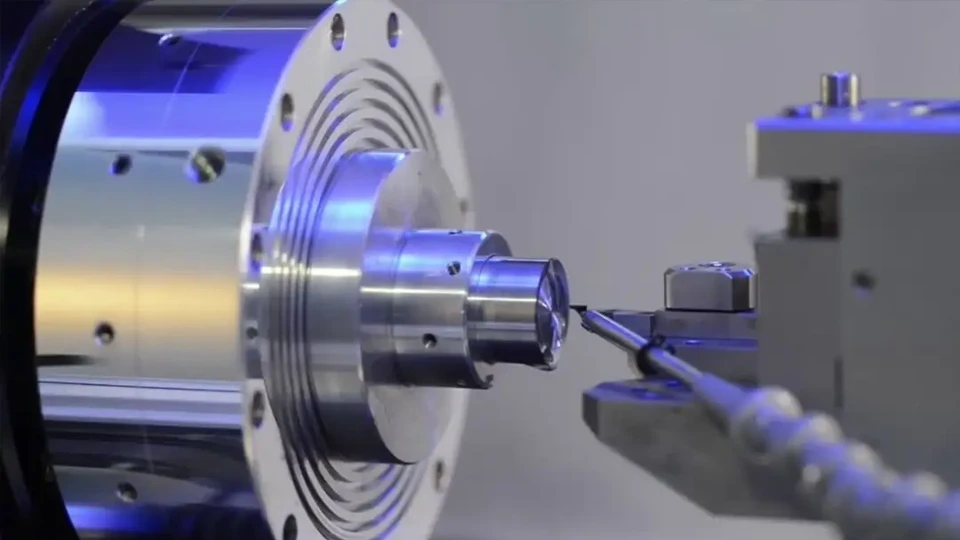
Machining allowance calculation starts from the difference between the blank size and the final required size. However, in real machining, this difference must be understood together with the machining route, number of operations, surface condition, part deformation, and final tolerance.
Basic Calculation Logic
The basic formula is:
This formula is useful for understanding total allowance. For example, if a blank is larger than the final part size, the difference is the material that must be removed by machining.
But this is only the starting point. In actual process planning, engineers also need to decide how much material should be removed in rough machining, how much should be left for semi-finishing, and how much should remain for final finishing.
So machining allowance is not only a number. It is also a distribution plan.
Allowance for External Turning
For external turning, allowance is often calculated on the diameter, but the actual cutting depth is usually considered on one side.
For example, if a shaft blank has a diameter of 52 mm and the final diameter is 50 mm, the total allowance on the diameter is:
52 mm – 50 mm = 2 mm
But during turning, material is removed from the radius. So the single-side allowance is:
2 mm ÷ 2 = 1 mm
This distinction is important. Diameter allowance and single-side cutting allowance are not the same. Confusing them can lead to wrong cutting depth and incorrect process planning.
Allowance for Internal Hole Machining
For internal holes, the logic is opposite to external turning. The pre-machined hole is usually smaller than the final required hole.
For example, if a drilled hole is 28 mm and the final bore size is 30 mm, the total allowance on the diameter is:
The single-side allowance is:
This means the boring or reaming process must remove 1 mm from the hole wall on each side. In precision hole machining, this allowance must be controlled carefully because hole size, roundness, straightness, and surface finish are often closely related.
Allowance for Milling a Plane
For plane milling, machining allowance is usually calculated in the height or thickness direction.
For example, if a plate blank is 21 mm thick and the final required thickness is 20 mm, the total machining allowance is:
This 1 mm may be removed from one surface or divided between two opposite surfaces, depending on the drawing requirement, datum selection, and process route.
For parts that require parallelism or flatness between two faces, allowance distribution on both sides should be considered carefully.
Allowance Distribution Between Processes
After total allowance is known, it must be distributed between different machining stages.
For example, if the total allowance is 3 mm, one possible distribution could be:
Rough machining: 2 mm
Semi-finishing: 0.7 mm
Finishing: 0.3 mm
This does not mean every part should follow this exact ratio. The actual distribution depends on material, blank accuracy, part rigidity, surface requirement, machine capability, and whether heat treatment is involved.
In general, rough machining removes most of the stock. Semi-finishing improves shape and prepares the surface. Finishing removes the final small layer to achieve the required dimension and surface quality.
Common Problems Caused by Incorrect Machining Allowance
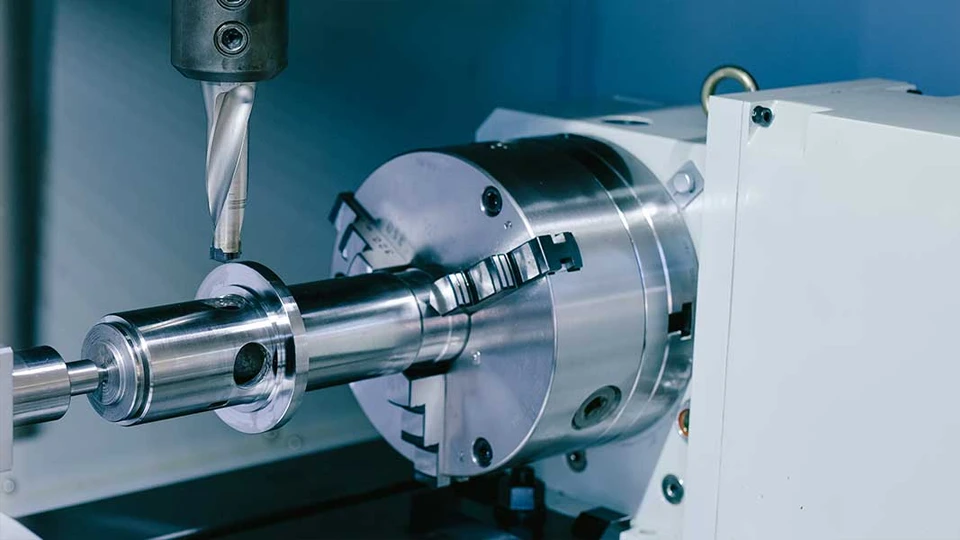
Incorrect machining allowance can make an otherwise normal machining process unstable. The problem may appear as poor accuracy, rough surface quality, excessive tool wear, deformation, or even part rejection. In most cases, the issue comes from three situations: excessive allowance, insufficient allowance, or uneven allowance.
Excessive Machining Allowance
Excessive machining allowance means too much material is left for machining.
This increases the amount of cutting work required. The machine needs more time to remove the extra stock, and the cutting tool must stay under load for longer. As a result, tool wear, energy consumption, and machining cost may all increase.
A larger allowance can also create heavier cutting force. This may cause vibration, heat buildup, tool deflection, or clamping stress, especially on thin-walled parts, long shafts, and parts with weak rigidity.
In finishing operations, excessive allowance is especially risky. Finishing is designed to remove a small and stable material layer. If too much stock remains, the final cut may become unstable and fail to produce the expected accuracy or surface finish.
Insufficient Machining Allowance
Insufficient machining allowance means there is not enough material left for correction and finishing.
This can prevent the cutting tool from fully removing blank defects, surface scale, hard layers, deformation marks, or rough machining errors. The part may reach the final dimension before the surface or geometry has been properly corrected.
This problem is common when the blank size is too close to the final drawing size, or when previous processes remove more material than planned.
Insufficient allowance can also make final machining unreliable. The tool may only cut in some areas and rub in others. This can lead to unstable surface quality, incomplete cleanup, and a higher risk of scrap.
Uneven Machining Allowance
Uneven machining allowance means the remaining stock is not distributed consistently across the surface.
For example, one side of a shaft may have more stock than the other. A casting surface may be offset from the machining datum. A hole may not be centered before boring. In these cases, the cutting tool removes different amounts of material during the same operation.
This causes cutting load to fluctuate. The tool may cut heavily in one area and lightly in another. The result can be vibration, tool marks, dimensional variation, and poor surface roughness.
Uneven allowance is also a common cause of part deformation. When material is removed unevenly, internal stress may release unevenly as well. For precision parts, this can make the final size difficult to stabilize even after the machining program is correct.
How to Choose Proper Machining Allowance?
Determining the appropriate material reserve requires a systematic engineering approach rather than blindly referencing standard charts. Process engineers must evaluate the entire manufacturing ecosystem to establish an allowance that balances processing efficiency with strict quality assurance.
Start from the Final Drawing Requirement
Process planning should begin with the final drawing.
Engineers need to check the target dimensions, dimensional tolerance, geometric tolerance, surface roughness, and functional surfaces. A bearing seat, sealing face, guide surface, or precision hole usually requires more controlled allowance planning than a non-critical surface.
The stricter the final requirement, the more carefully the allowance must be divided between machining stages.
Evaluate the Blank Condition
After the final requirement is clear, the next step is to evaluate the blank.
Casting, forging, welding, sawing, rolling, and heat treatment can all leave different surface and dimensional conditions. These may include casting skin, forging scale, surface defects, warpage, uneven stock, or internal stress.
A blank with larger deviation or rougher surface condition usually needs more initial allowance so rough machining can reach stable material.
Consider the Machining Route
Machining allowance must match the complete process route.
A simple part may only need rough machining and finishing. A precision part may require rough machining, stress relief, semi-finishing, finishing, or grinding. If heat treatment is involved, allowance should be planned before and after it.
Each cutting stage should receive enough reserved material to complete its purpose and prepare the workpiece for the next stage.
Leave Enough Material for Error Correction
Allowance should act as a physical buffer for error correction.
The allowance assigned to each main operation must be enough to remove geometric error, tool marks, surface defects, and stress-related changes from the previous stage. At the same time, it should not be so large that it reduces efficiency or makes cutting unstable.
This balance is the core of proper allowance selection.
Match Allowance with Machine Capability
The selected allowance must match actual shop-floor capability.
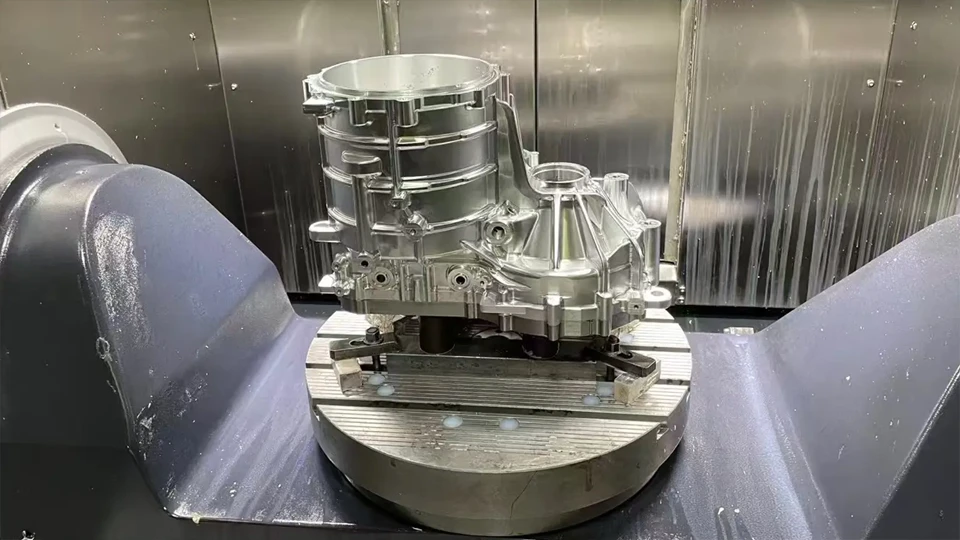
Machine rigidity, spindle power, positioning accuracy, tool condition, fixture stability, and cutting parameters all affect how much material can be removed safely and consistently. A rigid CNC machining center can support a different removal strategy than an older or less stable machine.
Allowance planning should reflect the real machining setup, not only the drawing value.
Verify Through Trial Machining
For precision parts or batch production, theoretical planning should be verified through trial machining.
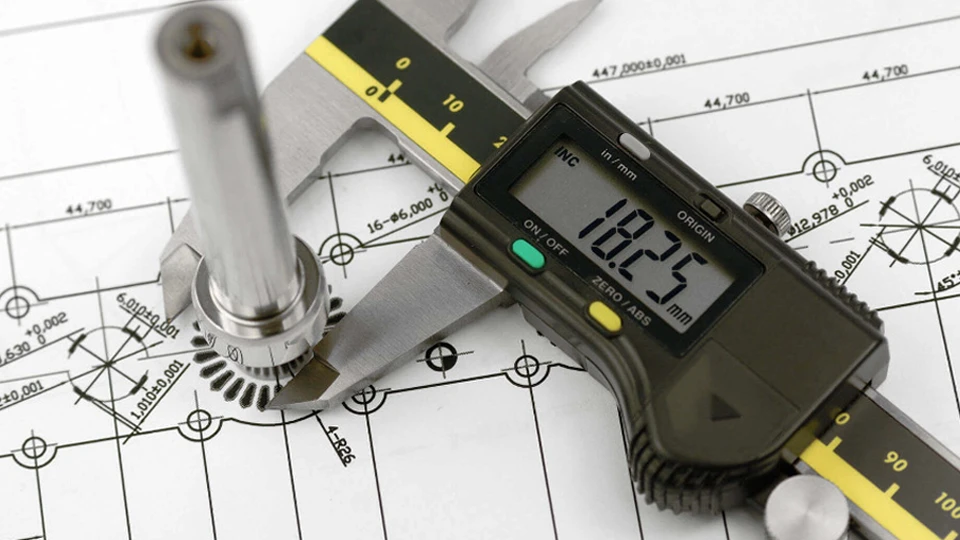
A first-piece inspection can show whether the planned allowance distribution is reasonable, whether the surface cleans up fully, whether the part deforms after unclamping, and whether the final dimension remains stable.
Based on this feedback, engineers can adjust the blank size, cutting depth, finishing allowance, or process sequence before full production.
Conclusion
Machining allowance may look like a small amount of extra material, but it carries a large responsibility in the machining process. It connects the blank, the machining route, and the final qualified part. A proper machining allowance helps remove unstable surfaces, correct previous errors, support finishing operations, and improve dimensional accuracy, surface quality, and process stability. In real production, it should always be determined according to the part material, blank condition, machining method, tolerance requirement, equipment capability, and actual inspection feedback.
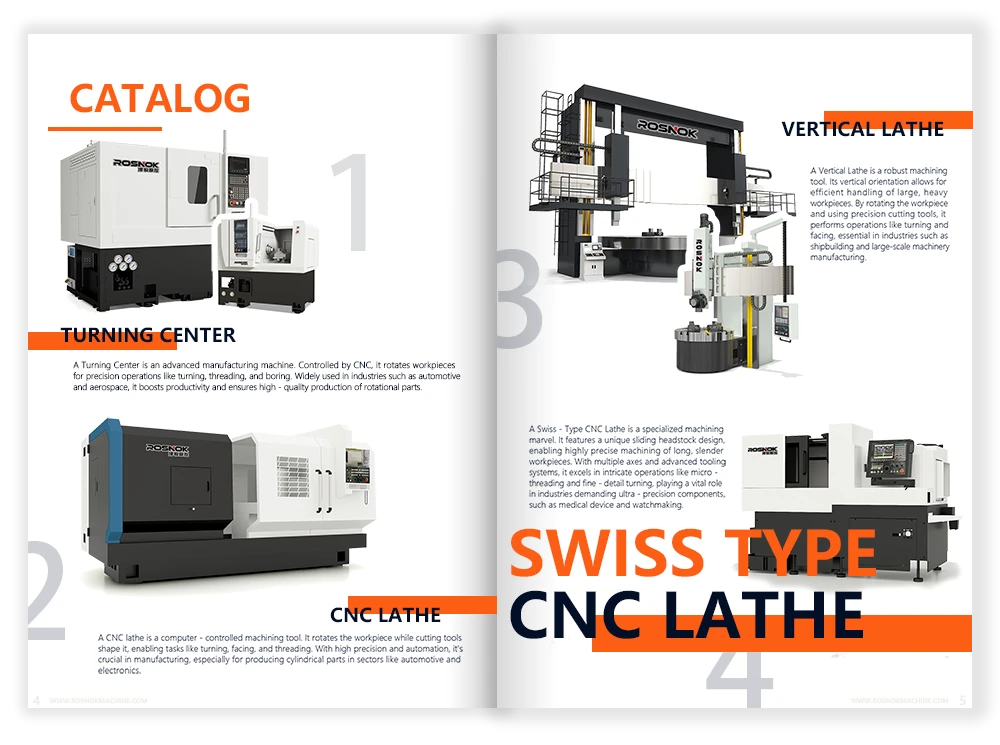
For manufacturers that need stable machining results, the machine tool behind the process is just as important as the allowance itself. Rosnok focuses on CNC machine tools for metal machining, including CNC lathes, machining centers, boring machines, drilling machines, and grinding machines. With reliable equipment and suitable process planning, machining allowance can be controlled more consistently from rough stock to finished component.