How a Follower Rest Works During Turning
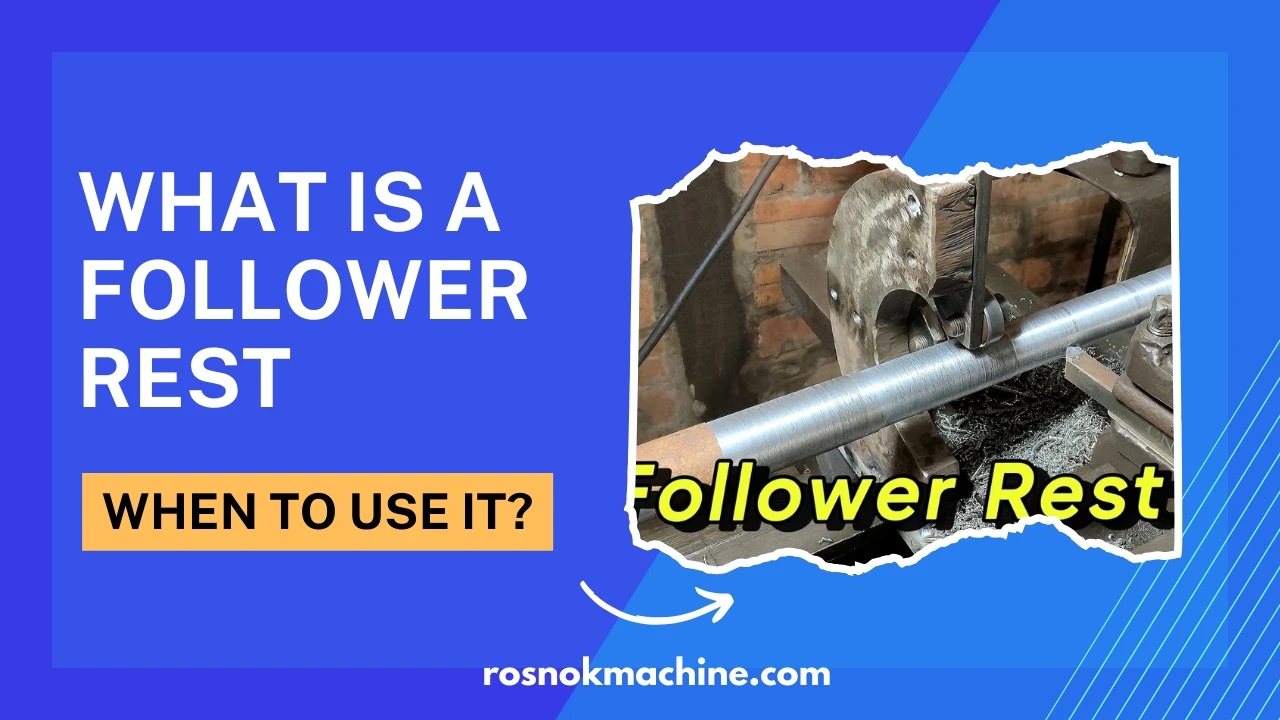
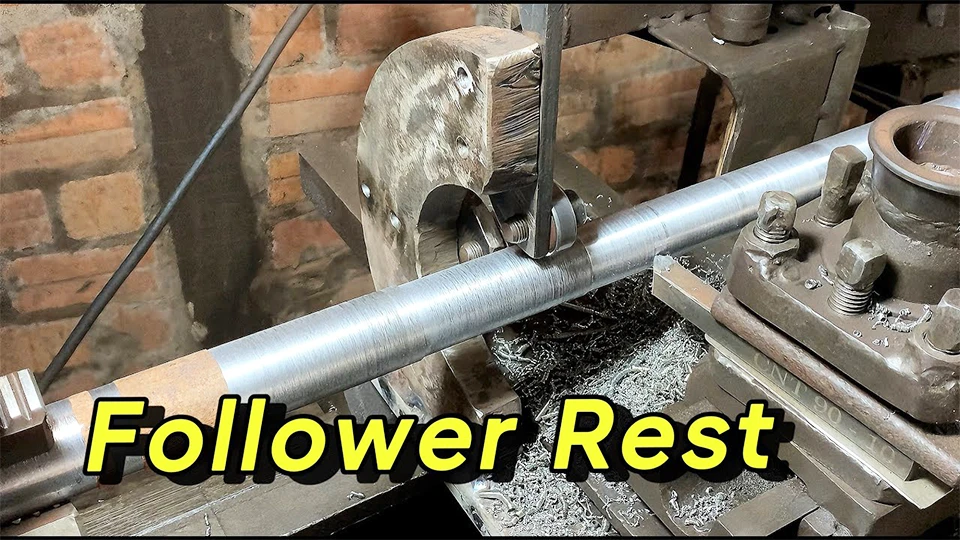
A follower rest works by providing continuous, localized support to the workpiece at a point very close to where cutting occurs. Unlike fixed supports, it is mounted on the carriage and moves together with the cutting tool as the tool feeds along the workpiece.
During turning, cutting forces act radially on the workpiece and tend to push it away from the tool, especially on slender parts. The follower rest counteracts these forces by applying a controlled supporting force from one or both sides of the workpiece. Because this support stays aligned with the cutting position, the unsupported length of the workpiece remains minimal throughout the operation.
The key mechanical principle is that deflection is reduced by shortening the effective free span between the support point and the cutting point. As the tool advances, the follower rest advances with it, maintaining a stable cutting condition. This synchronized movement allows the workpiece to remain supported exactly where stiffness is most critical, without interfering with normal tool motion.
When to Use a Follower Rest
A follower rest should be considered when the workpiece does not have sufficient stiffness to resist cutting forces during turning. A widely accepted engineering guideline is the length-to-diameter (L/D) ratio. When the L/D ratio exceeds approximately 10:1 to 12:1, the workpiece becomes increasingly susceptible to bending under radial cutting loads.
In practice, the need for a follower rest is often indicated by observable machining issues rather than dimensions alone. These include visible deflection of the workpiece during a cutting pass, chatter marks caused by vibration, and tapering, where the diameter becomes inconsistent along the length of the part due to elastic displacement.
A follower rest should be avoided when the workpiece is short and rigid or when sufficient support is already provided by other means. Because the follower rest contacts a machined surface, improper use on rigid parts can increase friction, affect surface finish, and offer little improvement in accuracy.
Common Problems When Using a Follower Rest
Although a follower rest is designed to improve stability during turning, improper use can introduce new machining problems. Understanding these issues helps distinguish follower-rest-related errors from tooling or machine rigidity problems.
Surface Damage on the Workpiece
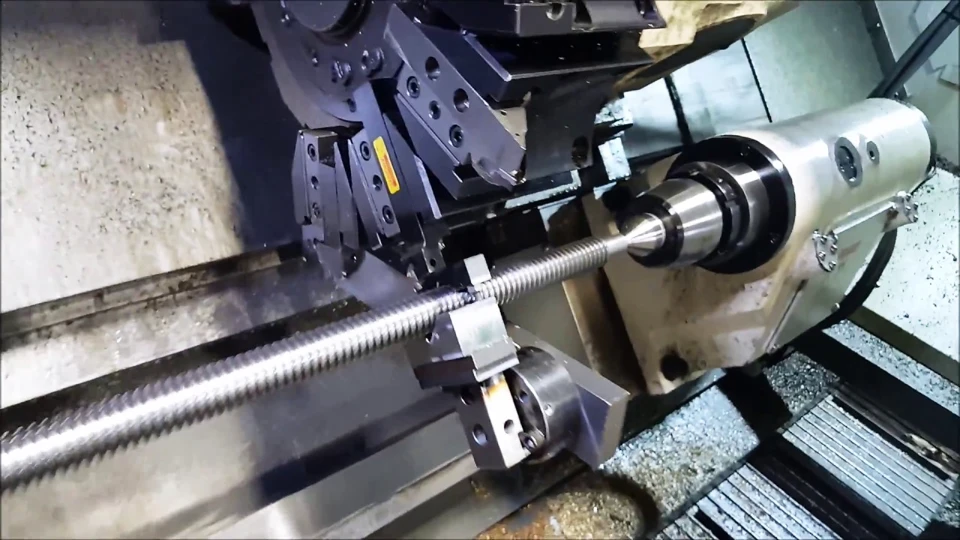
One common problem when using a follower rest is surface damage on the workpiece. Because the support remains in continuous contact with an already machined surface, friction is unavoidable. This contact can generate localized friction heat and, in some cases, trap fine chips between the support point and the workpiece. As a result, scoring, scratches, or localized wear marks may appear on the surface, even when cutting parameters are otherwise stable.
Incorrect Support Force
Another frequent issue is incorrect support force. If the follower rest applies excessive pressure, friction and heat increase, which can distort the workpiece locally during cutting. If the support force is insufficient, the workpiece may still deflect under radial cutting loads. In both cases, the intended stabilizing effect of the follower rest is reduced, leading to inconsistent cutting conditions along the machined length.
Negative Impact on Machining Accuracy
Follower rests can also negatively affect machining accuracy when misused. Uneven or unstable support may cause taper, where the diameter gradually changes along the length of the part, or chatter marks resulting from vibration. These geometric errors are often mistaken for tool wear or machine rigidity problems, but they can originate from improper follower rest behavior at the cutting zone.
Practical Tips for Using a Follower Rest Effectively
Even when a follower rest is correctly selected and positioned, its effectiveness depends largely on how it is used during cutting. The following practical guidelines focus on controlling contact, maintaining stable cutting conditions, and minimizing secondary issues introduced by the support itself.
Control Contact Without Adding Distortion
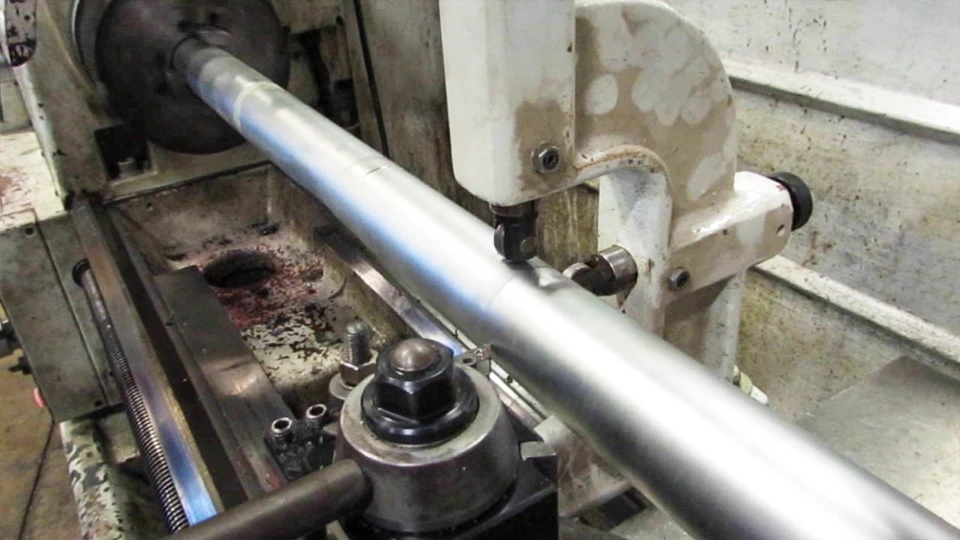
To maintain controlled and consistent contact, the follower rest should be adjusted so the support just contacts the workpiece after the tool has taken an initial light cut. The support must apply enough pressure to prevent movement, but not enough to visibly deform the surface. A practical check is that the workpiece can still be rotated smoothly by hand when the machine is stopped. If rotation feels tight or uneven, the contact force is excessive; if the workpiece can shift under light pressure, the support is insufficient.
Match Cutting Parameters to Stable Support
Cutting parameters should be set conservatively when using a follower rest, especially at the beginning of a cut. Feed rate and depth of cut should be increased gradually to keep the cutting load stable at the support point. Abrupt changes in cutting conditions can momentarily unload or overload the support, disrupting contact. A stable setup is indicated by smooth cutting sound and consistent chip formation along the length of the part, without sudden vibration or load changes.
Use Lubrication and Clean Contact Surfaces
Because the follower rest slides on a machined surface, lubrication should be applied directly at the contact point before cutting begins and replenished as needed during long passes. Adequate lubrication reduces friction and limits heat buildup at the support interface. Contact surfaces should be wiped clean before engagement and checked periodically, as trapped chips or debris can quickly damage the surface and compromise stable support.
Follower Rest vs Steady Rest on a Lathe
Although both follower rests and steady rests are used to support workpieces during turning, they serve different purposes and operate in fundamentally different ways. Understanding this distinction is critical to choosing the correct support method for a given machining situation.
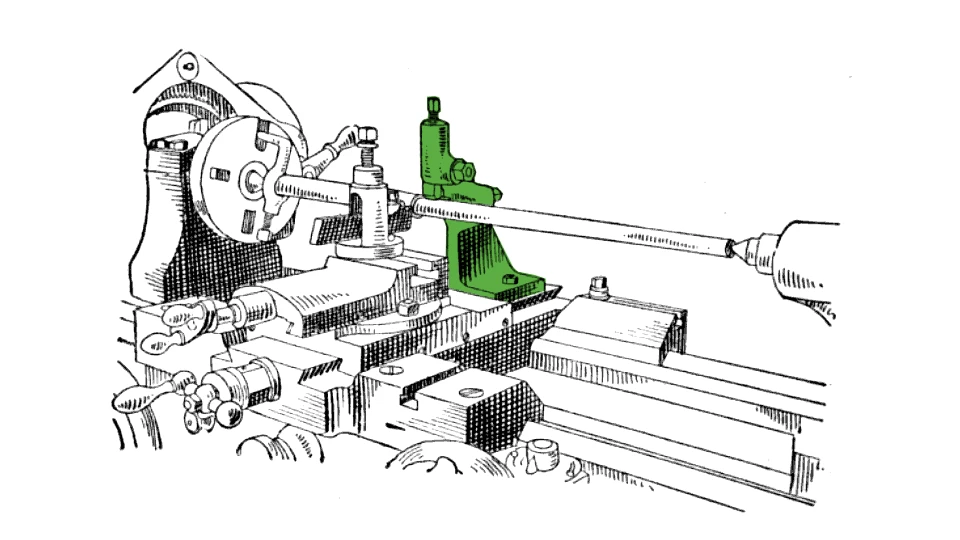
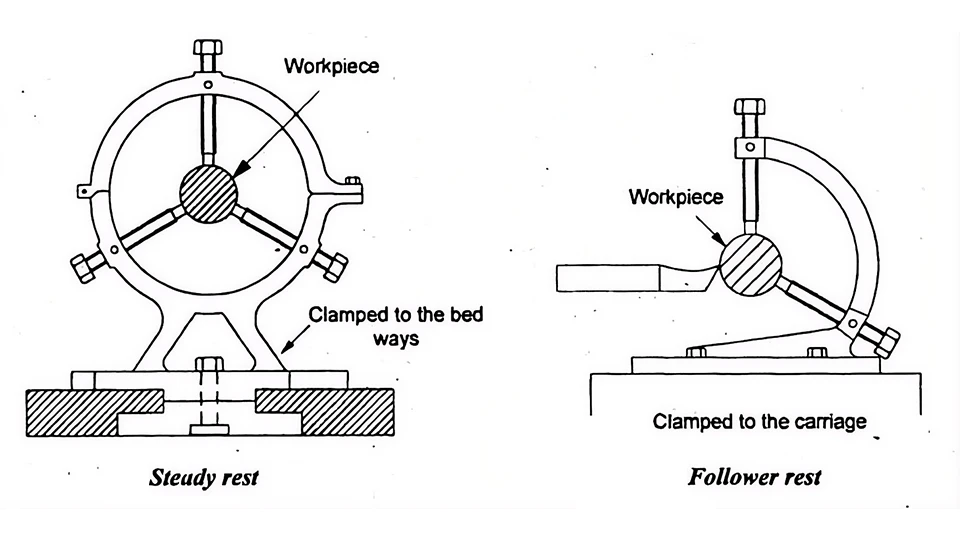
A steady rest is fixed to the lathe bed and supports the workpiece at a stationary location. It is typically used to support long workpieces at a specific point, such as the middle of a shaft, where additional rigidity is required. Once positioned, the support location does not change during the cut.
In contrast, a follower rest is mounted on the carriage and moves together with the cutting tool. Its support point stays close to the cutting zone as the tool advances along the workpiece. This moving support minimizes the unsupported length throughout the operation, making it more effective for controlling deflection during longitudinal turning.
Because of these differences, the two supports are not interchangeable. A steady rest is better suited for fixed support at a known location, while a follower rest is designed to provide continuous, localized support near the cutting point. Choosing between them depends on whether the workpiece benefits more from stationary reinforcement or from support that follows the cutting action.
Conclusion
Understanding how a follower rest works, when it should be used, and how it differs from other support methods is essential for achieving stable and accurate turning results. Throughout this article, we explored the core working principle of the follower rest, the conditions that justify its use, common problems that arise from improper application, and practical guidelines to ensure reliable performance. When applied correctly, a follower rest is not just an accessory, but a critical tool for controlling deflection, maintaining accuracy, and improving consistency when machining long or slender workpieces.
In real-world production, the effectiveness of a follower rest is closely tied to the rigidity, precision, and overall design of the lathe itself. Rosnok designs and manufactures CNC lathes with these practical machining challenges in mind, focusing on machine structure, carriage stability, and seamless compatibility with supporting accessories. This integrated approach enables machinists and manufacturers to apply follower-rest-supported turning with confidence, efficiency, and consistent results in demanding production environments.