What is Box Way?
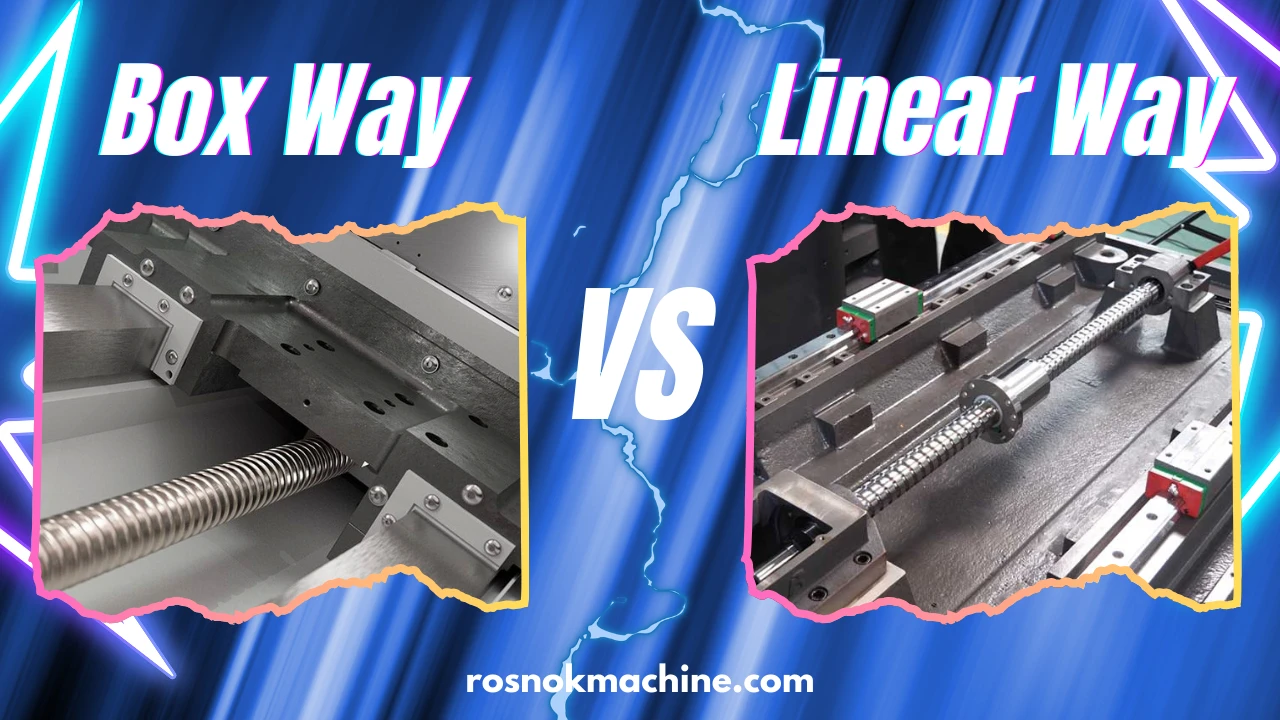
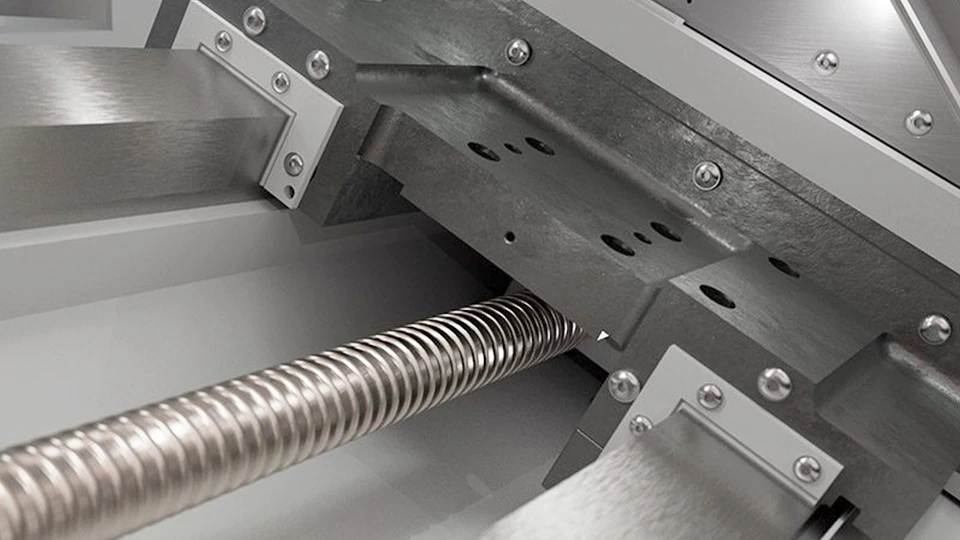
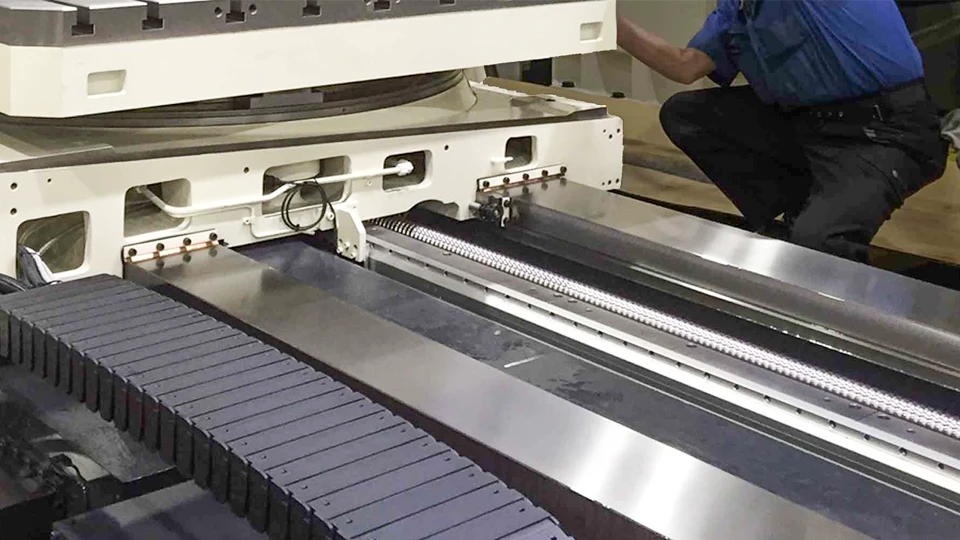
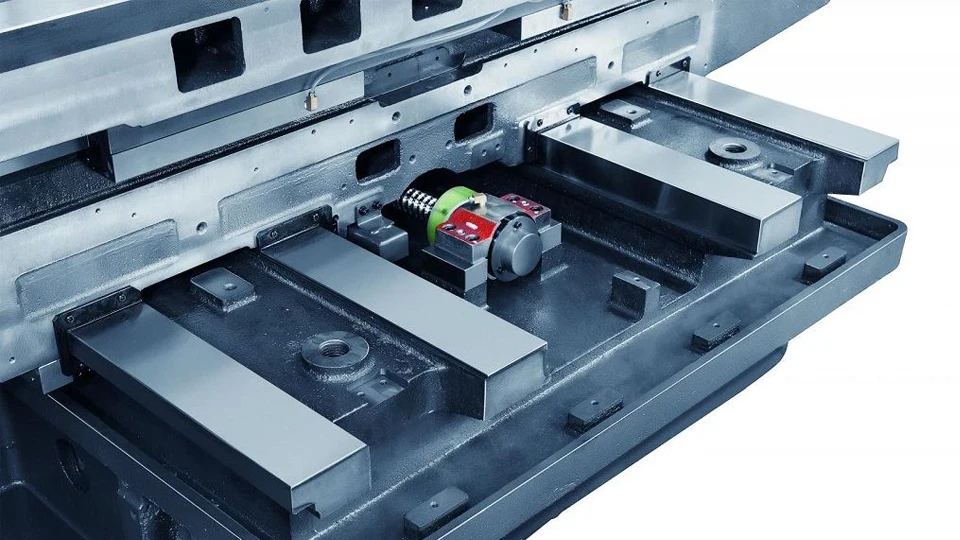
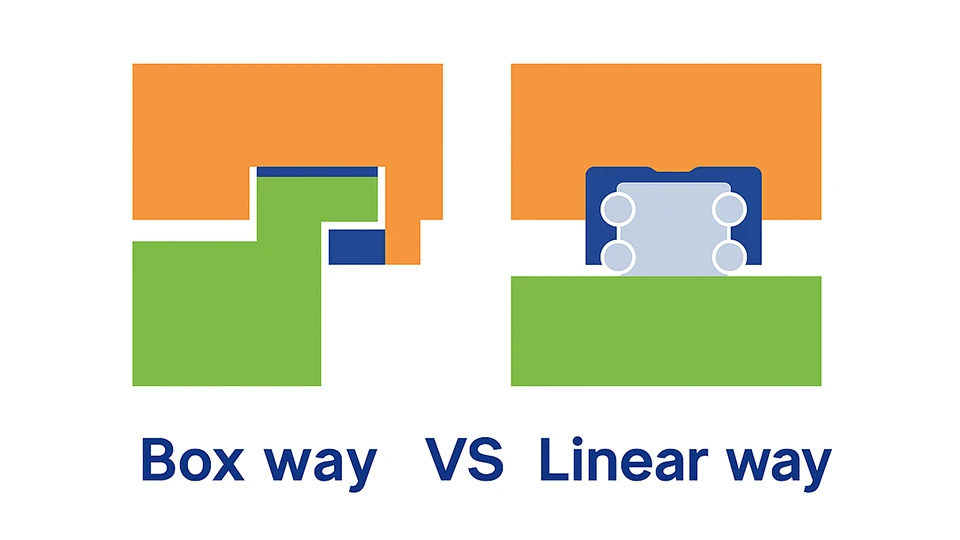
Box way refers to a traditional type of machine tool guideway system that uses broad, flat sliding surfaces to support and guide the moving parts of a CNC machine. These guideways are typically made of cast iron or other wear-resistant metals, and are often integrated directly into the machine’s base and saddle structure. The name “box way” comes from the box-like cross-sectional shape of the guide rail, which provides extensive surface contact between the moving and stationary components.
This sliding interface works through metal-on-metal contact, where one surface glides directly over the other with the help of lubrication. This is fundamentally different from linear ways, which use rolling elements like ball bearings. In box ways, the contact area is much larger, enabling the system to distribute loads over a broader surface, which plays an important role in how the machine reacts under force.
Because of the large contact area, box way systems are usually hand-scraped or precision ground during manufacturing to ensure accurate alignment and smooth motion. They often incorporate Turcite or similar low-friction materials on the mating surfaces to reduce wear and improve sliding performance. The movement is generally slower than linear systems, and requires a more robust lubrication system to prevent stick-slip and wear.
Box way designs have been used for decades in traditional CNC lathes, vertical turning centers, and heavy-duty machining equipment. Despite the rise of linear guides, box ways remain widely respected for their mechanical simplicity, stability, and strong support under force. However, it’s important to understand that this design is fundamentally optimized for load distribution and structural contact, not for high-speed positioning — a difference we’ll explore in later sections when comparing box way vs linear way performance.
What is Linear Way?
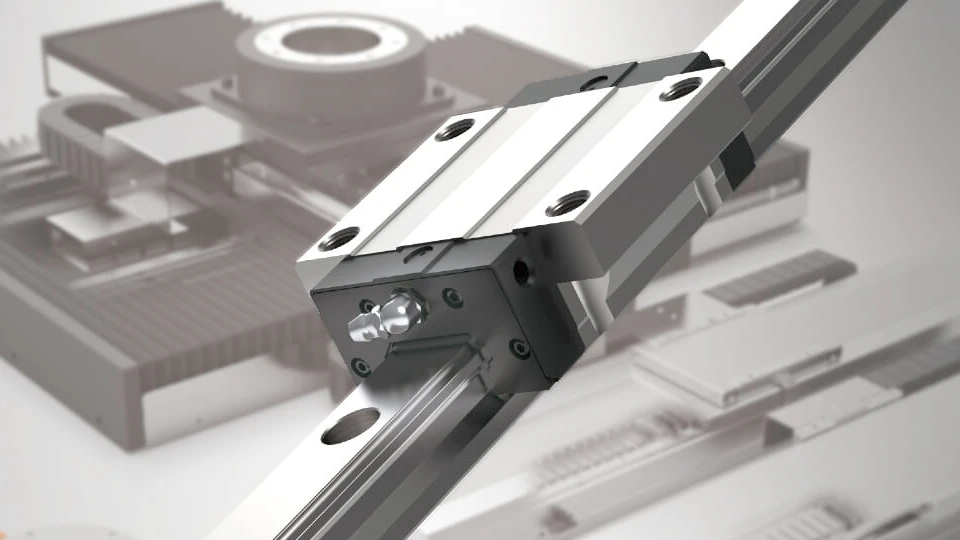
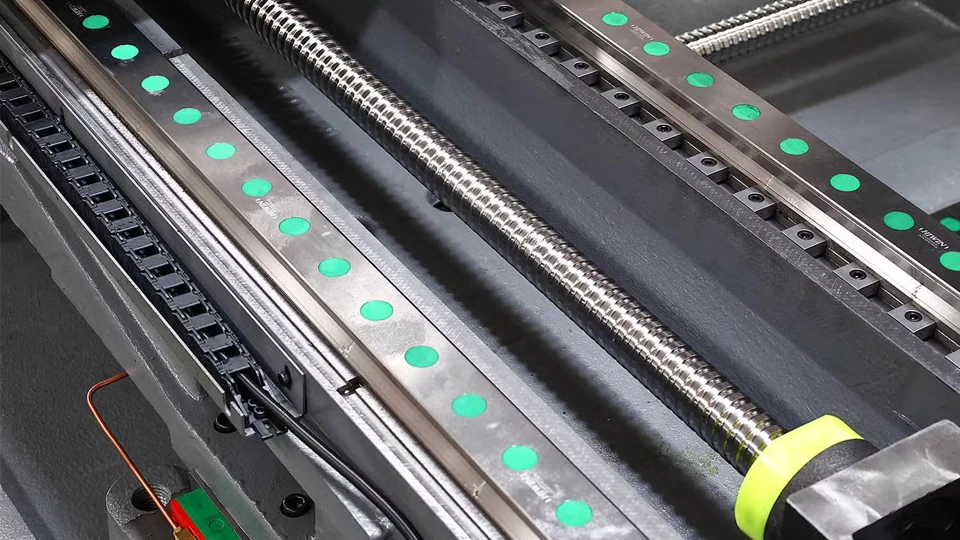
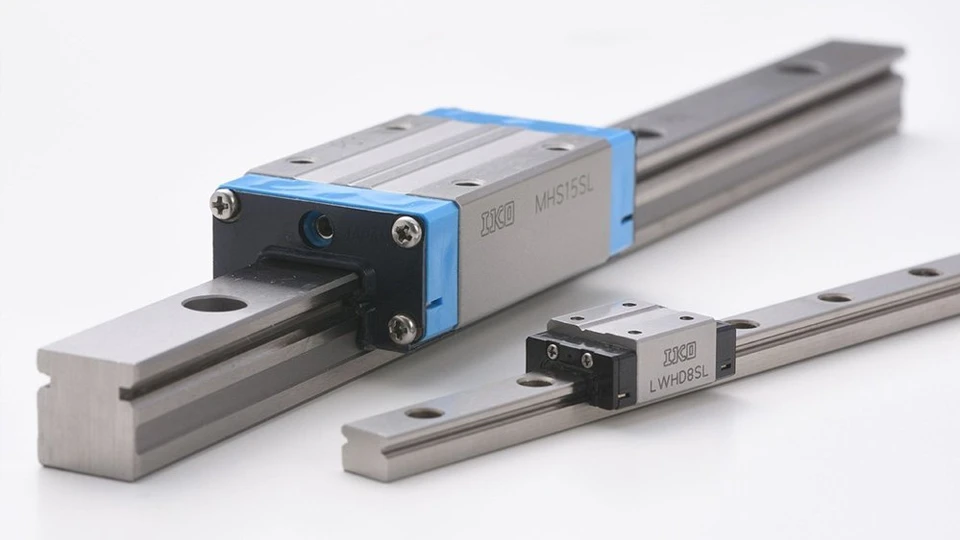
Linear way refers to a modern type of guideway system commonly used in CNC machines, where motion is supported by rolling elements such as ball bearings or rollers. These guideways, also known as linear guides or linear guideways, are designed to provide smooth, high-speed, low-friction movement along a straight path. The moving part of the machine slides over a precision-ground rail with the help of recirculating bearings housed in a carriage block, significantly reducing resistance during motion.
Unlike box ways, which rely on sliding contact across a large surface area, linear ways use point or line contact through their rolling elements. This contact design results in much less surface friction, allowing for faster positioning speeds and increased responsiveness. The entire assembly is usually made of hardened steel or alloy materials and is engineered to tight tolerances to maintain precision even under dynamic loads.
Linear way systems are typically preloaded to eliminate play and ensure rigidity during rapid acceleration and deceleration. Many models also feature sealed bearing blocks, integrated lubrication systems, and anti-dust wipers to reduce maintenance needs and extend service life. These characteristics make linear guides ideal for high-speed machining centers, precision milling machines, and Swiss-type lathes where agility and accuracy are essential.
Pros and Cons of Box Way
Pros of Box Way
High Rigidity
One of the most recognized strengths of box way systems is their exceptional rigidity. The large contact surface between the moving and stationary elements creates a solid mechanical foundation that resists deflection under load. This rigidity is crucial in heavy-duty machining processes where the cutting forces are substantial and consistent tool engagement must be maintained. For industries such as aerospace or shipbuilding, where deep cuts and hard materials are common, this rigidity provides stability throughout the entire operation.
Superior Damping Capacity
Box ways naturally excel in vibration damping due to the sliding metal-on-metal contact and mass of the guideway components. This inherent damping ability helps absorb machining vibrations that might otherwise transfer to the cutting tool, leading to chatter or surface finish issues. In long, continuous cutting passes—especially on difficult materials like stainless steel or cast iron—the stability provided by the damping performance of box ways results in better surface integrity and fewer tool wear problems.
Excellent Load-Bearing Performance
Because box ways distribute loads over a large surface area, they are capable of handling extremely high static and dynamic loads. This makes them suitable for machining large or heavy parts without loss of structural support. Even when subjected to off-center loads or unbalanced force applications, box ways maintain consistent support and smooth movement. This makes them particularly ideal for large CNC lathes and vertical turning machines used in industrial production environments.
Long-Term Structural Stability
Box way systems are built with longevity in mind. With proper lubrication and maintenance, the wear is gradual and predictable, allowing for a long service life without major degradation in performance. Machines with box ways can remain in production for decades with only routine service, especially in facilities that prioritize preventive maintenance. This long-term reliability makes box way machines attractive to manufacturers planning for stable, long-cycle production.
Robustness Under Heavy Cutting
For applications that involve aggressive roughing or heavy interrupted cuts, box ways provide unmatched toughness. Their design can handle shock loads better than rolling-bearing systems, making them suitable for operations where sudden tool engagement or material inconsistencies might introduce impact forces. Whether turning forged parts or rough milling large castings, box ways maintain machine geometry and tool control under stress.
Cons of Box Way
Higher Maintenance Requirements
Box way systems require more frequent and consistent maintenance compared to linear ways. Due to their large sliding surfaces and metal-to-metal contact, these guideways must be well-lubricated at all times to prevent galling, stick-slip motion, or excessive wear. Without proper lubrication, friction increases rapidly, which can lead to premature surface damage and alignment issues. Additionally, box ways are more sensitive to contamination from chips and coolant, often requiring manual cleaning and monitoring—especially in high-volume production environments.
Slower Acceleration and Response
Because of their inherent friction and the massiveness of the components, box ways do not allow for fast acceleration or deceleration. The sliding motion is smooth but not as agile as rolling-contact systems. This limits the machine’s ability to perform high-speed contouring or rapid toolpath transitions, which can be a bottleneck in time-sensitive applications such as mold making, precision prototyping, or electronics part production. As modern CNC workflows increasingly demand speed and flexibility, this slower dynamic response can be a disadvantage.
Heavier Machine Structure
Machines equipped with box way guide systems are typically larger and heavier due to the extra material needed for the wide, rigid guide rails and supporting components. While this added weight contributes to rigidity, it also means the overall machine footprint is larger, which may not be ideal for workshops with limited floor space. Transport, installation, and foundation costs may also be higher, especially for manufacturers upgrading from compact linear-way machines.
Reduced Positioning Precision
Although box ways provide excellent support under load, they are not inherently designed for high-precision positioning. The sliding contact can introduce microscopic stick-slip behavior, especially during small incremental movements. Unless the guideways are precisely hand-scraped and maintained regularly, positional repeatability may degrade over time. For tasks that require micron-level accuracy or ultra-smooth surface finishes, box way machines typically cannot match the precision performance of linear guide-equipped systems.
Pros and Cons of Linear Way
Pros of Linear Way
High Positioning Accuracy
One of the most significant advantages of linear ways is their exceptional positioning accuracy. Because these systems use rolling elements like ball bearings or rollers, they minimize static friction and enable smooth, consistent motion along precisely ground rails. This allows for extremely fine control of movement, making linear guides ideal for applications such as precision milling, medical device manufacturing, or aerospace component machining, where tolerances are tight and repeatability is critical.
Faster Motion and Responsiveness
Linear guideways are optimized for speed. The rolling contact between the carriage and rail greatly reduces friction, enabling machines to accelerate and decelerate rapidly without sacrificing stability. This is particularly valuable in modern high-speed machining centers, where reduced cycle time is a competitive advantage. The ability to move quickly between toolpaths also improves productivity in batch production and complex multi-axis operations.
Lower Friction
Linear ways generate significantly less resistance than sliding-type box ways. This low-friction movement not only improves energy efficiency but also reduces the load on servo motors and ball screws. The result is smoother operation, reduced heat generation, and longer component life. For CNC systems where continuous motion and light-to-medium cuts are common, the reduced friction of linear guides enhances long-term performance and cost-efficiency.
Compact Machine Design
Because of their streamlined structure, linear way systems allow for more compact and lightweight machine designs. This is especially useful in high-density production facilities or mobile equipment. The compact form factor also enables greater flexibility in machine layout and installation, allowing manufacturers to optimize shop floor space while still benefiting from high-speed precision machining.
Easier Maintenance
Linear guide systems are generally easier to maintain than box ways. Most units are sealed and pre-lubricated from the factory, with built-in lubrication ports and wipers to extend service intervals. Replacement is also simpler—if a rail or bearing block wears out, it can typically be swapped without major machine disassembly. This ease of upkeep minimizes downtime and reduces the need for highly specialized maintenance staff, making linear way systems ideal for factories aiming to streamline operations.
Cons of Linear Way
Lower Load Capacity
Compared to box ways, linear guides typically have a lower load-bearing capacity. Their rolling-element design concentrates load on smaller contact areas, making them more sensitive to overloading and shock forces. In heavy-duty applications—such as large-part turning, deep cuts, or interrupted cutting—linear ways may experience deformation or premature wear if pushed beyond their rated limits. For industries where high static and dynamic loads are routine, this can be a significant drawback.
Less Rigidity Under Heavy Cutting
While linear ways offer excellent precision and speed, they lack the inherent structural rigidity of box ways when subjected to high cutting forces. The rolling contact interface introduces slight elasticity, which may lead to minor deflection during aggressive machining operations. This flexibility, though beneficial for smooth movement, becomes a disadvantage in roughing or hard-material cutting tasks where absolute stiffness is required to maintain tool control and part geometry.
Susceptibility to Vibration
Linear guide systems are more prone to transmitting vibrations through the machine frame due to their lower damping capacity. The rolling elements do not absorb shock the way sliding surfaces do. As a result, high-speed cuts on tough materials may lead to chatter, especially if the machine is not adequately damped through its base or column structure. This can negatively impact surface finish, tool life, and noise levels during production.
Higher Cost for High-Quality Units
While standard linear ways are cost-effective, high-precision or heavy-load variants—especially those with advanced seals, preload settings, or anti-contamination features—can be expensive. In some cases, the total cost of installing linear guides with the same durability and rigidity as a box way setup can be higher, both in terms of parts and the machining tolerance requirements during assembly. For budget-sensitive manufacturers, this upfront investment may not always be justified.
Box Way vs Linear Way – Which Is Right for Your Needs?
Choosing between box way and linear way guide systems ultimately depends on your machining priorities, production volume, and the types of parts you manufacture. Neither system is universally better—the ideal choice comes down to balancing rigidity, speed, precision, maintenance needs, and cost.
If your operations involve heavy roughing, large workpieces, or aggressive cutting depths, especially in materials like cast iron, steel, or titanium, a box way machine is likely the better fit. The superior rigidity and vibration damping of box ways help maintain tool life, surface finish, and dimensional accuracy under difficult cutting conditions. This makes them ideal for industries like shipbuilding, energy, and mold making, where massive and slow-but-steady machining is the norm.
On the other hand, if your work demands high-speed machining, fine positioning, or repeatable precision, especially in light to medium-duty parts, linear ways are the more logical option. Their lower friction and rapid acceleration capabilities make them suitable for electronics components, medical devices, and automotive part machining, where cycle time and tolerances are crucial. They also require less maintenance and offer more compact machine footprints, which is advantageous in high-efficiency production environments.
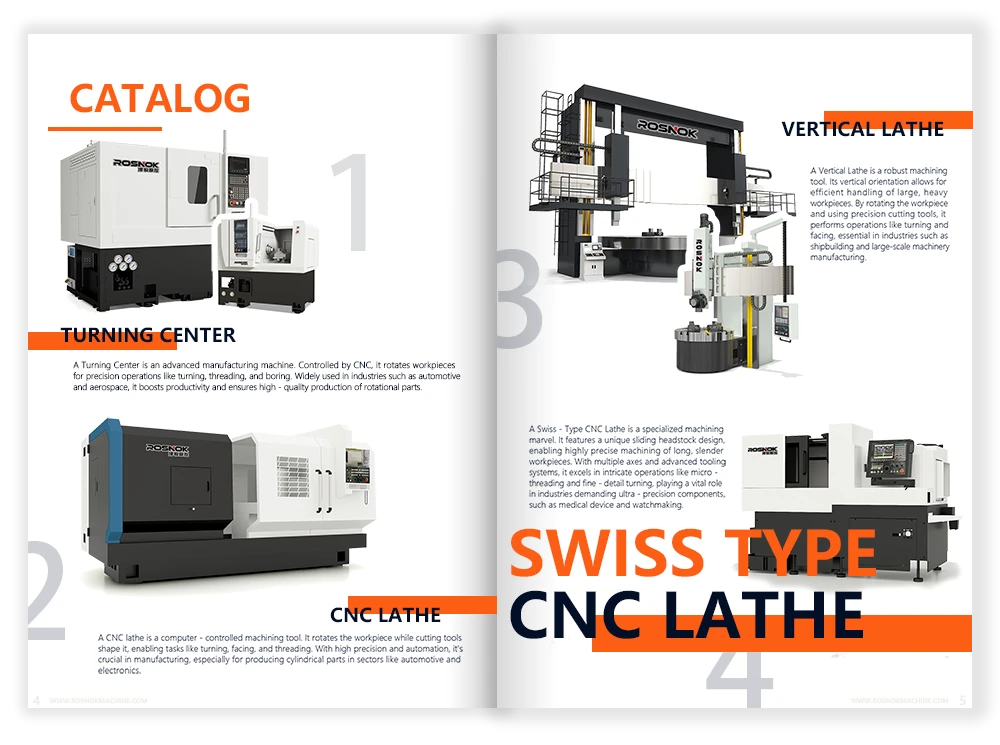
In practice, many modern CNC machine designs deliberately choose either box ways or linear ways based on the specific performance demands of their target applications. For example, large CNC lathes and vertical turning centers typically adopt box way systems to ensure maximum cutting stability and load-handling performance. In contrast, Swiss-type lathes and high-speed machining centers often utilize linear guides to achieve fast acceleration, precise positioning, and smooth operation. By understanding the trade-offs between box way vs linear way systems, manufacturers and buyers can make informed decisions based on production goals, operator skill levels, and long-term investment priorities.
Conclusion
Choosing between box way and linear way is never simply about comparing one feature against another—it is about understanding the soul of your machining work. Throughout this article, we explored how each guideway reflects a different philosophy of CNC design: the strength, steadiness, and enduring character of box ways, versus the speed, agility, and precision of linear ways. Whether your priority is heavy‑duty stability or high‑speed efficiency, the right choice comes from aligning these engineering differences with your production goals, accuracy requirements, and long‑term operational plans. When you clearly understand how each system behaves under load, motion, and time, choosing the ideal guideway becomes a strategic decision rather than a confusing technical debate.
For manufacturers looking for a trustworthy CNC partner who understands how guideway selection impacts real‑world machining performance, Rosnok stands ready to assist. With decades of experience designing CNC lathes, machining centers, vertical turning machines, and Swiss‑type equipment, Rosnok integrates both box way and linear way technologies across its product lines—each chosen intentionally to match the machine’s purpose. Whether you need the steadfast power of a box‑way turning center or the rapid precision of a linear‑way machining platform, Rosnok’s engineering team ensures that every machine is built on the right foundation. If you want expert guidance tailored to your industry and production goals, the door is always open to start that conversation with Rosnok.