This distinction directly affects cycle time, tool wear, machining stability, dimensional accuracy, and surface results. If roughing leaves unstable stock or finishing removes too much material, the result can be longer cycle times, higher costs, and inconsistent part quality.
This guide breaks down what roughing and finishing mean, how they differ, where each stage adds value, and how to apply them more effectively in machining practice.
What Is Roughing in Machining?
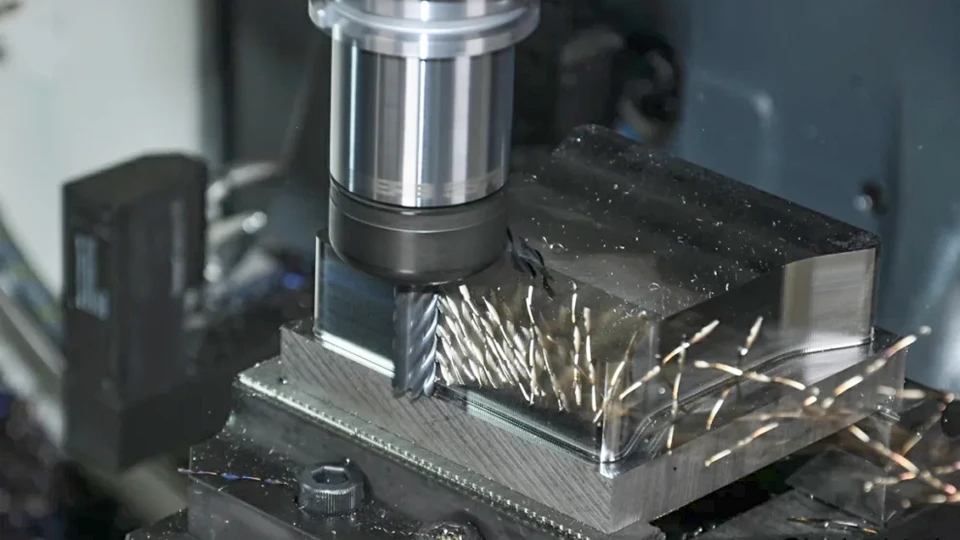
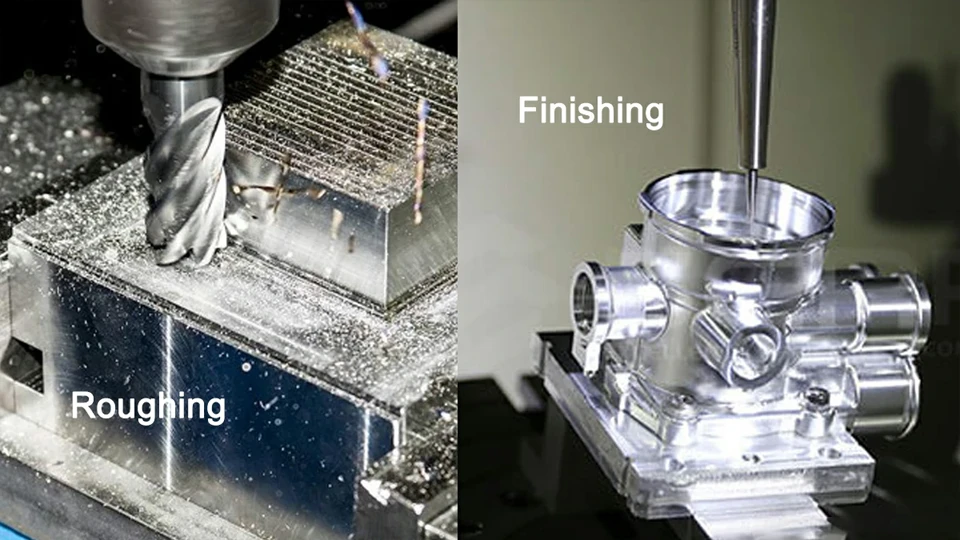
Roughing in machining is an early material-removal stage whose main purpose is to remove most of the excess stock from a raw workpiece as quickly and efficiently as possible.
Its basic nature is high-volume material removal. At this stage, the machining strategy is focused on achieving a high material removal rate, usually through heavier depths of cut and higher feed rates. The goal is to transform a raw block, casting, or forging into the basic geometric form of the part in a shorter amount of time.
Because this aggressive cutting approach generates massive mechanical forces and extreme heat, the process is often accompanied by heavy physical vibration. Under these conditions, it is impossible for the machine to maintain high positional accuracy. Therefore, roughing never attempts to achieve final dimensional tolerances, nor does it focus on leaving a clean surface finish. Its mission is strictly to complete the initial shaping at the lowest possible time cost, intentionally leaving a uniform, thin layer of remaining material across all surfaces to provide a stable physical foundation for the next stage.
What Is Finishing in Machining?
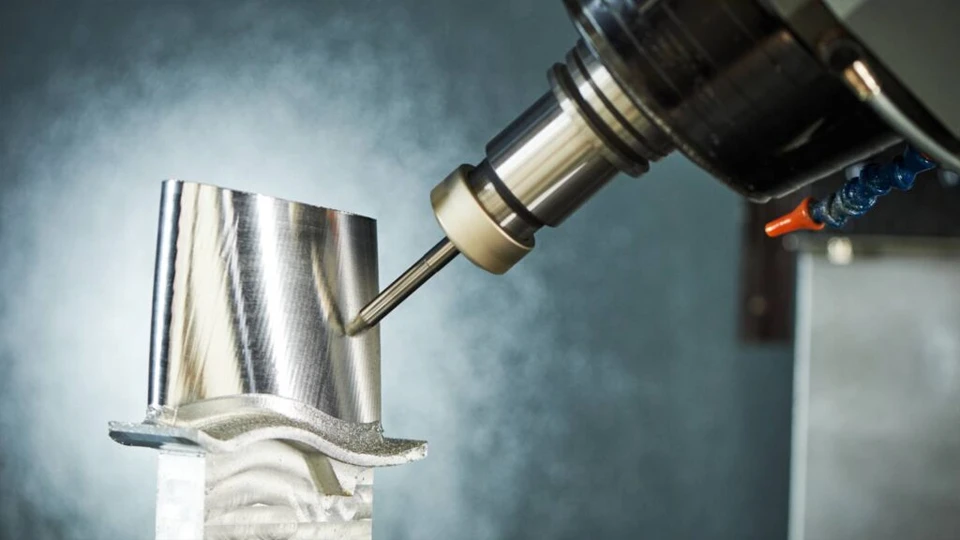
Finishing in machining is the final, definitive stage of the manufacturing process, engineered to bring a workpiece to its exact blueprint specifications. Its primary objective is to lock in the required dimensional tolerances and achieve the specified surface roughness.
This operation removes only the microscopic, uniform layer of stock allowance intentionally left behind by earlier stages. To accomplish this without inducing stress or thermal distortion into the material, the process relies on a highly stable cutting environment utilizing extremely light depths of cut and precise feed rates.
By minimizing mechanical forces and cutting-zone temperatures, tool deflection is significantly reduced. This mechanical stability allows the cutting edge to shear the material more cleanly, producing a more accurate and consistent surface. Ultimately, finishing is the decisive phase that determines whether a machined component meets final quality requirements.
What Is the Difference Between Roughing and Finishing?
Difference in Purpose
The primary goal of roughing is geometric preparation through bulk stock removal, transforming raw material into a recognizable part shape. Finishing has a different objective: to achieve the dimensional tolerances and surface roughness specified by the engineering blueprint.
Difference in Material Removal Rate
Roughing operates at the highest material removal rate the machine tool setup can reliably sustain, removing large volumes of metal in a short time. Finishing operates at a much lower material removal rate, engaging only with the small layer of stock allowance left behind by previous operations.
Difference in Cutting Parameters
Roughing relies on heavy depths of cut and high feed rates to remove stock quickly, while maintaining controlled cutting speeds to manage heat and tool life. Finishing reverses this logic by using very shallow depths of cut, lower feed rates, and more controlled cutting conditions to improve dimensional consistency and surface quality.
Difference in Tooling
Tools dedicated to roughing are engineered for strength and load resistance, often using stronger edge geometry and wear-resistant coatings to survive heavy cutting conditions. Finishing tools are engineered for sharpness and low cutting forces, using refined edge preparation and more precise geometry to cut cleanly without disturbing the workpiece.
Difference in Surface Finish and Accuracy
The result of roughing is a structurally correct but unfinished surface, often marked by visible feed patterns and dimensional variation caused by heavier cutting loads. The result of finishing is a more accurate surface that meets final dimensional requirements and visual quality standards.
Machining Economics: Cycle Time vs. Tooling Cost
Roughing has a stronger influence on total cycle time because it handles most of the stock removal. Finishing has a stronger influence on final quality cost because even a small instability at this stage can compromise the value created by all previous machining steps.
Key Factors That Affect Roughing and Finishing
Roughing and finishing do not succeed by parameter choice alone. Their performance is shaped by a group of interacting factors. If any of these factors is poorly managed, both machining efficiency and final part quality can suffer.
Workpiece material
Workpiece material has a direct effect on how roughing and finishing behave. Softer metals may allow higher removal rates, while harder or heat-resistant materials usually require more controlled cutting conditions. Material hardness, toughness, and thermal behavior all influence cutting load, cutting heat, tool wear, and achievable surface quality.
Tool selection
Tool selection affects both process stability and final results. In roughing, the tool must withstand heavier cutting loads and remove stock efficiently. In finishing, the tool must cut more cleanly and maintain better control over size and surface condition.
Tool material, geometry, coating, and edge preparation all matter. A tool that performs well in roughing may not be the right choice for finishing, because the objective of the cut has changed. The tool must match the stage, not just the material.
Machine rigidity and setup
Machine rigidity and setup stability are critical in both stages. If the machine, holder, fixture, or workpiece setup lacks rigidity, cutting forces can cause chatter, tool deflection, and loss of dimensional control. This is especially damaging in finishing, where even small movement can affect tolerance and surface quality.
The same principle applies to roughing, although the effect shows up differently. Poor rigidity during roughing often reduces removal efficiency and makes the process unstable. Poor rigidity during finishing more directly affects final accuracy.
Stock allowance
Stock allowance is the amount of material intentionally left after earlier machining stages. It plays an important role in the transition from roughing to finishing. If too much stock is left, finishing may carry more cutting load than intended. If too little stock is left, the finishing pass may not fully clean up the surface.
The key is not simply leaving more or less material. The key is leaving the right amount in a controlled and consistent way. Stable finishing depends heavily on stable stock conditions.
Cooling and chip control
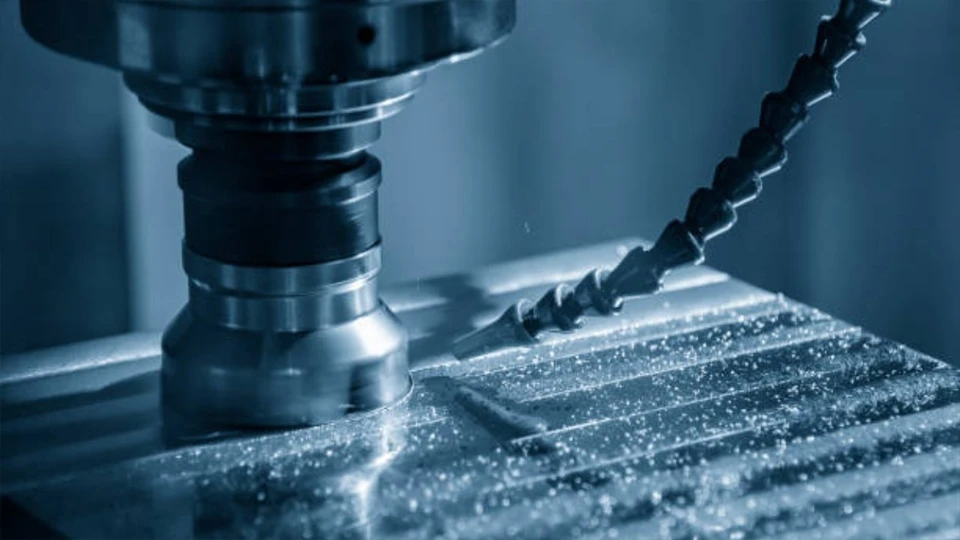
Cooling and chip control affect both tool life and machining stability. Heat buildup can damage the cutting edge, cause thermal distortion, and reduce consistency, especially in finishing. Poor chip evacuation can interfere with the cut, damage the surface, and increase the risk of instability.
In roughing, chip volume is usually much higher, so chip evacuation becomes a productivity issue as well as a quality issue. In finishing, chip control is usually less about volume and more about protecting the final surface and keeping the cut clean.
How to Choose the Right Roughing and Finishing Strategy
Choosing the right roughing and finishing strategy means matching the process to the actual demands of the part, the material, and the machine. The effectiveness of any strategy depends on whether it fits the specific machining conditions.
Match the strategy to part requirements
The machining strategy should begin with the part itself. If the part has tight tolerances, thin walls, critical sealing surfaces, or demanding surface roughness requirements, finishing must be planned more carefully from the start. If the part is structurally simple and tolerance demands are lower, roughing can usually carry a larger share of the workload.
The key point is that part requirements should determine how aggressive roughing can be and how controlled finishing needs to become.
Match the strategy to material and machine capability
The same strategy cannot be applied equally across all materials and machine conditions. Harder alloys, heat-resistant metals, and less rigid setups usually require a more conservative approach. Softer materials and more stable machines may allow higher removal rates without sacrificing control.
A good strategy must reflect what the machine tool, holder, fixture, and cutting tool can actually sustain in production, not just what looks efficient on paper.
Balance efficiency and quality
A strong machining strategy does not maximize only speed or only precision. It balances both. If roughing is too aggressive, chatter, tool deflection, or uneven stock can create problems for the next stage. If finishing is too cautious, cycle time rises without adding meaningful quality value.
The goal is to remove stock efficiently in roughing while preserving the process stability needed for finishing to deliver the final result.
When semi-finishing may be needed
Some parts benefit from an intermediate semi-finishing stage between roughing and finishing. This is especially useful when the part geometry is complex, the stock allowance after roughing is still uneven, or the final finishing pass needs a more stable and predictable cutting condition.
In some cases, roughing can also release residual stress and cause slight part movement, making semi-finishing useful for stabilizing the geometry before the final pass. Semi-finishing does not replace finishing. It improves the transition into it. In more demanding parts, that extra step can make final tolerance control and surface quality much easier to achieve.
Conclusion
Roughing and finishing may sound like two simple shop-floor terms, but together they define the logic of successful machining. One removes material with speed and force, while the other delivers precision and final quality. In practical terms, roughing determines how efficiently a part moves toward its target shape, and finishing determines whether that part ultimately meets dimensional, functional, and surface requirements.
For manufacturers evaluating machining processes or machine tool capability, this distinction matters in a very practical way. A well-planned process depends on the right balance between stock removal rate, cutting control, tooling choice, machine rigidity, and finishing stability. This is also why experienced suppliers such as Rosnok place strong emphasis on machine structure, cutting stability, and application-oriented CNC solutions, helping customers build machining processes that are not only productive, but also consistent and reliable.