In practice, the real issue is often not simply whether the shop is hot or cold, but whether temperature remains stable during production. That is why room temperature deserves close attention whenever manufacturers aim for tight tolerances and consistent CNC performance.
Why Room Temperature Can Affect CNC Machining Accuracy
Room temperature can affect CNC machining accuracy for more than one reason. A clear answer starts with looking at the main ones one by one.
Room Temperature Changes the Thermal State of the Machine
A CNC machine does not stay in one fixed thermal condition while it runs. Its bed, spindle housing, column, guideways, and other structural parts are always exchanging heat with the surrounding air. When room temperature changes, the machine changes with it.
This matters because the machine is not one small solid block. It is a large structure made up of different sections, masses, and materials. They do not all warm up or cool down at the same speed. For example, if the workshop becomes warmer in the afternoon, exposed machine surfaces may respond sooner than heavier internal parts, which have higher thermal inertia and respond more slowly to ambient change. That small thermal difference can slightly change the machine’s geometry, even when the machine itself is mechanically healthy.
In precision machining, a very small geometric shift is enough to matter. If the thermal state of the machine changes, the relative position between the spindle and the work area may no longer remain exactly the same. That is one of the main reasons room temperature cannot be treated as a background condition in CNC production.
Room Temperature Can Cause Thermal Expansion in Key Components
Room temperature can also affect CNC machining accuracy through thermal expansion. When temperature rises, metal components expand. When temperature falls, they contract. In CNC machining, this does not apply only to the workpiece. It also applies to the machine structure, tool holders, cutting tools, fixtures, and other key parts involved in the machining process.
The important point is that CNC accuracy depends on physical position, not only on programmed coordinates. A machine may move to the same commanded position, but if a tool, fixture, or structural component has changed size slightly, the actual cutting result may still shift. One common form of this change is linear expansion, where a component grows slightly in length as temperature rises. For example, if a long component expands by only a small amount, that small change may already be enough to affect a tight-tolerance part.
The same logic applies to cutting tools and workholding. If a tool becomes slightly longer or a fixture changes size slightly with temperature, the cutting position changes with it. These changes may be small, but in precision machining, small changes are often exactly where accuracy problems begin.
Room Temperature Can Disturb Thermal Balance During Machining
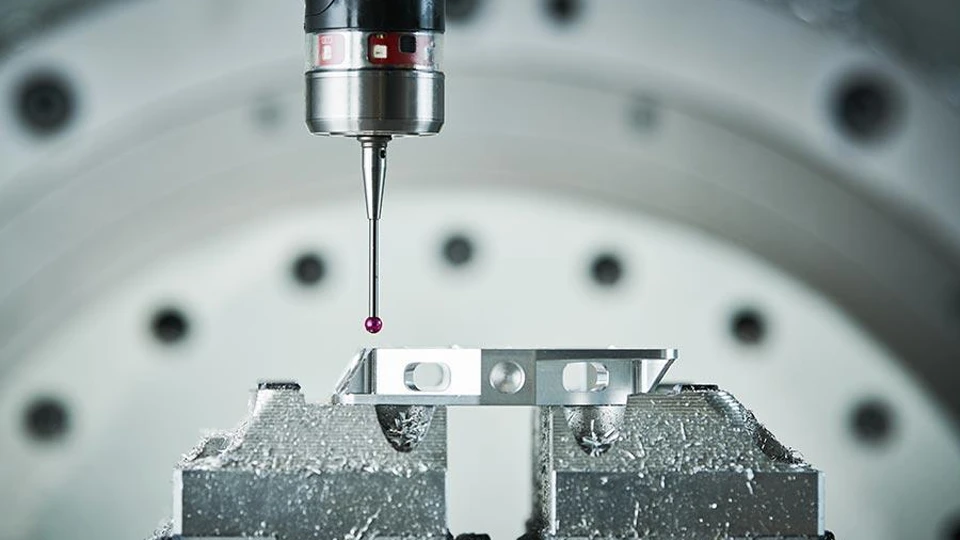
Another reason room temperature can affect CNC machining accuracy is that it can disturb thermal balance during machining. A CNC process is more stable when the machine, tool, workpiece, and measuring conditions remain thermally consistent. When room temperature shifts, that balance becomes harder to maintain.
The problem is not simply that everything becomes warmer or cooler together. Different parts of the process respond differently. A machine structure may still be adjusting to the room temperature while the cutting zone is already generating heat. A workpiece may remain relatively cool at one stage and then gain heat as machining continues. If these conditions do not stay balanced, machining accuracy becomes less predictable.
A simple example is a shop environment that feels stable to people but is not fully stable for the machine. Even a modest change in room temperature during production can affect how quickly heat is gained or lost across different parts of the machining system. Once that happens, the machine may still run normally, but dimensional consistency becomes harder to hold.
Room Temperature Can Make Precision Less Stable Over Time
Room temperature can also affect CNC machining accuracy because its influence often appears over time rather than all at once. A machine may seem stable at one point, then gradually behave differently as its thermal condition continues to change during production.
This is one reason why a part produced earlier in the day may not behave exactly the same as a part produced later, even when the program, tool, and setup remain unchanged. The machining process may be the same, but the thermal condition behind it is no longer identical. As that condition shifts, accuracy can become less repeatable.
For manufacturers aiming for tight tolerances, this matters a great deal. Precision is not only about hitting the target once. It is about holding the same result over time. Room temperature becomes important because it can quietly reduce that stability, even when no obvious mechanical fault appears.
When Room Temperature Affects CNC Machining Accuracy More Clearly
Room temperature does not affect every machining job in the same way. In some cases, the influence may be limited. In others, it becomes much easier to notice. The difference usually depends on tolerance level, machining time, workpiece size, and material behavior.
Tight Tolerances Make Temperature Effects More Noticeable
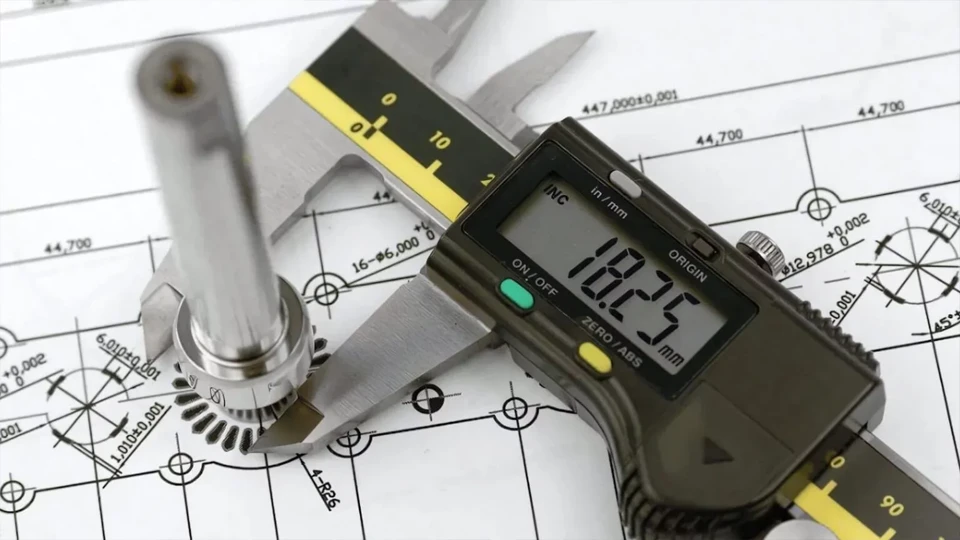
The tighter the tolerance, the easier it is for room temperature effects to become visible. A small thermal change may not matter much in general machining, but it becomes far more important when the allowed dimensional range is very narrow.
This is why temperature-related variation is more often discussed in precision parts than in rough machining. If a part must stay within a few microns or a very small tolerance band, even slight thermal movement in the machine, tool, or workpiece may be enough to reduce accuracy. In other words, the tighter the tolerance, the smaller the margin for error.
Long Production Cycles Increase Thermal Instability
Room temperature tends to matter more when machining cycles are long or when production continues for extended periods. A short operation may finish before thermal change becomes significant. A longer cycle gives more time for heat exchange, thermal buildup, and gradual drift to develop.
This is especially important in continuous production. The machine may begin under one thermal condition and continue under another. Even if the room temperature changes only modestly, the effect becomes easier to notice when machining lasts long enough for that change to influence the process. That is why long production cycles make temperature-related instability more visible.
Large Workpieces Are More Sensitive to Temperature Change
Large workpieces are usually more sensitive to room temperature because thermal change can accumulate over a greater length, width, or diameter. A small amount of expansion across a short feature may not create a serious problem, but the same thermal effect across a much larger dimension can become harder to ignore.
This is one reason large plates, long shafts, and larger structural parts often require closer attention to thermal conditions. As part size increases, the chance of measurable dimensional change also increases. In practical terms, the larger the workpiece, the more clearly room temperature may influence the final result.
Some Materials Respond More to Temperature Than Others
Material choice also affects how clearly room temperature influences machining accuracy. Different materials do not respond to temperature in the same way. Some expand more with heat, while others remain relatively more stable under similar conditions.
For example, aluminum usually has a higher thermal expansion rate than steel, so temperature-related dimensional change can become more noticeable. That does not mean steel is unaffected. It simply means that material behavior changes how visible the effect becomes. When the material itself is more temperature-sensitive, room temperature is more likely to become an important part of the accuracy discussion.
Common Signs That Room Temperature May Be Affecting CNC Machining Accuracy
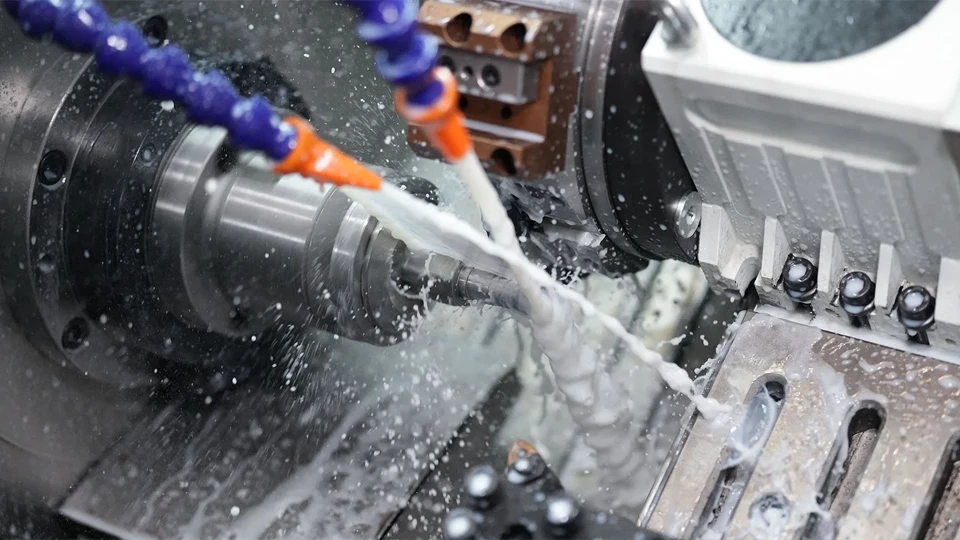
In many workshops, room temperature does not create an obvious or dramatic problem at first. Instead, it tends to appear through small patterns in production and inspection. When those patterns repeat, temperature should be considered as a possible factor.
Dimensions Drift Between Morning and Afternoon
One common sign is that dimensions do not stay equally stable throughout the day. A part measured in the morning may be slightly different from a part produced later in the afternoon, even when the program, tool, and setup appear unchanged.
This kind of shift does not always mean there is a mechanical failure. In some cases, it simply suggests that the thermal condition of the machine and the surrounding environment is no longer the same as it was earlier in the day. When dimensional drift follows a time pattern, room temperature becomes a reasonable factor to examine.
First Parts and Later Parts Do Not Measure the Same
Another common sign is inconsistency between earlier parts and later parts in the same production run. The first few parts may look stable, while later parts begin to show small dimensional change.
This pattern matters because it suggests that the process is not staying under one fixed condition. If the machining setup remains the same but the measured result gradually changes, room temperature may be contributing to that shift together with the thermal behavior of the machine during production.
Measurements Change After the Part Cools Down
A part may also measure one way immediately after machining and another way after it has cooled and stabilized. This is especially important in precision work, where even a small dimensional change can affect whether the part remains within tolerance.
When this happens repeatedly, it suggests that temperature is affecting the measured result, not only the cutting process itself. In that situation, room temperature becomes relevant because it influences how quickly the part gains, holds, or loses heat before measurement.
Accuracy Problems Appear Without an Obvious Machine Fault
Sometimes the clearest sign is simply that accuracy becomes less stable even though there is no obvious problem with the machine, tool, or program. The machine may still run smoothly, the tool may still look usable, and the setup may appear correct, yet dimensional consistency becomes harder to hold.
When that happens, it is easy to focus only on mechanical causes. But if no clear fault can be found, room temperature should not be ignored. In some cases, the issue is not a damaged component, but a changing thermal condition that is affecting machining accuracy in a less visible way.
Conclusion
In the end, room temperature is easy to overlook because it does not always create immediate or dramatic problems on the shop floor. Yet in CNC machining, many accuracy issues do not begin with a visible fault, but with small thermal changes that slowly reduce stability. That is why this topic deserves serious attention. From machine structure and thermal expansion to tolerance sensitivity and dimensional drift, the message is clear: room temperature can affect CNC machining accuracy, and its influence becomes more important whenever manufacturers aim for tighter tolerances, better repeatability, and more consistent production results.
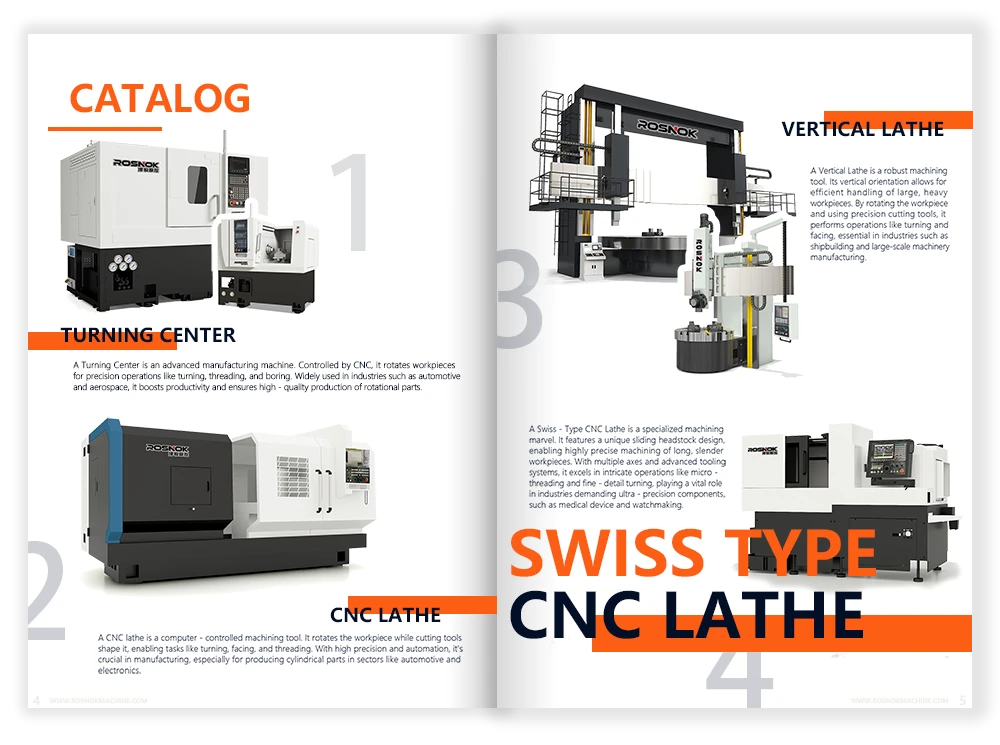
For buyers evaluating CNC equipment, this topic is a useful reminder that true machining accuracy depends on more than a machine’s listed specifications. Thermal stability, structural design, component quality, and repeatable performance under real workshop conditions all matter in practice. This is why manufacturers such as Rosnok focus on building CNC lathes, machining centers, milling machines, vertical lathes, pipe thread lathes, and other metalworking machines with greater rigidity, stable performance, and production reliability in mind.