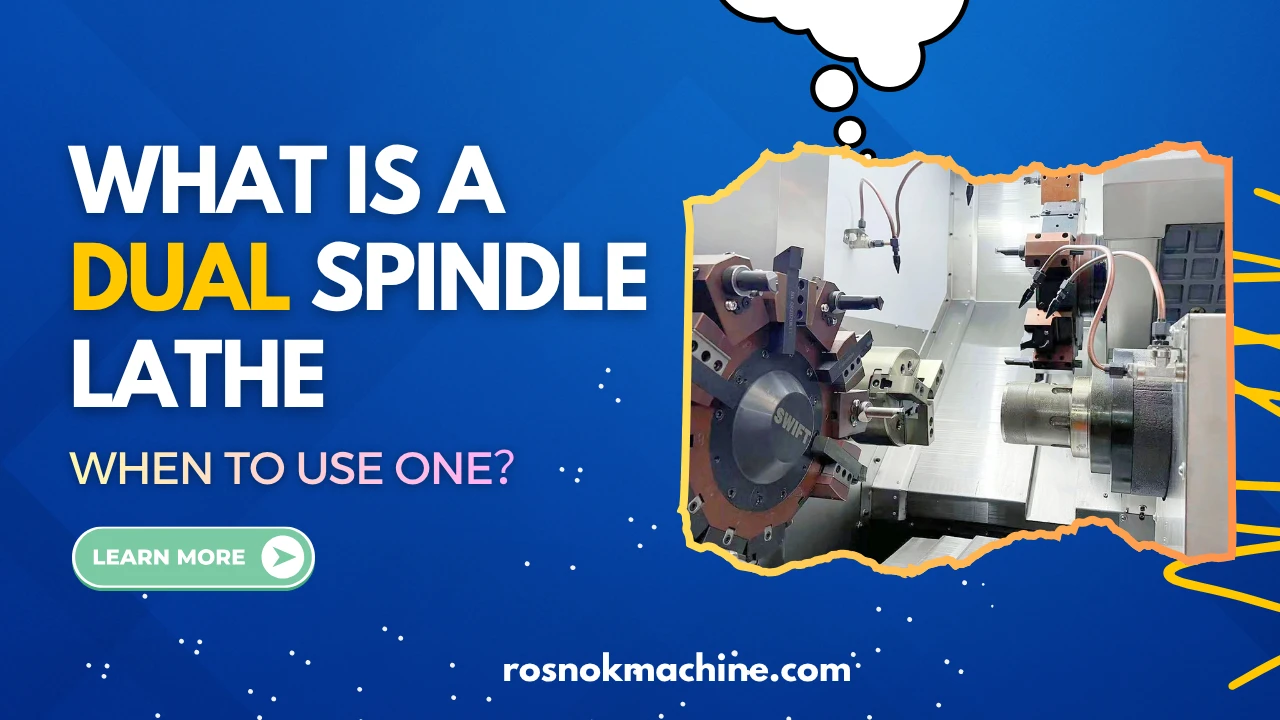
This article will explore how a dual spindle CNC lathe works in practice, what advantages it offers, the applications it is best suited for, and when it becomes a more effective machining solution than a standard single spindle CNC lathe.
What Is a Dual Spindle CNC Lathe?
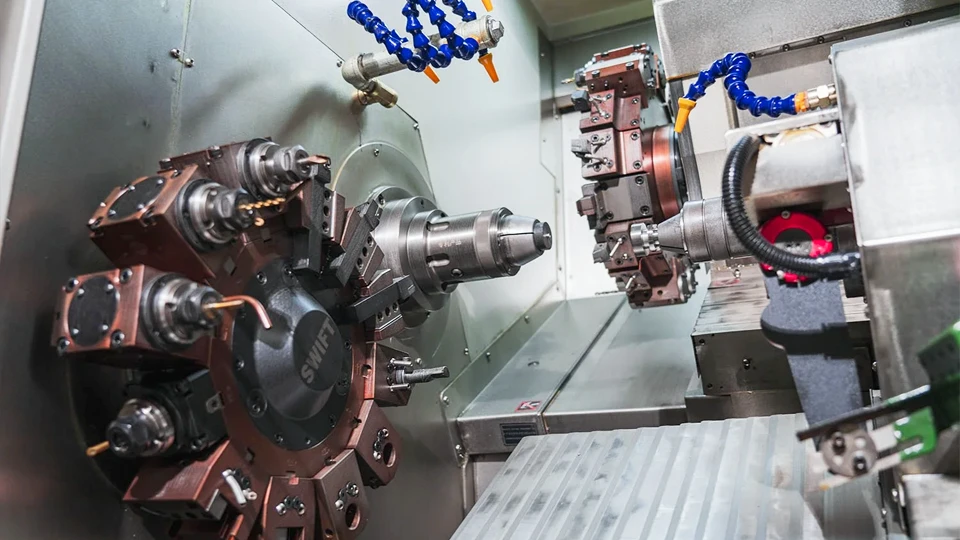
A dual spindle CNC lathe is a specialized turning center equipped with two independent spindles—a main spindle and a sub-spindle (or secondary spindle)—designed to machine both ends of a workpiece in a single, continuous automated cycle.
In a standard turning setup, a part is held by a single spindle, and once the front-end machining is complete, the machine must stop for an operator to manually flip the part to process the second side. A dual spindle configuration eliminates this manual intervention. By integrating a second axis of rotation, the machine can “hand off” the workpiece internally. This makes the dual spindle lathe a more integrated turning setup, capable of completing complex parts that require front-side and back-side operations without leaving the machine envelope.
Main Spindle and Sub Spindle in a Dual Spindle CNC Lathe
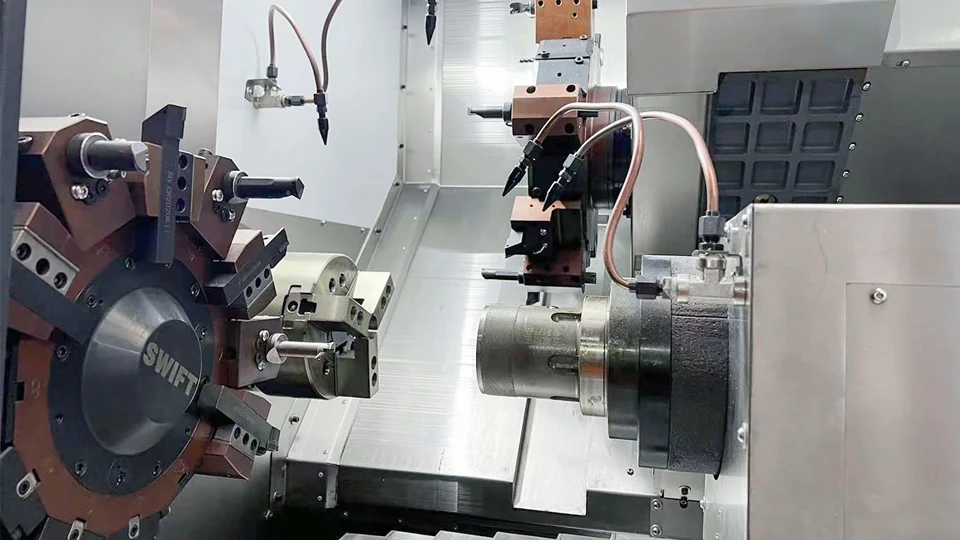
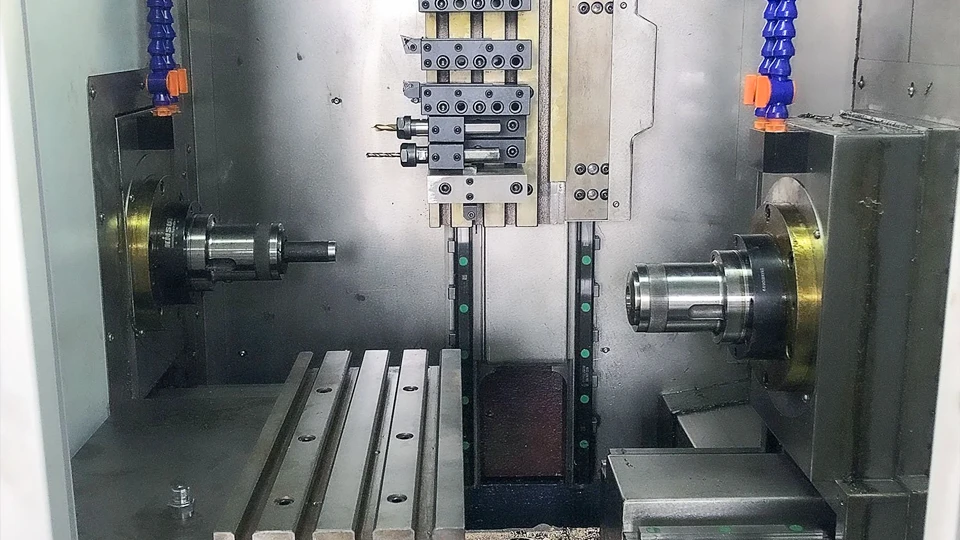
The defining characteristic of this machine lies in its structural two-spindle configuration. Each spindle serves a distinct mechanical role:
- Main Spindle: This is the primary drive unit located on the left side of the machine (headstock). It holds the raw material—typically fed through a bar feeder—and performs the initial heavy-duty turning, drilling, or milling operations on the first side of the part.
- Sub Spindle: Positioned opposite the main spindle, the sub-spindle is a fully functional secondary unit that can move along its own axis to meet the main spindle. Its role is to synchronized-grip the part, receive it during the transfer, and then perform the remaining machining on the opposite face.
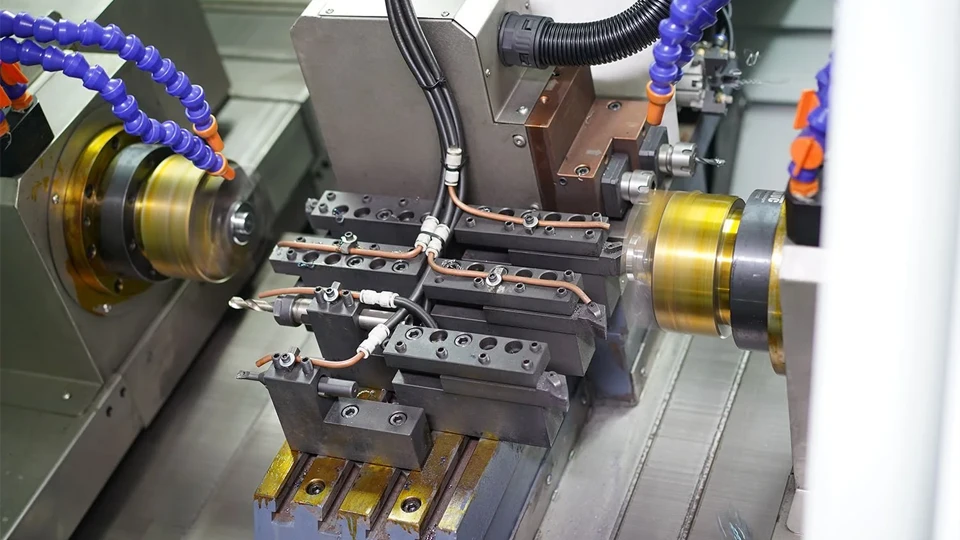
In this architecture, the two spindles work in tandem. The presence of a sub-spindle is what technically transitions a lathe from a traditional single-point machine to a continuous-flow production system.
How Does a Dual Spindle CNC Lathe Work?
The operation of a dual spindle CNC lathe follows a synchronized, sequential flow that transitions a workpiece from raw stock to a finished component in one seamless process.
How the Main Spindle Handles the First Operation
The cycle begins at the main spindle. Raw material is clamped in the chuck, and the machine executes the first set of programmed operations—such as facing, OD (outer diameter) turning, and threading. At this stage, the main spindle functions similarly to a standard lathe, providing the high torque and stability required for primary metal removal.
How the Sub Spindle Takes Over the Part
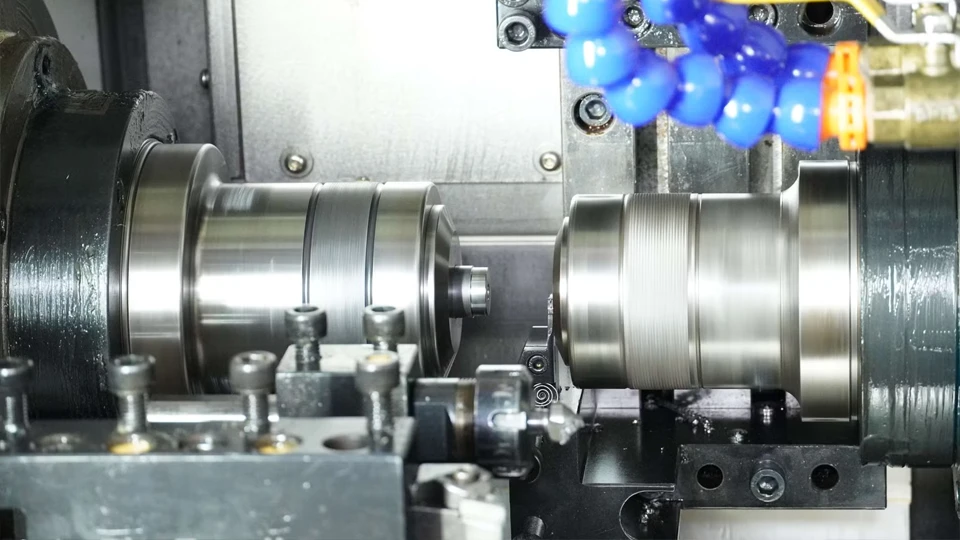
Once the first-side machining is complete, the machine enters the transfer phase. The sub-spindle moves forward along its Z-axis toward the main spindle. Both spindles are synchronized in speed (RPM) to ensure a smooth “pick-up” without damaging the part or the machine. The sub-spindle chuck closes onto the finished end of the workpiece, while the main spindle chuck releases (or the parting tool cuts the piece from the bar stock).
Why Part Transfer Matters in CNC Turning
Part transfer is the critical mechanical link in the dual spindle logic. By automating the hand-off, the machine maintains a continuous machining flow. This transfer ensures that the orientation and alignment of the part are preserved between the first and second operations, allowing the sub-spindle to immediately begin machining the back-side features while the main spindle can potentially begin working on the next piece of raw material.
What Advantages Does a Dual Spindle CNC Lathe Offer?
The primary value of a dual spindle CNC lathe lies in its ability to consolidate operations. By integrating a second spindle into the turning center, manufacturers gain several strategic advantages in process stability and flow.
Reduced Setup Changes and Secondary Handling
In a single-spindle environment, a part requiring two-sided machining must be manually removed, flipped, and re-clamped. This “secondary handling” is a major source of downtime. A dual spindle lathe eliminates the need for an operator to intervene between the first and second operations. By reducing the number of setups from two to one, the entire production cycle becomes more autonomous and less prone to the delays associated with manual part loading.
Better Process Continuity and Part Consistency
When a part is manually re-clamped, there is an inherent risk of “repositioning error,” which can affect the concentricity and total runout between the front and back features. In a dual spindle setup, the transfer is handled by the machine’s synchronized CNC control. This mechanical hand-off ensures that the part remains perfectly aligned. The result is higher part consistency across large batches, as the human variable is removed from the precision-critical transfer phase.
Why a Dual Spindle CNC Lathe Can Improve Production Efficiency
Efficiency in a dual spindle machine is a result of process integration. Because the sub-spindle can perform back-side machining while the main spindle begins the first operation on the next piece of raw material (in bar-fed applications), the machine effectively overlaps cycles. This “overlap” significantly reduces the total cycle time per part. Furthermore, with fewer touchpoints, the risk of scrap is lowered, leading to a more streamlined and predictable production output.
What Applications Is a Dual Spindle CNC Lathe Best Suited For?
While a dual spindle lathe is a versatile tool, its strengths are most apparent in specific machining tasks and industries where part complexity and volume intersect.
Parts That Benefit from Dual Spindle Machining
This type of machine is especially suitable for turned parts that require work on both sides. Common examples include shafts, bushings, sleeves, fittings, connectors, valve components, and similar rotational parts with front-side and back-side features.
It is also well suited for parts that need multiple turning stages before they can be considered complete. When both ends of the part carry machining features, a dual spindle CNC lathe fits the part geometry more naturally than a process built around only one spindle position.
Production Tasks That Fit a Dual Spindle CNC Lathe
A dual spindle CNC lathe is a strong fit for production tasks that depend on a connected turning sequence rather than isolated individual operations. This includes batch production, repeated two-sided turning cycles, and machining work that benefits from keeping the part inside one machine system from the first operation to the second.
It is also suitable for turning workflows where process integration matters more than keeping each operation separate. In this kind of production environment, the machine is used not simply as a lathe with two spindles, but as a turning system designed around continuity.
Industries That Commonly Use Dual Spindle CNC Lathes
Dual spindle CNC lathes are commonly used in industries that produce precision turned parts in stable volumes. These include automotive manufacturing, aerospace component machining, medical part production, oil and gas fittings, and general precision engineering.
Across these industries, the machine is typically applied where part geometry, process flow, and production repetition make two-sided machining within one system a practical requirement rather than just an added convenience.
Dual Spindle CNC Lathe vs. Standard Single Spindle CNC Lathe
Choosing between a dual spindle and a standard single spindle lathe is a strategic decision that impacts a workshop’s long-term throughput and operational cost. While both machines can produce high-quality parts, their underlying machining logic and economic efficiency differ significantly.
Key Differences in Machining Flow
The most fundamental difference lies in the continuity of the process.
- In a single spindle lathe, the machining flow is interrupted. Once the first operation (Op. 10) is complete, the machine sits idle while the part is manually flipped and re-clamped for the second operation (Op. 20).
- In a dual spindle lathe, the flow is continuous. The sub-spindle picks up the part while the main spindle is already preparing for the next cycle. This synchronized hand-off transforms a two-step process into a single, automated stream.
Differences in Efficiency, Handling, and Process Continuity
The “human element” is the variable that separates these two configurations.
- A single spindle setup requires constant operator presence to load, flip, and unload parts. This leads to higher labor costs per part and increases the likelihood of human-induced errors in concentricity or surface finish during re-clamping.
- A dual spindle setup drastically reduces secondary handling. By integrating two machines’ worth of work into one footprint, it achieves better process continuity. This not only saves floor space but also ensures that the mechanical precision of the CNC control—rather than the operator’s hand—governs the alignment between both ends of the part.
When a Dual Spindle CNC Lathe Makes More Sense
A dual spindle machine is a superior investment when your production meets the following criteria:
- Two-Sided Machining: If a high percentage of your parts require operations on both ends.
- High-Volume Batches: When reducing cycle times by even 30 seconds per part results in massive gains over a monthly production run.
- Tight Concentricity Requirements: When the relationship between the front and back features is too critical to trust to manual re-clamping.
- Automation Goals: If you plan to implement bar feeders and run “lights-out” or minimally staffed shifts.
When a Single Spindle CNC Lathe Remains Sufficient
Conversely, a standard single spindle lathe may be the more practical choice if:
- Simple Part Geometry: The parts only require machining on one side.
- Low-Volume/Prototyping: The setup time for a dual spindle transfer might not be justified for a run of only five or ten pieces.
- Budget Constraints: If the initial capital expenditure (CAPEX) is the primary hurdle and the current labor costs for manual flipping are manageable within your local market.
Conclusion
A dual spindle CNC lathe is more than a machine with two spindles. It represents a more integrated way to handle two-sided turning work, especially when part geometry, machining continuity, and production stability all matter at the same time. From its structural design to its working sequence, application fit, and comparison with a standard single spindle lathe, the real value of this machine lies in how it reduces process breaks and supports a more connected manufacturing flow. For the right parts and the right production environment, it can be a highly practical solution for improving machining consistency and making two-stage turning more efficient.
For manufacturers evaluating this kind of equipment, machine selection is rarely just about spindle count. It is about choosing a turning solution that fits actual production goals, part requirements, and long-term process planning. That is also why many buyers turn to specialized CNC machine suppliers with real manufacturing experience. As a professional CNC machine manufacturer, Rosnok focuses on practical machine solutions for metalworking, including CNC lathes designed for precision, process stability, and reliable production performance across different industrial applications.