Even a small amount of runout can create serious consequences in CNC machining. It can overload one side of the cutting edge, create uneven chip load, accelerate tool wear, reduce surface quality, and increase the risk of chatter. If the problem is ignored, it may lead to scrap parts, unstable batch quality, wasted tooling costs, and unnecessary stress on the spindle and tool holding system.
Understanding runout is the first step toward controlling it. This article explains what runout in machining is, what causes it, how it affects machining performance, and how it can be measured and reduced through practical setup, tooling, and maintenance improvements.
What Is Runout in Machining?
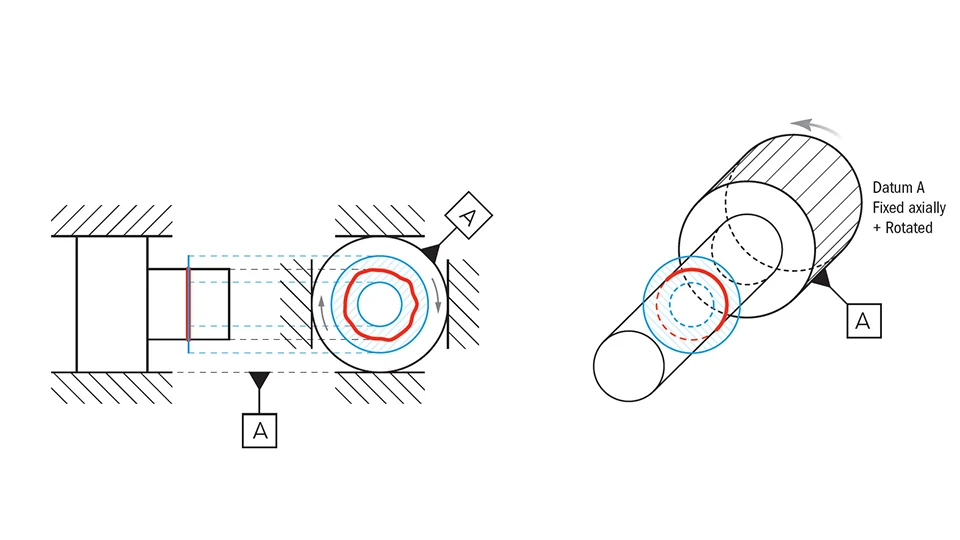
Runout in machining refers to the amount of deviation that occurs when a rotating tool, spindle, holder, or workpiece does not rotate on its true rotational axis. In an ideal machining system, rotation should remain perfectly centered. In real production, however, even a small offset can cause the rotating part to move slightly away from that centerline during rotation.
This deviation is not just a visible wobble. It is a mechanical error in rotational alignment. When runout is present, the cutting edge does not engage the material in a perfectly uniform way. In high-RPM machining, even a small amount of runout can become more significant.
Runout can appear in different parts of the machining system. It may come from the spindle, the tool holder, the collet, the cutting tool itself, or the workpiece setup. In other words, runout is not limited to one component. It is a system-level issue that can enter the process from several points and then affect the final cutting result.
For that reason, runout should not be treated as a minor detail. In precision machining, a small rotational error can quickly become a measurable production problem. Understanding what runout is is the starting point for identifying its type, tracing its source, and controlling its effect on machining performance.
Main Types of Runout in Machining
Runout in machining does not appear in only one form. In practice, it can affect a rotating system in different directions and at different points. That is why understanding its main types is important. Without this distinction, it is easy to detect runout but misunderstand what kind of error is actually present.
The most common way to classify runout is by direction. In machining, the two primary forms are radial runout and axial runout. Beyond that, runout can also be discussed as static or dynamic, and it may be traced to different parts of the system, such as the tool, holder, spindle, or workpiece.
Radial Runout
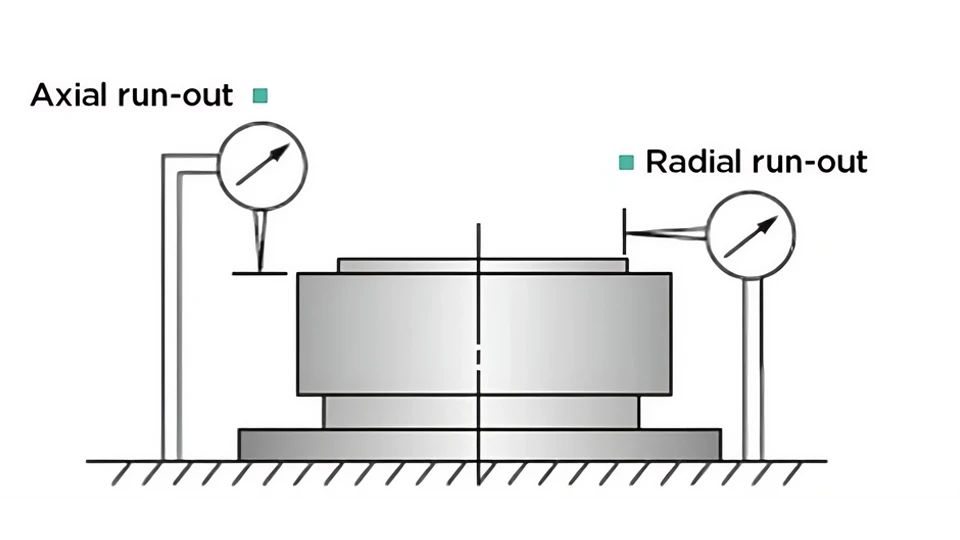
Radial runout refers to deviation measured perpendicular to the axis of rotation. In simple terms, the rotating part does not stay at a constant radius as it turns. Instead, its outer surface moves slightly in and out relative to the true centerline.
This is the form most people mean when they talk about runout in everyday machining. It is especially important in rotating tools because it changes how evenly each cutting edge engages the material. Even a small radial error can make one flute cut more than another, which is why radial runout is closely tied to cutting imbalance and machining inconsistency. In practical shop inspection, this condition is often reflected in the tool’s TIR reading.
Axial Runout
Axial runout refers to deviation measured parallel to the axis of rotation. Instead of moving outward and inward from the centerline, the rotating surface shifts along the axis as it turns. This type of error is often seen on the face of a rotating component rather than on its diameter.
Axial runout matters because it can affect face contact, seating accuracy, and the stability of rotating surfaces. In machining systems, it may appear in spindle faces, tool holder contact surfaces, or workpiece mounting faces. Although it is discussed less often than radial runout, it can still influence machining accuracy and assembly quality.
Static and Dynamic Runout
Runout can also be understood in terms of when and how it appears. Static runout is the deviation observed when the component is checked in a stationary or slowly rotated inspection condition. This is the type commonly measured with a dial indicator during setup or maintenance.
Dynamic runout appears under actual running conditions, especially at operating speed. A system may show acceptable static readings and still behave differently once rotational speed, centrifugal forces, thermal growth, and balance effects enter the process. For that reason, static measurement is necessary, but it does not always tell the full story of machining performance.
Tool, Holder, Spindle, and Workpiece Runout
Runout is also often described by where it appears in the machining system. Tool runout comes from the cutting tool itself, including shank error or manufacturing variation. Holder runout comes from the tool holder or collet system. Spindle runout comes from the spindle assembly, taper condition, or bearing wear. Workpiece runout comes from the way the part is mounted, clamped, or rotated.
This distinction matters because similar symptoms can come from different sources. A poor surface finish or unstable cut does not automatically mean the cutting tool is defective. The real error may come from the holder, the spindle, or the workholding condition. In many cases, the observed runout is the result of error stacking, where small inaccuracies across the spindle, holder, tool, or workpiece combine into a larger total error. Identifying the type of runout is therefore the first step toward identifying the real source.
What Causes Runout in Machining?
Runout in machining rarely comes from a single source. In most cases, it develops from small errors in the rotating system, and those errors become more visible once the tool or workpiece begins to rotate. That is why runout should be treated as a system problem rather than a defect in only one component.
Tool Holder and Collet Problems
The tool holder and collet are among the most common sources of runout. If the holder is manufactured with poor concentricity, damaged during use, or contaminated by dirt and chips, the tool will not be clamped on a true rotational axis. The same is true for worn or deformed collets. Even when the spindle is in good condition, poor clamping accuracy at the holder level can still create noticeable runout.
Assembly condition also matters. A holder may be dimensionally acceptable, but if the contact surfaces are not clean or the collet is installed incorrectly, the final clamping result can still be unstable. In real shop conditions, this is one of the easiest sources of runout to overlook.
Spindle Condition and Bearing Wear
The spindle is another major source of runout. If the spindle taper is worn, contaminated, or slightly damaged, the holder will not seat correctly. This creates alignment error before cutting even begins. Over time, spindle bearing wear can also increase rotational deviation, especially in machines that run at high speed or carry heavy cutting loads for long periods.
Thermal growth can make this problem more complex. As spindle speed increases and heat builds up, bearing condition and internal clearances may change, which can increase dynamic runout even when static inspection looks acceptable. The spindle interface also matters. Different taper systems, such as traditional 7/24 designs and HSK interfaces, differ in contact behavior and rigidity, which can influence alignment stability under demanding machining conditions.
This is why spindle condition cannot be judged only by whether the machine still runs. A spindle may continue operating while already introducing measurable runout into the system. In precision machining, that hidden error can be enough to reduce consistency across multiple setups and production batches.
Tool Geometry, Shank Damage, and Stick-Out
The cutting tool itself can also contribute to runout. A tool with shank damage, poor manufacturing consistency, or improper geometry may not rotate true even if it is clamped in a good holder. Small damage marks, burrs, or wear on the shank can shift the tool off center and create error at the cutting edge.
Excessive tool stick-out makes this problem worse. The farther the tool extends from the holder, the more any small alignment error is amplified at the cutting end. In practical terms, a higher L/D ratio reduces system rigidity and allows small alignment errors to grow into larger effective runout at the tool tip.
Setup, Clamping, and Workholding Errors
Runout can also come from setup conditions and workholding. If a workpiece is not clamped evenly, if a chuck has wear, or if a rotating part is not seated correctly, the system may already contain runout before the spindle reaches cutting speed. In turning and grinding operations, workpiece runout is especially important because the part itself becomes the rotating body.
Improper setup practices can also create avoidable error. Misalignment during assembly, inconsistent tightening, or poor contact between mating surfaces can all shift the rotational centerline. In many cases, observed runout is not caused by one major failure, but by several small setup errors adding together across the spindle, holder, tool, and workholding system.
How Runout Affects Cutting Performance
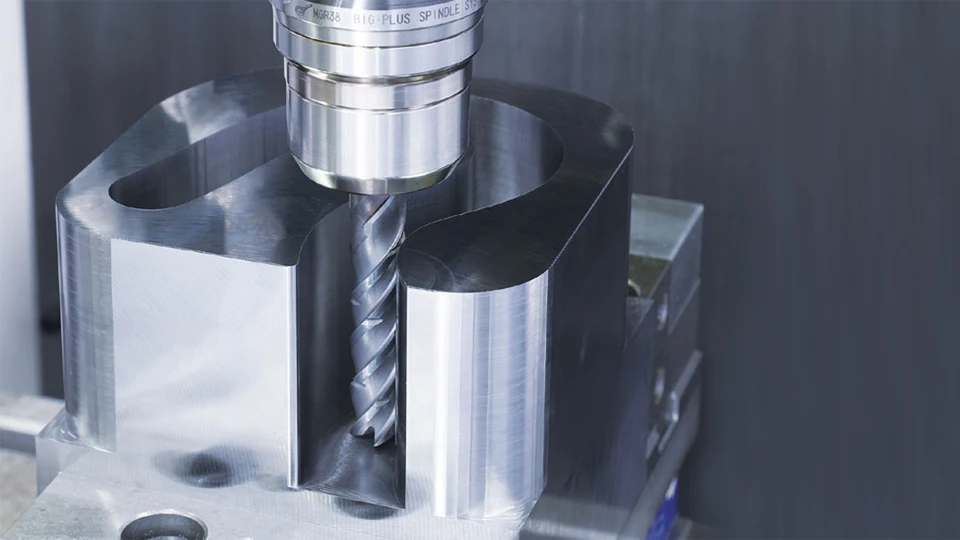
Runout affects cutting performance by changing how the tool or rotating part actually engages the material. When rotation no longer follows a true axis, the cut stops being evenly distributed. The result is not only a geometric error, but also a change in force, load, heat, and stability during machining.
Runout and Uneven Chip Load
One of the most direct effects of runout is uneven chip load. In a rotating cutting tool, not every edge enters the material in the same way when runout is present. One flute may cut deeper or carry more force, while another flute cuts less or does almost no effective work.
This imbalance matters because the tool is designed to share load across its cutting edges. When that balance is lost, cutting forces become uneven and the machining process becomes less predictable. In milling, this is one of the main reasons why even small runout can quickly reduce process stability.
Runout and Tool Life
Uneven cutting load leads directly to uneven tool wear. The edge that carries more force tends to wear faster, generate more heat, and reach failure earlier than the others. Instead of wearing uniformly, the tool begins to lose balance in performance long before its full cutting capacity is used.
This shortens effective tool life. A tool may still look usable overall, yet one overloaded edge may already be chipped, rounded, or thermally damaged. In production, that means more frequent tool changes, more unstable results, and higher tooling cost over time. Even a small increase in runout can shorten tool life significantly, especially in small-diameter tools and high-speed applications.
Runout and Surface Finish
Runout also affects surface finish because it changes the consistency of the cutting path. When the rotating edge does not stay on a true axis, the tool does not remove material in a perfectly even pattern. This can leave visible irregularities on the machined surface, especially in finishing operations.
At higher spindle speeds, the problem often becomes more noticeable. Small rotational error can turn into repetitive surface marks, waviness, or inconsistent roughness. In finishing operations, runout can also make scallop height or cusp formation less consistent, which leads to a less uniform surface pattern. Even when the feed and speed settings are correct, the final finish may still degrade if runout is present in the system.
Runout and Vibration
Runout increases the chance of vibration because it introduces uneven force into each rotation cycle. Once the load is no longer balanced, the cutting system is more likely to excite machine, tool, or holder deflection. That instability can then grow into chatter if cutting conditions are already close to the system’s limit.
This is why runout often appears together with vibration symptoms, but the two are not the same thing. Vibration is the behavior that becomes visible during cutting, while runout is often one of the mechanical errors that helps create it. In that sense, runout is frequently an upstream cause of unstable machining behavior.
Runout and Dimensional Accuracy
Runout also reduces dimensional accuracy because the effective cutting path is no longer fully controlled by the programmed geometry. A rotating system with runout does not remove material in a perfectly centered or repeatable way. This can affect diameter control, feature consistency, and the repeatability of finished dimensions.
The effect becomes more serious when tolerances are tight or when tool diameter is small. In these cases, even minor runout can represent a meaningful percentage of the final dimensional target. What looks like a small mechanical deviation at the spindle or holder can therefore become a real accuracy problem at the part level.
Overall, runout affects machining performance because it changes the real cutting condition, not just the measured geometry of the setup. Once load distribution, heat generation, and edge engagement become uneven, the process becomes harder to control. Over time, this kind of uneven loading can also increase stress on the spindle system and contribute to bearing fatigue and long-term machine wear. That is why runout must be understood not only as a rotational error, but also as a direct cause of lower cutting stability, shorter tool life, and less reliable machining results.
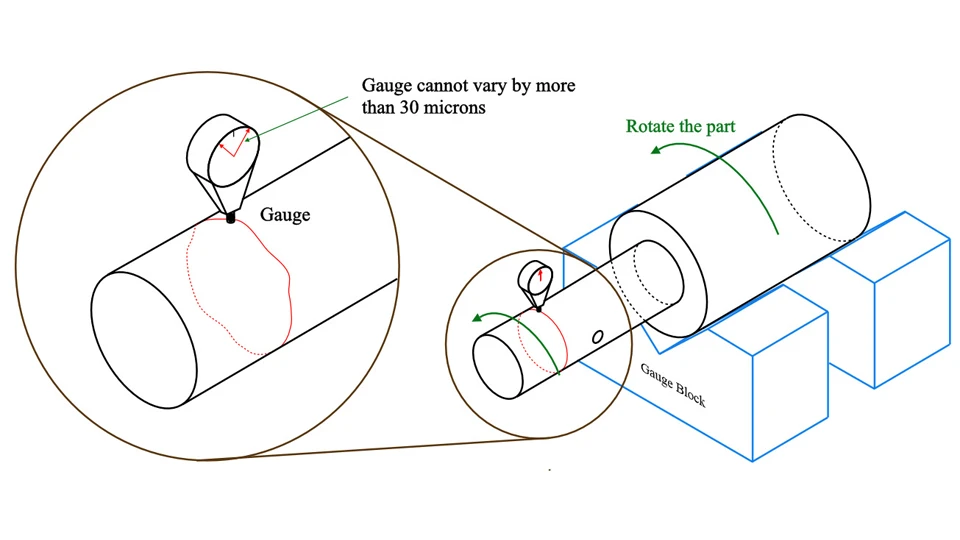
How to Measure Runout Correctly
Measuring runout correctly is essential because runout cannot be judged reliably by appearance alone. A tool may look centered to the eye and still contain enough deviation to affect cutting performance. In practice, accurate measurement is the only way to confirm whether runout is present, where it comes from, and how serious it is.
Tools Used to Measure Runout
The most common tool for checking runout is a dial indicator. It is widely used because it allows small rotational deviation to be seen directly as the component is turned. In higher-precision environments, shops may also use test bars, electronic indicators, or spindle inspection instruments, but the dial indicator remains the standard starting point for most practical checks.
In precision inspection, a test indicator is often more suitable than a standard plunger-type indicator when access is limited or when small angular deviation must be detected more clearly. What matters most, however, is not only the instrument itself, but also how it is used. A good indicator can still produce misleading results if the contact point is unstable, the setup is dirty, or the rotating part is not checked in a consistent way.
Where Runout Should Be Measured
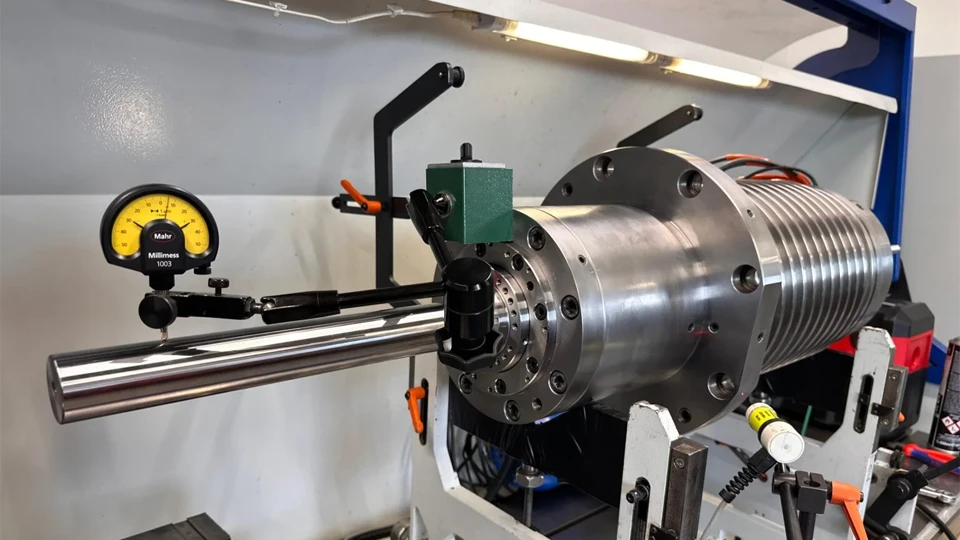
Runout should be measured at the location most relevant to the suspected source of error. If the goal is to check spindle condition, measurement may be taken at the spindle taper or with a test bar mounted in the spindle. If the concern is tool holding accuracy, the reading may be taken on the holder or on the tool shank. If the workpiece is the rotating body, the reading should be taken directly on the clamped part.
Measurement location matters because runout often changes along the length of the system. A small error near the holder may become larger at the tool tip, especially when stick-out is high. For that reason, one reading is not always enough. A result at the holder does not automatically describe the condition at the cutting edge.
In practical troubleshooting, runout is best checked in sequence: first at the spindle, then at the holder or collet interface, and finally at the tool or tool tip. This step-by-step approach makes it easier to separate spindle error from holder error, and holder error from tool error.
Understanding TIR in Practice
Runout is often discussed in terms of TIR, or Total Indicator Reading. In practical terms, TIR is the total difference between the highest and lowest indicator reading observed during one full rotation. It is a measurement expression, not a separate type of runout.
This distinction is important because TIR describes what the indicator sees at a given measurement point. It does not, by itself, explain the cause of the error. A high TIR reading may come from the tool, the holder, the spindle, the setup, or a combination of small errors across the system.
Common Mistakes During Measurement
One common mistake is measuring only one part of the system and assuming the source is already known. For example, checking only the tool tip may confirm that runout exists, but it does not show whether the problem comes from the spindle, holder, collet, or tool. The measurement process should move step by step through the system if the source is not immediately clear.
Another mistake is checking under poor conditions. Dirt, burrs, coolant residue, or damaged contact surfaces can affect the reading. So can inconsistent clamping force or poor indicator positioning. In some cases, shops also make the mistake of trusting a static reading too completely. Static inspection is necessary, but dynamic behavior at operating speed may still differ because of heat, centrifugal effects, balance, or spindle condition. If static runout appears small but vibration remains severe during machining, dynamic balance should be checked more carefully.
Correct runout measurement is therefore not just about getting a number. It is about measuring the right place, using a stable method, and interpreting the reading in context. Only then can runout be traced back to its real source and controlled effectively.
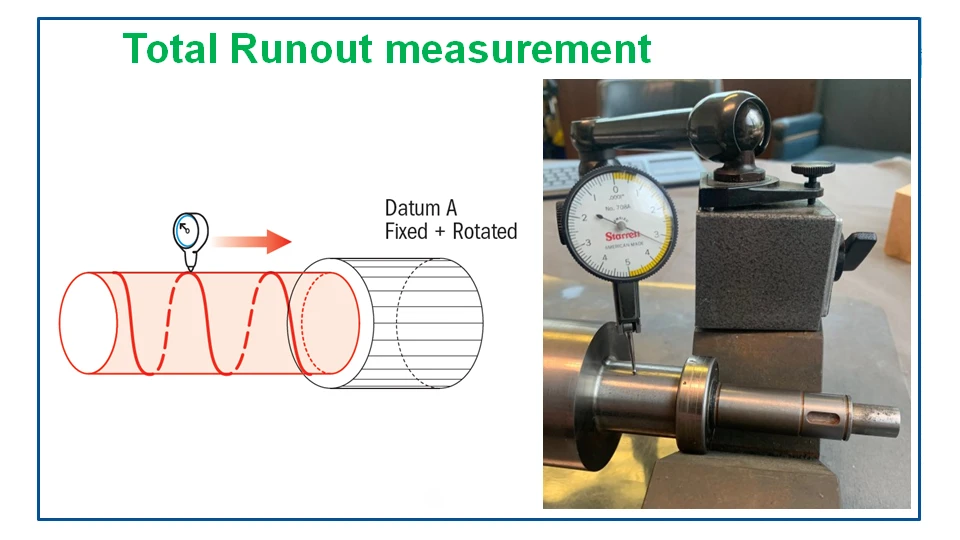
How to Reduce Runout in Machining
Reducing runout in machining starts with the understanding that runout is usually a system issue, not a single-point defect. In many cases, the problem is not solved by changing one tool alone. It is reduced by improving the condition, cleanliness, and alignment of the entire rotating system.
Improve Tool Holding Quality
One of the most effective ways to reduce runout is to improve the quality of the tool holding system. A high-quality holder with good concentricity will clamp the tool more accurately and more consistently. Worn collets, damaged holders, or low-precision clamping systems should not be ignored, because even small clamping errors can become significant at the cutting edge.
Tool condition matters as well. A holder cannot correct a damaged tool shank or poor tool geometry. If the tool itself is worn, burred, or out of tolerance, runout may remain even when the holder is good. That is why both the holder and the tool should be treated as part of the same accuracy chain.
Holder design also makes a practical difference. Standard ER collet systems are widely used and flexible, but in applications that demand tighter runout control, many shops move toward milling chucks, hydraulic holders, or shrink fit systems. These clamping methods often provide better repeatability and lower runout potential when applied correctly.
Control Cleanliness and Assembly Discipline
Cleanliness is one of the simplest and most overlooked controls. Dirt, chips, coolant residue, or small burrs on the spindle taper, holder surface, collet seat, or tool shank can all shift the rotational axis enough to create measurable runout. In many shops, this kind of contamination causes avoidable error long before a major mechanical failure appears.
Assembly discipline is just as important. The holder must seat correctly, the collet must be installed properly, and tightening should be consistent. Poor assembly practice can turn acceptable components into an unstable system. Good machining accuracy often depends as much on repeatable setup discipline as on the hardware itself.
In critical applications, cleaning method matters too. A simple shop rag may remove visible dirt, but it can also leave fibers behind. For spindle taper cleaning, many shops prefer a dedicated spindle wiper or other purpose-made cleaning tool to reduce the risk of trapped contamination.
Reduce Stick-Out and Improve Balance
Tool stick-out should be kept as short as the application allows. The farther the tool extends from the holder, the more any small alignment error is amplified at the tip. A high L/D ratio reduces rigidity and makes the system more sensitive to runout, vibration, and cutting instability.
Balance also matters, especially in high-speed machining. Even if static runout appears acceptable, poor rotating balance can still create unstable cutting behavior at operating speed. When vibration remains high despite acceptable static readings, balance should be checked rather than assuming the problem has already been solved.
Build Runout Inspection into Daily Practice
Runout control works best when it becomes part of routine process discipline. Critical tools, holders, and spindle interfaces should be checked regularly rather than only after visible quality problems appear. A simple inspection routine can catch small errors early, before they lead to scrap parts, unstable cutting, or premature tool failure.
The most effective approach is preventive rather than reactive. When shops clean interfaces, inspect holders, verify clamping condition, and check runout before important jobs, machining performance becomes more consistent. In that sense, reducing runout is not only a maintenance task. It is part of building a more stable and more predictable machining process.
Conclusion
Runout in machining is often small in appearance, but its impact is rarely small in practice. It quietly affects cutting balance, surface finish, dimensional accuracy, tool life, and overall process stability, which is why it deserves far more attention than it usually receives on the shop floor. Once runout is understood clearly, it becomes easier to trace its type, identify its source, measure it correctly, and reduce it through better tool holding, cleaner assembly, improved setup discipline, and more consistent inspection habits.
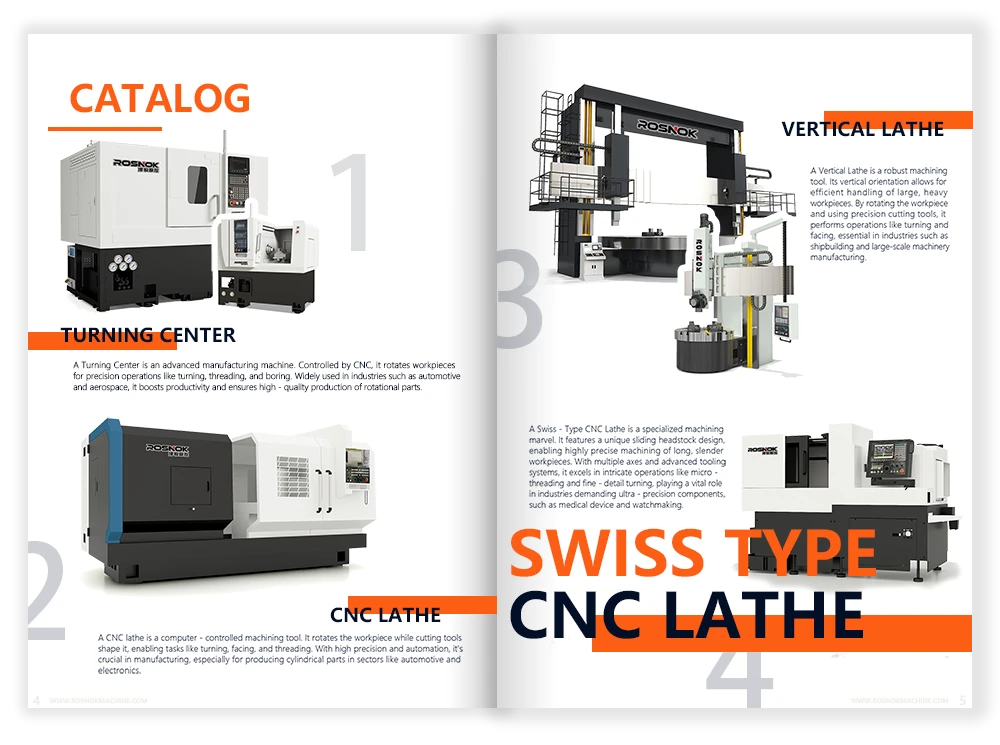
As this article has shown, controlling runout is not only about fixing a single error, but about building a more reliable machining system as a whole. In that context, machine quality also becomes part of the solution. A more stable spindle system, better assembly accuracy, and stronger structural rigidity all make runout control easier in real production. That is one reason why manufacturers such as Rosnok continue to focus on reliable CNC machine design and build quality, helping shops achieve more stable machining performance, better repeatability, and greater long-term confidence in daily operation.