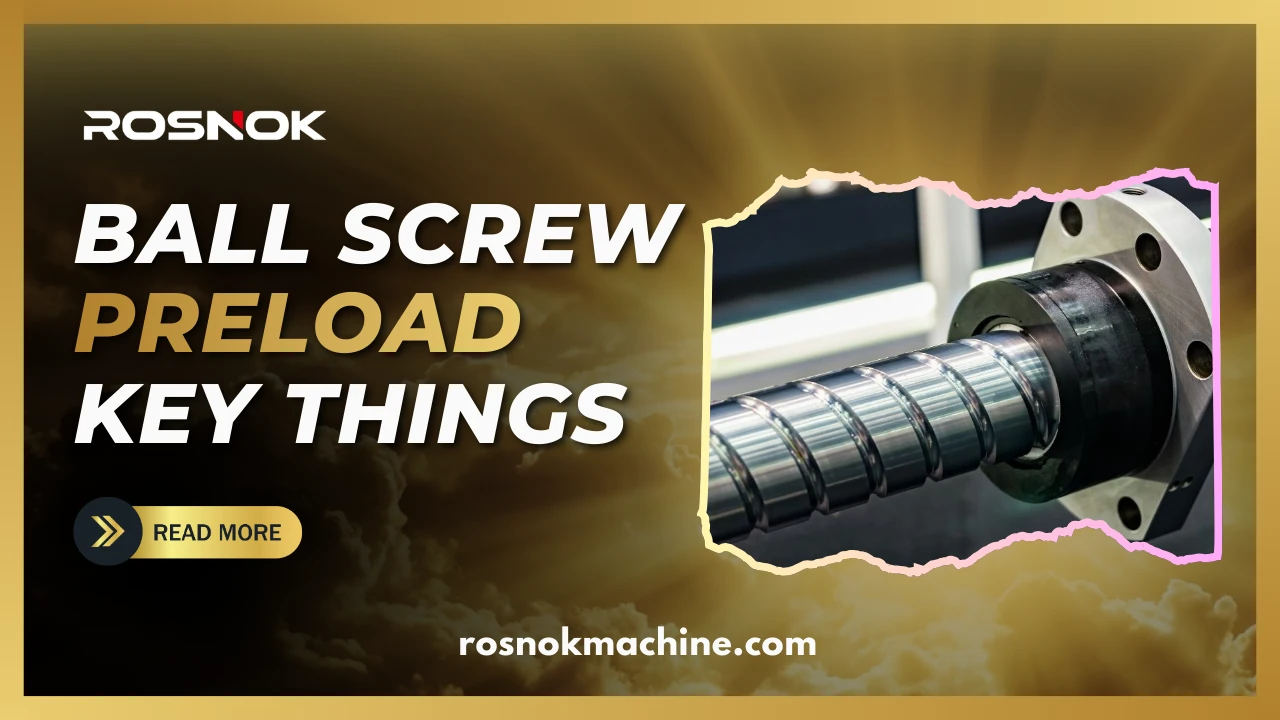
Ball Screw Preload is the controlled internal force applied within a ball screw assembly to reduce axial clearance, improve rigidity, and support higher positioning accuracy. In CNC machines, it plays a direct role in backlash control, motion stability, service life, and machining consistency. When preload is selected correctly, the machine performs more smoothly and predictably. When it is wrong, accuracy, heat control, and long-term reliability can all suffer.
Continue reading this article to learn why Ball Screw Preload matters, how it affects CNC motion performance, and how the wrong preload can create accuracy, heat, and wear problems.
What Is Ball Screw Preload?
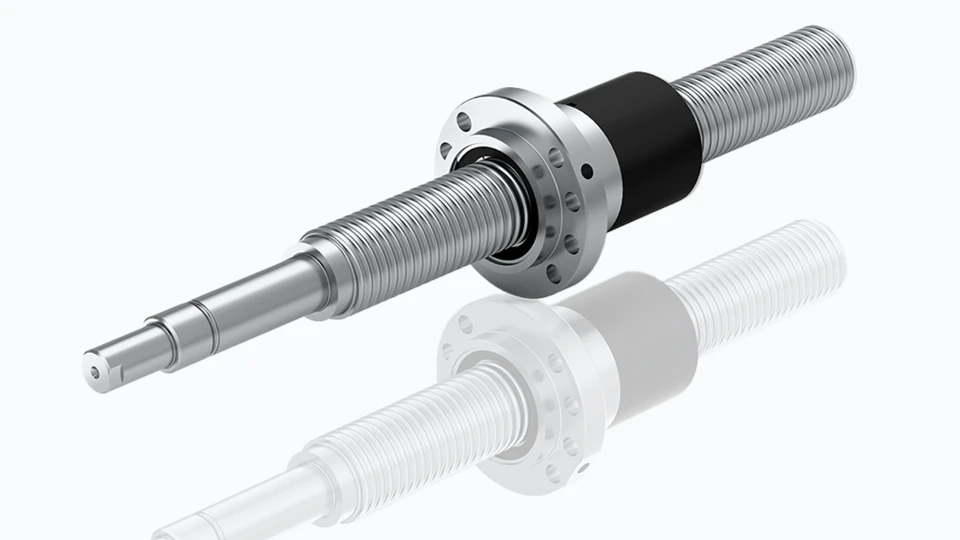
Ball Screw Preload is the controlled internal force applied within a ball screw assembly to eliminate or minimize axial clearance between the screw shaft, the rolling balls, and the nut. In practical terms, it creates a defined internal tightness that reduces mechanical play within the assembly.
In CNC machine tools, Ball Screw Preload is a built-in design condition rather than a random adjustment. It is used to establish a more stable internal contact state within the ball screw system, forming the mechanical basis for controlled linear motion.
How Does Ball Screw Preload Work?
To understand Ball Screw Preload more clearly, it is necessary to look at how a ball screw assembly functions and how preload changes the internal contact condition within that system.
How a Ball Screw Assembly Transmits Motion
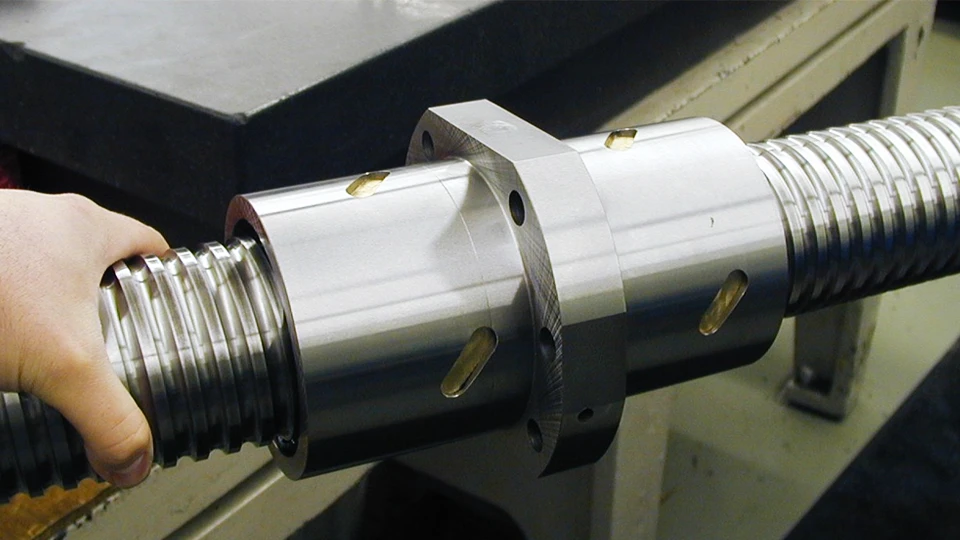
A ball screw assembly converts rotary motion into linear motion through the interaction of the screw shaft, the nut, and a set of recirculating balls. As the screw rotates, the balls roll between the raceways of the screw and the nut, allowing the nut to move along the screw axis with high efficiency and controlled motion.
Because the load is transmitted through rolling contact rather than direct sliding contact, a ball screw can achieve lower friction and more precise movement than many conventional screw mechanisms. However, efficient motion alone is not enough. The internal contact condition between the balls and the mating raceways must also remain controlled, which is where Ball Screw Preload becomes important.
How Preload Reduces Axial Clearance
Ball Screw Preload works by creating a controlled internal force that removes or minimizes axial clearance inside the assembly. In a ball screw without sufficient preload, a small amount of internal play can remain between the screw raceway, the balls, and the nut raceway. Even when that clearance is very small, it can still create a slight gap between commanded motion and fully transmitted motion. In CNC terms, this internal clearance is also one of the mechanical sources of backlash.
With preload, the balls are held in a more constant loaded contact condition between the mating raceways. Instead of shifting freely within a small clearance zone, they remain pressed against the contact surfaces in a more stable way. This reduces internal looseness and limits the axial movement that would otherwise appear before full force transmission is established.
How Preload Improves Rigidity and Motion Control
By reducing internal clearance, Ball Screw Preload also increases the mechanical rigidity of the transmission system. A more rigid internal structure resists displacement more effectively, which allows force and motion to be transmitted in a more direct and controlled manner. By placing the contact zone under a defined preload condition, the assembly also enters a lightly pre-compressed state that reduces additional elastic deformation under working load.
This is why preload is not simply a matter of making the assembly tighter. Its function is to create a defined internal load condition that supports more stable contact, lower compliance, and more controlled motion behavior within the ball screw system.
Why Ball Screw Preload Matters in CNC Machining
In CNC machining, the effect of Ball Screw Preload is reflected not only in internal transmission behavior, but also in backlash control, positioning accuracy, motion smoothness, and long-term operating stability.
Ball Screw Preload and Backlash Control
One of the most important reasons Ball Screw Preload matters is its role in backlash control. Backlash is not just a theoretical mechanical issue in a CNC machine. It directly affects how accurately a feed axis responds when motion reverses or when force is reapplied after a small clearance has been taken up. If internal looseness remains in the ball screw assembly, the axis may not respond immediately to the commanded movement.
By reducing axial clearance inside the transmission system, Ball Screw Preload helps limit one of the main mechanical sources of backlash. This makes axis reversal more direct and reduces lost motion within the feed system. In practical machining terms, that creates a more stable mechanical foundation for controlled positioning.
Ball Screw Preload and Positioning Accuracy
Ball Screw Preload also matters because CNC machining depends on both positioning accuracy and repeatability. A feed axis must not only reach the correct position once, but do so consistently across repeated cycles, direction changes, and changing loads. In production machining, that consistency is often just as important as single-point accuracy. If the ball screw system contains too much internal looseness, the relationship between motor input and axis movement becomes less exact.
With a more stable internal contact condition, Ball Screw Preload helps the axis respond with greater positional consistency. This supports both positioning accuracy and repeatability, especially in applications where small motion errors can affect part geometry, dimensional tolerance, or feature location.
Ball Screw Preload and Surface Finish
Although surface finish is influenced by many factors, Ball Screw Preload also plays a role by affecting motion smoothness during cutting. A more controlled transmission system can support steadier feed movement, while internal looseness can introduce small motion disturbances that reduce consistency at the cutting point. By improving rigidity within the transmission path, preload can also help reduce unwanted vibration that would otherwise disturb cutting stability.
For this reason, Ball Screw Preload is not only relevant to measurement accuracy. It also contributes to the stability of axis movement during actual machining, which can affect cutting smoothness and, in turn, surface finish quality.
Ball Screw Preload and Machine Service Life
Ball Screw Preload matters over the long term because motion quality and mechanical stability are closely tied to component loading and wear behavior. A ball screw assembly that maintains controlled internal contact is better positioned to transmit force in a stable and consistent way during repeated operation.
In CNC machine tools, this matters not only for short-term accuracy but also for long-term reliability. Ball Screw Preload is therefore part of the larger relationship between transmission stability, mechanical stress, and machine service life.
What Happens When Ball Screw Preload Is Too High or Too Low?
The effect of Ball Screw Preload does not depend on preload alone, but on whether the preload level is appropriate for the machine structure, motion demand, and working load. If preload is set too high or too low, the ball screw assembly may still operate, but its motion behavior and mechanical condition will no longer remain in a well-balanced state.
Problems Caused by Excessive Preload
When Ball Screw Preload is too high, the internal contact force between the balls and the raceways increases beyond the level needed for stable transmission. This raises internal friction and makes the ball screw assembly harder to drive. As a result, more force is required to keep the axis moving, more heat can be generated during operation, and servo motor load can increase as the drive system works against greater internal resistance.
Excessive preload can also increase stress within the contact zone. Over time, that higher stress can accelerate wear on the balls and raceways, especially under repeated high-speed or high-duty motion. The additional heat may also contribute to thermal growth in the screw, which can reduce positioning stability during operation. In practical terms, too much preload may improve tightness at first, but it can also create a heavier-running transmission condition that sacrifices efficiency, thermal stability, and long-term durability.
Problems Caused by Insufficient Preload
When Ball Screw Preload is too low, the assembly retains more internal clearance than it should. That remaining looseness allows small axial movement to appear inside the transmission path before force is fully transferred. In CNC machine tools, this makes the axis less mechanically direct during reversing motion and load changes.
Insufficient preload also reduces rigidity within the ball screw system. With less stable internal contact, the assembly becomes more vulnerable to displacement under working force, which weakens motion consistency. In practical machining terms, too little preload can leave the transmission system too loose to support the level of control expected from a precision feed axis.
Why Proper Preload Is a Balance
Ball Screw Preload is effective only when it is matched to the actual requirements of the machine. Too much preload increases friction, heat, and contact stress. Too little preload leaves clearance, lowers rigidity, and weakens motion control. In both cases, the problem is not the presence of preload itself, but the mismatch between preload level and application demand.
For that reason, Ball Screw Preload should be understood as a balance between internal tightness and usable motion performance. The goal is not simply to maximize preload, but to establish a preload level that supports controlled transmission without introducing unnecessary mechanical penalty.
Common Types of Ball Screw Preload
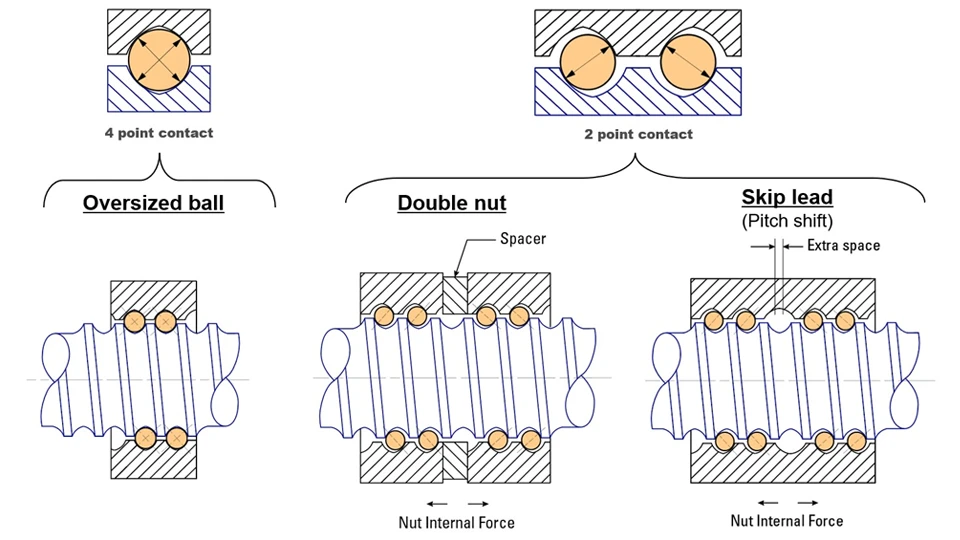
Ball Screw Preload can be created in different ways, depending on the structure of the nut assembly and the preload level required by the application. Although the purpose remains the same, the method used to generate preload affects assembly complexity, rigidity characteristics, and practical suitability in CNC machine design.
Double-Nut Preload
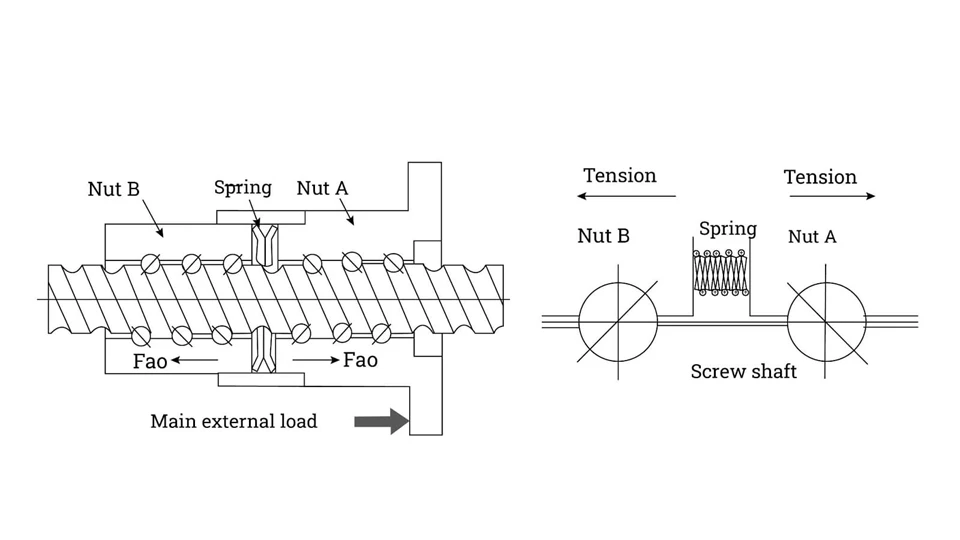
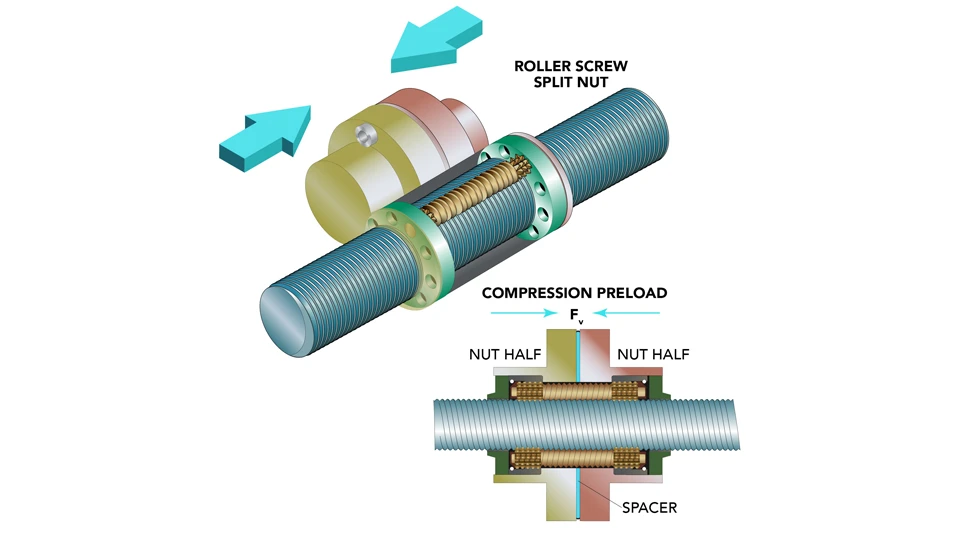
Double-nut preload uses two ball nuts mounted on the same screw shaft, with a controlled axial offset created between them, often established by a spacer or a similar adjustment element. This offset applies opposing force through the ball circuits, which removes internal clearance and establishes preload within the assembly.
This method is widely used when higher rigidity and more stable preload control are required. Its main advantage is structural adjustability and strong axial stiffness. However, it also adds more components, more assembly complexity, and more installation space than simpler preload methods.
Oversized Ball Preload
Oversized ball preload is created by using balls that are slightly larger than the nominal ball size for the raceway geometry. Because the balls fit more tightly between the screw and nut raceways, internal clearance is reduced and preload is generated through that tighter contact condition.
This method is more compact than a double-nut arrangement and is often used where space efficiency and structural simplicity matter. However, preload control depends heavily on ball size selection and manufacturing precision. Compared with double-nut preload, it offers less adjustability once the assembly has been built.
Single-Nut Lead Offset Preload
Single-nut lead offset preload is created by introducing a slight lead difference within the ball nut circuit so that the rolling balls are forced into a preloaded contact condition as they circulate through the assembly. This allows preload to be built into a single-nut structure without requiring two separate nuts on the same screw.
This method combines a more compact structure with a relatively high level of rigidity, which makes it attractive in precision applications where both space efficiency and controlled preload are important. However, its design and manufacturing demands are higher, since the preload condition depends heavily on the internal geometry of the nut and raceway system.
Key Differences Between Common Preload Methods
The main difference between these preload methods lies in how the internal force is created and controlled. Double-nut preload relies on axial offset between two nuts, oversized ball preload relies on tighter ball-to-raceway contact within a single nut structure, and single-nut lead offset preload relies on internal lead variation to generate preload.
In practical terms, double-nut preload is generally associated with stronger adjustability and higher structural complexity, oversized ball preload is associated with a more compact design and simpler assembly form, and single-nut lead offset preload offers a balance between compact structure and higher rigidity. The better choice depends on how the machine balances rigidity, space, manufacturing precision, and overall design requirements.
How to Know If Ball Screw Preload Is Incorrect
Incorrect Ball Screw Preload usually reveals itself through changes in machine behavior rather than through visible structural damage at the beginning. In most cases, the earliest signs appear in axis motion, running condition, and machining consistency.
Common Signs of Incorrect Preload
One common sign is abnormal backlash or increasing lost motion during axis reversal. If preload is too low, internal clearance may remain in the transmission path, making the axis response feel less direct. Another common sign is unusual heat around the ball screw nut or support area, especially during repeated motion. If preload is too high, internal friction can increase and raise operating temperature.
Noise can also be an indicator. A ball screw assembly with incorrect preload may produce harsher running noise, unstable sound during travel, or a less uniform motion feel. In some cases, servo load may also rise beyond the normal pattern because the drive system is working against increased internal resistance.
Performance Symptoms in Real CNC Operation
In actual machining, incorrect Ball Screw Preload often appears as unstable positioning behavior rather than as an immediately obvious mechanical fault. The machine may show reduced repeatability, small dimensional drift, or less consistent response during reversing moves. These issues are especially noticeable in operations that depend on accurate axis transition and repeated positioning.
Surface finish may also become less stable when the feed axis no longer moves with the same mechanical consistency. In addition, long-cycle operation may reveal a gradual loss of motion stability as heat, internal looseness, or excess resistance begins to affect axis behavior more clearly. In some cases, heat-related screw growth can also contribute to a temporary loss of pitch accuracy during operation.
How Ball Screw Preload Is Set and Evaluated
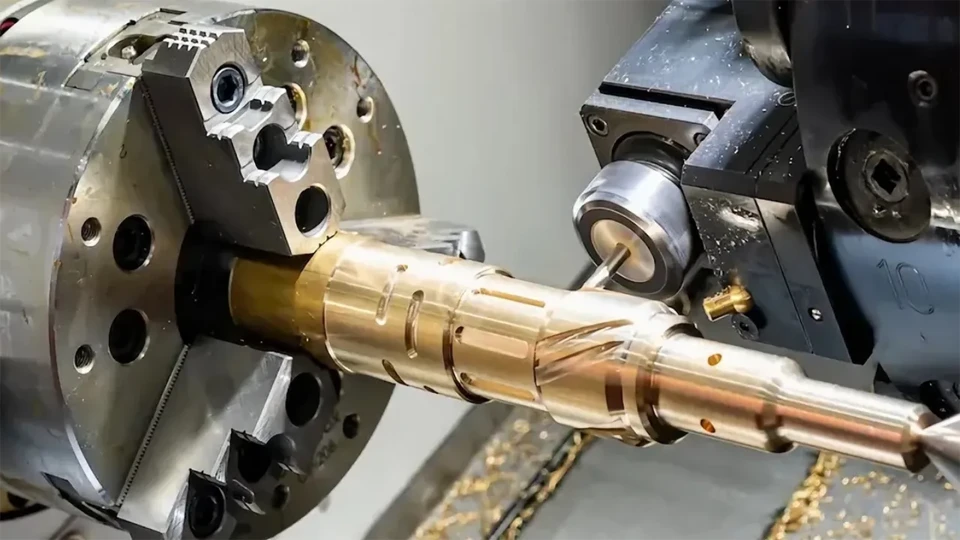
Ball Screw Preload is not established by guesswork. In CNC machine tools, it is determined through component design, preload method, assembly control, and performance verification. The preload value itself is only one part of the result. How that preload is built into the ball screw system is equally important.
How Manufacturers Set Ball Screw Preload
Manufacturers set Ball Screw Preload through the structural method used in the ball screw assembly. In a double-nut system, preload is created by introducing a controlled axial offset between the two nuts. In an oversized ball design, preload is created by selecting balls that fit more tightly within the raceway geometry. In a lead offset design, preload is generated through internal lead variation within the nut circuit.
Although the methods differ, the goal is the same: to establish a defined internal load condition that removes or minimizes axial clearance without creating unnecessary internal resistance. For that reason, preload is a design and assembly parameter, not a random adjustment made after the machine is built.
How Preload Is Checked in Practice
Once preload has been established, it must be evaluated through actual running and mechanical performance. In practice, this usually means checking whether the ball screw assembly moves with the intended internal resistance, maintains stable running behavior, and avoids abnormal looseness or excessive drag. One practical way to quantify preload condition is by checking starting torque, since it reflects how much internal resistance is present in the assembled ball screw system.
Common checks may include backlash behavior, running smoothness, temperature rise, and motion consistency during repeated travel. At the machine level, tools such as laser interferometers or ball-bar systems may also be used to verify whether the final axis behavior remains consistent with the intended preload condition. In a CNC machine, preload is considered acceptable only when the transmission system remains mechanically stable without showing signs of excessive friction or remaining internal play.
Why Machine Design Matters as Much as Preload
Ball Screw Preload cannot be judged in isolation from the rest of the drive system. Its actual effect depends not only on the ball screw itself, but also on support bearing condition, alignment, lubrication, mounting accuracy, and the rigidity of the surrounding machine structure.
For that reason, the same preload level may not produce the same result in different machine designs. A correctly selected preload still depends on the quality of the full transmission path. In practical machine design, Ball Screw Preload works as part of a larger mechanical system rather than as a standalone parameter.
Maintenance Tips for Ball Screw Preload Performance
Ball Screw Preload is established during design and assembly, but its long-term performance depends heavily on how well the ball screw system is maintained in actual service. Even a correctly preloaded assembly can lose motion stability if lubrication, cleanliness, or running condition is neglected over time.
Lubrication and Cleanliness
Proper lubrication is one of the most important conditions for preserving Ball Screw Preload performance. The rolling contact between the balls and the raceways depends on a stable lubricant film to reduce friction, limit wear, and control heat generation. If lubrication becomes insufficient or contaminated, internal resistance and surface damage can increase, which may gradually disturb the original preload condition. It is also important to use the correct lubricant type and to confirm that any automatic lubrication system is delivering properly, since poor lubrication control can gradually affect preload performance.
Cleanliness matters for the same reason. Chips, abrasive particles, and dirty coolant can enter the screw area if protection is poor or maintenance is inconsistent. Once contamination reaches the contact surfaces, wear can accelerate and motion quality can decline. Regular inspection of wipers, covers, or bellows is also important, since damaged protection can allow chips, coolant, and abrasive particles to reach the screw area more easily. For that reason, lubrication quality and contamination control are basic maintenance requirements for any preloaded ball screw system.
Monitoring Heat, Noise, and Backlash
Changes in operating condition often appear before severe mechanical damage becomes obvious. Unusual heat around the ball screw nut, harsher running noise, or increasing backlash during axis reversal can all indicate that the internal condition is moving away from normal.
Regular monitoring helps detect those changes early. If heat rises beyond the usual pattern, running sound becomes less uniform, or backlash begins to increase, the ball screw system should be checked before the condition develops further. In practical maintenance, Ball Screw Preload performance is protected not only by service actions, but also by timely observation of these warning signs.
When to Inspect, Repair, or Replace the Ball Screw
A ball screw assembly should be inspected more closely when motion stability, repeatability, or operating condition begins to change in a consistent way. Occasional variation may not always indicate preload failure, but repeated signs such as rising heat, persistent backlash, rougher travel, or abnormal load behavior should not be ignored.
When wear, internal damage, or loss of preload condition becomes significant, repair or replacement may be necessary. The correct response depends on the severity of the condition and the precision demands of the machine. In any case, delaying action after clear warning signs appear usually increases both accuracy risk and maintenance cost.
Conclusion
Ball Screw Preload may appear to be a small internal design detail, but it has a direct influence on how a CNC machine performs in real machining. From backlash control and positioning accuracy to motion smoothness, rigidity, heat behavior, and long-term service life, its role runs through the entire feed transmission system. Understanding Ball Screw Preload more clearly helps explain why some machines deliver stable precision over time while others gradually lose consistency under load.
For manufacturers and buyers who care about CNC machine performance, details like Ball Screw Preload should never be treated as secondary. As a CNC machine manufacturer, Rosnok focuses on building CNC lathes, machining centers, milling machines, vertical lathes, pipe thread lathes, and other metalworking equipment with close attention to transmission accuracy, structural stability, and long-term operating reliability.