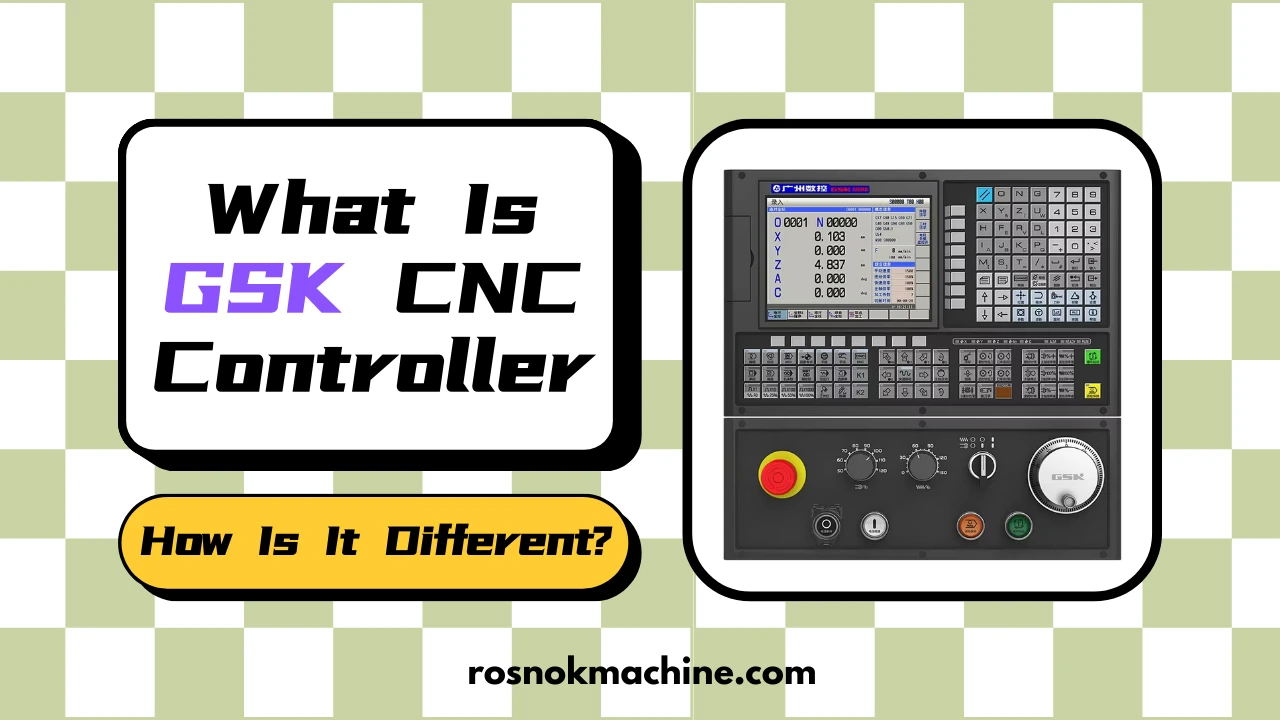
GSK CNC Controller Product Series Overview
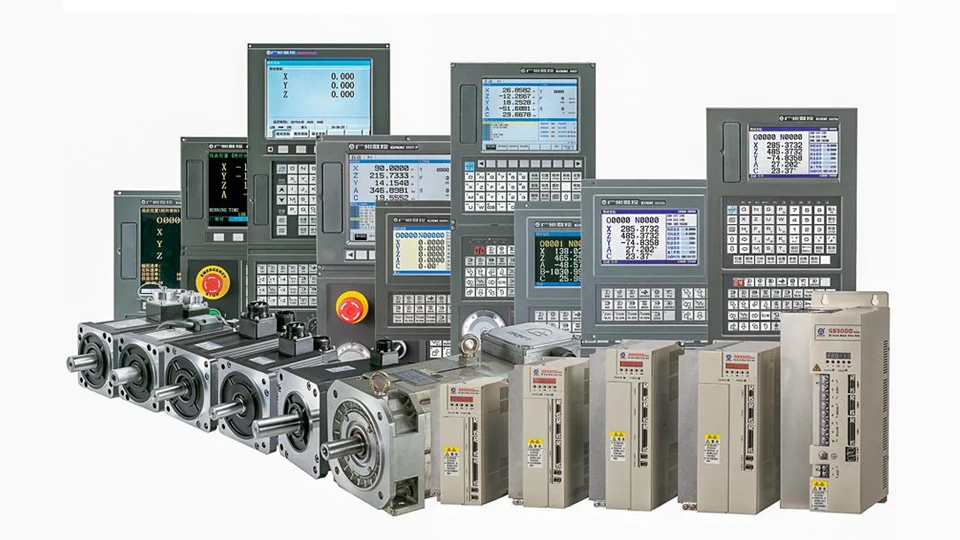
GSK offers a range of CNC controllers designed to serve various levels of machining needs, from standard 2-axis lathes to more complex multi-axis machining centers. The product line is structured around key models such as the GSK 980TD series, GSK 990TDi, GSK 988TA, and the newer GSK 25i and 26i series.
The GSK 980TDc is one of the brand’s most widely adopted models, commonly found in basic CNC turning applications. It supports 2-axis control, simple programming, and has earned popularity in entry-level production lines due to its affordability and ease of use.
For users requiring enhanced control, the GSK 990TDi supports up to 3 axes with improved motion accuracy and faster processing, making it more suitable for slant-bed lathes or mid-range turning centers.
In milling and machining centers, the GSK 988TA and 25i series offer 3+1 or 5-axis capabilities. The 25i, in particular, is equipped with a modern interface and higher-speed logic, and is increasingly adopted in machines designed for international users seeking better usability without significantly increasing cost.
The GSK 26i series, while similar to the 25i, is designed for compound machining or multifunctional lathes, giving machine builders more flexibility in integrating turning and milling operations on one platform.
One of GSK’s strengths is offering a consistent programming philosophy across its product line. This helps manufacturers scale their equipment without retraining operators or overhauling software environments. Backward compatibility also plays a key role in supporting machine retrofits or long-term OEM projects.
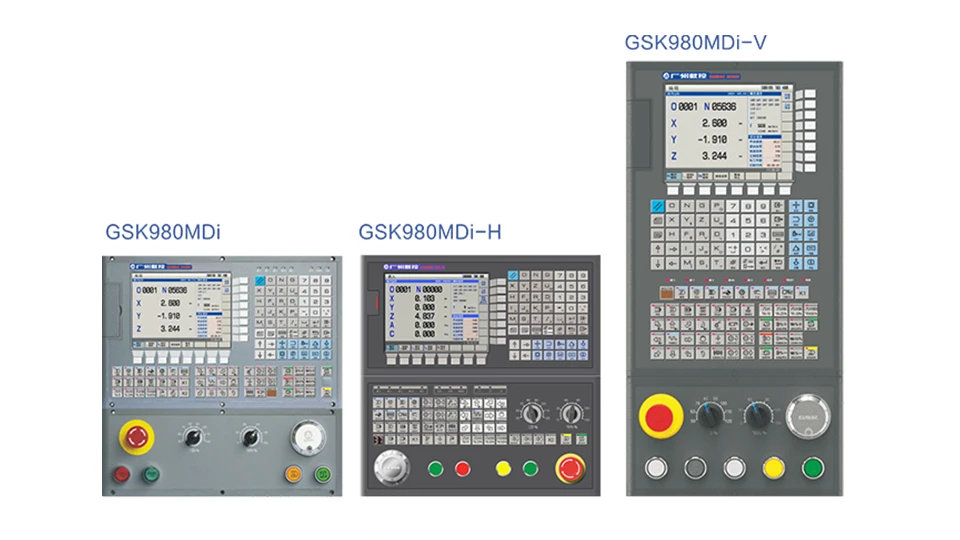
Operating Interface & Programming
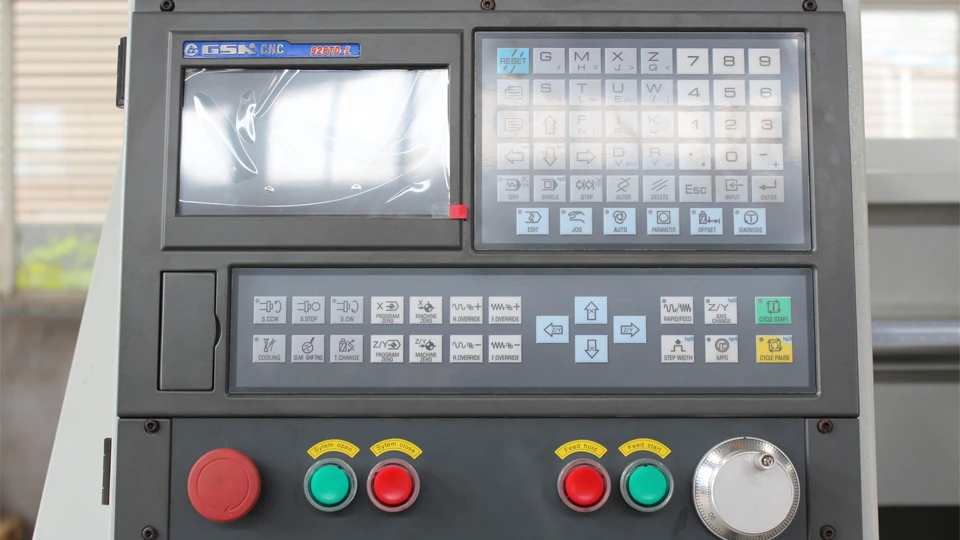
GSK CNC controllers are designed with a practical, function-first philosophy when it comes to interface and programming. Most models feature a built-in LCD or TFT screen ranging from 7 to 10.4 inches, with a combination of physical buttons and menu-driven navigation. While not as graphically polished as high-end controllers from Siemens or Heidenhain, GSK interfaces are intentionally simplified to lower the learning curve and improve accessibility for general-purpose operators.
The user interface typically adopts a structured, tree-style menu system with clearly grouped functions for manual, MDI, automatic, and parameter settings. This consistency across models—from the GSK 980TD series to the newer 25i—allows for easier operator transition between machines. For environments where technician turnover is frequent or operator training budgets are limited, this familiarity becomes a strong advantage.
On the programming side, GSK controllers support standard ISO G-code, including basic turning, milling, drilling, threading, and canned cycles. Advanced models like the 25i series also support macro programming, user-defined subroutines, and custom M-codes. While the system doesn’t natively support conversational programming or 3D simulation like some Western brands, its support for standard CAM post-processing and RS232/USB file transfer ensures good compatibility with mainstream workflows.
GSK has also developed its own offline programming software, such as GSK-CAM or GSK-NCEditor, which allows users to write, simulate, and debug programs before uploading them to the controller. These tools are lightweight but effective, and are particularly helpful for workshops that handle repetitive batch jobs or multiple program variants. However, they are generally only available in Chinese and may require localization support for global users.
Some newer models, including the 25i and 26i series, have begun to integrate Ethernet communication and touchscreen support. While still basic in appearance, these upgrades reflect GSK’s move toward improving human-machine interaction without sacrificing the controller’s industrial reliability and cost-effectiveness.
GSK’s programming environment is not designed to compete with high-end CAD/CAM-integrated solutions, but rather to provide a stable, predictable, and accessible control layer for most everyday machining needs. Its strength lies in its simplicity: operators can learn it quickly, errors are easy to diagnose, and downtime is minimized. For many manufacturers, this is precisely what they need—reliable functionality over complexity.
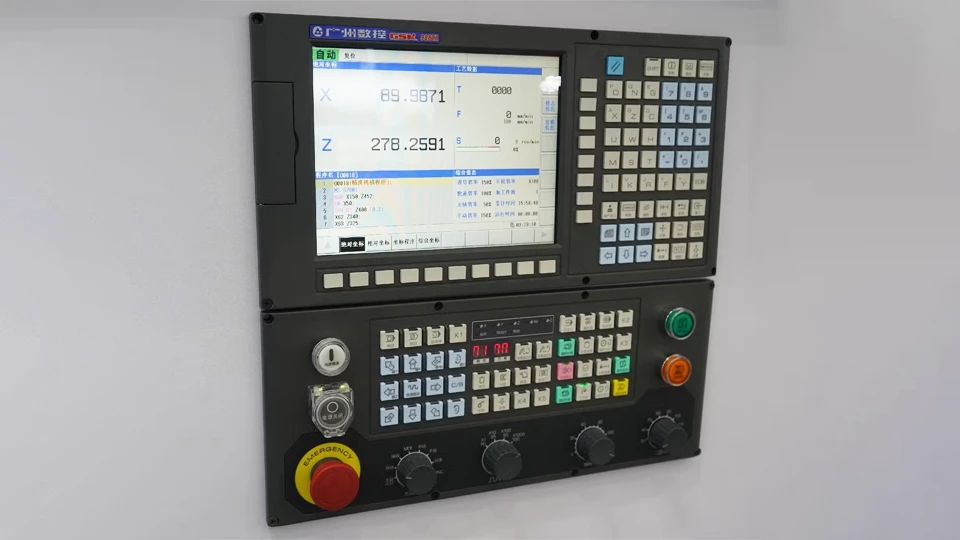
Performance and Stability
In evaluating any CNC control system, performance metrics such as motion accuracy, command processing speed, and operational stability are critical. GSK controllers, while positioned in the mid-market segment, deliver a reliable performance profile that meets the essential demands of mass production, basic multi-axis coordination, and repeatable part quality.
Precision-wise, GSK systems typically offer linear interpolation accuracy within ±0.005 mm and repeat positioning accuracy around ±0.002 mm—values sufficient for most general machining tasks. While this may not rival the ultra-fine resolution of higher-end aerospace-grade controls, it is more than adequate for automotive components, general engineering parts, and mold base roughing. Many GSK models also support look-ahead functions to smooth toolpath transitions during high-speed contouring, improving both surface finish and mechanical stability.
In terms of speed, instruction execution rates and axis response times have improved significantly in newer generations like the GSK 25i and 26i series. These models feature faster CPU cores, upgraded servo bus protocols, and more efficient PLC logic handling, resulting in better throughput on complex cycles. Although high-speed machining is not GSK’s primary market, its performance is sufficient for moderate feedrate operations across multi-axis configurations—ranging from 3+1 and 4-axis systems to supported 5-axis setups with rotary or tilting tables.
GSK controllers also support multi-axis and multi-channel configurations, though within reasonable limits. For example, systems such as the 990TDi can manage up to 5 axes and dual-channel logic, which is suitable for twin-spindle or Y-axis turning centers. However, for applications requiring true simultaneous 5-axis contouring or full MTM (multi-tasking machining), higher-end brands still hold an edge in terms of synchronization fidelity and interpolation smoothness.
In terms of stability, real-world feedback from OEMs and integrators suggests that GSK controls are generally robust under standard shop-floor conditions. The hardware is known for thermal stability, and software crashes or logic errors are rare. Diagnostic tools are basic but effective, and machine downtime due to controller faults remains low. Additionally, the use of standard industrial components and simple architecture reduces the risk of cascading failures during operation.
Overall, GSK’s performance is best described as functionally consistent rather than cutting-edge. It offers the processing power and reliability necessary for high-uptime, mid-precision operations while maintaining a manageable technical complexity. For manufacturers looking for dependable control without overpaying for unused features, GSK delivers a balanced solution.
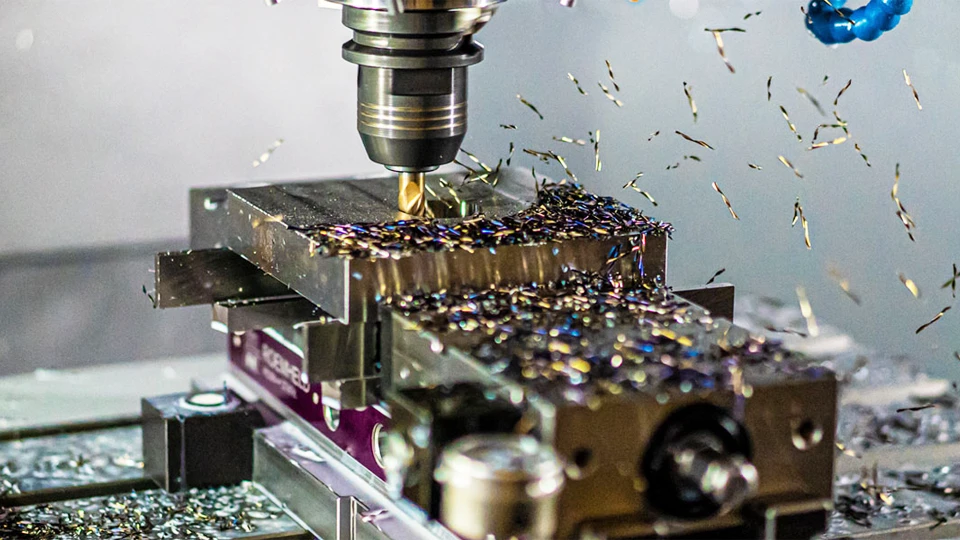
Industry Applications & Adaptability
GSK CNC controllers are widely used in industries that rely on cost-effective, mid-range automation. While they may not be the first choice for high-end precision applications, they are well-positioned in sectors where process stability, affordability, and ease of integration are critical.
One of the strongest application areas is the automotive parts sector, particularly in operations like brake disc turning, hub milling, and chassis component processing. Many manufacturers in Asia and Eastern Europe deploy GSK-controlled lathes and machining centers on large-volume production lines where tolerance requirements are moderate and machine utilization is high. The system’s stable control, minimal downtime, and simplified operator interface align well with such use cases.
GSK controllers are also found in general metalworking industries, including sheet metal shops, gear manufacturers, and bolt/nut factories. In these environments, where flexibility and quick program switching are necessary, GSK systems offer just enough programming depth without overwhelming the operator with complex setup processes. They are compatible with most mainstream CAM workflows—many users run FANUC-based post-processors directly on GSK systems with minimal adjustment, benefiting from its high ecological compatibility.
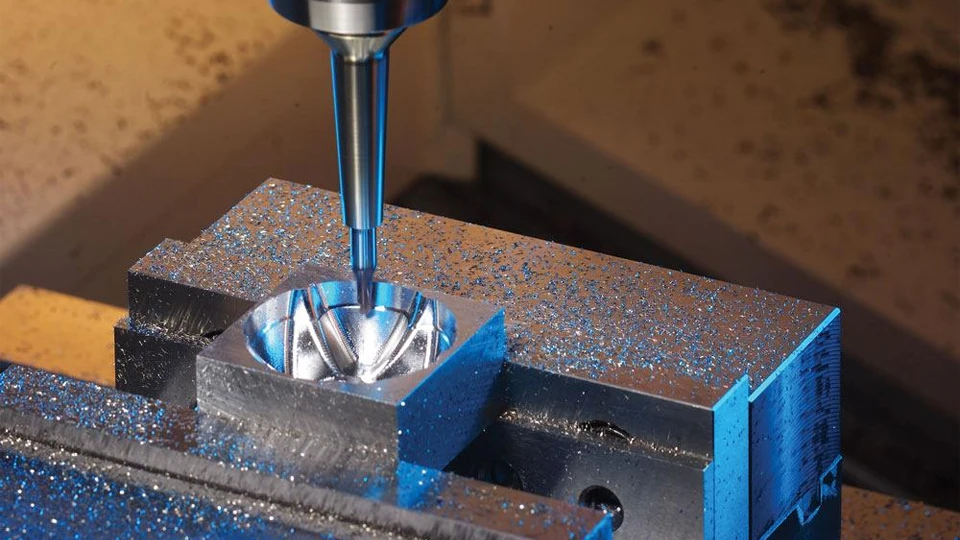
In the mold and die industry, GSK controls are used primarily in roughing and semi-finishing operations on milling machines or vertical machining centers. Though not typically applied in high-speed finishing for complex contours, the newer 25i series—with improved interpolation speed and axis control—has made inroads into mold base and cavity work where cost is a bigger concern than micron-level accuracy.
For educational and vocational training, GSK systems are often selected due to their intuitive layout and basic programming environment. Technical colleges and vocational schools in regions like Southeast Asia and South America frequently use GSK-equipped training lathes and mills to teach CNC principles, preparing students for entry-level operator roles in local industries.
Ultimately, GSK’s adaptability lies in its ability to serve diverse roles: a simple controller for small workshops, a reliable production tool in large factories, or an entry platform for skill development. In addition to its widespread use in metal cutting, the GSK-RB controller series also supports industrial robotic arms for tasks such as material handling and welding—marking its expansion into non-cutting automation scenarios. Its balance between function and simplicity makes it a practical choice in markets where over-specification leads to inefficiencies rather than benefits.
Service, Support, and Localization
Beyond technical specs, long-term CNC value depends heavily on service quality, upgradeability, and localized usability. GSK’s support strategy is designed around emerging markets, prioritizing availability over centralization. In Asia—particularly China and Southeast Asia—GSK operates through a wide network of local distributors who offer first-line technical assistance, parts inventory, and on-site setup. In contrast, brands like Fanuc and Siemens often rely on centralized, certification-heavy service systems that can delay on-the-ground response.
Localization is one of GSK’s strongest advantages. The controller interface supports multiple languages, with terminology and parameter naming adapted to match vocational training habits in Asia, South America, and Eastern Europe. This significantly lowers the learning curve for operators without fluent technical English. Translated manuals, localized alarm codes, and region-specific parameter presets all contribute to faster onboarding and fewer user errors.
In terms of software and maintenance, GSK systems offer flexibility. Firmware updates, ladder logic adjustments, and diagnostics can often be done without proprietary tools or software dongles—ideal for workshops without advanced IT support. This contrasts with Fanuc or Siemens systems, which typically require licensed software, secure remote access, or vendor-side configuration, making basic support less accessible in bandwidth-limited regions.
Training access is another key differentiator. Technical colleges across Asia and South America frequently include GSK systems in their curricula, and the company supplies native-language manuals, wiring diagrams, and G-code examples. While these resources may not match the simulation depth of SINUTRAIN or Fanuc’s simulators, they meet the practical training needs of production-level teams in cost-sensitive markets.
Cost Efficiency & Market Positioning
Cost has always been a defining factor in the adoption of CNC systems, especially in regions where return on investment (ROI) must be realized quickly. In this regard, GSK CNC controllers have carved out a clear niche in the global market—not by trying to compete with high-end platforms, but by offering an affordable and dependable alternative for value-driven manufacturing.
Compared to international brands like Fanuc and Siemens, GSK systems are typically priced 50%–70% lower for equivalent 2-axis or 3-axis control setups. This cost gap becomes particularly meaningful for small-to-medium machine builders and workshops who need to scale production capacity without over-investing in features they don’t need. Even when bundled with servo motors and drives, GSK’s all-in-one pricing structure keeps total system costs well below those of most global competitors.
Affordability doesn’t mean a stripped-down experience. GSK systems include essential features such as PLC integration, macro programming, real-time axis monitoring, and alarm history—all within a streamlined UI that avoids overcomplication. For many users, this means faster learning curves, quicker machine commissioning, and lower operator training costs. The savings continue into the long term, as spare parts and technical service are often more accessible and less expensive than those tied to international brands with proprietary hardware ecosystems.
GSK’s pricing strategy also aligns well with the total cost of ownership (TCO) principle. Maintenance is simpler, diagnostics are less dependent on external tools, and the availability of modular parts shortens downtime. In cost-sensitive markets where machine uptime directly affects profitability, these factors translate into real operational gains.
Position-wise, GSK doesn’t aim to replace Fanuc or Siemens in premium applications. Instead, it holds a strong position in the value-tier segment, often serving as the default control system in domestic Chinese machine tools and a growing number of export-ready equipment shipped to Asia, South America, and Eastern Europe. This positioning is intentional—it allows GSK to meet the needs of emerging markets that require reliability and flexibility without high acquisition or lifecycle costs.
In many ways, GSK’s market strategy reflects the needs of its core audience: pragmatic manufacturers who prioritize ROI, uptime, and simplicity. Rather than feature overload, the focus is on delivering dependable, easy-to-maintain systems that get the job done—efficiently and economically.
GSK vs Fanuc vs Siemens: A Comprehensive Comparison
When evaluating CNC controllers globally, Fanuc and Siemens are typically viewed as the two dominant brands, while GSK has steadily built a niche in emerging markets. Each system reflects a distinct design philosophy and target audience, making direct comparison a matter of context. The following analysis compares the three across five dimensions: architecture, capabilities, user experience, ecosystem, and cost-positioning.
1. System Architecture and Flexibility
Fanuc and Siemens both employ modular hardware platforms with scalable control units, external I/O racks, and advanced servo bus systems. Siemens stands out for its tight PLC-CNC integration via TIA Portal, while Fanuc maintains a more segmented yet stable design optimized for machine builders. GSK, by contrast, typically integrates CNC, PLC, and HMI functions into a single board or cabinet. This results in simpler wiring and faster deployment, but offers less flexibility in complex multi-machine or plant-wide automation environments.
2. Functional Capabilities
Siemens offers the broadest technical ceiling, supporting true 5-axis machining, dynamic work offsets, and advanced real-time compensation features. Fanuc is widely trusted for its high-speed response, nanometer-level interpolation, and robust reliability in production lines. GSK covers essential capabilities for multi-axis turning and milling applications, including 2–4 axis turning and 3+1 to supported 5-axis milling, with basic macro support and look-ahead motion. While not suited for high-end aerospace or medical device tasks, GSK delivers stable motion control and practical features for general-purpose machining and vocational-level automation.
3. User Interface and Programming Experience
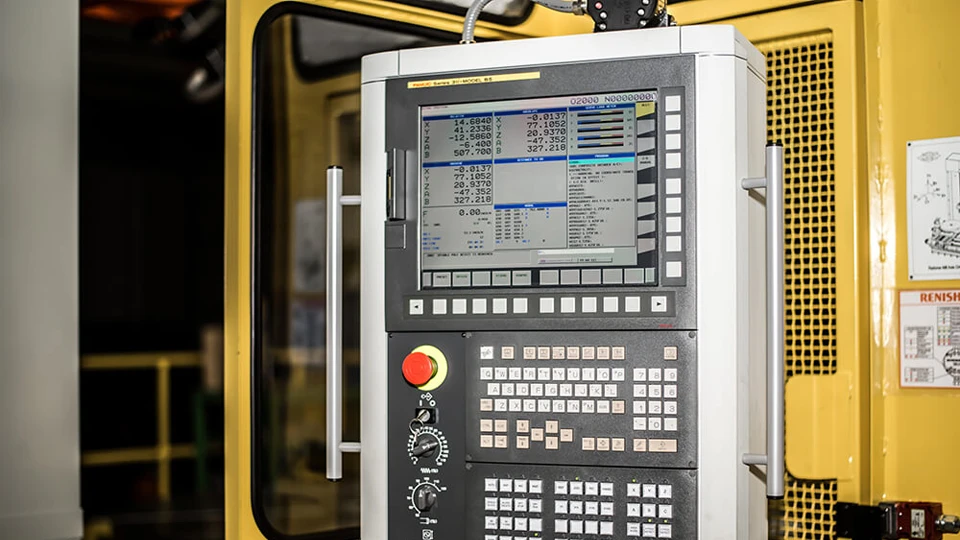
Fanuc and GSK share a similar G-code-based interface, making them largely cross-compatible at the operator level. Siemens uses a more abstract, graphical programming model (ShopMill/ShopTurn), which can be powerful but has a steeper learning curve for G-code-trained users. GSK’s localized interfaces (available in multiple languages) and simplified menu structures cater well to technicians in Asia, South America, and Eastern Europe. For first-time users or vocational schools, GSK offers a smoother onboarding experience, while Siemens excels in environments with highly trained personnel.
4. Support Ecosystem and Localization
Fanuc and Siemens have established global networks of authorized integrators and certified training centers, offering deep support for both machine builders and large enterprises. However, response times and service fees can be high in regions with limited coverage. GSK takes a different route—working through local distributors and OEM partners to deliver hands-on support, region-specific manuals, and spare part availability. While not as globally standardized, GSK’s support is often faster and more affordable in its core markets.
5. Cost and Application Fit
In terms of cost structure, Siemens commands the highest price point, followed by Fanuc. GSK offers the most economical option, often bundling controllers, drives, and motors in a single package. This model appeals to cost-sensitive machine builders and job shops who require basic CNC functionality without excess overhead.
| Category | GSK | Fanuc | Siemens |
|---|---|---|---|
| System Architecture | Integrated CNC+PLC+HMI; compact setup | Modular; stable machine-builder integration | Highly modular; seamless CNC-PLC via TIA Portal |
| Functional Capabilities | 2–4 axis; macro & look-ahead supported | High-speed interpolation; robust automation | 5-axis, dynamic offsets, full compensation features |
| User Interface & Programming | Simplified menus; multilingual; G-code base | G-code; widely adopted; low learning curve | Graphical programming; ShopMill/Turn; steeper learning |
| Support & Localization | Strong in Asia/EM; local OEM partnerships | Global certified centers; slower in remote areas | Extensive global coverage; higher service costs |
| Cost & Target Fit | Most affordable; ideal for SMEs & training | Mid to high cost; reliable for production lines | Highest cost; tailored for premium, complex applications |
Conclusion
In an industry often dominated by legacy brands and high-cost solutions, GSK CNC controllers have carved out a different path—one defined by balance, accessibility, and purpose. For manufacturers navigating tight budgets, workforce training, and evolving market demands, GSK offers more than just a control unit; it delivers a bridge between ambition and practicality. From basic turning centers to mid-tier machining solutions, GSK provides a reliable answer for those who value simplicity, integration, and support without unnecessary complexity.
That same philosophy—favoring practical performance over over-engineering—also defines the machine design approach of Rosnok, a global manufacturer of CNC lathes and machining centers. In markets such as Asia, Eastern Europe, and South America, Rosnok integrates GSK control systems into its equipment to meet the needs of mid-sized manufacturers, OEMs, and technical training institutions. This pairing allows Rosnok to deliver machines that are reliable, serviceable, and cost-aligned—without overextending on unnecessary complexity or features.