How 3-Axis CNC Machining Works
Axis Movement and Tool Behavior
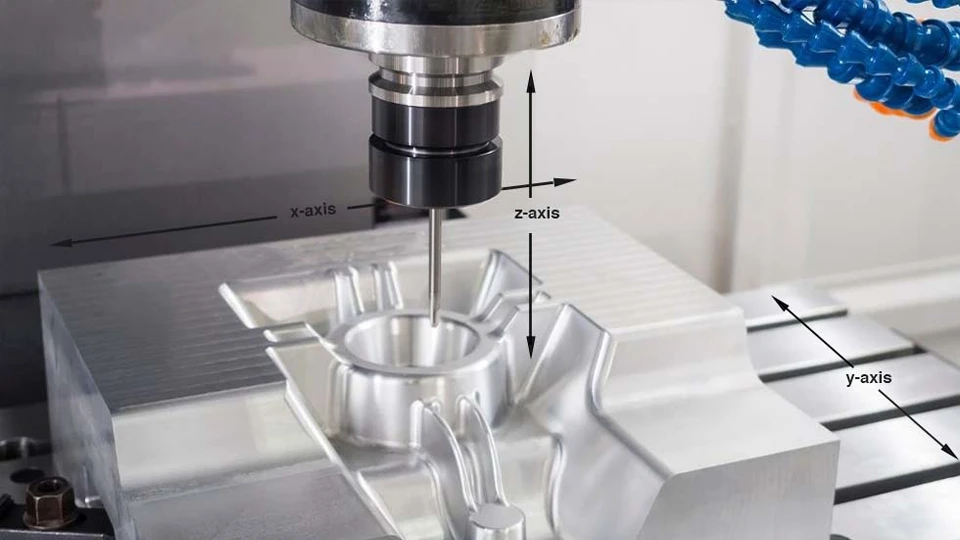
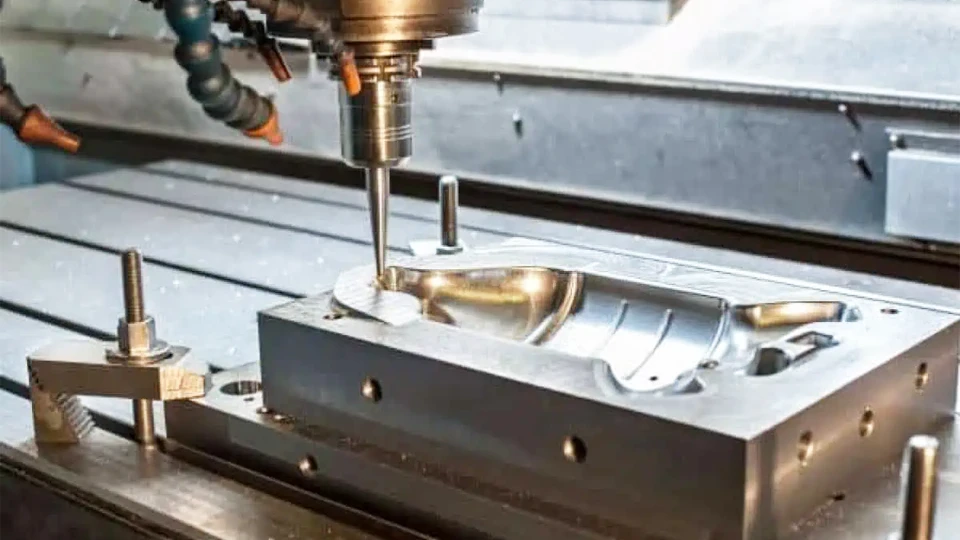
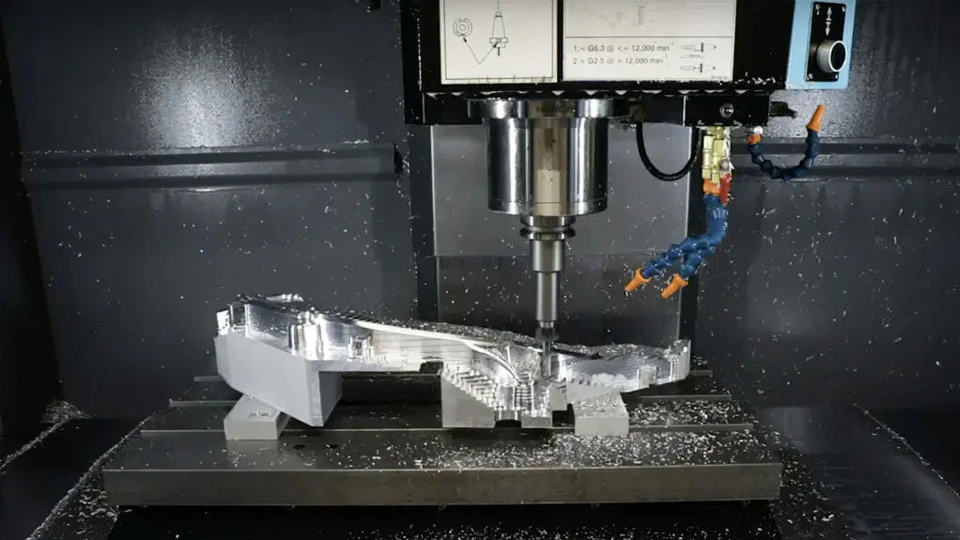
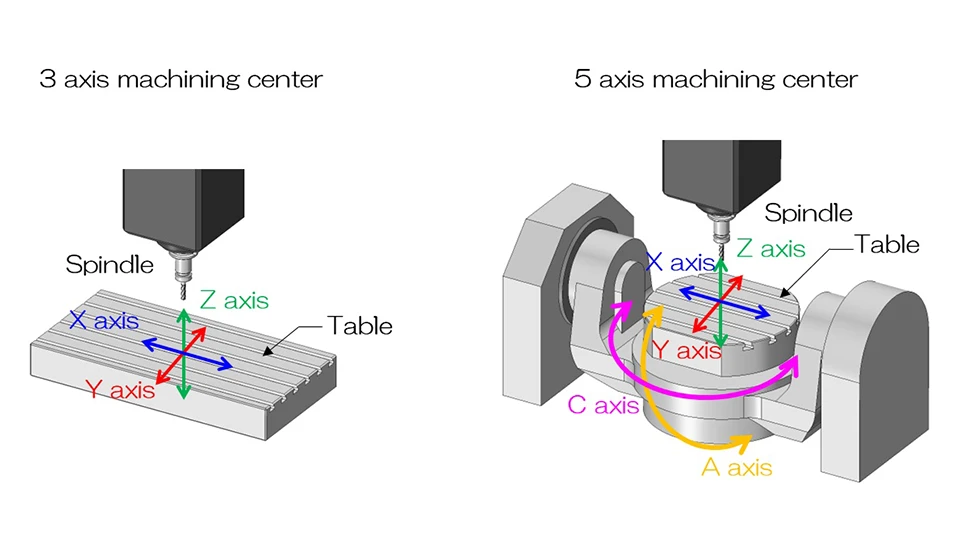
In 3-axis CNC machining, the cutting tool moves in three straight lines: left to right (X-axis), front to back (Y-axis), and up and down (Z-axis). These motions are controlled by precision motors—typically servo motors that guide the tool along precise paths. During machining, the workpiece stays stationary on the machine table while the tool travels across these three directions to reach different cutting points.
This linear movement setup means the tool always cuts from above, at a fixed vertical angle. As a result, 3-axis machines are excellent for operations like milling flat surfaces, cutting slots, drilling vertically, and tracing 2D or 2.5D part profiles. However, since the tool can’t tilt or approach from side angles, it struggles with deep cavities, undercuts, or complex 3D geometries that require angled entry.
Machining Strategies in 3-Axis CNC
While the tool can only move in three directions, different machining strategies allow it to handle a variety of part shapes and requirements. Common strategies include:
- Contour milling: Following the edges of a part to create precise outlines.
- Pocket milling: Removing material inside a closed boundary to create cavities.
- Z-level roughing: Stepping down layer by layer to clear large volumes of material.
- Face milling: Flattening the top surface of a workpiece.
The choice of strategy depends on the part geometry, material, and required surface finish. For example, slotting might use end mills with straight passes, while pocketing might involve spiral or zig-zag paths for efficient material removal. These strategies are programmed into the machine using CAM software, which we’ll discuss next.
CAM Programming for 3-Axis
Computer-Aided Manufacturing (CAM) software is used to generate toolpaths for 3-axis machining. Engineers import 3D models into the software, define machining operations (like facing, contouring, drilling), and assign tools and cutting parameters.
Since the tool moves only in straight lines, 3-axis toolpaths are relatively easy to program. CAM software calculates each movement by combining X, Y, and Z positions, creating a series of linear steps that the machine follows.
Modern CAM tools can also simulate the machining process, helping users identify collisions, optimize tool engagement, and reduce cycle time before sending the final code (G-code) to the CNC machine.
Capabilities and Applications of 3-Axis Machining
3-axis machining enables efficient material removal along three linear axes: X, Y, and Z. It is especially effective for parts with flat surfaces or features aligned with these primary directions. While it cannot handle complex undercuts or angled surfaces, this process remains widely used for high-quality, repeatable, and cost-efficient operations in a variety of industries.
What 3-Axis Machining Can Achieve
This method supports a wide range of operations such as:
- Face milling: Performing a broad, flat pass to level the top surface of a raw workpiece, often as the initial step in part preparation.
- Surface milling: Machining specific surface regions to achieve defined contours, heights, or shallow 3D features using flat or ball end mills.
- Slotting and grooving: Cutting narrow channels or keyways for mechanical function or assembly.
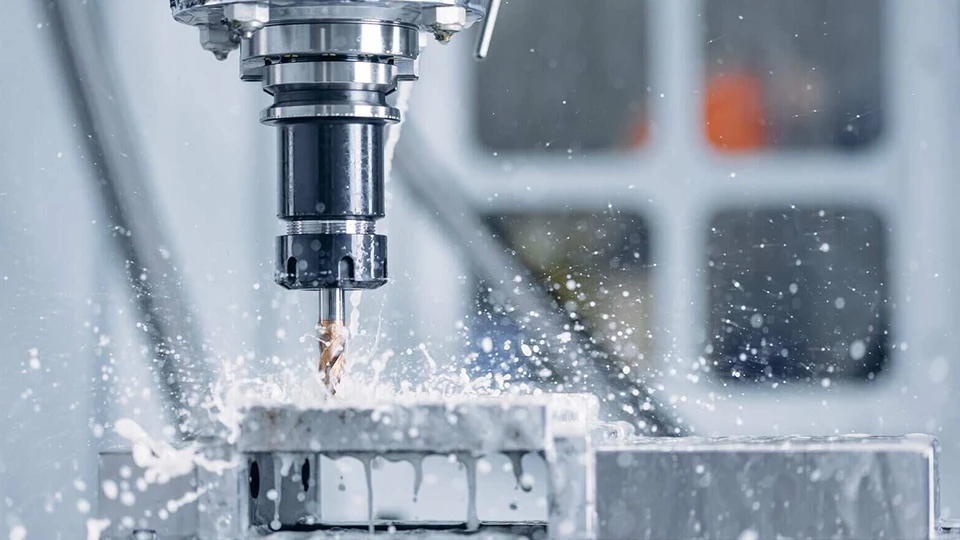
- Drilling: Performing vertical drilling operations in predefined locations using twist drills or center drills.
- Pocketing: Clearing internal cavities with sharp or rounded corners.
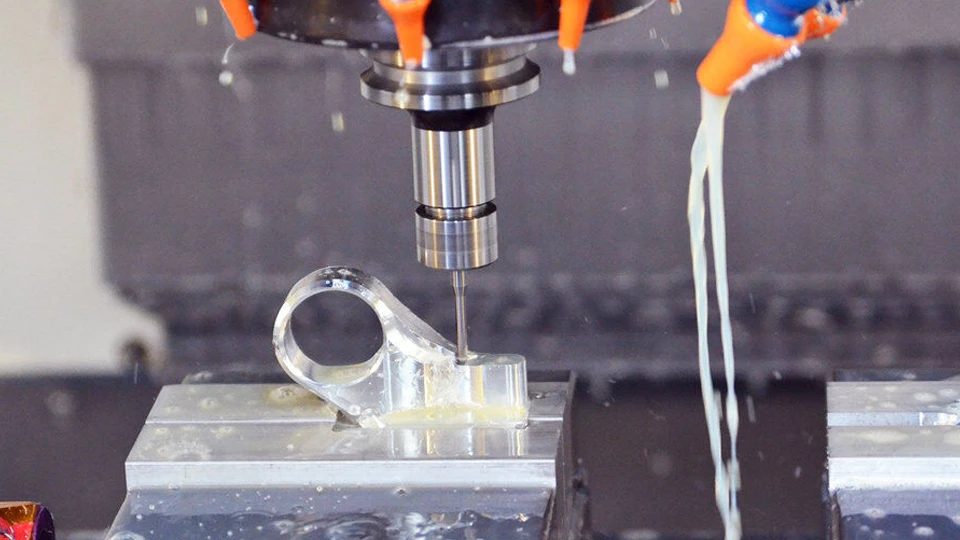
- 2D and 2.5D contouring: Following flat profiles with controlled depth for dies, plates, or engraved parts.
Because the toolpath stays linear and the part remains stationary, 3-axis machining provides high consistency and dimensional control for parts with straightforward geometries.
Common Industrial Use Cases
3-axis machining is widely used in manufacturing environments where parts require flat features, symmetric geometry, or moderate complexity. Typical application areas include:
- Automotive components: Brackets, covers, housings, and base plates.
- Aerospace fixtures: Flat panels, frames, and mechanical supports.
- Electronics parts: Housings, heat sinks, mounting frames.
- Medical tooling: Instrument trays, implant blanks, and positioning jigs.
- General industrial parts: Base blocks, spacers, bearing housings, and structural plates.
In all these applications, the simplicity and speed of 3-axis machining allow manufacturers to meet tight deadlines while maintaining high quality.
Capabilities and Applications of 3-Axis Machining
3-axis machining enables efficient material removal along three linear axes: X, Y, and Z. It is especially effective for parts with flat surfaces or features aligned with these primary directions. While it cannot handle complex undercuts or angled surfaces, this process remains widely used for high-quality, repeatable, and cost-efficient operations in a variety of industries.
What 3-Axis Machining Can Achieve
This method supports a wide range of operations such as:
- Face milling: Performing a broad, flat pass to level the top surface of a raw workpiece, often as the initial step in part preparation.
- Surface milling: Machining specific surface regions to achieve defined contours, heights, or shallow 3D features using flat or ball end mills.
- Slotting and grooving: Cutting narrow channels or keyways for mechanical function or assembly.
- Drilling: Performing vertical drilling operations in predefined locations using twist drills or center drills.
- Pocketing: Clearing internal cavities with sharp or rounded corners.
- 2D and 2.5D contouring: Following flat profiles with controlled depth for dies, plates, or engraved parts.
Because the toolpath stays linear and the part remains stationary, 3-axis machining provides high consistency and dimensional control for parts with straightforward geometries.
Common Industrial Use Cases
3-axis machining is widely used in manufacturing environments where parts require flat features, symmetric geometry, or moderate complexity. Typical application areas include:
- Automotive components: Brackets, covers, housings, and base plates.
- Aerospace fixtures: Flat panels, frames, and mechanical supports.
- Electronics parts: Housings, heat sinks, mounting frames.
- Medical tooling: Instrument trays, implant blanks, and positioning jigs.
- General industrial parts: Base blocks, spacers, bearing housings, and structural plates.
These use cases show that 3-axis machining is a practical and efficient solution for manufacturing parts across a wide range of industries.
Pros and Cons of 3-Axis Machining
Advantages of 3-Axis Machining
3-axis machining is a widely adopted method in manufacturing because of its practical strengths in both performance and cost-efficiency. Below are its main advantages:
- Simplicity and ease of use
Its linear toolpaths are straightforward to understand and program, making it ideal for beginners and fast setup in production environments. - Broad compatibility
Compatible with a wide range of standard CAM software and G-code programming. Most CNC operators are trained to handle 3-axis systems with minimal onboarding. - Lower machine cost
Compared to 4-axis and 5-axis machines, 3-axis systems are significantly more affordable, both in initial investment and long-term maintenance. - Stable cutting conditions
The tool maintains a fixed vertical orientation, reducing tool deflection and vibration in many standard machining tasks. This contributes to consistent surface finish and dimensional accuracy. - High repeatability
Once programmed, the same part can be manufactured with high precision repeatedly, which is crucial for batch production in automotive, aerospace, and general industrial sectors. - Shorter programming time
Simpler geometries and fewer tool orientations lead to faster CAM toolpath generation, reducing pre-production engineering time.
These advantages make 3-axis machining especially suitable for mass-producing components with relatively simple shapes, flat surfaces, or features aligned along vertical or horizontal planes.
Limitations of 3-Axis Machining
Despite its strengths, 3-axis machining has notable limitations that make it unsuitable for certain complex applications. These constraints include:
- Limited geometric flexibility
Because the cutting tool can only approach the workpiece from one fixed orientation (typically vertical), it cannot reach angled features, deep cavities, or undercuts without repositioning the part manually. - Manual part reorientation
Complex parts often require multiple setups or fixtures to expose hidden features. This increases machining time and raises the risk of alignment errors. - No simultaneous multi-axis movement
3-axis machines lack rotational axes, which means they can’t perform complex 3D surfacing or free-form milling in a single setup like 5-axis machines can. - Reduced efficiency for complex parts
When dealing with highly contoured surfaces or tight geometries, 3-axis machining often requires additional machining passes, leading to longer cycle times and higher tool wear.
While 3-axis machining is a versatile and cost-effective solution for many jobs, it’s essential to understand where its limitations start to impact productivity, part complexity, or overall cost-efficiency.
Pros and Cons of 3-Axis Machining
Like any machining method, 3-axis CNC machining offers distinct advantages and limitations. Understanding both sides helps clarify where this process performs best in terms of geometry, volume, and cost efficiency.
Advantages of 3-Axis Machining
3-axis machining is a widely adopted method in manufacturing because of its practical strengths in both performance and cost-efficiency. Below are its main advantages:
- Simplicity and ease of use
Its linear toolpaths are straightforward to understand and program, making it ideal for beginners and fast setup in production environments. - Broad compatibility
Compatible with a wide range of standard CAM software and G-code programming. Most CNC operators are trained to handle 3-axis systems with minimal onboarding. - Lower machine cost
Compared to 4-axis and 5-axis machines, 3-axis systems are significantly more affordable, both in initial investment and long-term maintenance. - Stable cutting conditions
The tool maintains a fixed vertical orientation, reducing tool deflection and vibration in many standard machining tasks. This contributes to consistent surface finish and dimensional accuracy. - High repeatability
Once programmed, the same part can be manufactured with high precision repeatedly, which is crucial for batch production in automotive, aerospace, and general industrial sectors. - Shorter programming time
Simpler geometries and fewer tool orientations lead to faster CAM toolpath generation, reducing pre-production engineering time.
These advantages make 3-axis machining especially suitable for mass-producing components with relatively simple shapes, flat surfaces, or features aligned along vertical or horizontal planes.
Limitations of 3-Axis Machining
Despite its strengths, 3-axis machining has notable limitations that make it unsuitable for certain complex applications. These constraints include:
- Limited geometric flexibility
Because the cutting tool can only approach the workpiece from one fixed orientation (typically vertical), it cannot reach angled features, deep cavities, or undercuts without repositioning the part manually. - Manual part reorientation
Complex parts often require multiple setups or fixtures to expose hidden features. This increases machining time and raises the risk of alignment errors. - No simultaneous multi-axis movement
3-axis machines lack rotational axes, which means they can’t perform complex 3D surfacing or free-form milling in a single setup like 5-axis machines can. - Reduced efficiency for complex parts
When dealing with highly contoured surfaces or tight geometries, 3-axis machining often requires additional machining passes, leading to longer cycle times and higher tool wear.
While 3-axis machining is a versatile and cost-effective solution for many jobs, it’s essential to understand where its limitations start to impact productivity, part complexity, or overall cost-efficiency.
3-Axis vs 4-Axis vs 5-Axis: What’s the Difference?
CNC machining systems are often categorized by the number of axes they can control. While 3-axis machining is the most basic configuration, 4-axis and 5-axis systems introduce additional degrees of motion that enable more complex part geometries and efficient operations. This section outlines the fundamental differences between them in terms of movement capability, part complexity, setup time, and typical applications.
Axis Definitions and Motion Capabilities
- 3-Axis Machining
Involves movement along the X, Y, and Z axes. The cutting tool moves in straight lines, while the workpiece remains stationary. This configuration is ideal for parts with features aligned to flat planes or perpendicular depths. - 4-Axis Machining
Adds a rotational axis (typically called the A-axis) that allows the workpiece to rotate around the X-axis. This enables machining on multiple sides of a part without manual repositioning. It’s particularly useful for cylindrical components, spiral grooves, and more complex contouring. - 5-Axis Machining
Introduces two rotational axes (commonly A and B or A and C), allowing the tool or workpiece to tilt and rotate in multiple directions. This provides full access to complex surfaces and undercuts, enabling simultaneous multi-axis machining with fewer setups.
Key Differences at a Glance
| Feature | 3-Axis | 4-Axis | 5-Axis |
|---|---|---|---|
| Number of axes | X, Y, Z | X, Y, Z + 1 rotary | X, Y, Z + 2 rotary axes |
| Workpiece movement | Fixed | Rotates on one axis | Tilts and rotates on two axes |
| Tool movement | Linear only | Linear, fixed-angle rotary | Linear + dynamic tool orientation |
| Geometry complexity | Simple / moderate | Moderate | Complex / multi-angled |
| Setup time | Short | Medium | Long (but fewer setups needed) |
| Programming complexity | Low | Medium | High |
| Typical use cases | Plates, blocks, enclosures | Gears, cams, spiral parts | Aerospace parts, molds, medical parts |
| Cost of machine + tooling | Low | Medium | High |
Choosing the Right System
The choice between 3-axis, 4-axis, and 5-axis systems depends largely on part complexity, production volume, budget, and available programming expertise. For high-volume, relatively simple components, 3-axis machining remains a cost-effective and robust solution. 4-axis machines are ideal for batch runs of more complex shapes that need side-access. When handling advanced components that require tight tolerances across curved or multi-angled surfaces, 5-axis systems offer unmatched flexibility and precision—albeit with higher cost and programming demands.
Conclusion
3-axis machining has long stood as a dependable foundation in the world of CNC manufacturing. While the industry continues to evolve with more sophisticated multi-axis systems, the enduring value of 3-axis technology lies in its balance of simplicity, efficiency, and performance. For many applications—from prototyping to large-scale production—3-axis CNC machining remains not only relevant but essential. It offers a cost-effective, stable, and repeatable solution for manufacturers who demand quality without unnecessary complexity.
In a landscape filled with options, choosing the right equipment is as critical as the machining strategy itself. That’s why working with experienced manufacturers who understand both the technical and operational needs of modern machining is key. Rosnok, with its expertise in producing high-precision CNC lathes, machining centers, milling machines, and more, provides global customers with trusted solutions backed by quality engineering, full certifications, and reliable support. For those seeking consistent performance and long-term value, partnering with the right supplier makes all the difference.