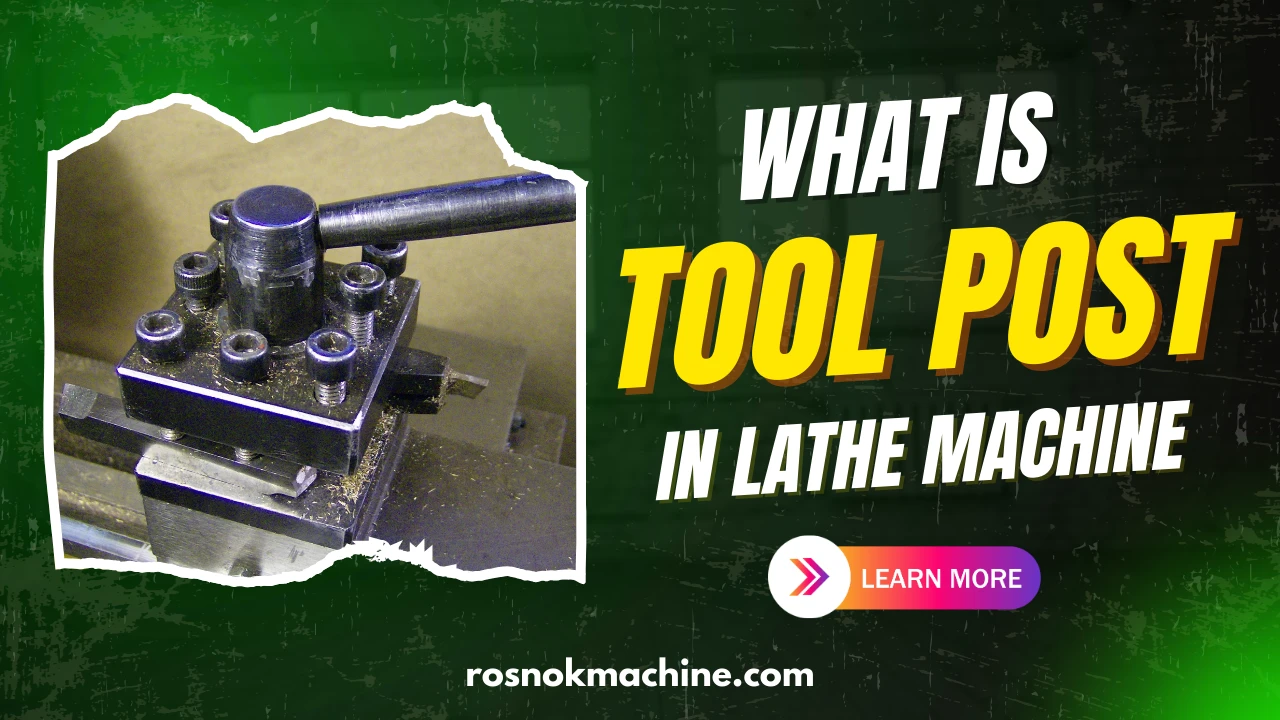
What is Tool Post?
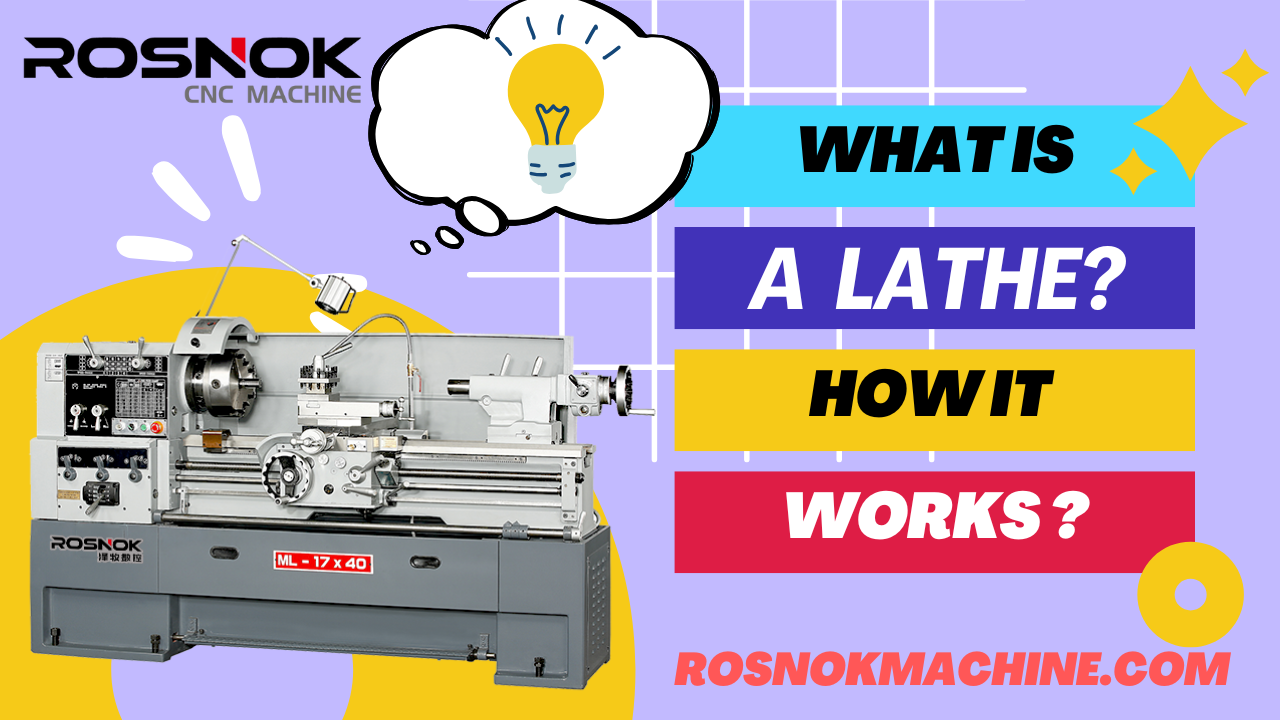
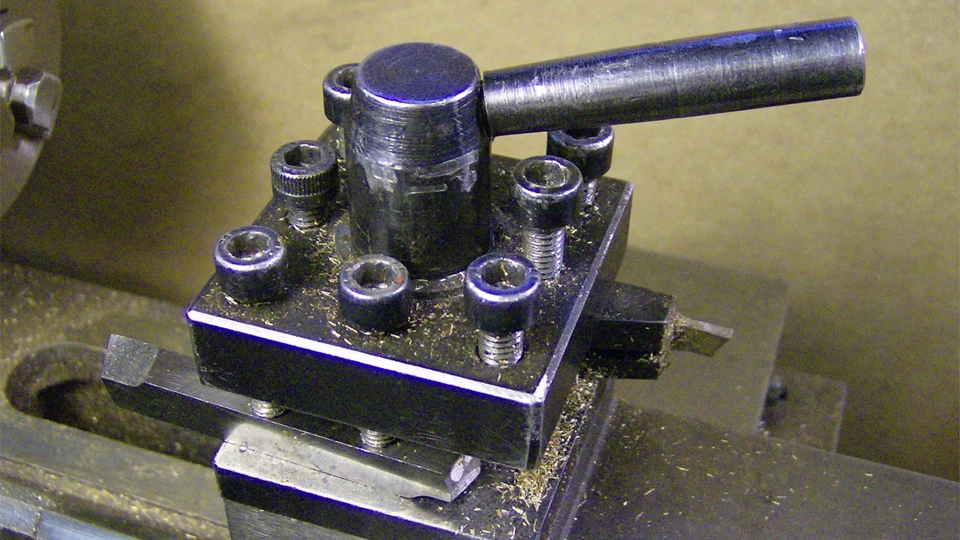
A tool post is a mechanical fixture mounted on the carriage (specifically the compound rest) of a lathe machine. Its primary function is to hold, position, and support the cutting tool during a wide range of turning operations. Without it, you simply cannot perform controlled cutting in a lathe.
The tool post serves as the physical and structural interface between the machine and the tool. It not only locks the cutting tool in place but also ensures that it is aligned properly with the workpiece. This alignment is critical for achieving accurate dimensions, correct cutting angles, and consistent surface finishes.
Most conventional tool posts are located atop the compound slide and are either manually rotated (in manual lathes) or automatically indexed (in CNC machines). Once a cutting tool is mounted onto the tool holder and secured to the post, it can be advanced toward the spinning workpiece using the lathe’s cross-slide or carriage movement.
How Does a Tool Post Work in a Lathe?
The tool post works by providing a rigid and adjustable platform to hold the cutting tool in the correct position while the workpiece rotates. It is mounted on top of the compound rest, which itself is connected to the cross-slide and carriage. Together, these components allow the cutting tool to move precisely in both the longitudinal (Z-axis) and cross (X-axis) directions.
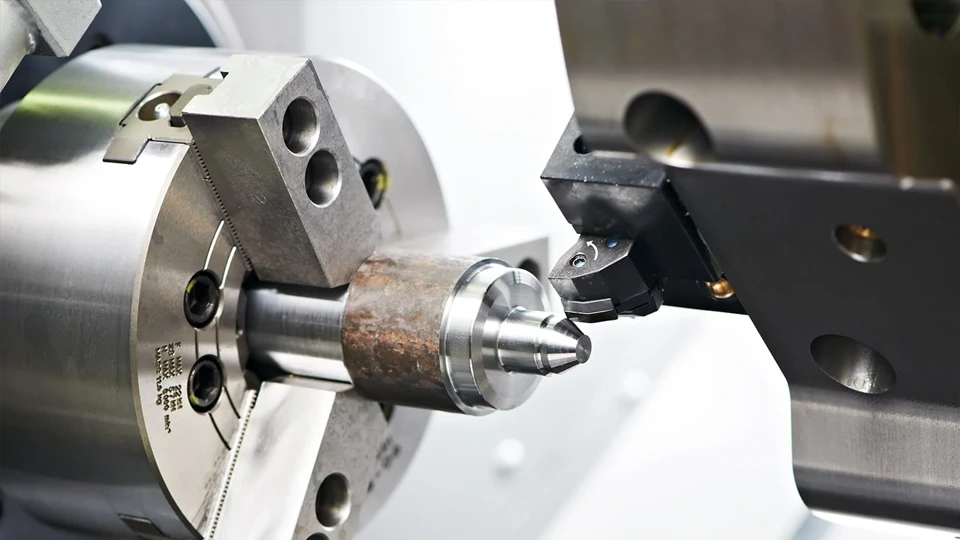
During machining, the workpiece is clamped in the lathe chuck and rotates at high speed. The tool post, with a cutting tool clamped in it, remains stationary in the rotational sense but moves linearly toward or along the rotating workpiece. This relative movement enables material to be removed in a controlled manner.
The working process begins by securing a cutting tool into the tool holder, which is then fastened to the tool post. Depending on the type of tool post—single, square, quick-change, or turret—the clamping mechanism may involve bolts, cam levers, or locking wedges. Once clamped, the operator or control system adjusts the tool’s height and orientation to align it precisely with the workpiece centerline.
In manual lathes, the operator rotates the tool post or its base to set the desired cutting angle. For example, when taper turning or chamfering, the angle must be manually adjusted. In CNC lathes equipped with a turret tool post, this angular movement is automated, and the tool change is executed via a servo or hydraulic indexing system.
Quick change tool posts simplify the workflow by allowing multiple pre-set tool holders to be swapped out within seconds. A dovetail slide or cam-lock mechanism ensures that the replacement holder returns to the exact same position each time, minimizing setup errors and downtime. This is especially beneficial in high-mix, low-volume production environments.
The tool post must also withstand significant cutting forces without deflection. A weak or worn post may result in chatter, poor surface finish, or dimensional inaccuracies. That’s why rigid construction, accurate fitting with the compound rest, and proper clamping torque are essential for stable performance.
In some cases, such as threading or grooving, the tool is positioned perpendicular to the workpiece. The tool post allows for this by rotating or tilting the tool holder as needed. For turret tool posts, the orientation and positioning of each station are factory-calibrated and controlled via CNC programming.
Ultimately, the way a tool post works is a coordinated interaction between mechanical design, operator skill (in manual machines), or control algorithms (in CNC systems). It ensures that the cutting tool is always in the right place, at the right time, with the right orientation—making accurate and repeatable turning possible.
Types of Tool Posts Used in Lathes
1. Single Tool Post
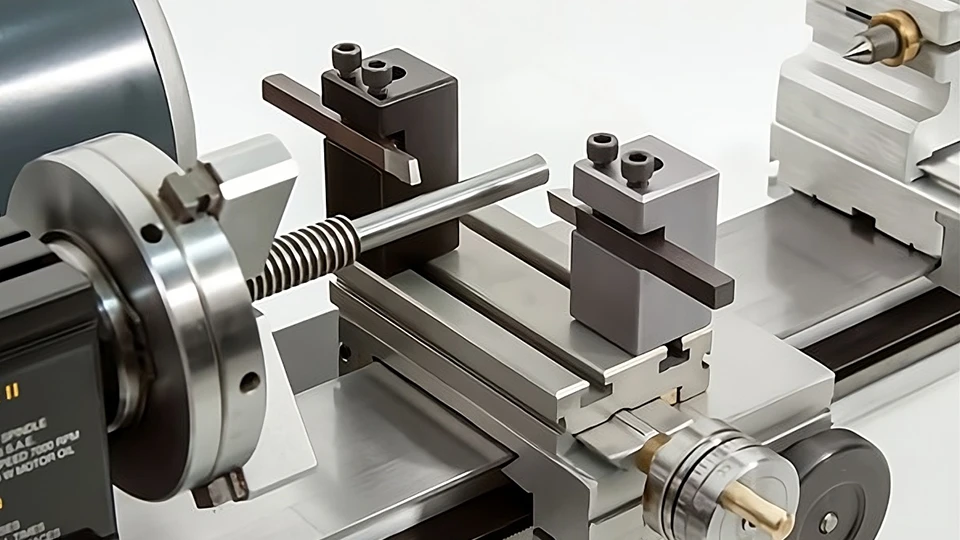
The single tool post is the most basic and traditional type of tool post found on engine lathes and older manual machines. It is designed to hold one cutting tool at a time and is mounted directly onto the top slide or compound rest of the lathe.
Structurally, this type of tool post usually consists of a central vertical stud or bolt, a clamping block, and a set of spacers or washers that help set the tool height. The cutting tool is inserted into a tool holder or directly clamped between two blocks and tightened using a locking nut or wrench. Once secured, the tool remains in a fixed position throughout the operation.
Single tool posts are known for their simplicity, low cost, and reliability in basic turning tasks. However, they have limited flexibility. Adjusting tool angles or switching between tools can be time-consuming, as the entire setup must often be loosened, repositioned, and re-tightened. For this reason, they are best suited for one-off jobs, training environments, or machines that handle a specific type of operation repeatedly.
In terms of rigidity, a well-maintained single tool post can still deliver solid performance, especially on low- to medium-speed operations. However, since there’s only one clamping point and minimal support area, they are not ideal for heavy-duty machining or multi-step operations requiring frequent tool changes.
Despite their limitations, single tool posts still serve as a cost-effective solution for workshops where simplicity and low maintenance are more important than automation or productivity. They also help new machinists understand the fundamentals of lathe tooling without the added complexity of multi-position or quick-change systems.
2. Square Tool Post
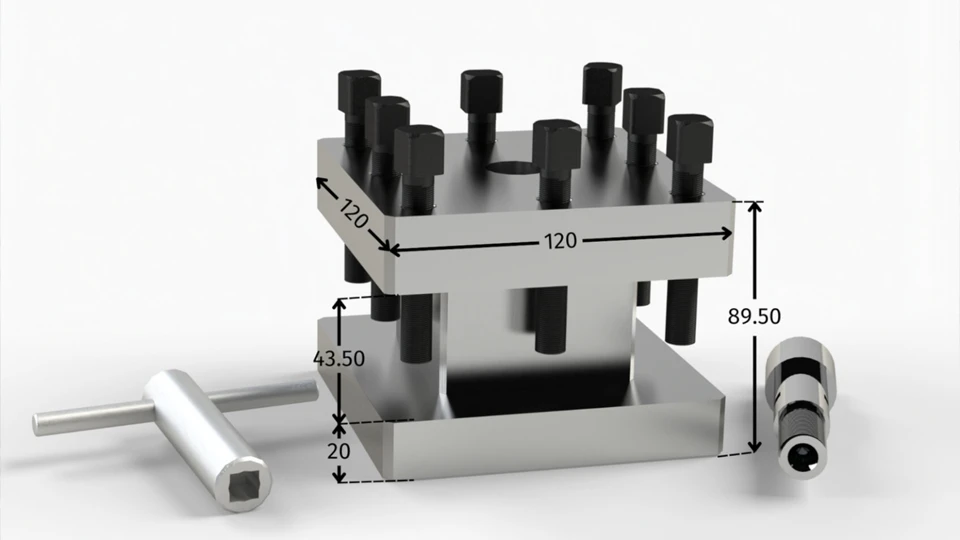
The square tool post, also known as a four-way tool post, is a common upgrade from the basic single tool post in manual lathes. Its structure allows for mounting up to four cutting tools simultaneously, each on one side of the square turret block. By loosening the center bolt, the entire block can be rotated manually to bring the desired tool into position, then locked in place for cutting.
This design significantly improves efficiency over single tool posts, especially in jobs that require multiple operations like roughing, finishing, grooving, and threading. The operator can pre-set different tools at the correct height and angle, then switch between them quickly without removing and re-installing each one.
A key advantage of the square tool post is repeatability. Once the tools are aligned and set, they stay in position during rotation. This reduces setup time and improves consistency across parts. It is especially useful for small-batch production or repair work where frequent tool changes are needed without automation.
However, square tool posts are still manually operated and require physical intervention for each tool change. In addition, they are bulkier than single tool posts and may limit tool clearance in machines with smaller swing diameters. The indexing is also mechanical, relying on the operator’s precision to ensure alignment, so they may not be suitable for high-precision or CNC-controlled operations.
In terms of rigidity, square tool posts offer good clamping strength, as each tool slot is secured by individual set screws or clamps. When used with properly ground tool holders, they can deliver stable cutting performance for a wide variety of materials.
Overall, square tool posts offer a practical balance between flexibility and simplicity. They are widely used in general-purpose lathes across repair shops, training institutions, and light industrial settings.
3. Quick Change Tool Post
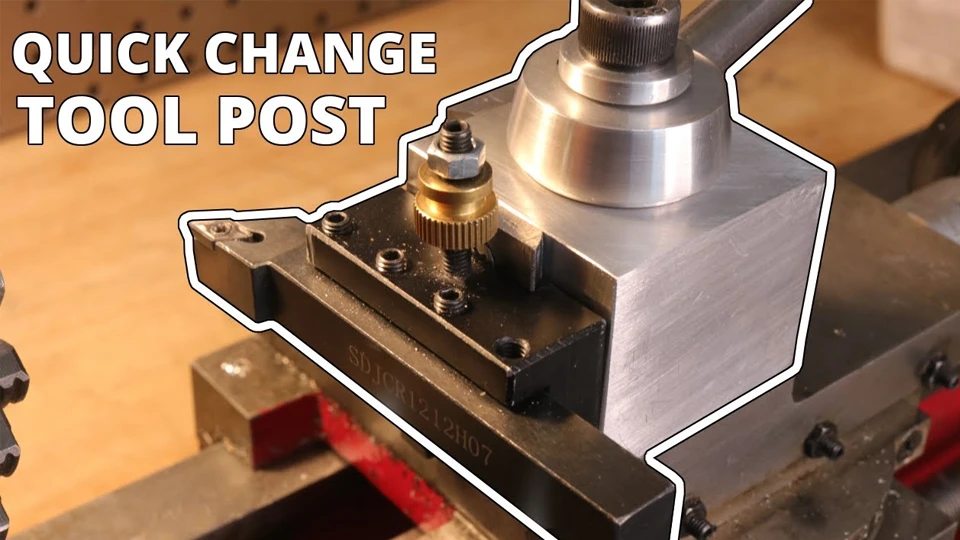
The quick change tool post (QCTP) is a widely adopted solution in both manual and semi-automatic lathes for improving setup efficiency and tool handling. As its name implies, the primary advantage of this system is the ability to switch between multiple pre-aligned tools in seconds, without the need for readjustment or re-centering.
Structurally, the QCTP consists of a central body mounted on the compound rest and a locking mechanism—often a cam-lock lever—that allows individual tool holders to be inserted, locked, and released with a single motion. Each tool holder is preset to the correct cutting height and angle, meaning operators can prepare multiple tools in advance and swap them mid-operation without interrupting workflow.
There are various styles of quick change tool posts, with dovetail-type holders being the most common. Tool holders typically slide onto the post’s dovetail slots and are secured with a locking cam or eccentric lever. This mechanical design provides strong repeatability and consistent positioning, reducing setup time and human error.
In practical terms, QCTPs are ideal for environments where small-batch production or frequent tooling changes are required. Compared to square tool posts, the quick change system reduces downtime significantly, especially when operations involve multiple tool types such as roughing, finishing, grooving, or threading.
While quick change tool posts are more expensive than basic models, they offer an excellent balance between flexibility, speed, and precision. They are popular among toolroom lathes, prototyping shops, and training centers where time savings and operator convenience matter. In some cases, even small CNC lathes integrate QCTP-style holders for manual override operations.
However, QCTPs do have limits. Their rigidity is generally lower than that of turret tool posts used in fully automated CNC systems, which may affect performance in heavy-duty or high-speed machining. That said, for most general-purpose turning tasks, a well-machined QCTP with hardened components delivers reliable and repeatable results.
4. Turret Tool Post
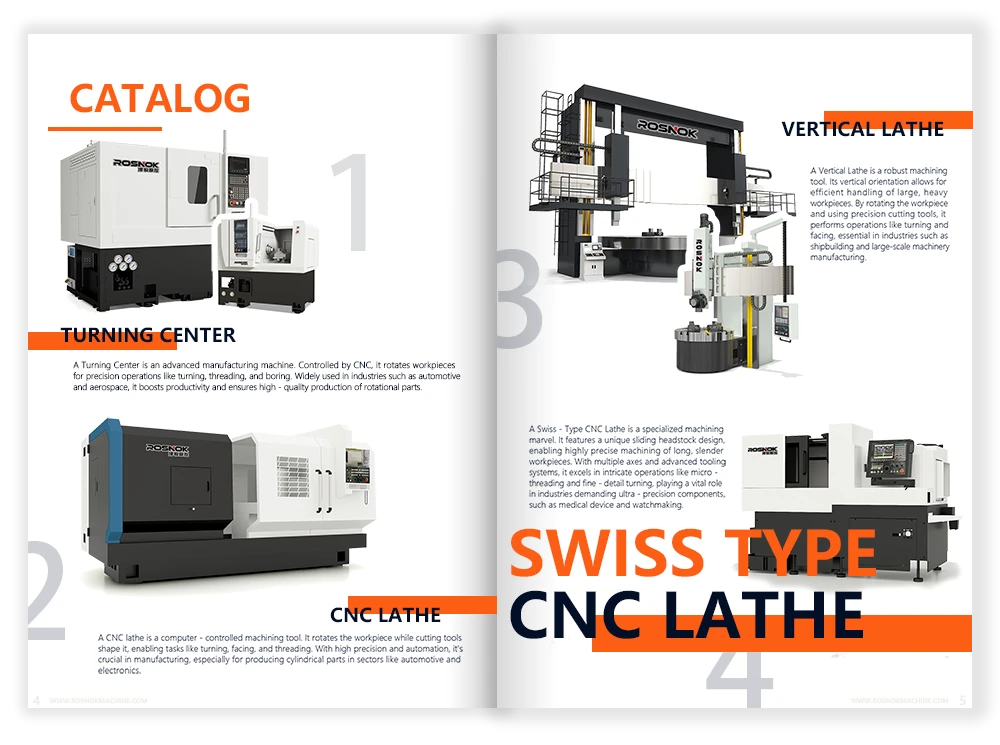
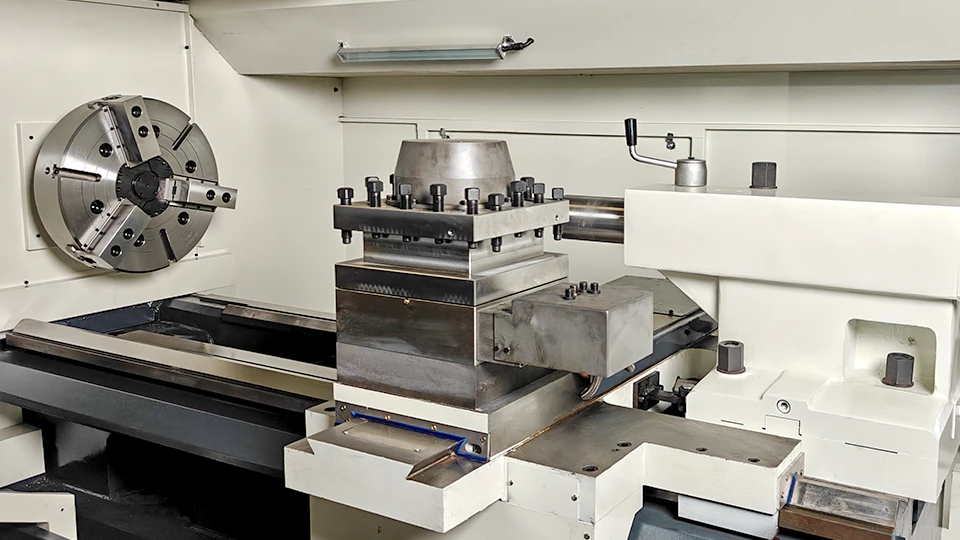
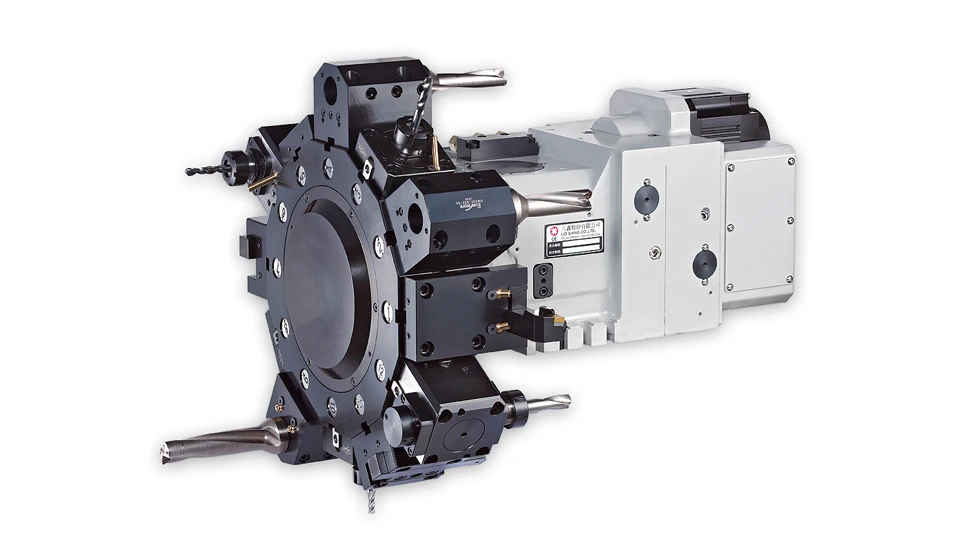
The turret tool post represents a more advanced and automated evolution of the traditional tool post system. It is most commonly found on CNC lathes and CNC turning centers, where rapid, precise, and programmable tool changes are essential for high-volume or complex part production.
Unlike manual tool posts that require operator intervention, a turret tool post is designed as a rotating indexable system that holds multiple tools—typically 4, 6, 8, or even 12—on a rotary drum or block. Each station on the turret can hold a different tool, and the system rotates automatically to bring the correct tool into the cutting position as commanded by the CNC controller.
Modern turret tool posts often support live tooling by enabling the use of motorized tool holders. These holders are driven by the turret itself, allowing rotational tools such as drills, end mills, or taps to perform milling, drilling, or tapping operations without transferring the part to another machine. This integration greatly improves productivity and part accuracy, especially in complex or multi-feature components.
Turret tool posts are usually servo- or hydraulically driven and feature automatic locking and positioning systems. Once indexed to the correct station, the turret locks rigidly in place to ensure cutting stability. Tool position is maintained within tight tolerances, enabling consistent performance even in multi-step or multi-axis machining.
This type of tool post significantly reduces non-cutting time and human error, making it ideal for mass production environments, such as automotive parts manufacturing, aerospace components, or medical devices. With the turret system, a complete part requiring multiple operations—like rough turning, finishing, threading, and grooving—can be machined in a single setup without manual tool changes.
In terms of rigidity and stability, turret tool posts are built for heavy-duty use. Their construction typically involves hardened steel housings, precision bearings, and reinforced mounting interfaces to handle large cutting forces without deflection or vibration.
However, turret systems are more expensive and complex than other types. They require regular calibration, proper CNC integration, and qualified maintenance. In addition, initial setup and programming can be time-consuming for small-batch work, making them less suited to simple, low-volume tasks.
Despite these challenges, turret tool posts remain the backbone of automated turning centers. They enable continuous production, minimize idle time, and support advanced machining strategies such as live tooling and multi-axis synchronization.
How to Choose the Right Tool Post
Selecting the right tool post is a strategic decision that directly affects machining accuracy, productivity, and workflow efficiency. Whether for manual lathes in a repair workshop or CNC turning centers in a production line, the tool post must match the machine’s capabilities and the job’s requirements. Choosing the wrong type can lead to misalignment, vibration, excessive tool wear, and unnecessary downtime.
1. Match the Tool Post to Your Lathe Type
Not all tool posts work with all lathes. Manual engine lathes are best paired with single or square tool posts. These are simple, rigid, and easy to maintain—perfect for low-volume work or general-purpose machining. Their straightforward setup is ideal for operators who prioritize reliability over speed.
For CNC lathes and CNC turning centers, turret tool posts are standard. They support automatic tool indexing and are built for automation and repeatability. Quick change tool posts fall in between, suitable for semi-automatic systems or workshops upgrading from manual setups but not yet ready for full CNC automation.
2. Consider Tool Change Frequency and Batch Size
If you’re changing tools often—say for roughing, finishing, threading, or parting—a quick change tool post offers major time savings. Pre-set tool holders allow for fast, accurate swaps without manual realignment. This is ideal for job shops or small-batch production where flexibility is key.
In high-volume environments, turret tool posts are the best option. Once programmed, they index tools automatically with no operator input. For occasional tool changes or short runs, a square tool post offers basic multi-tool support without automation, keeping costs low and setup simple.
3. Align with Your Application Requirements
Some machining tasks, such as threading, facing, or profiling, require precise tool angles and stable support. In these cases, turret and square tool posts provide reliable alignment across multiple tools, helping reduce positioning errors and improve surface finish.
For more advanced applications, especially when turning and milling need to be combined within a single setup, you’ll need support for live tooling. This is commonly available in CNC turning centers equipped with turret tool posts that can drive powered tool holders. Live tooling enables drilling, tapping, or off-center grooving without transferring the part to another machine.
4. Evaluate Rigidity Based on Material and Cutting Force
When machining hard metals or performing heavy-duty turning, tool post rigidity is critical. A rigid structure minimizes vibration, improves surface finish, and protects both the cutting tool and the spindle from stress.
Among all tool post types, square tool posts generally offer the highest rigidity. Their simple, block-like construction and mechanical clamping mechanism provide excellent resistance to deflection under load, making them ideal for deep cuts and aggressive feed rates on manual lathes.
5. Account for Operator Skill and Workflow Simplicity
Tool post selection also depends on who’s operating the machine. For experienced machinists, square or single tool posts provide flexibility and control. But they demand manual alignment and more hands-on setup.
In contrast, quick change and turret tool posts reduce human error. Pre-aligned holders and auto-indexing eliminate guesswork, making them ideal for newer operators, shift work, or high-turnover workshops where consistency is critical.
6. Plan According to Long-Term Productivity Goals
If your production is scaling up—or if you’re moving toward automation—your tool post should support that vision. CNC lathes with turret tool posts future-proof your investment by enabling multi-operation machining and automatic tool indexing.
On the other hand, if flexibility, low upfront cost, and ease of use are your top priorities, a high-quality quick change tool post offers a practical and scalable solution. It can deliver speed improvements now without locking you into CNC complexity too early.
Maintenance Tips for Tool Posts
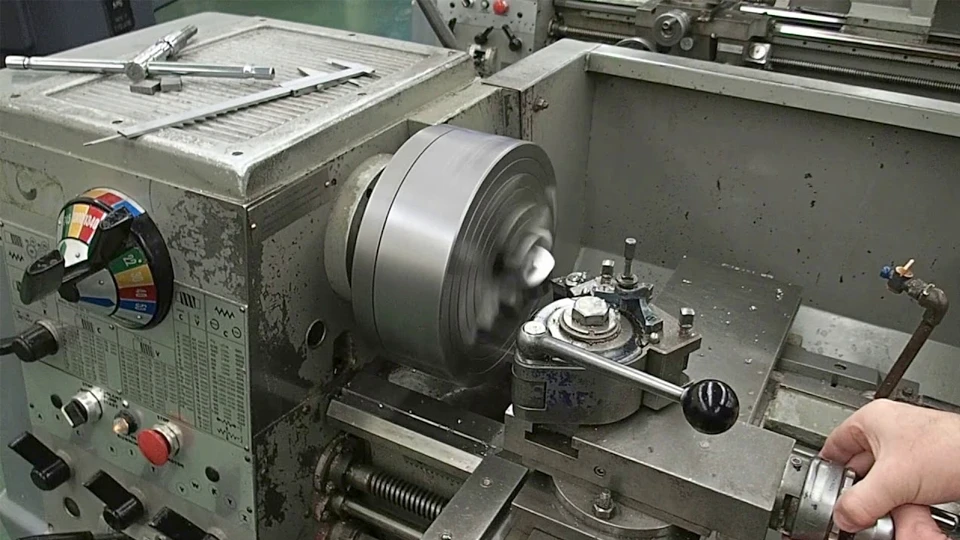
A well-maintained tool post is essential to maintain cutting accuracy, extend machine life, and avoid unexpected downtime. Over time, chips, coolant, and repeated clamping cycles can degrade performance if left unchecked. Whether you’re using a manual square post or a CNC turret, consistent maintenance improves reliability and repeatability. Below are the key areas you should focus on during regular inspection and care.
1. Clean the Tool Post After Each Shift
Metal chips, oil, and coolant can build up around the tool post and cause positioning errors. After each work shift, wipe the tool post with a clean cloth and remove any trapped debris around the clamping surfaces. This prevents misalignment and protects precision fits from wear over time.
2. Inspect Clamping Surfaces Regularly
Even small burrs or dents on clamping areas can compromise tool holding. Visually inspect the contact surfaces where the tool holder meets the post, and stone down any raised edges carefully. This ensures firm, repeatable locking and avoids micro-shifts during cutting.
3. Check for Mechanical Play or Looseness
Over time, vibration and thermal cycles can loosen bolts or degrade locking mechanisms. Test the tool post by applying light force to detect any unwanted movement. If detected, tighten fasteners to the correct torque or replace worn parts to restore rigidity.
4. Lubricate Moving Components
If the tool post includes sliding or rotating parts—like in quick change or turret systems—keep them well-lubricated using manufacturer-approved oils. Lubrication reduces friction, prevents rust, and prolongs the service life of internal mechanisms.
5. Maintain CNC Turret Calibration
For turret tool posts on CNC lathes, regularly check the indexing alignment and locking repeatability. Misalignment can lead to tool position errors and inconsistent cutting. Also, inspect live-tooling interfaces (if present) for leaks, debris, or coupling wear.
Conclusion
The tool post may seem like a small component, but its role in lathe operations is fundamental. It holds the cutting edge that defines tolerances, surface finishes, and machining consistency. Choosing the right type—whether square, quick-change, or turret—requires understanding both the machine’s capabilities and the production demands at hand. From basic turning to live-tool integration, the tool post stands at the intersection of precision and productivity, making it one of the most impactful decisions in any machining setup.
As manufacturing shifts toward more integrated and scalable platforms, the importance of machine tool design becomes ever more apparent. That’s why manufacturers worldwide are investing in equipment built not only for accuracy, but for longevity, flexibility, and system-level performance. At this frontier, Rosnok continues to engineer CNC lathes and turning solutions that support this direction, offering machines designed to maintain stability, precision, and reliability across a wide range of materials, workloads, and production demands.