In CNC machining, excessive heat, unpredictable tool wear, and chips clogging inside deep holes are not just small inconveniences—they are constant threats to production. When tools fail mid-cut, machines stop, operators scramble, and costly workpieces are ruined. Every unplanned halt means lost hours, rising expenses, and frustrated clients waiting for delayed deliveries. This cycle can quietly erode profits and damage trust.
The way forward is Through-Spindle Coolant (TSC). Unlike external spray, TSC drives high-pressure fluid through the spindle directly to the cutting edge. It attacks heat at the source, clears chips from deep holes, and stabilizes cutting. The benefits are longer tool life, faster feeds, smoother finishes, and greater reliability. With TSC, fragile operations turn into predictable, high-performance machining that manufacturers can trust day after day.
We will dive deeper into how TSC works inside CNC machines and the key advantages it offers for precision, efficiency, and tool life in modern machining.
Understanding Through-Spindle Coolant (TSC)
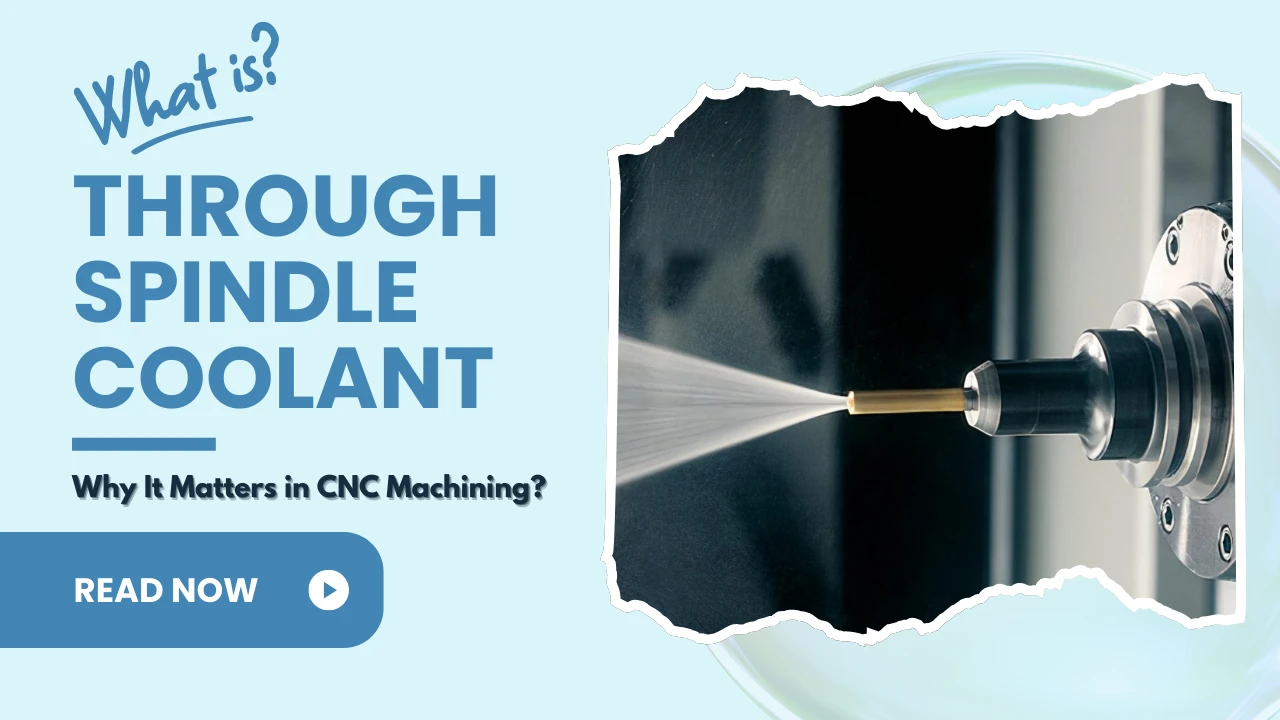
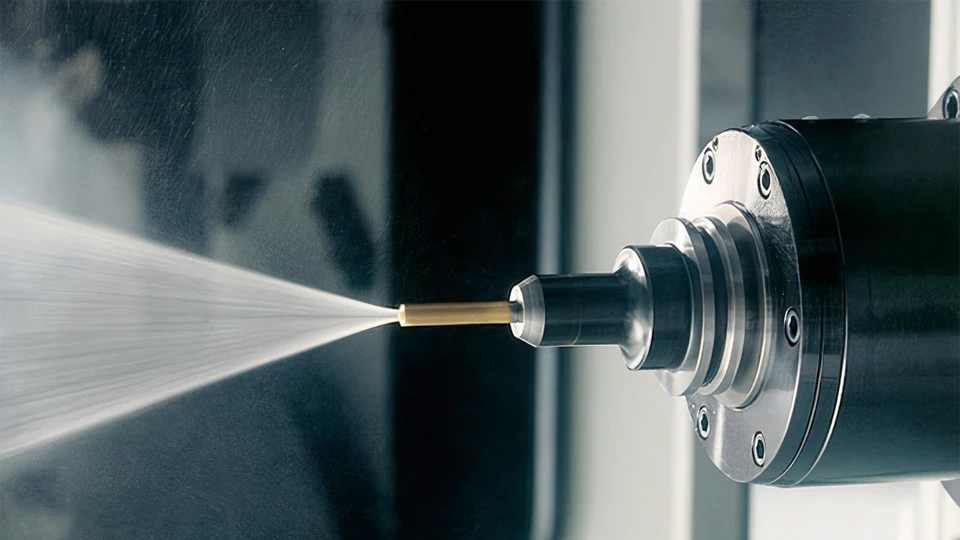
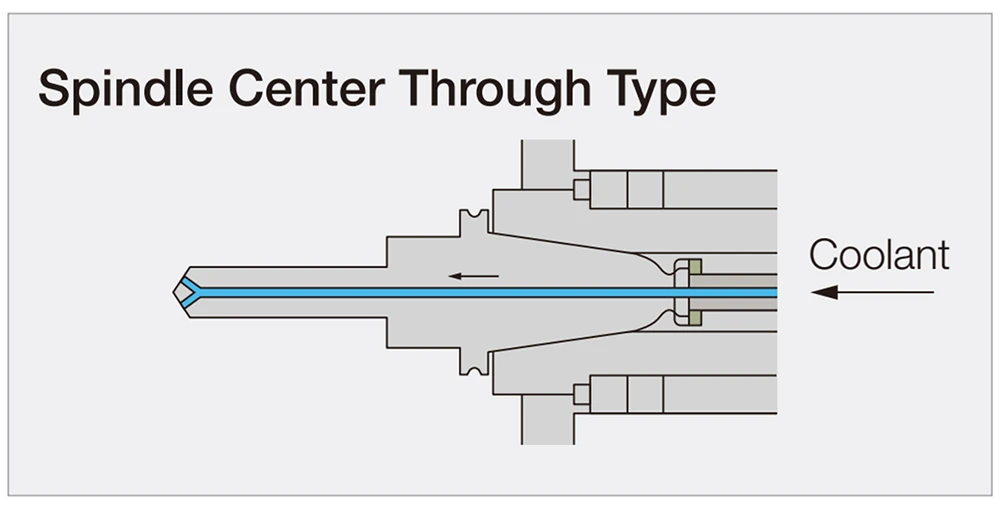
Through-Spindle Coolant is a cooling method where the cutting fluid flows directly through the spindle, into the tool holder, and exits at the cutting edge. Unlike external spray nozzles that only reach the tool from the outside, Through-Spindle Coolant delivers coolant exactly where the heat and chips are generated. This direct flow improves cooling, lubricates the tool-workpiece interface, and helps flush chips away before they cause trouble.
In modern CNC machining, this makes a big difference. When drilling deep holes or cutting tough alloys like titanium, external coolant often cannot reach the tool tip effectively. Heat builds up, chips clog flutes, and the tool wears out quickly. With TSC, the fluid attacks these problems at their source, ensuring the tool stays cooler, the cut remains stable, and chips are cleared efficiently.
The adoption of Through-Spindle Coolant has grown because today’s high-speed spindles and precision tooling are designed to handle it. Pumps provide the pressure, tools are built with internal channels, and filtration systems keep the coolant clean enough to flow smoothly. Depending on the job, systems can run at moderate pressures for general cutting or at very high pressures for deep-hole drilling. The flexibility allows manufacturers to match the coolant delivery to the exact needs of their process.
How Through-Spindle Coolant Works
Understanding how Through-Spindle Coolant functions inside a CNC machine helps explain why it is so effective. The system is not just a single pump or channel; it is an integrated setup designed to deliver coolant directly to the cutting edge with precision and stability.
1 Main Components of a Through-Spindle Coolant System
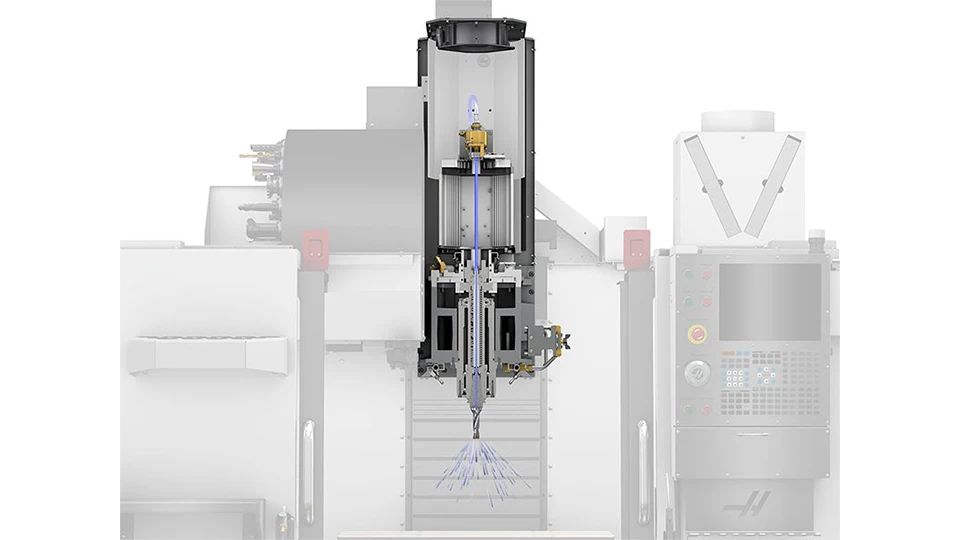
A through-spindle coolant system consists of several key parts working together:
- Coolant tank and filtration system – stores coolant and removes chips, oil, and other contaminants before the fluid is re-circulated. Clean coolant is essential to prevent blockages.
- High-pressure pump – generates the force needed to push coolant through the spindle and tool channels. Pump capacity varies depending on the application.
- Rotary union (or rotary joint) – a precision coupling that allows high-pressure coolant to pass into the rotating spindle without leakage.
- Spindle and internal channels – the spindle body includes pathways for the coolant, aligned with the tool holder’s internal channels.
- Tool holder and cutting tool – specially designed with through-holes so that coolant exits directly at the cutting edge or flute.
Together, these components create a sealed path that ensures fluid flows exactly where it is needed.
2 Coolant Pressure Levels and Their Uses
Not every machining task requires the same coolant pressure. Broadly, TSC systems operate in two ranges:
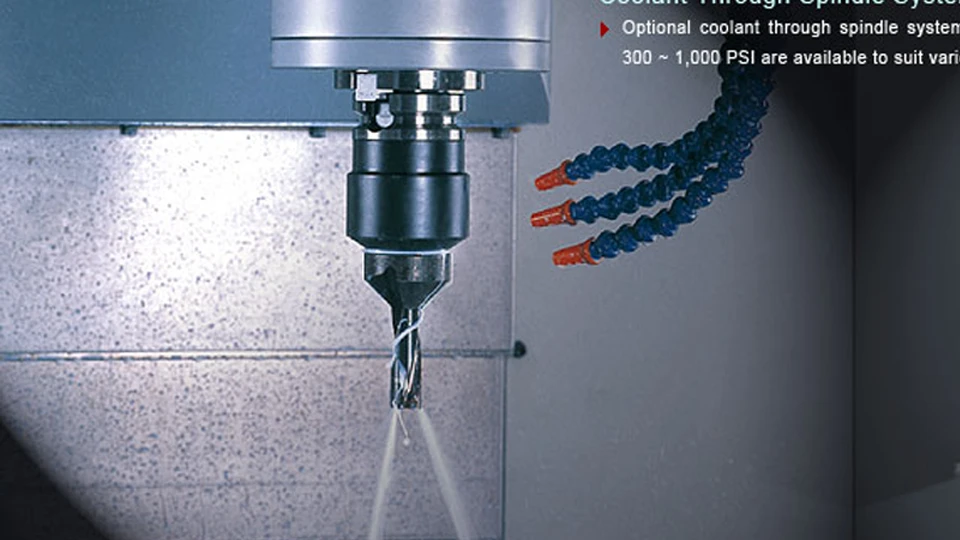
- Low-pressure systems (20–30 bar / ~300–450 psi) – typically used for milling, tapping, or general turning where chip evacuation is not too demanding. They focus more on cooling and lubrication.
- High-pressure systems (50–70 bar / ~725–1000 psi, sometimes higher) – required for deep-hole drilling, boring, and machining tough alloys. High pressure ensures chips are flushed out before clogging and that coolant penetrates to the very tip of the cutting zone.
Choosing the right pressure is critical. Too little pressure and chips will pack inside the hole. Too much pressure with the wrong tooling can damage seals or erode tool channels. Matching pump capacity to the operation keeps the process stable.
3 Coolant Flow Path Through the Spindle
The flow of coolant inside a Through-Spindle Coolant system follows a precise route:
- The coolant is filtered in the tank.
- The pump pressurizes the coolant and pushes it into the rotary union.
- The rotary union feeds the pressurized coolant into the rotating spindle.
- The spindle channels guide coolant into the tool holder.
- Finally, coolant exits directly at the cutting edge through holes in the tool.
This direct flow prevents heat buildup, reduces friction, and washes chips away before they compact. Unlike external nozzles that may miss the target area at high spindle speeds, TSC always delivers coolant exactly where it is needed, regardless of spindle rotation.
4 Integration with CNC Tooling
Through-Spindle Coolant is only effective if the tooling is designed for it. Common examples include:
- Through-coolant drills – with coolant holes running along the shank and exiting at the tip, essential for deep-hole operations.
- End mills with internal coolant channels – reduce heat and improve chip evacuation in slotting and pocketing.
- Boring bars and reamers – deliver coolant directly into the bore, avoiding chip recutting.
Tool holders also matter. Hydraulic chucks, collet chucks, and shrink-fit holders must have proper internal sealing to allow coolant to pass through without leaking. If either the holder or tool is not designed for TSC, performance drops sharply.
Benefits of Through-Spindle Coolant
Through-spindle coolant is not just a convenience—it is a process enabler. By delivering coolant directly to the cutting edge under controlled pressure, Through-Spindle Coolant provides multiple benefits that impact productivity, quality, and overall cost efficiency.
1 Tool Life Extension
One of the most immediate benefits of TSC is longer tool life. Excessive heat is the main reason cutting edges wear out prematurely. When coolant reaches the cutting zone directly, it reduces thermal stress, minimizes micro-cracks, and prevents tool coating damage. This allows tools to last significantly longer before needing replacement.
For production managers, longer tool life translates directly into lower tooling costs and fewer tool changes. Each avoided stoppage means more uptime, and a more predictable production schedule.
2 Improved Machining Accuracy
Precision is at the core of CNC machining. When a tool overheats, thermal expansion causes dimensional errors, taper mismatches, and poor surface finishes. By keeping the tool and workpiece cooler, TSC stabilizes cutting conditions.
Stable temperatures mean consistent tolerances, smoother finishes, and fewer rejected parts. This is especially critical in industries like aerospace or medical implants, where tolerances are measured in microns and failure is not acceptable.
3 Chip Evacuation in Deep-Hole Drilling
Deep-hole drilling is one of the toughest challenges in machining. Chips tend to pack inside the hole, causing drill breakage, poor hole quality, or even scrapped parts.
Through-Spindle Coolant addresses this by pushing chips out through the flutes with high-pressure coolant flow. Instead of relying on peck drilling cycles, operators can cut deeper in one pass. This saves time, reduces tool stress, and delivers cleaner, more accurate holes.
4 Higher Cutting Speeds and Feeds
When heat and chips are under control, tools can run at higher speeds and feeds safely. TSC creates the process stability needed to push machining parameters closer to the tool’s maximum capacity.
This not only reduces cycle times but also enables more aggressive machining of difficult alloys such as Inconel or titanium. For high-volume manufacturers, these gains accumulate into substantial increases in output without investing in additional machines.
5 Reduced Downtime and Scrap
Unplanned downtime is the hidden enemy of manufacturing profitability. Tool breakages, scrapped parts, and emergency machine stops eat into margins and create scheduling headaches.
By extending tool life, stabilizing accuracy, and ensuring chip evacuation, TSC reduces the chances of unexpected stoppages. The result is smoother workflows, fewer rejected parts, and a more predictable production line. Over time, this reliability builds trust with customers and strengthens competitiveness in the market.
Limitations and Considerations
While through-spindle coolant delivers clear advantages, it is not a universal solution without trade-offs. To get the most out of TSC, manufacturers must be aware of its limitations and the practical considerations involved in implementation.
1 Investment and Cost Factors
A Through-Spindle Coolant system requires additional hardware: a high-pressure pump, rotary unions, upgraded filtration, and compatible tooling. These components add cost compared to a standard coolant system. For smaller shops or low-volume production, the return on investment may take longer to realize.
In addition, high-pressure pumps consume more energy. Companies evaluating TSC need to balance energy costs against productivity gains.
2 Machine Compatibility
Not every CNC machine can be retrofitted with TSC. Older spindles may lack the internal channels or sealing required to handle high-pressure flow. Retrofitting might require extensive modifications or may not be technically feasible.
For new machines, it is usually better to order TSC-ready spindles from the manufacturer, ensuring long-term reliability and performance.
3 Coolant Quality and Filtration
Through-Spindle Coolant depends on clean coolant. If chips, fines, or dirt circulate through the system, they can clog tool channels or damage seals. This makes filtration systems critical. Shops must invest in adequate filters and commit to regular maintenance.
Coolant type also matters. The viscosity and lubricity of the fluid affect both pressure delivery and cooling effectiveness. Choosing the right fluid—and maintaining its cleanliness—directly impacts system performance.
4 Potential Technical Issues
Although designed for reliability, TSC systems are subject to wear. Seals in rotary unions can degrade over time, especially under constant high pressure. Tool holders not properly sealed can leak, reducing coolant pressure at the cutting edge.
Operators must also ensure that the coolant pressure matches the tool’s design. For instance, applying 70 bar pressure to a tool rated for 20 bar can lead to erosion or premature failure of the coolant channels.
5 Operational Training and Monitoring
Finally, TSC is not a “plug and play” option. Operators need training to understand correct pressure settings, tool selection, and maintenance schedules. Monitoring system performance—such as coolant flow, pressure consistency, and tool condition—is key to long-term success.
Through-spindle coolant is a powerful process enhancer, but it must be implemented thoughtfully. By recognizing these limitations, manufacturers can plan better, avoid costly mistakes, and maximize the benefits of TSC in their operations.
Applications of TSC in CNC Machining
Through-spindle coolant is not limited to one type of operation or one industry. Because it addresses heat, chip evacuation, and tool stability, it has become essential across sectors where precision and reliability are critical. Below are some of the most common applications.
1 Aerospace Industry
Aerospace machining often involves titanium, Inconel, and heat-resistant alloys. These materials are notoriously difficult to cut due to their low thermal conductivity and high strength. Without effective cooling, tools wear out quickly, and surface integrity suffers.
Through-Spindle Coolant allows aerospace manufacturers to drill deep holes in engine components, cut complex structural parts, and maintain tight tolerances on surfaces that demand flawless quality. For example, when machining aircraft engine blades, through-spindle coolant ensures chip evacuation and reduces the risk of tool breakage in long, narrow cavities.
2 Automotive Industry
In automotive production, cycle time and consistency are key. Parts such as crankshafts, engine blocks, and transmission housings require repetitive machining with minimal downtime.
TSC helps in high-volume milling and drilling operations by keeping tools cooler and removing chips efficiently. This not only improves tool life but also allows manufacturers to run machines at higher speeds without sacrificing accuracy. For instance, deep-hole drilling of fuel injector bodies becomes faster and more reliable with high-pressure TSC.
3 Medical Implants and Devices
Medical components like bone screws, hip implants, and surgical instruments must meet the strictest quality standards. Materials such as titanium and stainless steel are common, but they generate significant heat during cutting.
With TSC, manufacturers achieve smoother finishes and consistent tolerances, which are crucial for biocompatibility and patient safety. In the production of orthopedic implants, through-spindle coolant enables precise, burr-free holes that reduce the need for secondary finishing.
4 Precision Engineering (Electronics, Molds, Dies)
Precision engineering sectors—including electronics, mold-making, and die manufacturing—require high dimensional accuracy and excellent surface finishes. Small holes, tight cavities, and intricate geometries are common challenges.
TSC helps flush chips from tiny channels, prevents micro-burrs, and maintains tool stability. In mold and die making, for example, high-pressure coolant ensures clean, accurate cavity machining, reducing the time spent on polishing and rework.
Through-spindle coolant has proven itself across industries where productivity, reliability, and accuracy are non-negotiable. Its ability to combine cooling, lubrication, and chip evacuation makes it a technology that bridges the gap between advanced materials and modern machining demands.
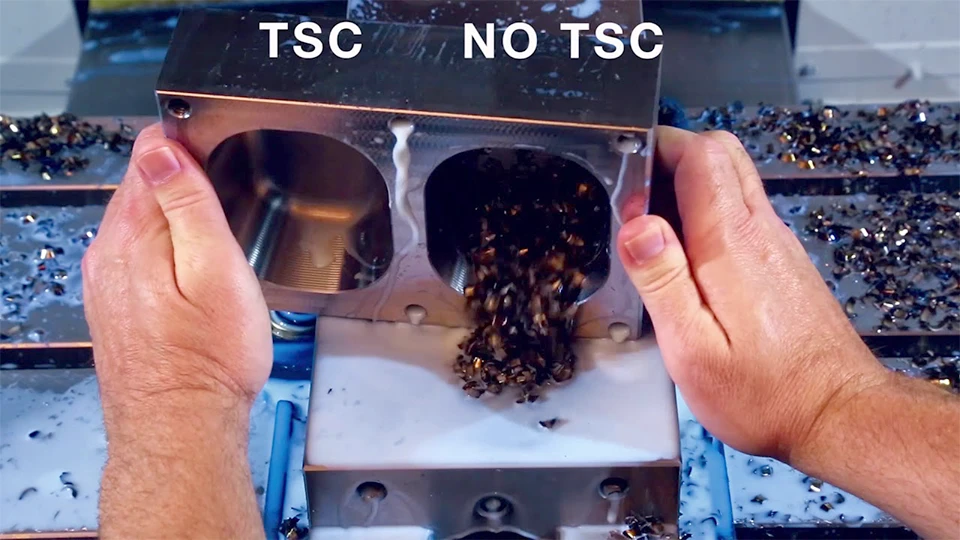
Through-Spindle Coolant vs Traditional Coolant Delivery
Coolant delivery methods in CNC machining have evolved significantly. While external nozzles and flood systems still exist, they have clear limitations compared to through-spindle coolant. Understanding the differences helps manufacturers decide when TSC is worth the investment.
1 External Nozzle Cooling
External nozzle cooling sprays coolant around the cutting area. It is simple, inexpensive, and effective for shallow cuts or general-purpose machining.
However, nozzle positioning is critical. At high spindle speeds, centrifugal force often deflects the coolant stream, preventing it from reaching the cutting edge. Deep holes and complex geometries make the situation worse, leaving heat and chips uncontrolled.
2 Flood Cooling
Flood systems deliver large volumes of coolant across the workpiece. They help cool surfaces and wash away loose chips.
But like nozzle systems, they struggle to reach the actual cutting zone. In operations such as deep-hole drilling or internal cavity machining, most of the coolant never reaches the cutting edge. Flood cooling also consumes high volumes of coolant, raising costs and environmental concerns.
3 Minimum Quantity Lubrication (MQL)
MQL systems use a fine mist of oil and air to lubricate the cutting edge. They are efficient for light machining and environmentally friendly because they use minimal coolant.
Yet MQL cannot match the cooling and chip evacuation capability of TSC. For demanding materials, high cutting speeds, or deep-hole drilling, MQL is insufficient to prevent overheating and chip packing.
4 Why Through-Spindle Coolant Stands Out
Through-spindle coolant eliminates the weaknesses of traditional systems by delivering fluid directly through the tool. Instead of “hoping” coolant reaches the cutting zone, TSC guarantees it.
Key differences include:
- Cooling efficiency – TSC removes heat at the exact source, not just the tool’s surface.
- Chip evacuation – high-pressure flow flushes chips from deep holes and tight cavities.
- Speed and reliability – stable cutting conditions enable higher feed rates and reduced cycle times.
- Coolant usage – while requiring pressure, TSC typically uses less total coolant than flood systems because delivery is targeted.
For advanced machining, especially in aerospace, automotive, and medical industries, TSC is no longer a luxury—it is becoming the standard.
Maintenance and Troubleshooting of TSC Systems
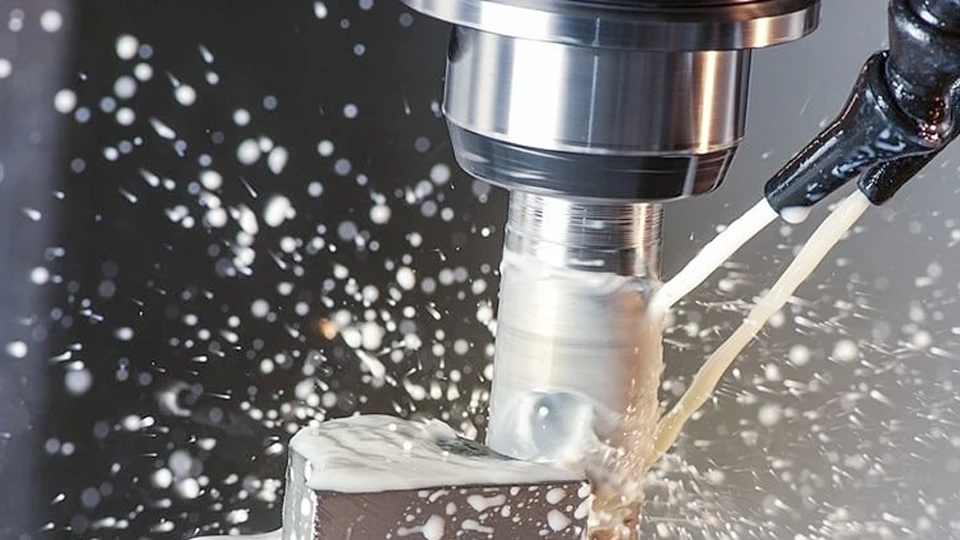
Through-spindle coolant systems are highly effective, but like any precision technology, they require consistent care to perform at their best. Proper maintenance extends system life, while quick troubleshooting keeps machines running with minimal downtime.
1 Routine Maintenance Practices
- Coolant filtration – Regularly check and replace filters to prevent fine chips or sludge from clogging tool channels. A blocked filter reduces flow and pressure at the cutting edge.
- Coolant concentration – Maintain the correct coolant mix ratio. Too much water reduces lubrication, while too much concentrate increases viscosity and pump load.
- Tank cleaning – Periodically drain and clean the coolant tank to remove built-up fines, tramp oil, and bacteria that can affect fluid performance.
- Rotary union inspection – Check seals and bearings in the rotary union. Worn seals cause leaks, pressure drops, and can damage spindle bearings if ignored.
2 Common Troubleshooting Scenarios
- Low coolant pressure – Often caused by clogged filters, worn pump seals, or leaks in the rotary union. Check filters first, then inspect pump and unions.
- Coolant not reaching the tool tip – Could be due to a blocked tool channel or a non-through-coolant tool accidentally installed. Verify tool and holder compatibility.
- Leakage around tool holder – Indicates a damaged seal in the holder or incorrect clamping of the tool. Replace seals or check assembly.
- Overheating despite TSC – Usually linked to incorrect pressure settings, insufficient flow, or degraded coolant quality. Adjust pump output and check coolant concentration.
3 Preventive Strategies
The best way to reduce troubleshooting is preventive care. Establishing a maintenance schedule ensures problems are solved before they cause downtime:
- Daily: Inspect pressure gauges, monitor coolant level, and visually check for leaks.
- Weekly: Clean filters, check concentration, and confirm flow rate.
- Monthly: Inspect rotary union seals, flush tank if needed, and test pump performance.
By following this routine, shops can avoid unexpected breakdowns, reduce tool failures, and maximize the return on their TSC investment.
4 Building Operator Awareness
Even with the best equipment, operator awareness is critical. Training staff to recognize early warning signs—such as reduced pressure, abnormal noise from the pump, or small leaks—prevents small issues from becoming major failures. A well-trained team can often resolve problems before they escalate.
Through consistent maintenance and fast troubleshooting, a through-spindle coolant system remains a reliable partner in production. Instead of fighting leaks, clogs, or pressure loss, operators can focus on what matters most: producing accurate, high-quality parts.
Future of Through-Spindle Coolant Technology
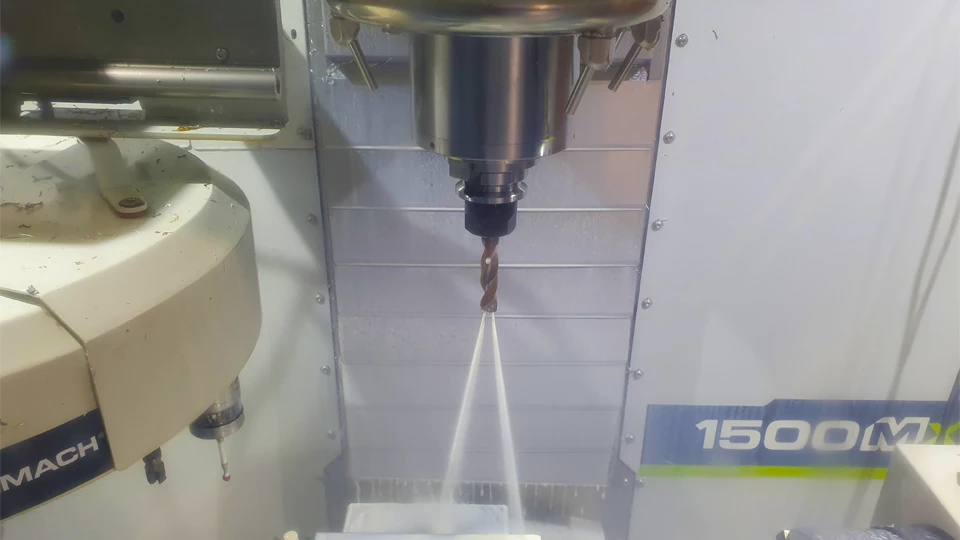
As machining technology advances, through-spindle coolant is evolving alongside it. The demands of new materials, higher spindle speeds, and sustainability goals are shaping the future of TSC systems. Below are the trends I believe will define the next generation of coolant delivery.
1 Energy Efficiency and Sustainability
Coolant systems consume significant energy, especially high-pressure pumps. In the future, manufacturers are focusing on energy-efficient pumps with variable frequency drives (VFDs) that adjust pressure to match the machining task.
At the same time, the industry is moving toward greener coolants—low-toxicity, biodegradable fluids with longer service life. Reducing coolant waste and consumption not only lowers costs but also helps meet stricter environmental regulations.
2 Intelligent Monitoring and IoT Integration
The rise of smart manufacturing is transforming TSC. New systems are being equipped with sensors that monitor pressure, flow rate, temperature, and even coolant quality in real time.
Connected to a factory’s IoT platform, these sensors can alert operators before a pump fails, automatically adjust pressure, or schedule maintenance based on usage patterns. Predictive maintenance reduces unplanned downtime and improves machine availability.
3 Adaptation for Advanced Materials
Future machining will involve even more challenging materials—ceramic composites, hardened steels, and high-temperature alloys. These materials generate extreme heat and demand precise cooling.
Tooling companies are already developing specialized through-coolant tools with optimized channel designs for these materials. Combined with ultra-high-pressure pumps, TSC will play a crucial role in enabling efficient machining of next-generation aerospace and medical components.
4 Hybrid Cooling Approaches
Some manufacturers are experimenting with hybrid cooling systems that combine TSC with cryogenic cooling (liquid nitrogen) or MQL mist for special applications. For example, pairing TSC with cryogenics helps control temperatures in ultra-hard materials, while TSC plus MQL balances cooling and lubrication in lightweight machining setups.
Although still in development, these hybrid methods show how TSC will remain central to innovation rather than being replaced.
5 Market Expansion and Standardization
As Through-Spindle Coolant becomes standard in high-end machines, we can expect broader adoption in mid-range CNC equipment as well. Standardization of interfaces, tool holders, and pressure ratings will make integration easier for shops worldwide.
This wider availability means even small and medium manufacturers can adopt TSC without prohibitive costs, making advanced coolant delivery an industry norm rather than a premium feature.
Through-spindle coolant will not remain static. It is evolving into a smarter, greener, and more adaptable technology that supports the future of precision machining. Companies that prepare for these trends today will be better positioned to stay competitive tomorrow.
Conclusion
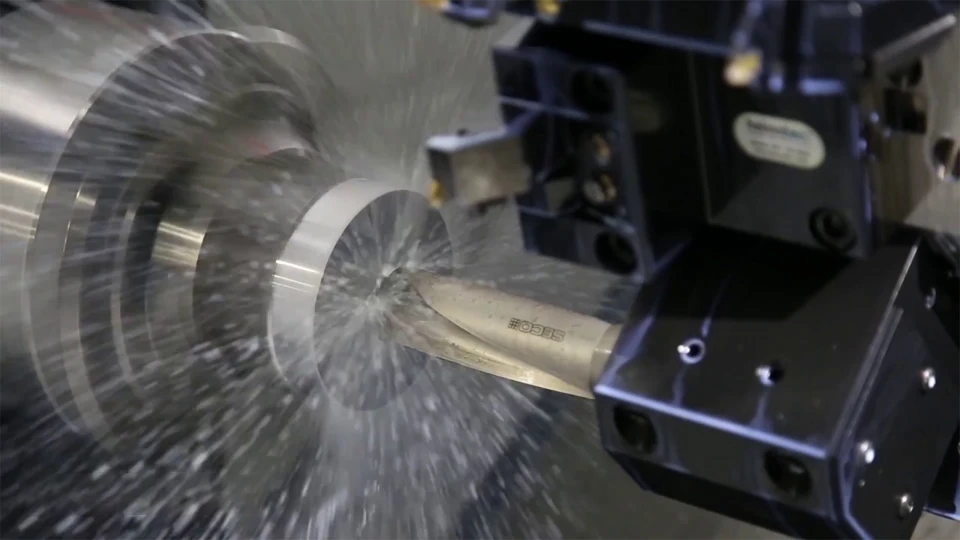
Through-Spindle Coolant (TSC) is more than a technical feature — it represents stability, confidence, and progress in modern machining. By delivering coolant directly to the cutting edge, it reduces heat, extends tool life, and ensures chips are cleared before they cause failures. The outcome is predictable accuracy, smoother workflows, and fewer disruptions. For manufacturers, TSC is not just about controlling temperatures, but about securing consistent quality and unlocking higher productivity.
At Rosnok, we design CNC machines with through-spindle coolant built into the process, not added as an afterthought. Our machining centers, turning centers, and Swiss-type lathes are engineered with sealed spindles, durable rotary unions, and filtration systems ready for both standard and high-pressure setups. This integration gives manufacturers the confidence to run demanding jobs with consistency—whether drilling deep holes in aerospace alloys, machining automotive components at scale, or producing precision medical implants. By embedding TSC into our equipment, we help customers achieve the reliability, accuracy, and efficiency modern machining demands.