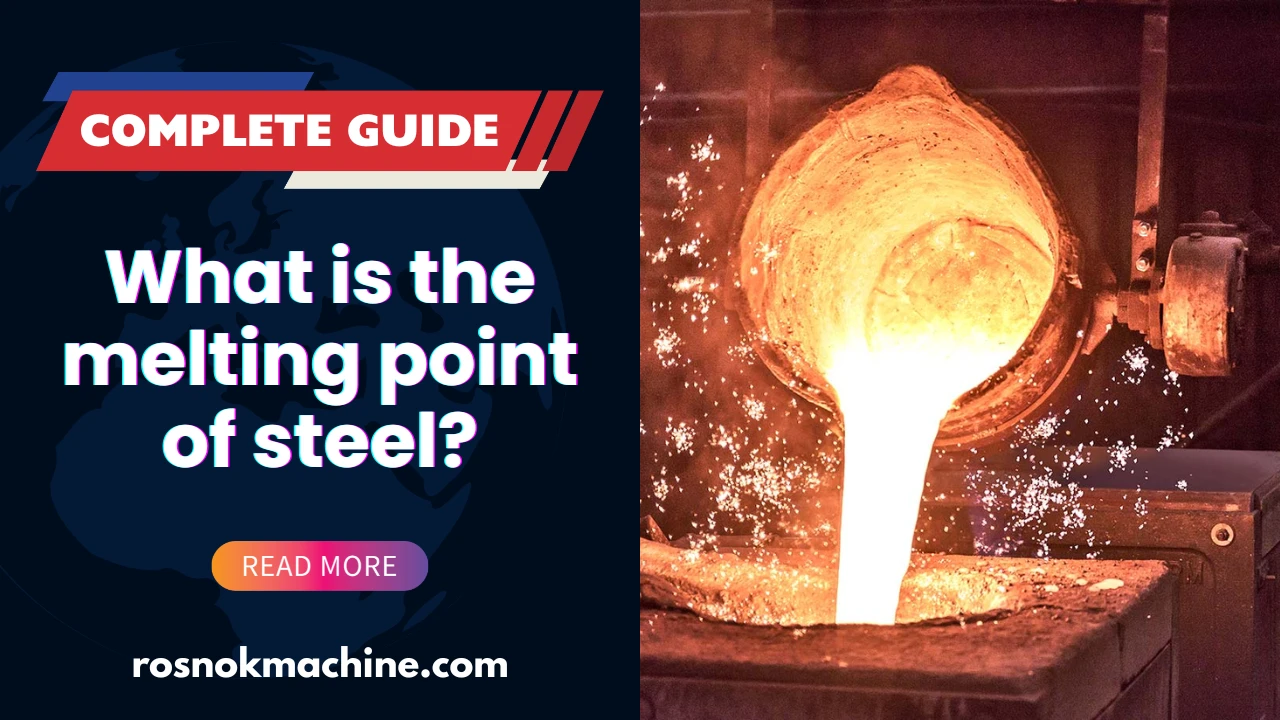
What is the melting point of steel? Why does it vary between different grades, and why should manufacturers, engineers, and buyers care about it? These questions matter because steel is the backbone of modern industry, and knowing its melting point is essential for safe and efficient production.
The melting point of steel typically ranges from 1370°C to 1510°C, depending on its composition and grade. Carbon content, alloying elements, and impurities all play a role in determining the exact temperature. This range makes steel versatile for countless industrial applications, from welding to casting.
The melting point of steel is more than just a number. It explains why stainless steel withstands heat differently than carbon steel, why welders fine-tune their settings, and why foundries rely on melting point data to control furnace temperatures and pouring conditions. In the sections ahead, we’ll explore these differences in detail and see how they shape real-world manufacturing.
What is the melting point of steel?
The melting point of steel is not a single fixed number but a range that reflects the complexity of its composition. In most cases, steel melts between 1370°C and 1510°C (about 2500°F–2750°F). This range is lower than the melting point of pure iron, which is 1538°C (2800°F), because steel contains carbon and other alloying elements that change its thermal behavior.
Instead of melting suddenly at one exact temperature, steel gradually softens and transitions from solid to liquid. This is why metallurgists and engineers often talk about a “melting range.” The precise steel melting point depends on factors such as carbon content, alloying additions like chromium or nickel, and the specific grade of steel being used.
Understanding this temperature range is essential in industries where steel must be heated, reshaped, or joined. From welding and forging to large-scale casting, knowing the approximate melting point of steel ensures that processes remain both efficient and safe.
Factors affecting the melting point of steel
The melting point of steel varies because steel is not a pure element but an alloy. Its thermal behavior is influenced by several key factors, and understanding these helps explain why different grades of steel melt at different temperatures.
Carbon content
Carbon is the single most influential factor in determining how steel melts. As carbon levels increase, the melting point drops. For example, the carbon steel melting point is usually lower than that of pure iron, making it easier to melt and reshape. In contrast, steels with a very low carbon percentage—often referred to as mild steels—show a slightly higher mild steel melting point, still within the general steel melting range of 1370°C to 1510°C. This relationship explains why different grades of carbon steels are chosen for specific applications depending on the required thermal performance.
Alloying elements
Beyond carbon, alloying additions also shift the melting range of steel. Elements such as chromium, nickel, manganese, and molybdenum modify the crystal structure and stability at high temperatures. For instance, the stainless steel melting point is typically lower than that of plain carbon steels because of the combination of chromium and nickel. Each addition changes the overall steel melting point temperature, sometimes broadening the melting range. Engineers consider these variations carefully when selecting steels for welding, forging, or other high-temperature processes.
Impurities and microstructure
Even minor impurities or microstructural differences can influence the way steel melts. Non-metallic inclusions, grain size, and heat treatment history all affect how steel transitions from solid to liquid. While these changes may only adjust the melting point temperature of steel by a few degrees, they become critical in precision industries where furnace settings and thermal cycles must be tightly controlled. This is why metallurgists often determine the exact melting behavior of a specific batch rather than relying solely on reference values.
Melting point of different types of steel
Different grades of steel have distinct melting behaviors because of their composition. Knowing these ranges helps engineers, welders, and manufacturers choose the right material for the right application.
Carbon steel
The carbon steel melting point usually falls between 1425°C and 1540°C (2600°F–2800°F), depending on the percentage of carbon present. Higher carbon content reduces the melting temperature slightly compared with pure iron. This makes carbon steels easier to melt and cast, but also more brittle at high temperatures. Different references may list slightly different values for the melting point of carbon steel, which is why it is usually expressed as a range rather than a single number.
Stainless steel
The stainless steel melting point is generally lower than that of carbon steel, typically ranging between 1375°C and 1450°C (2500°F–2650°F). The difference comes from the alloying elements—mainly chromium and nickel—that give stainless steel its corrosion resistance. Because these elements change the crystal structure, the melting point of stainless steel can vary across grades. For example, austenitic stainless steels have slightly lower melting ranges compared with ferritic stainless steels. These grade-specific differences mean that stainless steel cannot be defined by one number; its melting behavior must always be understood in the context of its composition.
Mild steel
Mild steel, sometimes called low-carbon steel, contains less than 0.3% carbon. Its melting range typically lies between 1450°C and 1520°C (2640°F–2768°F). Because of the low carbon content, the mild steel melting point or melting point of mild steel is slightly higher than that of high-carbon steels. This makes mild steel easier to weld and shape without risk of cracking, which is why it is widely used in construction, pipelines, and general fabrication.

Alloy steel
The melting point of alloy steel is generally found in the range of 1430°C to 1500°C (2600°F–2730°F), though the exact value depends on the alloying elements involved. Additions such as manganese, chromium, molybdenum, and vanadium modify the microstructure and influence how the steel behaves under heat. These elements enhance strength, toughness, and wear resistance, but they also cause slight shifts in melting behavior compared with plain carbon steels. Because alloy steels are produced in many variations, their melting points are always described as ranges, not single values. This versatility explains why alloy steels are widely used in gears, bearings, and oil drilling equipment.
Tool steel
Tool steels are high-carbon steels enriched with elements like tungsten, molybdenum, vanadium, and chromium. Their melting range extends from roughly 1425°C to 1540°C (2600°F–2800°F), which places them close to carbon steels but with improved hardness and thermal stability thanks to alloying additions. These properties make tool steels highly resistant to wear and deformation, which is why they are the preferred choice for cutting tools, molds, stamping dies, and heavy-duty machining components. Like other steel grades, the melting point of tool steel is best understood as a range that reflects its specific composition.
High-speed steel (HSS)
High-speed steels are a special group of tool steels designed to withstand the heat generated in high-speed machining. In most cases, the melting point of high-speed steel falls between 1430°C and 1500°C (2600°F–2730°F), influenced by its high content of tungsten, molybdenum, and vanadium. These alloying elements allow HSS to maintain hardness even when exposed to elevated temperatures, a property known as “red hardness.” Because of this, HSS is widely used in drills, milling cutters, and turning tools. As with other alloyed steels, the melting behavior of HSS varies slightly across grades, making it more accurate to discuss a melting range rather than a fixed temperature.
Summary
| Steel Type | Melting Point Range (°C) | Melting Point Range (°F) |
|---|---|---|
| Carbon steel | 1425 – 1540 | 2600 – 2800 |
| Stainless steel | 1375 – 1450 | 2500 – 2650 |
| Mild steel | 1450 – 1520 | 2640 – 2768 |
| Alloy steel | 1430 – 1500 | 2600 – 2730 |
| Tool steel | 1425 – 1540 | 2600 – 2800 |
| High-speed steel (HSS) | 1430 – 1500 | 2600 – 2730 |
In summary, different grades of steel show unique melting behaviors because of their carbon levels, alloying elements, and microstructures. Understanding these ranges helps engineers and manufacturers select the right steel for applications like welding, casting, and machining, where precise heat control is critical.

Why melting point matters in manufacturing
The melting point of steel is not just an academic detail; it directly affects how steel is processed in modern manufacturing. From welding and forging to casting and machining, understanding the temperature range where steel transitions from solid to liquid ensures that processes are both efficient and safe. Without this knowledge, manufacturers risk poor product quality, wasted energy, or even structural failures.
Welding and joining
In welding, precise heat control is essential. If temperatures are too low, the weld may not penetrate properly; if too high, the steel can lose strength or develop cracks. Knowing the steel melting point temperature helps welders set the right parameters for different grades, whether they are working with carbon steel, stainless steel, or specialized alloys. For example, stainless steel requires tighter control because its melting range is narrower than that of mild or carbon steels.
Casting and forming
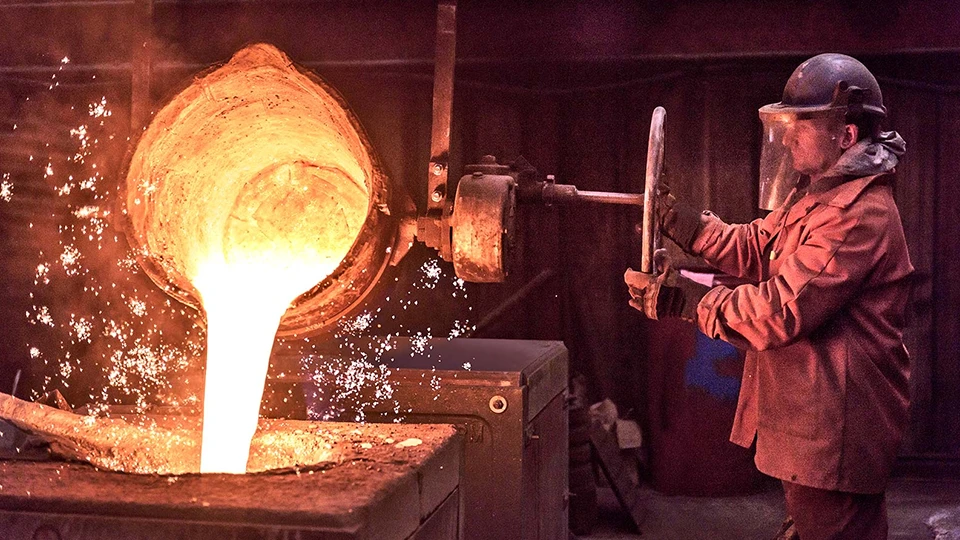
Casting involves heating steel until it reaches its molten state, then pouring it into molds. The success of this process depends on accurately reaching and maintaining the correct melting range. If the steel is overheated, impurities can form or the microstructure can degrade. If it is underheated, incomplete filling and surface defects may occur. Understanding the melting point of steel in Fahrenheit and Celsius allows foundries to balance energy efficiency with product reliability.
Heat treatment and machining
Heat treatment processes such as annealing, quenching, and tempering rely on heating steel close to—but not beyond—its melting point. Each grade responds differently to heat because of its composition. For machining operations, steels like high-speed steel are specifically designed to maintain hardness at elevated temperatures. Knowing the melting point temperature of steel ensures that manufacturers can push materials to their limits without compromising performance.

Conclusion
The melting point of steel is not just a number in a handbook—it is a parameter that shapes how steel can be welded, cast, heat-treated, and machined. By understanding the factors that shift this range and the differences among carbon, stainless, mild, alloy, tool, and high-speed steels, manufacturers can align processes with material behavior and prevent performance issues. The key takeaway is that melting point knowledge is strategic: it defines whether steel is applied with precision and reliability or exposed to unnecessary risks.
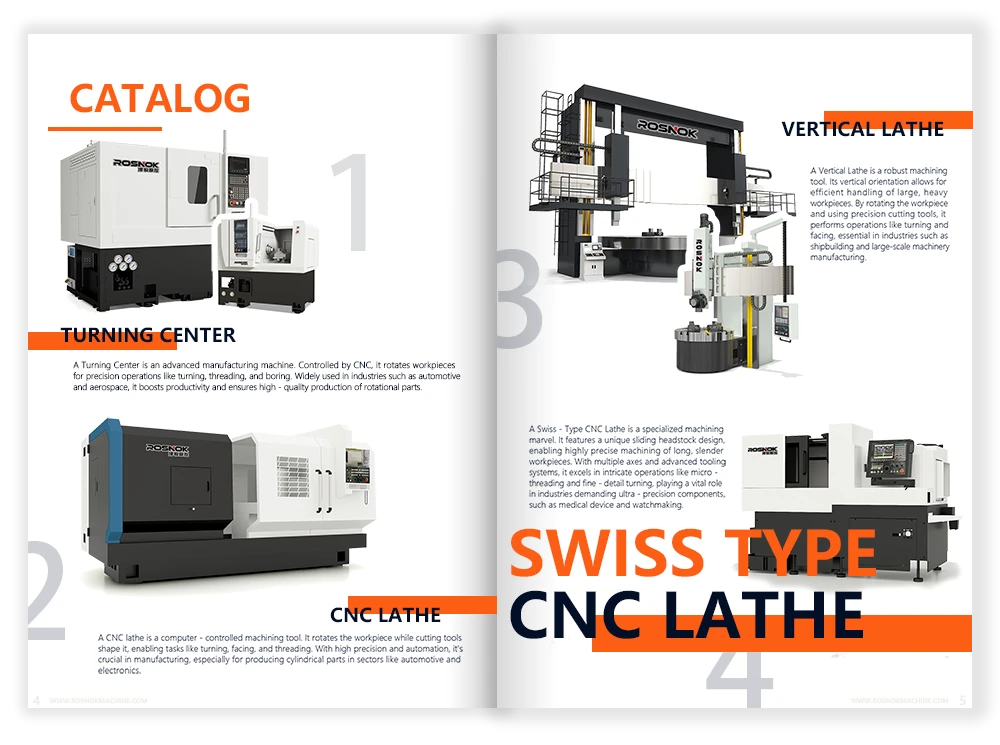
For companies that work daily with steel, this knowledge only creates real value when paired with the right equipment. At Rosnok, we design and build CNC lathes, machining centers, vertical lathes, Swiss-type lathes, and other solutions that turn metallurgical principles into repeatable shop-floor results. By combining certified quality with responsive support, we help manufacturers handle diverse steel grades confidently—achieving precision, consistency, and efficiency in every production cycle.