A lathe is widely used in metalworking, but its role goes beyond simply shaping a piece of metal. The way a lathe holds and rotates a workpiece determines the machining operations it can perform and the types of parts it can produce. Understanding these fundamentals helps you see where a lathe fits into a manufacturing process and which machine type may suit your production needs.
What Is a Lathe?
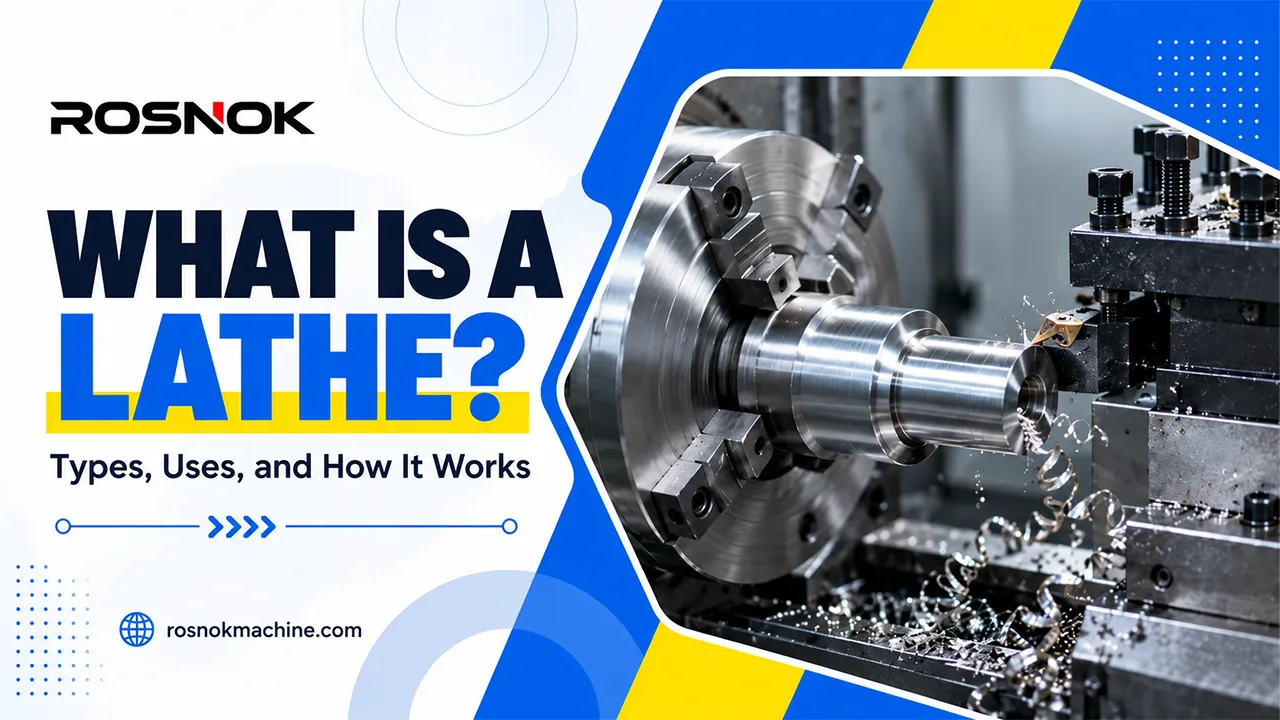
A lathe is a machine tool that shapes a workpiece by rotating it around an axis while a cutting tool removes material. In metalworking, the workpiece is typically held in a chuck or another workholding device connected to the spindle. As the spindle rotates, the cutting tool moves relative to the workpiece to produce the required dimensions and surface features.
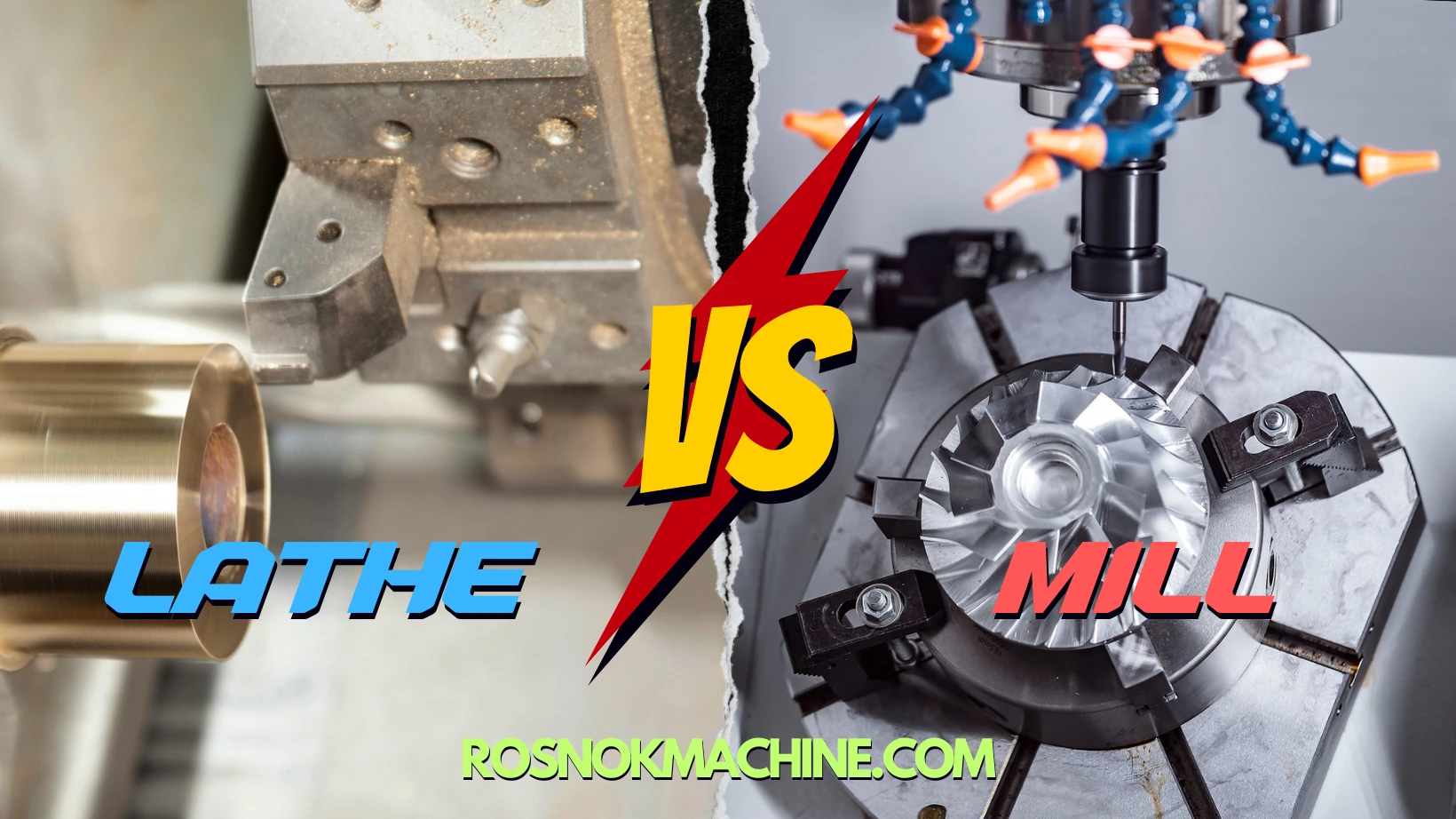
Unlike a milling machine, which typically removes material with a rotating cutting tool, a conventional lathe primarily uses workpiece rotation to generate the cutting motion. This makes it particularly suitable for producing parts with rotational features, such as shafts, bushings, and threaded components.
Modern lathes range from manually operated machines to CNC-controlled systems. Although their control methods and capabilities vary, they share the same basic principle: the workpiece and cutting tool move relative to each other in a controlled way to remove material and achieve the required geometry.
How Does a Lathe Work?
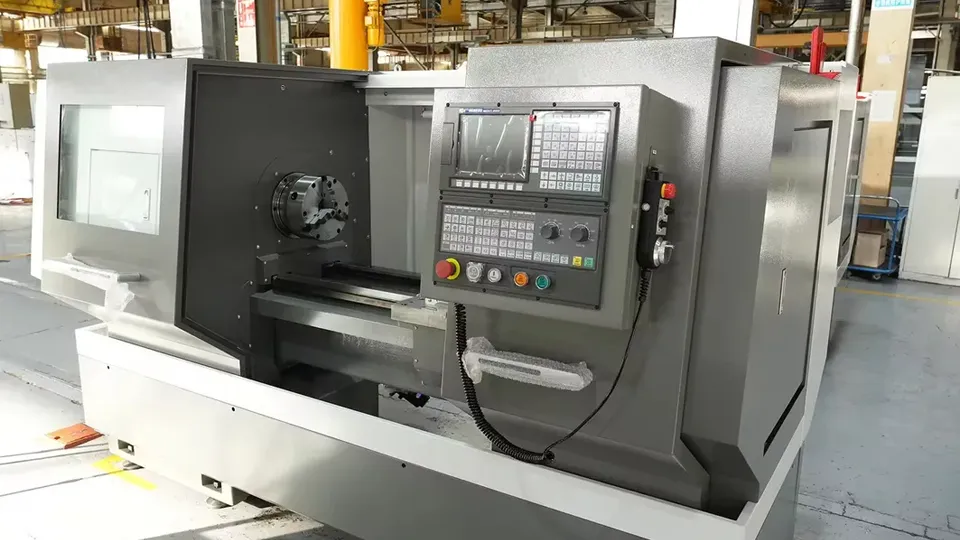
A lathe works by rotating a workpiece while a cutting tool moves against it to remove material. The spindle drives the workpiece, and the tool follows a controlled path to produce the required diameter, length, and surface features. The exact setup depends on the part geometry, material, and machining operation.
How the Workpiece Is Held and Rotated
The workpiece is commonly secured in a chuck attached to the spindle. For suitable parts, collets or other workholding devices may be used instead. The spindle rotates the workpiece at a selected speed, while the workholding setup must provide enough grip and support for the machining forces involved.
Long or slender workpieces may require additional support from a tailstock or steady rest to help control deflection. The appropriate setup depends on the workpiece dimensions, stiffness, cutting conditions, and required accuracy.
How the Cutting Tool Removes Material
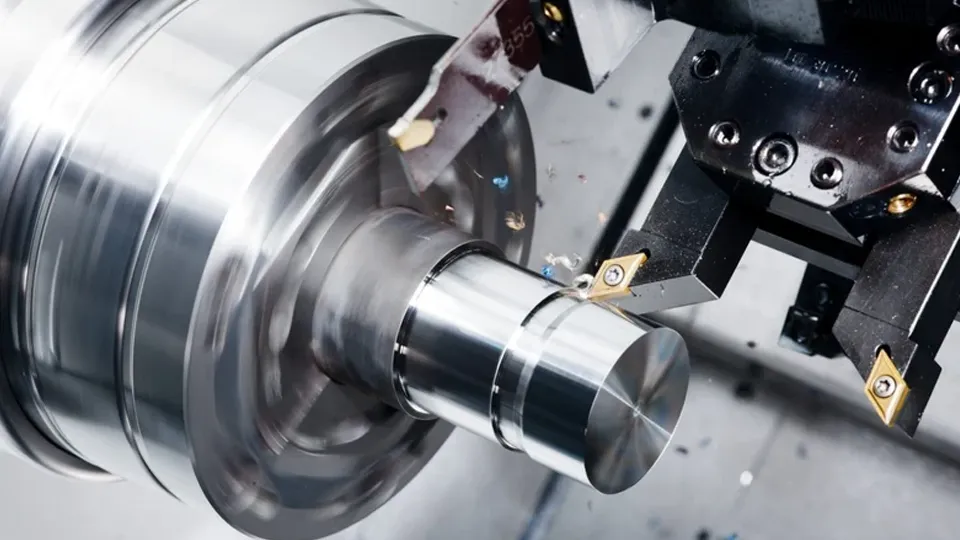
The cutting tool contacts the rotating workpiece and removes material as it moves along the required path. For external turning, the tool typically travels parallel to the workpiece axis to reduce its diameter. For facing, the tool moves across the end of the workpiece to create a flat surface.
Other operations require different tool paths and setups. Grooving creates a narrow recess, while threading forms a helical profile. Drilling and boring can also be performed on suitable lathe configurations, depending on the tooling and workholding arrangement.
How Spindle Speed and Feed Affect Machining
Spindle speed determines how quickly the workpiece rotates, while feed describes the cutting tool’s movement relative to the workpiece. These settings influence cutting conditions, surface finish, tool life, and machining time.
The appropriate settings depend on the workpiece material, tool material and geometry, cut depth, machine rigidity, and workholding conditions. Higher spindle speed or feed does not automatically mean better productivity. The goal is to select conditions that achieve the required part quality at a practical production rate.
What Is a Lathe Used For?
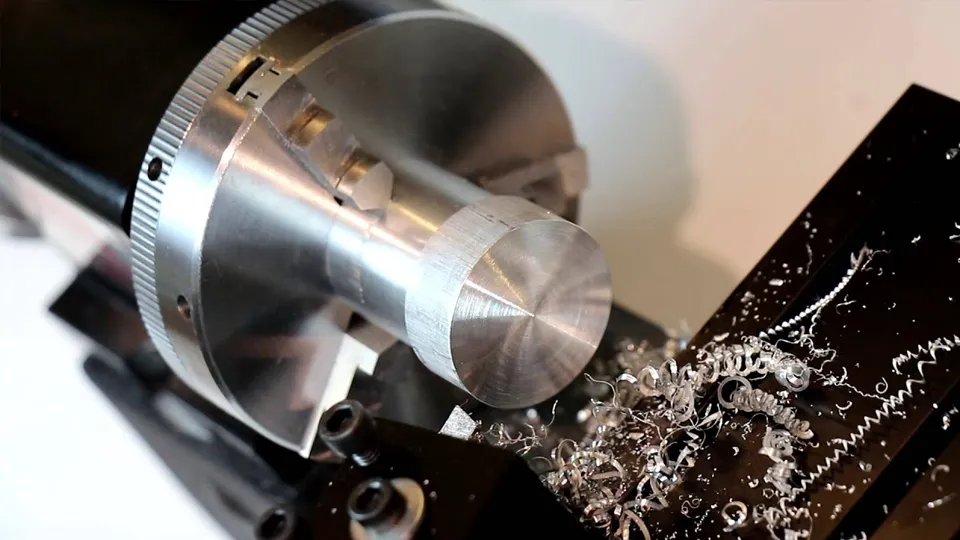
A lathe is primarily used to machine rotational parts and produce precise features on a workpiece. Common applications include turning shafts, machining end faces, cutting grooves and threads, drilling holes, and boring existing holes to achieve the required dimensions and surface finish. Depending on the machine configuration and tooling, a lathe can also perform additional operations to meet specific part requirements.
Turning Cylindrical Surfaces
Turning is one of the main operations performed on a lathe. A cutting tool removes material from the outside of a rotating workpiece to achieve the required diameter, machine shoulders, or produce a tapered surface.
This operation is widely used to produce shafts, pins, bushings, rollers, and other components with cylindrical features. When a part has several diameters or shoulders, multiple turning passes can bring each section to its specified dimensions.
Facing, Grooving, and Threading
Lathes can perform several other operations to create specific features on a part.
- Facing: Removes material from the end of a workpiece to create a flat end surface and establish the required length.
- Grooving: Cuts a narrow recess into the workpiece, such as a groove for a retaining ring or seal.
- Threading: Produces internal or external threads for threaded connections, fasteners, and assembled components.
- Taper Turning: Produces a conical surface whose diameter varies along its length.
These operations are often combined in a single setup, helping manufacturers complete multiple features without repeatedly repositioning the workpiece.
Drilling and Boring on a Lathe
A lathe can also produce internal features when the appropriate tools and setup are available. Drilling creates a hole, while boring enlarges or refines an existing hole to achieve the required diameter, dimensional accuracy, and surface finish.
For example, a manufacturer producing a cylindrical housing may need to machine its outside diameter, face the ends, and finish an internal bore. A suitable lathe configuration can perform several of these operations in one setup, reducing repeated handling and helping maintain dimensional and positional accuracy between machined features.
The actual capability depends on factors such as tool access, spindle configuration, workpiece geometry, and the machine’s available travel. More complex internal features or additional milling operations may require specialized tooling or a machine with suitable live tooling capabilities.
What Are the Main Parts of a Metalworking Lathe?
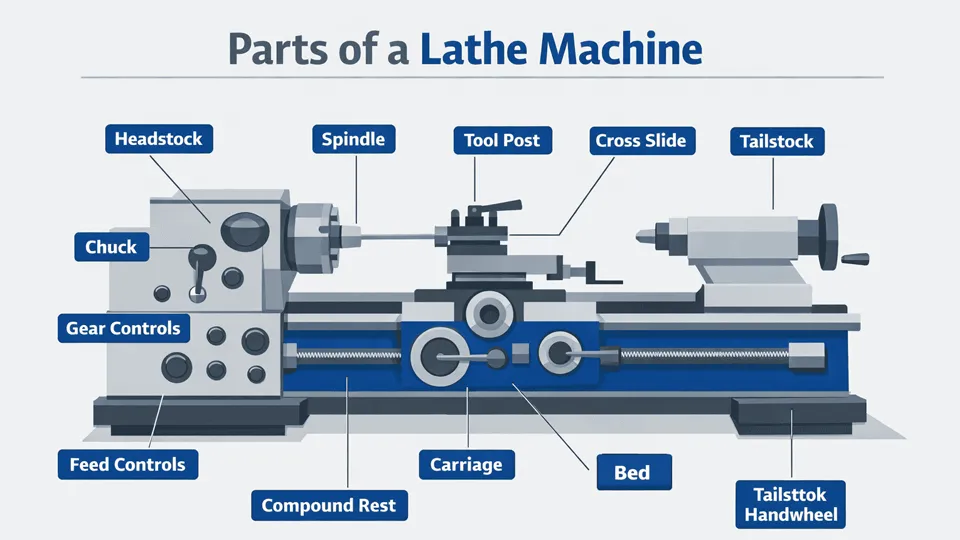
A metalworking lathe consists of several key components that hold and rotate the workpiece, support the cutting tool, and control machining movements. The main components include the bed, headstock, spindle, workholding device, and tool-supporting assembly. Their design and arrangement vary between conventional lathes, CNC lathes, and specialized machines.
Bed, Headstock, and Spindle
The bed provides the main structural foundation of a lathe and supports components such as the headstock, carriage, and, where applicable, the tailstock. Its rigidity and the accuracy of its guideways influence how the machine components move relative to one another.
The headstock houses or supports the spindle drive system, depending on the machine design. The spindle rotates the workpiece through a chuck, collet, or another suitable workholding device. Spindle performance, bearing condition, and structural rigidity all contribute to stable machining and the ability to achieve the required part quality.
Chuck and Other Workholding Devices
The workholding device secures the workpiece and transmits spindle rotation to it. A chuck is commonly used for holding individual parts, while a collet can provide accurate, repeatable gripping for suitable workpiece sizes and shapes.
The choice of workholding method depends on the workpiece geometry, material, dimensions, and machining requirements. Long or slender parts may need additional support to reduce deflection, while thin-walled components may require a suitable clamping method to limit distortion.
Incorrect workholding can affect dimensional accuracy, surface finish, and machining stability. The clamping force and gripping arrangement must therefore suit the workpiece and the cutting conditions.
Tool Post or Turret, Carriage, and Tailstock
The cutting tool must be positioned and moved accurately relative to the workpiece. The components responsible for this movement depend on the lathe design.
- Tool post or turret: A conventional lathe typically uses a tool post to hold the cutting tool. Many CNC lathes use a tool turret that indexes between different tools, allowing multiple machining operations to be performed with less manual tool changing.
- Carriage and slides: On a conventional lathe, the carriage supports and moves the cutting tool along the bed, while cross slides provide movement across the workpiece axis. CNC lathes use controlled axes and slides to position the tool along programmed paths.
- Tailstock: When fitted, the tailstock can support the free end of a long workpiece using a center. It can also hold tools such as drills for suitable machining operations. Whether a tailstock is needed depends on the workpiece, machining setup, and machine configuration.
These components work together to position the cutting tool, support the workpiece where necessary, and help achieve the required dimensions and surface finish. Their configuration differs across lathe types, so the machine should be evaluated according to the actual parts and operations it needs to handle.
What Are the Different Types of Lathes?
Lathes come in different designs to meet a wide range of machining and production requirements. Some are operated manually, while others use CNC systems to control tool movements and machining sequences. Specialized lathes are also designed for particular workpiece geometries, such as large components, pipes, or small precision parts. Understanding these differences helps you narrow down the machine types suited to your application.
Manual Lathes
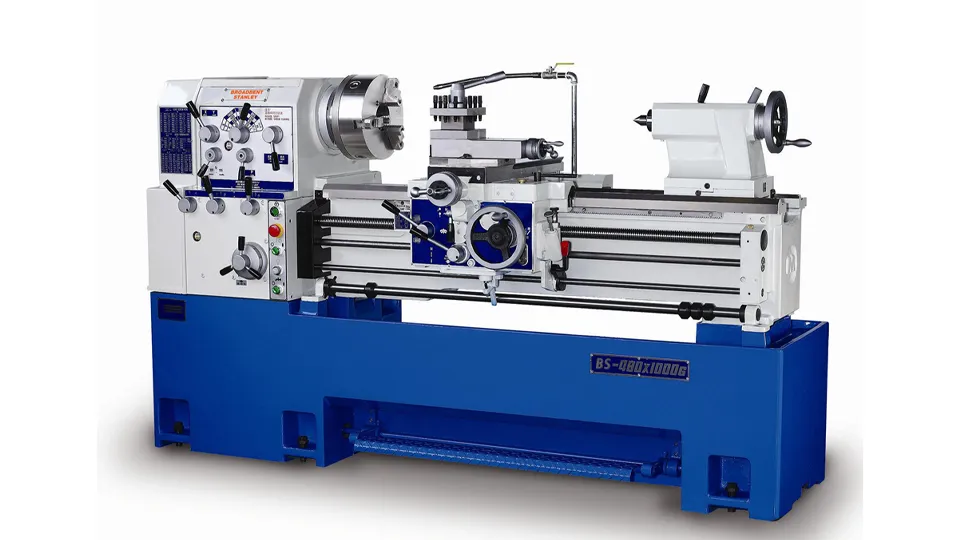
Manual lathes rely on the operator to control tool movements and machining operations. They are commonly used for repair work, maintenance, prototyping, and low-volume production where flexibility and direct operator control are important.
A manual lathe can handle a range of turning tasks, including facing, threading, grooving, and drilling with suitable tooling. It can be a practical choice when production volumes are low or the mix of parts changes frequently. For repetitive production requiring consistent machining cycles and reduced operator intervention, a CNC lathe may be a better fit.
CNC Lathes
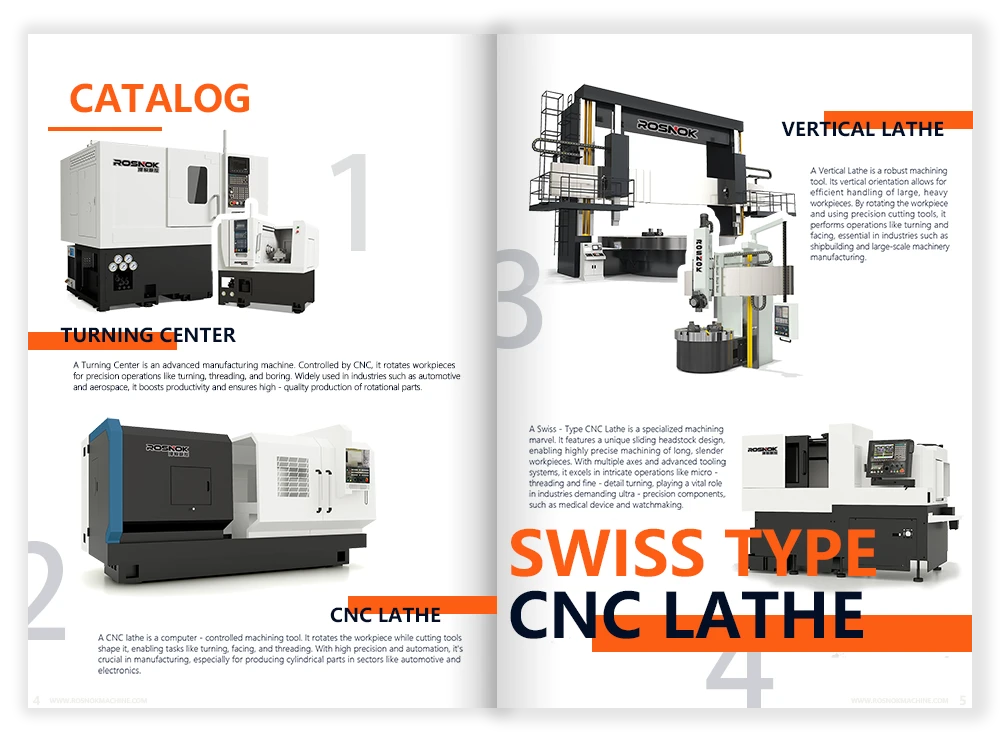
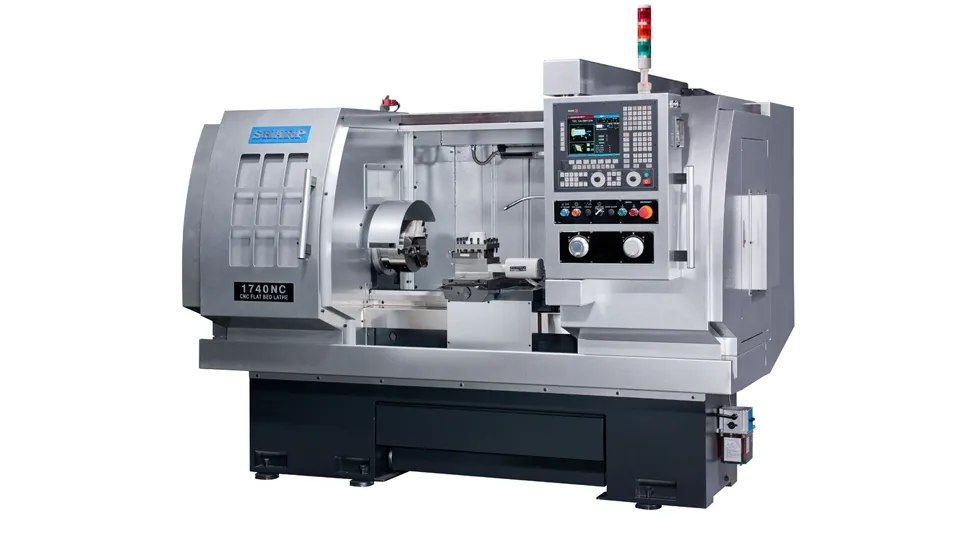
CNC lathes use a computer numerical control system to execute programmed machining movements. Once a program and setup have been established and verified, the machine can repeat machining sequences across multiple workpieces with reduced manual intervention.
They are widely used in batch production where consistent dimensions and repeatable machining cycles are important. When selecting a CNC lathe, consider workpiece dimensions, spindle capacity, required operations, tooling arrangement, and production volume.
CNC Turning Centers
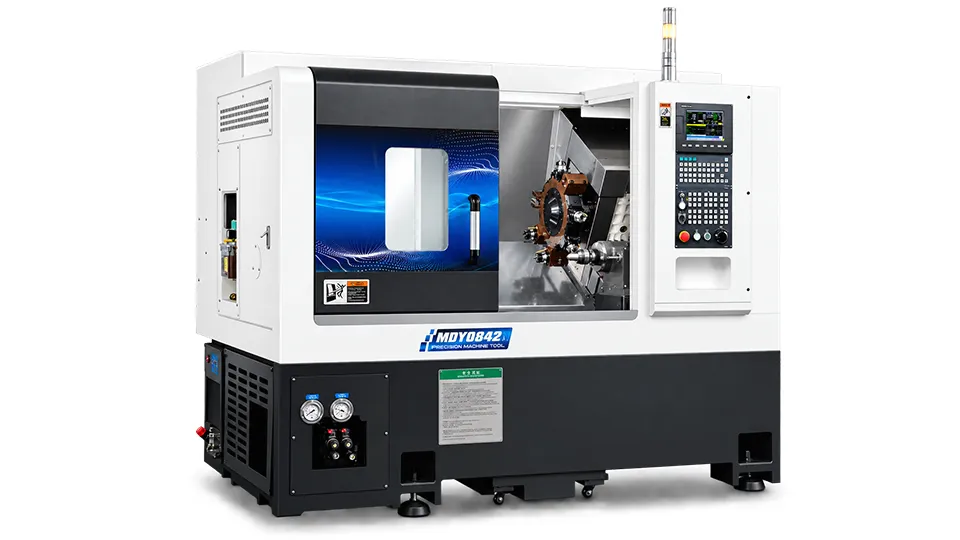
CNC turning centers can combine turning with additional machining operations, depending on their configuration. Many models can be equipped with live tooling to perform secondary operations such as milling, drilling, and tapping without transferring the workpiece to a separate machine.
They are suitable for parts that require both turning and additional features, such as cross-holes or milled surfaces. Options such as a C-axis, Y-axis, sub-spindle, or multiple turrets can expand machining capabilities, but the required features should be verified against the part drawing and production needs.
Vertical Lathes
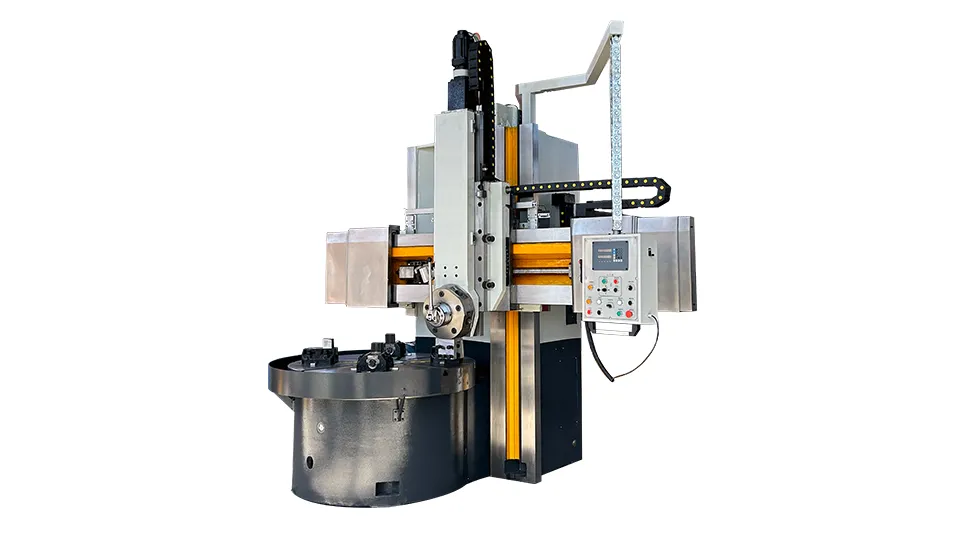
Vertical lathes feature a vertically oriented spindle, with the workpiece typically mounted on a horizontal rotary table. This arrangement can be advantageous for machining large-diameter or heavy rotational parts that are difficult to support and handle on a conventional horizontal lathe.
Typical applications include large discs, rings, and flanges used in general machinery and heavy industrial equipment. When selecting a vertical lathe, check the workpiece diameter and height, table load capacity, machining envelope, and workholding requirements.
Pipe Threading Lathes
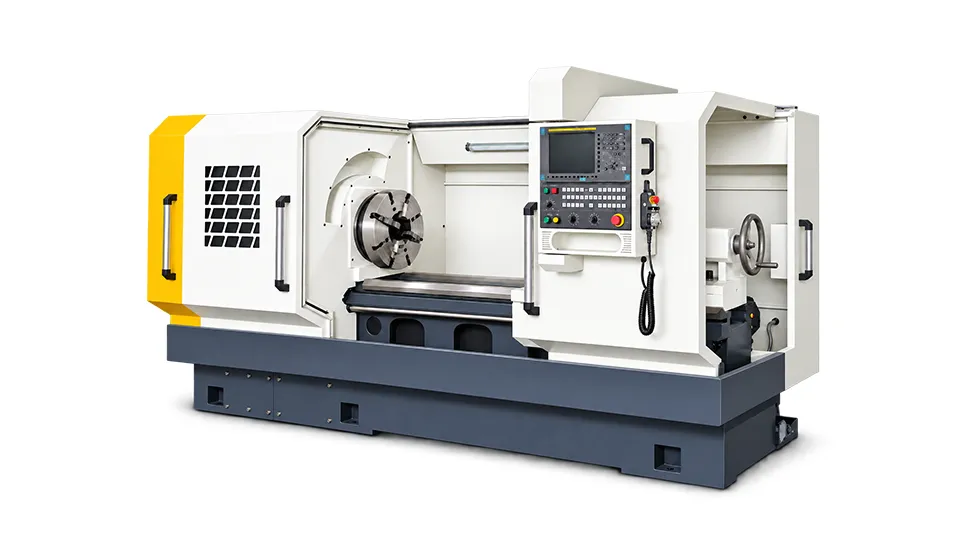
Pipe threading lathes are designed for machining pipe ends and producing threads for pipe connections. Their configuration accommodates pipe workpieces and the threading operations required for specific applications.
When choosing a pipe threading lathe, consider the spindle bore, pipe diameter range, chuck capacity, and required thread specifications. Pipe length, workpiece weight, and the support needed during machining should also be evaluated.
Swiss-Type CNC Lathes
Swiss-type CNC lathes are designed primarily for small, precision components, particularly long or slender parts that require support close to the cutting area. In a typical configuration, the bar passes through a guide bushing while the sliding headstock feeds the workpiece toward the cutting tools. Some machines can also operate in bushingless mode, depending on their design.
These machines are commonly used for precision components in industries such as medical devices, electronics, and automotive manufacturing. When selecting a Swiss-type lathe, consider bar diameter, part length, required features, tolerances, and production volume, along with the available tooling and axis configuration.
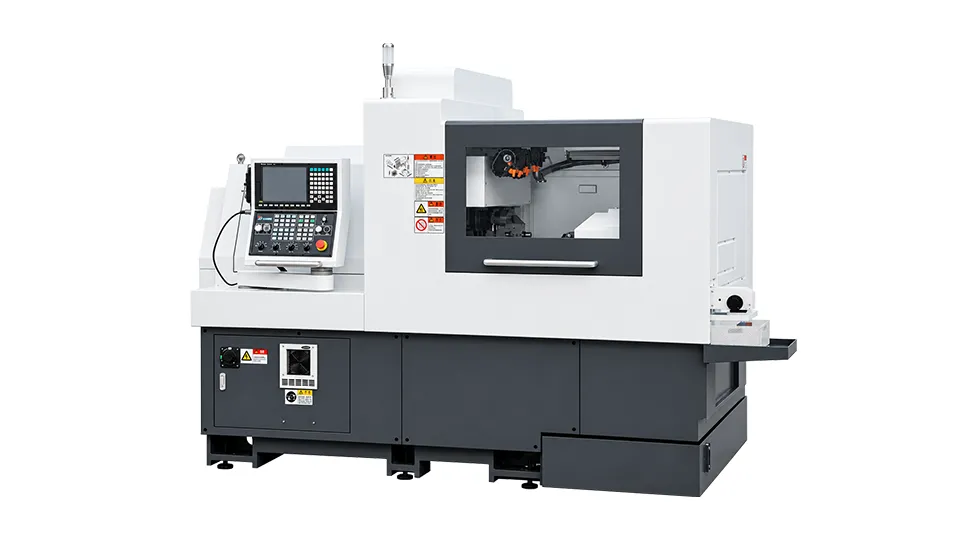
The lathe types described above are not all mutually exclusive categories. For example, a vertical lathe can also use CNC control, and a CNC lathe may be configured specifically for pipe threading. The best choice depends on the machine’s structure, intended application, available configuration, and the requirements of the workpiece.
What Materials Can a Lathe Machine Process?
A lathe can process a variety of materials, including metals, wood, plastics, and certain other materials, depending on the machine design, tooling, and intended application. Each material has different machining characteristics, so the appropriate machine and setup must match the workpiece properties and the required dimensions, tolerances, and surface finish.
Metal
Metalworking lathes commonly process steel, stainless steel, aluminum, brass, and copper to produce components such as shafts, bushings, fittings, and mechanical parts. Different metals have different cutting characteristics, which affect tool selection, cutting conditions, chip control, and the power required for machining.
When selecting a lathe for metalworking, consider the material grade, workpiece dimensions, required tolerances, and production volume. Machine rigidity, spindle power, workholding, and tooling should all suit the intended machining operations.
Wood
Wood lathes are designed to shape rotating wooden workpieces into components such as furniture legs, handles, decorative pieces, and other turned products. Unlike metalworking lathes, they use tooling and operating methods suited to wood’s grain structure and cutting behavior.
Woodworking and metalworking lathes are not interchangeable by default. The machine must be designed for the intended material and application, with suitable workholding, tooling, and operating arrangements.
Plastics
Certain plastics can be machined on suitable lathes to produce components such as bushings, sleeves, rollers, and precision parts. Different plastics respond differently to cutting heat, clamping forces, and tool pressure, so the machining setup must account for the material’s properties.
Tool geometry, cutting conditions, and workholding should be selected to limit deformation and achieve the required dimensions and surface finish. The appropriate setup depends on the plastic grade, part geometry, and tolerance requirements.
Other Materials
Depending on the machine and tooling, specialized turning applications may involve materials such as composites or other engineering materials. Their suitability for lathe machining depends on their properties, the required part geometry, and the available machining methods.
Before machining an unfamiliar material, verify its compatibility with the machine, cutting tools, and workholding arrangement. Material-specific requirements should be assessed rather than assuming that a standard metalworking setup is suitable for every application.
How Do You Choose the Right Lathe for Your Application?
Choosing the right lathe starts with your workpiece and production requirements. Before comparing machine specifications, identify the part dimensions, material, machining operations, required tolerances, and expected production volume. These factors help determine the machine type, capacity, and configuration needed for your application.
Workpiece Size, Length, and Weight
Start with the maximum workpiece diameter, length, and weight. These dimensions help determine the required machining envelope, spindle capacity, chuck size, and whether additional support is needed.
For long shafts, consider the distance between centers and whether a tailstock or steady rest is required. For large-diameter or heavy components, a vertical lathe may be worth evaluating. The selected machine must accommodate the actual workpiece and workholding arrangement, not just meet a single maximum-size specification.
Machining Operations and Accuracy Requirements
List all the operations required to complete the part, including turning, facing, grooving, threading, drilling, and any additional milling operations. A conventional lathe or CNC lathe may suit parts that mainly require turning, while a CNC turning center with live tooling may be more appropriate when the part also requires milling or off-center holes.
You should also identify critical dimensions, tolerances, and surface finish requirements from the part drawing. These requirements influence machine selection, tooling, workholding, and inspection methods. If the required accuracy cannot be confirmed from available specifications, arrange a technical review or trial machining before finalizing the machine.
Production Volume and Automation Needs
Consider how many parts you need to produce, how often part specifications change, and how frequently the machine must be set up for different jobs. Manual lathes may suit repair work and low-volume production, while CNC lathes are often better suited to repeatable production runs.
For higher production volumes or more complex parts, options such as bar feeders, live tooling, sub-spindles, or multiple turrets may help reduce manual intervention and repeated setups. Evaluate these options against the actual machining sequence, changeover frequency, and production targets rather than assuming that more automation is always the best choice.
Before requesting a quotation, prepare the workpiece drawing, material specification, key tolerances, expected production volume, and required operations. This information helps the supplier assess the machine capacity and configuration needed for your application.
FAQs About Lathes
What Does Swing Over Bed Mean on a Lathe?
Swing over bed is the maximum workpiece diameter that can theoretically fit over the lathe bed. However, it does not necessarily represent the maximum diameter that the machine can turn. The usable turning diameter may be smaller because of tool clearance, chuck dimensions, and other machine design limitations.
Does a Larger Lathe Always Offer Greater Machining Capability?
Not necessarily. A larger lathe may accommodate bigger workpieces, but its suitability also depends on spindle power and torque, workholding, machine rigidity, tooling, and the required machining operations. Choose a machine based on the actual part dimensions and production requirements rather than size alone.
What Is a Bar Feeder Used for on a CNC Lathe?
A bar feeder automatically supplies bar stock to a compatible CNC lathe, reducing the need for manual loading between machining cycles. It is particularly useful for repeat production of parts made from bar material. Before selecting one, check compatibility with the lathe, bar diameter and length, workpiece requirements, and the intended production setup.
Conclusion
Different lathe types serve different machining applications, with their capabilities shaped by machine design, tooling, and workpiece requirements. Understanding their operating principles, main components, machining operations, and material compatibility provides a clearer picture of how lathes are used across manufacturing industries.
From conventional turning to advanced CNC machining, ROSNOK offers a range of lathe machines designed to meet diverse industrial production needs. Explore our lathe machine range to discover the solutions available for different machining applications.