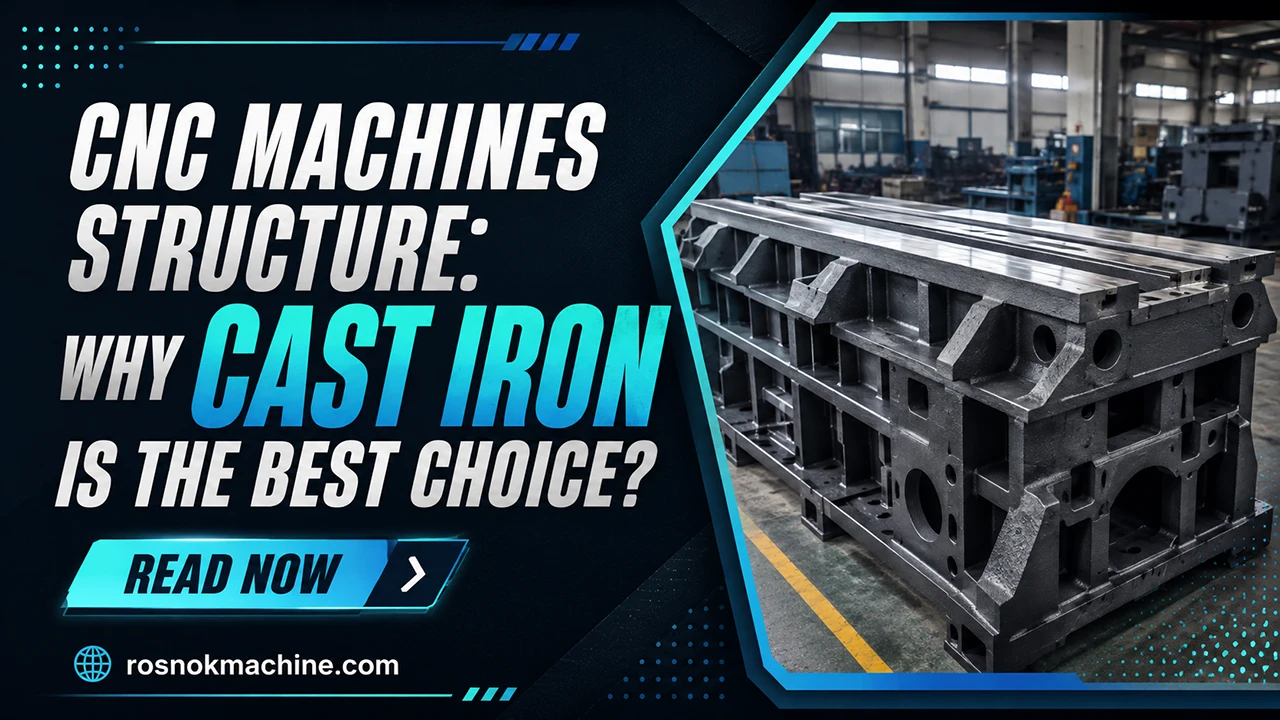
This article explains why cast iron is commonly used in CNC machines structure. It will examine its vibration-damping ability, rigidity, thermal stability, wear resistance, manufacturing advantages, and long service life, helping buyers and engineers understand how structural materials influence CNC machine accuracy and performance.
What Is Grey Cast Iron and Why Is It Chosen?
To understand why one material is so widely used in machine tool manufacturing, it is necessary to examine its basic composition and internal structure. A CNC machines structure needs a material that is strong, stable, and suitable for producing large machine components. Grey cast iron meets these requirements well.
What Is Grey Cast Iron?
Grey cast iron is an iron-based alloy with a higher carbon and silicon content than standard carbon steel. Typical composition ranges are:
- Iron (Fe): Balance
- Carbon (C): Approximately 2.5%–4.0%
- Silicon (Si): Approximately 1.0%–3.0%
- Manganese (Mn): Approximately 0.4%–1.0%
- Phosphorus (P) and Sulfur (S): Controlled at low levels
- Alloying elements: Small additions of chromium, molybdenum, copper, or nickel may be used to adjust strength, hardness, and wear behavior
The material takes its name from the dull-grey appearance of its fractured surface. This appearance is caused by graphite exposed along the fracture path.
Common Grades Used in CNC Machines Structure
Machine tool builders select grey cast iron grades according to required tensile strength, section thickness, hardness, and structural load.
Common designations include:
- GB Standard: HT250, HT300
- JIS Standard: FC250, FC300
- ASTM Standard: Class 35, Class 40
- EN Standard: EN-GJL-250, EN-GJL-300
These grades are not always direct equivalents. Different standards use different specimen sizes, testing methods, and acceptance criteria.
For this reason, manufacturers should evaluate actual mechanical properties, casting thickness, hardness distribution, and application requirements rather than relying only on a nominal grade name.
The Role of Graphite Flakes
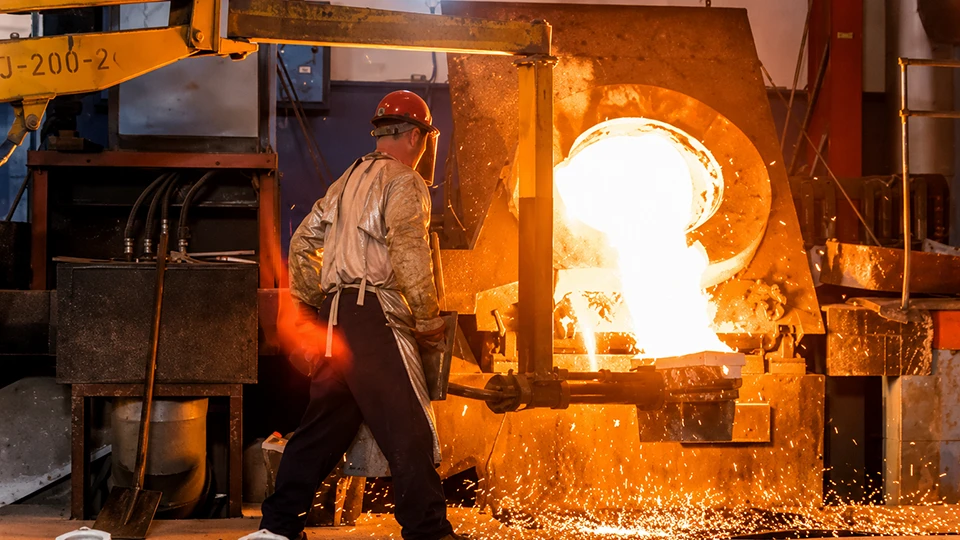
In grey cast iron, part of the carbon separates from the iron matrix during solidification and forms thin graphite flakes.
These flakes are distributed throughout a ferritic, pearlitic, or mixed matrix. Their size, shape, and distribution depend on chemical composition, cooling rate, and section thickness.
The graphite flakes change how stress, vibration, heat, and cutting forces move through the material.
This microstructure is the basis of several important properties discussed later, including vibration damping, machinability, and wear behavior.
Four Critical Benefits of Cast Iron in CNC Machines Structure
Vibration Damping and Chatter Control
Cutting creates continuous vibration. If the machine structure cannot absorb it, chatter marks, poor surface finish, faster tool wear, and unstable dimensions may follow.
The graphite flakes in grey cast iron help dissipate vibration energy. This makes the CNC machines structure more stable during turning, milling, and heavy cutting.
High Compressive Strength and Structural Rigidity
A CNC machine bed must support the spindle, table, fixtures, workpiece, and cutting load without excessive movement.
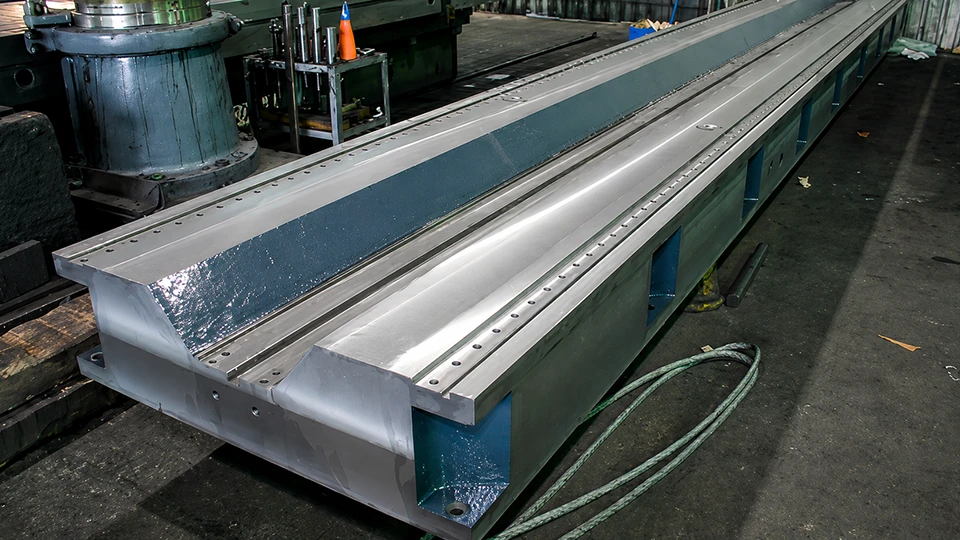
Grey cast iron performs well under compressive load. Combined with thick walls, box sections, and internal ribs, it helps maintain stable tool-to-workpiece alignment.
Thermal Stability and Wear Resistance
Heat from the spindle, motors, ball screws, guideways, and cutting process can shift machine geometry.
Cast iron has high thermal mass, so temperature changes usually occur more gradually. This supports more stable machining during long production cycles.
Its graphite structure also improves sliding behavior and lubricant retention, which is useful for box ways and other wear-sensitive surfaces.
Machinability and Design Flexibility
Critical mounting surfaces on a CNC machine must be milled, bored, ground, or scraped after casting.
Grey cast iron is relatively easy to machine and forms short, manageable chips. It can also be cast into complex shapes with internal ribs, hollow sections, guideway supports, and integrated mounting areas.
This makes it practical for producing accurate, rigid, and efficient CNC machines structure components.
Structural Comparison: Cast Iron vs. Welded Steel vs. Mineral Castings
Different CNC machine structures use different materials because each one offers a different balance of stiffness, damping, cost, and manufacturing flexibility.
Grey Cast Iron Structure
Grey cast iron is widely used in mainstream CNC machines because it combines good vibration damping, high compressive strength, stable thermal behavior, and practical manufacturing cost.
It is especially suitable for machine beds, columns, saddles, and headstock housings. Its casting performance also allows complex ribbed structures to be formed in one piece.
Welded Steel Structure
Welded steel offers high tensile strength and good design flexibility. It is often used for large, custom, or low-volume machines where structural dimensions may change from one project to another.
Its main limitation is lower vibration damping. Welding can also introduce residual stress, so proper welding sequence, reinforcement, and stress relief are important.
Mineral Castings
Mineral castings, also called polymer concrete or epoxy granite, provide excellent vibration damping and high thermal inertia.
They are often used in ultra-precision grinding machines, measuring equipment, semiconductor systems, and other machines where thermal and vibration control are more important than impact resistance.
Their limitations include higher production complexity, more difficult structural modification, and the need for embedded metal inserts at mounting points.
Direct Comparison
| Factor | Grey Cast Iron | Welded Steel | Mineral Casting |
|---|---|---|---|
| Vibration damping | Very good | Moderate | Excellent |
| Tensile strength | Moderate | High | Relatively low |
| Structural flexibility | Good for cast designs | Very high | Moderate |
| Thermal stability | Good | Moderate | Excellent |
| Modification after production | Difficult | Easier | Difficult |
| Typical use | Mainstream CNC machines | Large or custom machines | Ultra-precision equipment |
Which Material Is Best?
There is no single best material for every CNC machines structure.
Grey cast iron is usually the most balanced choice for general-purpose CNC lathes, machining centers, and milling machines. Welded steel is often better for very large or customized frames. Mineral castings are preferred when maximum damping and thermal stability are the main priorities.
Where Cast Iron Is Used in CNC Machines Structure
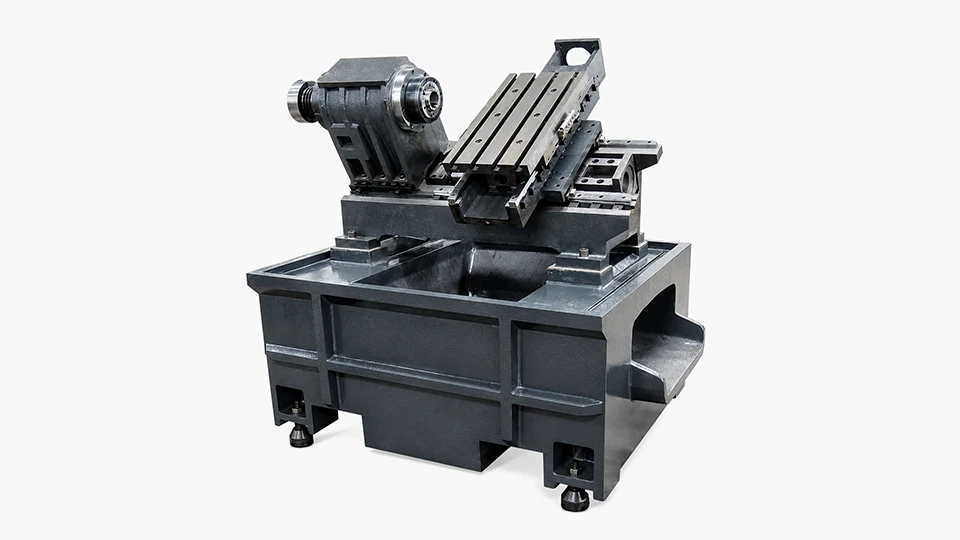
Cast iron is mainly used in the large structural parts that support loads, maintain alignment, and absorb cutting vibration.
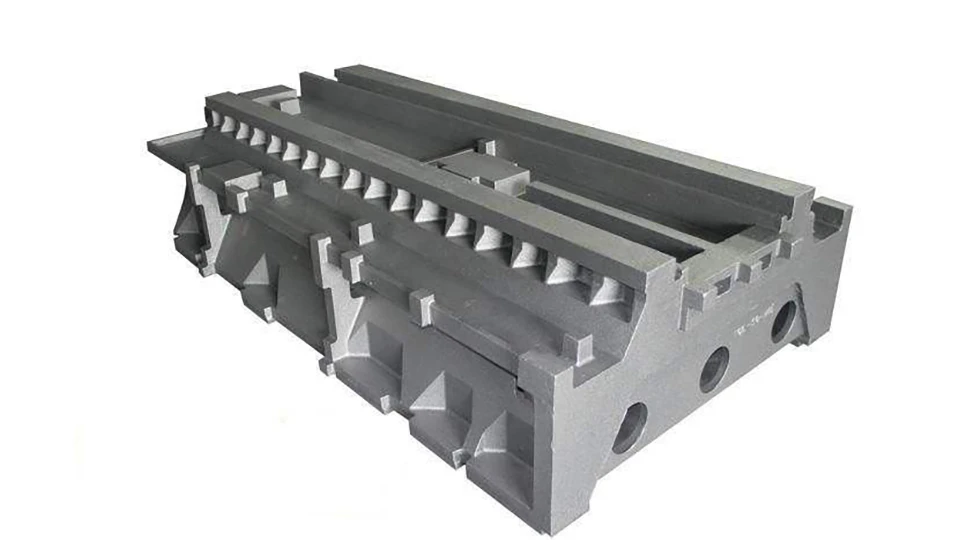
Machine Bed
The machine bed is the foundation of the entire CNC machine. It supports guideways, ball screws, worktables, columns, and spindle assemblies.
A stable cast iron bed helps maintain straightness and alignment under cutting loads. Its internal ribs and box-shaped sections also improve bending and torsional rigidity.
Column
The column supports the spindle head in machining centers and other vertical CNC machines.
It must resist bending caused by spindle weight, cutting force, and axis movement. Cast iron is widely used because it provides the mass and rigidity needed to keep the spindle position stable.
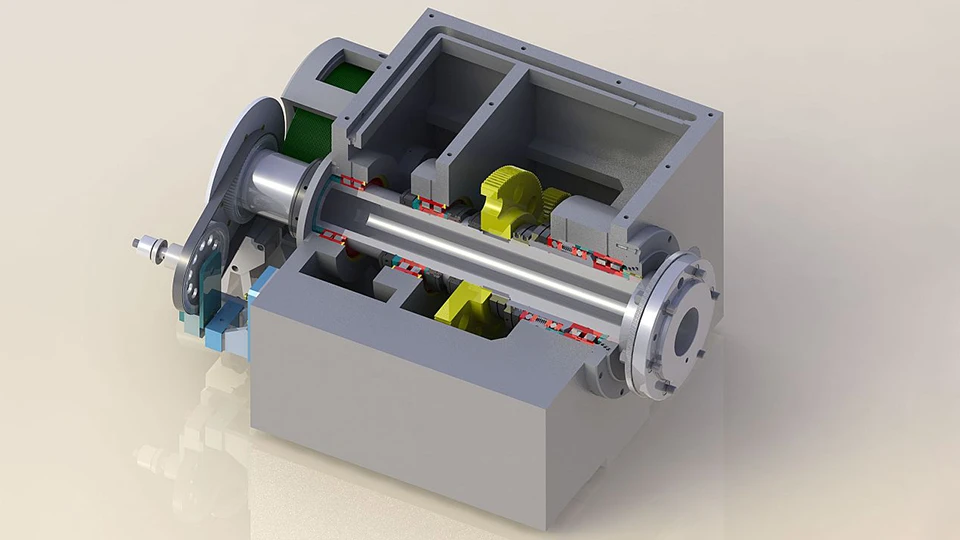
Headstock Housing
The headstock housing supports the spindle, bearings, and transmission components.
Any movement in this structure can affect spindle alignment and surface quality. Cast iron provides a rigid and vibration-resistant housing for high-speed rotation and cutting loads.
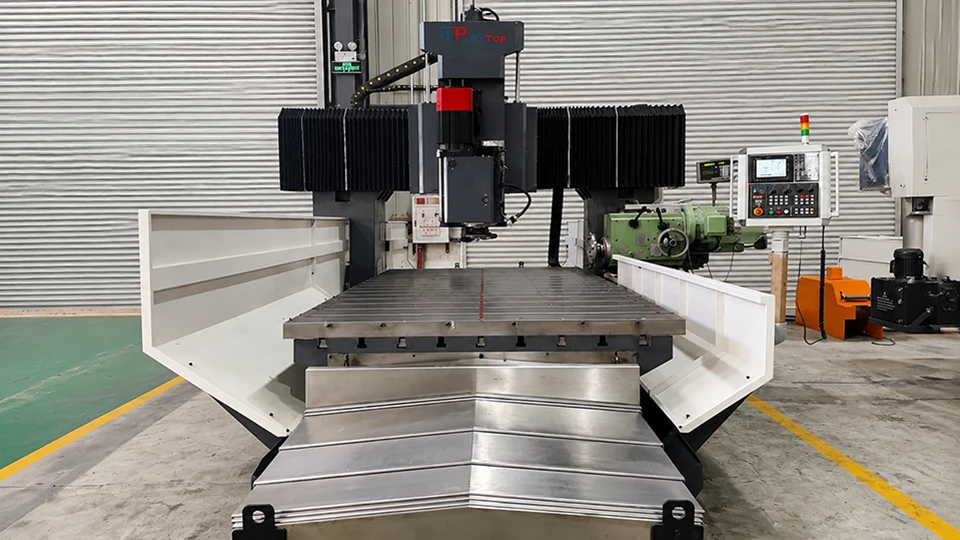
Saddle and Worktable Base
The saddle and worktable base support moving axes, fixtures, and workpieces.
These components require stable guideway mounting surfaces and good resistance to deformation. Cast iron allows them to combine load-bearing strength with precise machining surfaces.
These parts form the main physical framework of a CNC machines structure. Their design and manufacturing quality directly influence machine stability, alignment, and long-term performance.
How CNC Machines Structure Affects Machining Accuracy
A stable CNC machines structure keeps the tool, spindle, guideways, and workpiece in the correct relative position. If the structure bends, vibrates, or shifts with temperature, machining accuracy will also change.
Geometric Accuracy
The machine bed and column support the guideways and spindle assembly. Their stability affects straightness, flatness, parallelism, and perpendicularity.
Even small structural movement can cause tapered holes, uneven surfaces, or misaligned features.
Positioning Accuracy and Repeatability
The CNC system controls axis movement, but the mechanical structure determines whether that movement is transferred accurately to the tool.
A rigid structure helps the machine return to the same position repeatedly, especially under changing cutting loads.
Surface Finish
Structural vibration can leave chatter marks, waviness, and irregular tool patterns on the workpiece.
A stable cast iron structure reduces unwanted movement between the tool and the workpiece, supporting smoother and more consistent surfaces.
Heavy-Cutting Accuracy
Heavy cutting creates larger forces and greater structural deflection.
A strong CNC machines structure helps maintain cutting depth, bore size, and dimensional consistency when the machine is operating under load.
Long-Term Production Consistency
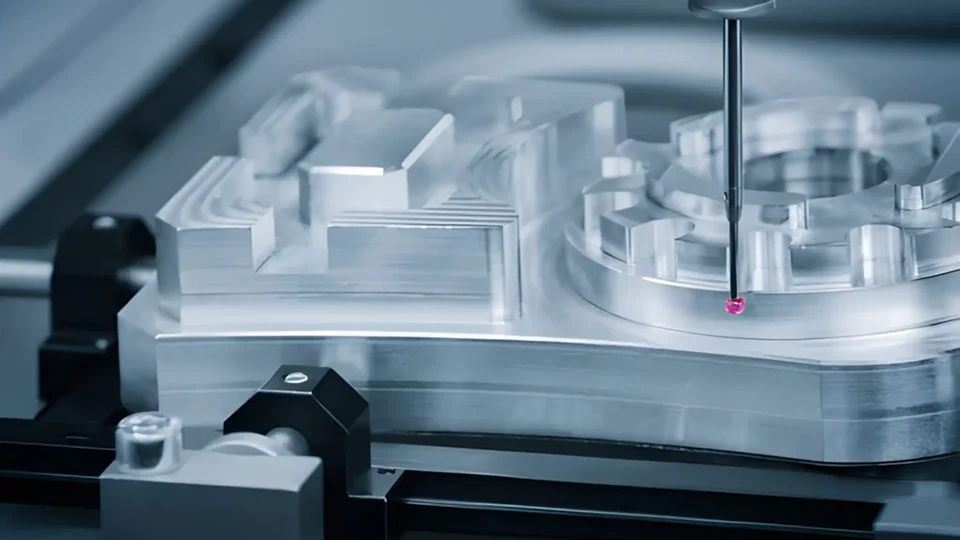
Machine accuracy must remain stable throughout long production cycles, not only during initial testing.
A well-designed structure helps reduce geometric drift, repeated adjustment, scrap, and inspection work over time.
Common Questions About Cast Iron CNC Structure
Is a Heavier CNC Machine Always More Accurate?
No. More mass can improve stability, but accuracy also depends on rib design, wall thickness, guideway spacing, load paths, and assembly quality. A well-designed structure is more important than weight alone.
Are All Cast Iron Machine Beds the Same?
No. Their performance depends on material grade, graphite structure, hardness, wall thickness, casting quality, and machining accuracy. The phrase “cast iron bed” alone does not prove quality.
Can the CNC Controller Correct Structural Problems?
Only partly. A CNC system can compensate for some measurable and repeatable errors, but it cannot fully correct random vibration, unstable thermal movement, loose joints, or changing structural deflection.
Can Welded Steel Replace Cast Iron?
Yes. Welded steel is suitable for large, custom, or low-volume machines. However, it generally needs careful stress control and additional design measures to achieve the same level of vibration damping.
Is Mineral Casting Better Than Grey Cast Iron?
Not in every application. Mineral casting offers excellent damping and thermal stability, while grey cast iron provides a more balanced combination of strength, machinability, cost, and production flexibility for mainstream CNC machines.
How Long Can a Cast Iron CNC Structure Last?
There is no fixed lifespan. Service life depends on casting quality, machine load, maintenance, installation, collisions, and workshop conditions. A well-built and properly maintained structure can remain accurate for many years.
Conclusion
Cast iron remains a trusted choice for CNC machines structure because it brings together vibration damping, rigidity, thermal stability, wear resistance, and practical machinability. Its real value is not found in one isolated property, but in the way these advantages work together to support accuracy, surface quality, and long-term production stability.
For manufacturers and buyers seeking reliable CNC equipment, this structural foundation should never be treated as a minor detail. Rosnok applies this principle across its CNC machine range, combining suitable cast structures with precise machining, quality components, and application-focused design to deliver stable performance for demanding metalworking operations.